
Corporate Electronics Recycling Atlanta GA: Secure Solutions

Your IT closet usually tells the truth before your reporting does.
If you're managing equipment for an Atlanta office, hospital, school, agency, or data center, you probably have a room, cage, or corner filled with retired laptops, dead monitors, old switches, boxed printers, and a few servers nobody wants to touch until “we have time.” That backlog isn’t just clutter. It’s dormant data, audit exposure, and a sustainability task that keeps getting pushed into the next quarter.
A solid corporate recycling program fixes more than disposal. It creates control. You know what left the building, how the data was destroyed, what was reused or recycled, and what story your company can tell afterward. In Atlanta, where regulated industries and IT-heavy operations are common, that matters more than most first-time clients expect.
Why Your Atlanta Business Needs a Better E-Waste Strategy
The first major cleanout usually starts with a practical problem. Facilities wants space back. IT wants old hardware gone before a move or refresh. Finance wants retired assets off the books. Compliance wants proof that every data-bearing device was handled correctly.
Then someone opens the storage room.
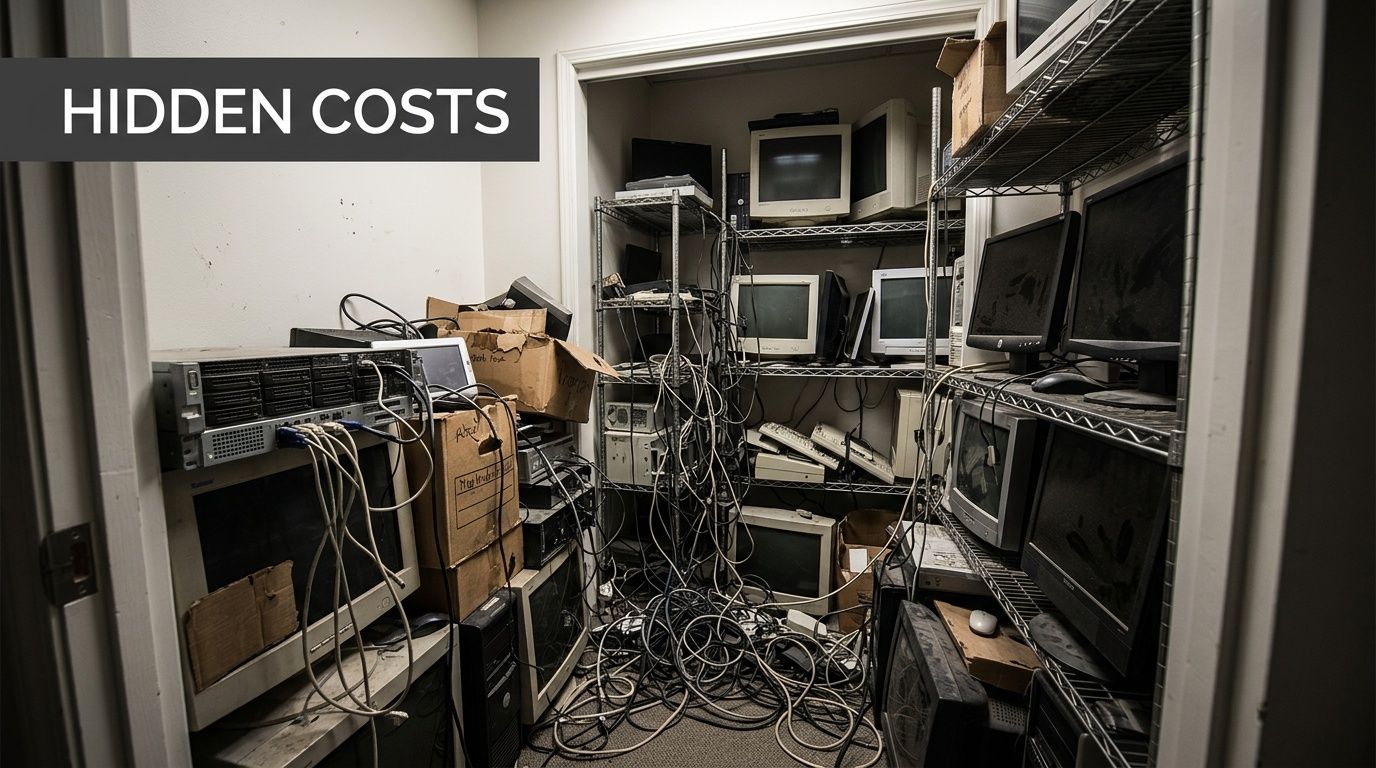
What’s sitting there is usually a mix of value and liability. A few assets may still be reusable or suitable for remarketing. Others have no resale value but still contain drives, labels, user data, configuration history, or internal records. Once equipment falls into that gray zone between “still in service” and “officially disposed,” companies lose visibility fast.
The real risk isn't the pile itself
The biggest mistake I see is treating electronics recycling like a junk removal job. It isn’t. Corporate Electronics Recycling Atlanta GA projects are really IT asset disposition projects with environmental, legal, and reputational consequences.
National context makes the stakes clear. The United States produces over 3.5 million tons of e-waste annually, generation has more than doubled since 2000, and only 15 to 20% is properly recycled, according to the industry summary citing EPA context in this Georgia certified e-waste recycling overview. That same source notes that Atlanta Recycling Solutions has recycled over 210 million pounds of electronics since 2004, which gives you a sense of the scale already being handled in the metro market.
If you want a broader primer on why this waste stream matters operationally and environmentally, Green Atlanta’s page on the environmental impact of electronic waste is a useful starting point.
What a better strategy changes
A better program does three things at once:
- It reduces security exposure by moving forgotten devices into a documented disposition workflow.
- It protects compliance with chain-of-custody records, destruction certificates, and defensible handling.
- It creates an ESG story that leadership can use.
Old tech shouldn’t sit in limbo. Once a device reaches end of life, every extra week in storage increases the chance that labels fall off, ownership gets murky, and accountability disappears.
That last point often gets overlooked. Disposal sounds like a backend operation, but it can become a visible part of your corporate responsibility work. For Atlanta companies trying to make ESG and CSR more concrete, a cause-based model changes the conversation. Instead of “we recycled some old equipment,” the message becomes “your old tech can house a veteran and grow a forest.”
That kind of framing works because it connects an operational necessity to a human outcome. It gives procurement, sustainability, HR, and communications a shared story. Internal teams can rally around it. Employees understand it immediately. Clients and stakeholders do too.
What doesn't work
Three approaches usually create trouble:
| Approach | Why it fails |
|---|---|
| Informal office cleanouts | Devices leave without a proper inventory or custody trail |
| “Free” hauling with vague paperwork | You save upfront, then struggle to prove what happened later |
| Waiting until a move or audit | The scope gets larger, riskier, and harder to manage |
A mature program starts before pickup day. It starts with inventory discipline, media handling rules, and a provider that understands both secure disposition and the story your business wants to tell after the truck leaves.
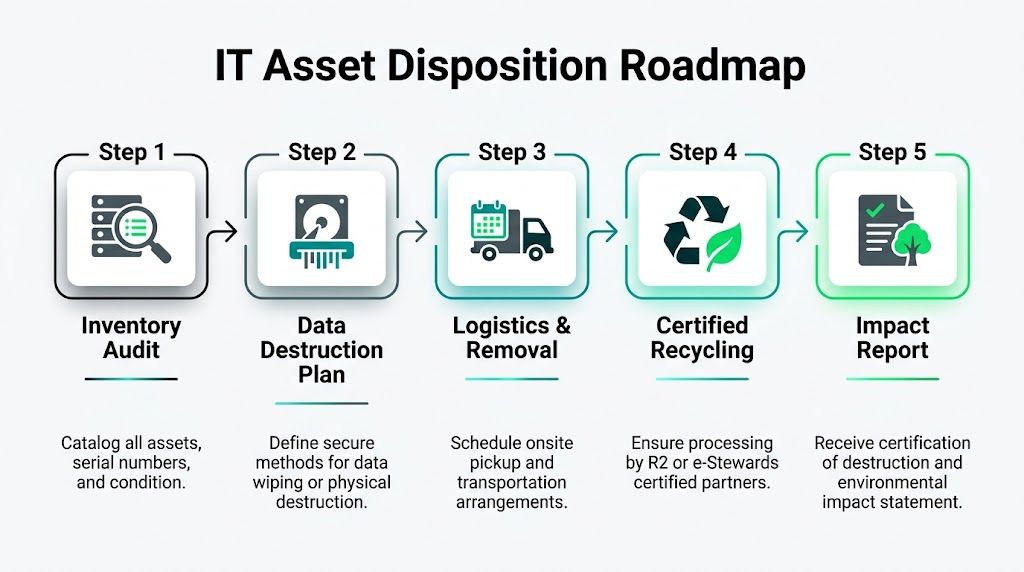
Building Your IT Asset Disposition Plan
Most first-time projects go sideways before a truck is ever scheduled. The problem isn’t recycling capacity. It’s poor internal preparation.
If you don’t know what you have, where it sits, and which items contain data, you can’t quote accurately, you can’t maintain custody, and you can’t prove the job was completed cleanly. A proper plan starts with an inventory that’s good enough for operations and defensible enough for compliance.
Start with a working inventory, not a perfect one
You don’t need to build a flawless CMDB to start. You do need a usable list that tells your team, and your recycler, what is being removed. A spreadsheet is fine if it’s structured well. Asset software is better if your organization already uses it consistently.
Your inventory should capture:
- Device type such as laptop, desktop, server, monitor, switch, printer, tablet, phone, or external drive
- Identifiers including asset tag, serial number, and hostname if available
- Physical location like floor, closet, room, rack, or department
- Data status whether the device contains storage media, and whether it’s functional
- Condition notes such as reusable, damaged, obsolete, incomplete, or ready for shred
- Special handling flags for items tied to regulated data, executive users, labs, or restricted areas
A lot of teams over-document cosmetic details and under-document storage media. Reverse that. For disposition, the key question is simple: does this asset hold data, and can it be sanitized or does it need physical destruction?
Build the project in layers
A large corporate collection becomes manageable when you split it into workstreams.
Data-bearing assets first
Servers, desktops, laptops, loose drives, backup media, and network gear with storage should be separated from peripherals early.By location next
Group by office, closet, floor, lab, or rack row. That reduces confusion on pickup day.By removal method last
Some assets can be boxed quickly. Others need de-installation, palletizing, or technician support.
This is the same logic many companies use when planning with an IT asset disposal program. The smoother the inventory stage, the fewer surprises later.
What a pickup-ready list looks like
A strong list answers these questions immediately:
| Question | What your list should show |
|---|---|
| What is being removed? | Device type and count by location |
| Which items carry data risk? | Storage media flag and destruction method |
| What needs technician labor? | Rack gear, cabling, de-installation notes |
| What needs documentation? | Asset tag and serial tracking |
| What can still hold value? | Functional condition and reuse potential |
Practical rule: If your team can't hand the list to Facilities, IT, Compliance, and the recycler without extra explanation, the list isn't ready yet.
Common planning mistakes
Some errors show up repeatedly in Atlanta corporate cleanouts:
- Mixing scrap with in-scope IT assets. Random metal, furniture, and office junk slow down a secure electronics project.
- Ignoring loose media. Drives in desk drawers and bins are often the highest-risk items in the building.
- Leaving ownership unclear. Shared closets and mergers create “mystery equipment” fast.
- Skipping site logistics in the inventory. If there’s no note about stairs, elevators, dock access, or freight restrictions, removal day gets harder than it needs to be.
A good ITAD plan is less about paperwork for its own sake and more about control. Once every asset has a path, inventory, sanitization, logistics, and reporting all become easier to manage.
Mastering Data Destruction and Regulatory Compliance
For most corporate clients, this is the section that matters most. Recycling is important, but data destruction is the point where legal risk becomes real. If your company handles patient records, financial information, employee files, public-sector data, customer records, or proprietary internal systems, end-of-life equipment has to be treated like a live security issue until destruction is documented.
That’s especially true in Atlanta sectors like healthcare, government, and enterprise IT operations, where old equipment often leaves production but stays onsite for months.
Wiping and shredding are not interchangeable
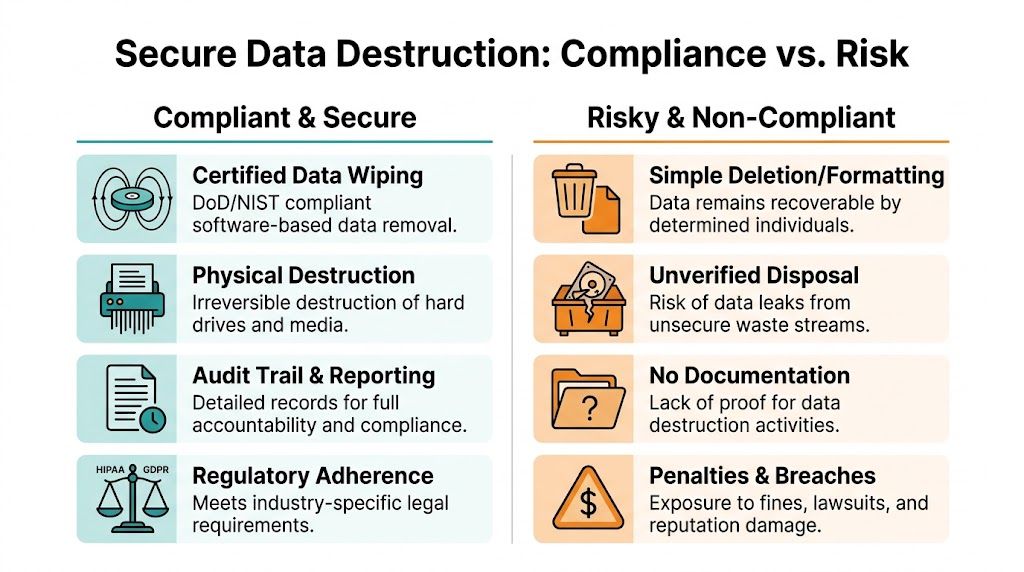
A lot of first-time clients ask whether wiping is enough, or whether every drive needs to be shredded. The right answer depends on the media type, condition, and compliance posture.
According to the industry summary in the World Economic Forum e-waste article, certified data sanitization adheres to DoD 5220.22-M standards with 3 to 7 pass overwriting, and physical shredding reduces media to particles smaller than 2mm in compliant workflows described in this e-waste recycling and data destruction reference.
In practice, the decision usually looks like this:
| Media type | Typical secure path |
|---|---|
| Functional HDDs | Software sanitization with verified overwrite process |
| SSDs | Physical destruction is often the cleaner compliance choice |
| Failed or unreadable drives | Physical shredding |
| Loose backup media or unknown storage | Physical destruction unless verified otherwise |
| Equipment for remarketing | Certified wiping if the media supports it |
The mistake is assuming that deletion, reformatting, or a quick internal reset counts as destruction. It doesn’t.
Why certified handling matters
The same verified source states that uncertified audits reveal a 40% failure rate in data wiping, with potential HIPAA fines of up to $1.5 million per violation in serious noncompliant scenarios. Those aren’t abstract numbers. They explain why regulated organizations don’t rely on informal internal disposal once assets leave active service.
A hard drive that was “probably erased” is a legal problem, not a disposition strategy.
That’s also why chain of custody matters as much as the destruction method. A Certificate of Data Destruction only means something when it ties back to a documented inventory, controlled pickup, and a known sanitization or shred process. Without that trail, the certificate is just paper.
What a compliant workflow looks like
A defensible workflow usually includes these steps:
- Onsite audit and collection so every targeted asset is identified before removal
- Segregation by media type because HDDs, SSDs, and failed devices shouldn’t all be processed the same way
- Documented chain of custody from room-level pickup through facility intake
- Verified sanitization or shred event aligned to the asset list
- Final reporting that gives compliance and audit teams something they can retain
If your team has ever dealt with a drive that failed before standard sanitization, it’s worth understanding the flip side of the problem too. In situations where organizations need to retrieve information from damaged media before disposition, specialized professional data recovery services can be relevant. That’s a separate process from destruction, but it’s often part of the same lifecycle decision.
Questions to ask before signing off on a vendor
Use these questions in procurement or legal review:
How is media categorized on intake?
You want a real process, not a vague promise.When is wiping used, and when is shredding mandatory?
The answer should change by media type and device condition.What documentation is issued at the end?
Ask specifically about destruction certificates and item-level or batch-level reporting.How is chain of custody maintained during pickup and transport?
If that answer feels soft, keep looking.Can they support regulated environments?
Healthcare and public-sector clients usually need more than general recycling paperwork.
For companies evaluating options in the metro area, secure hard drive destruction services in Atlanta GA outlines the kind of service scope that should exist when destruction is treated as a compliance function, not a side task.
What works and what doesn't
Here’s the short version:
- Works: media-specific handling, documented custody, verified wipe logs, shred reporting, clear certificates
- Doesn’t work: office resets, hand-me-down assumptions, “we removed the users,” and disposal vendors that treat drives like mixed scrap
Compliance lens: If your legal team would struggle to defend the disposal process after a breach investigation, the process isn’t strong enough yet.
Scheduling Onsite Decommissioning and Removal in Atlanta
Once your inventory is stable and your destruction rules are set, the next issue is physical removal. At this stage, many projects either stay controlled or become disruptive.
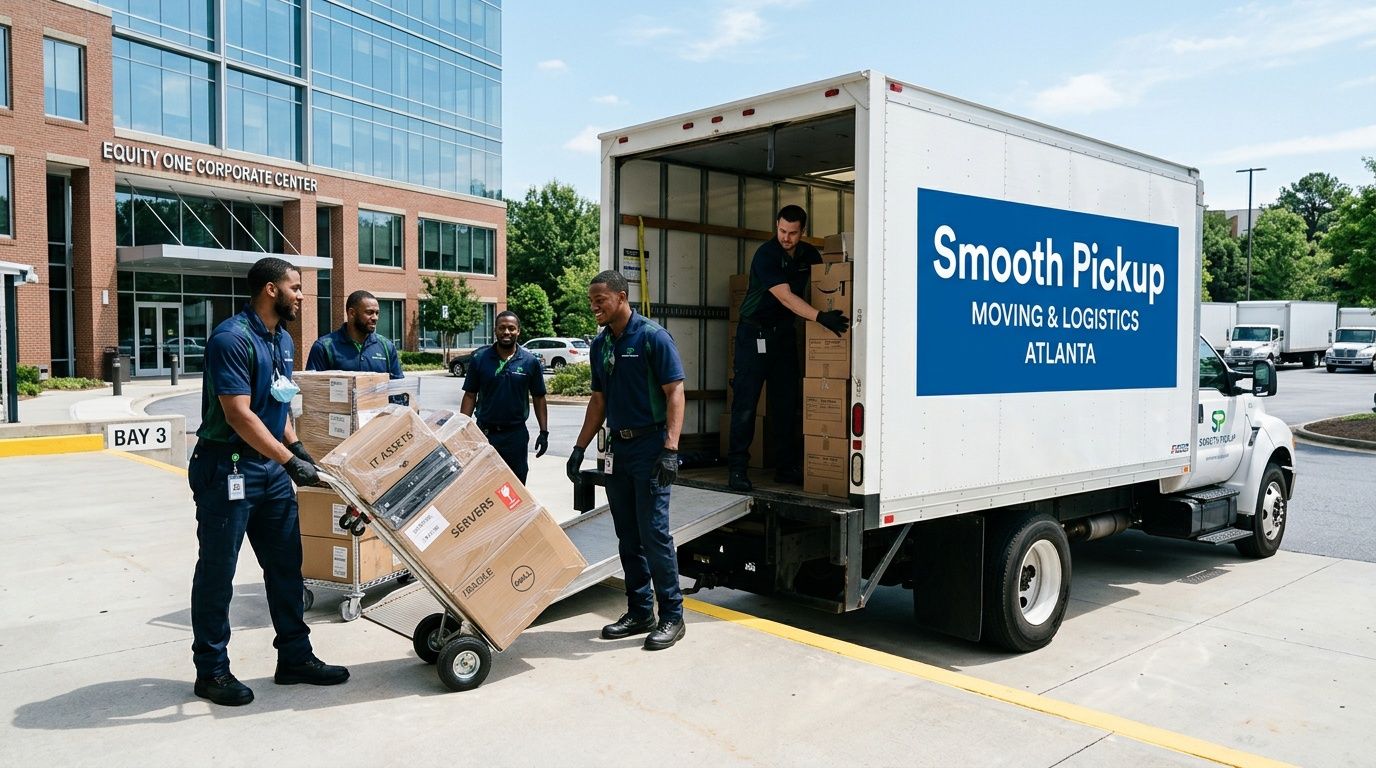
Corporate pickups in Atlanta aren’t just about loading boxes into a truck. You may be dealing with freight elevators, downtown access windows, loading dock rules, server rooms with live neighboring racks, hospital corridors, school calendars, or office buildings that don’t want rolling carts crossing the lobby at noon.
What a professional pickup should include
A proper onsite decommissioning event usually covers more than pickup. For servers, network gear, and dense office cleanouts, you should expect some combination of:
- De-installation from racks, desks, carts, or storage shelves
- Packing and palletizing to prevent damage and media loss in transit
- Label control so assets already inventoried remain traceable
- Dedicated transport with chain-of-custody records at handoff
For example, Atlanta Green Recycling handles B2B electronics removal, secure packing, DoD-standard data destruction options, and fleet-based pickup for metro-area organizations. That’s the kind of practical scope corporate clients should look for when the project involves both logistics and compliance.
Site prep makes pickup day smoother
The best removals are quiet. They don’t interrupt staff, they don’t block hallways longer than necessary, and they don’t force your IT team to make last-minute decisions at the dock.
Before the crew arrives, confirm:
| Site factor | Why it matters |
|---|---|
| Building access | Entry procedures can delay or stop a crew cold |
| Freight elevator availability | Server moves and palletized loads depend on it |
| Dock schedule | Shared buildings often require reserved windows |
| Parking and route | Trucks need a legal, practical loading path |
| Internal escort | Some spaces require IT, security, or facilities presence |
If your building has unusual access constraints, Green Atlanta’s loading dock logistics page is a practical reference for planning the handoff side of the job.
When to schedule
For active offices, early morning and after-hours pickups often work best. For hospitals and schools, timing depends more on internal operations and restricted areas than on normal office traffic. For data rooms, a phased removal is usually cleaner than trying to clear everything in one rush.
The fastest pickup is usually the one that was staged properly the day before.
A few operational habits help:
- Stage loose devices in one secure area if your site allows it
- Leave rack equipment connected until the approved cutover point
- Separate personal electronics from corporate assets
- Assign one decision-maker onsite who can resolve questions quickly
What doesn't work in the field
Most delays come from preventable issues. Nobody reserved the elevator. Devices were moved after inventory. A closet contains twice as much gear as expected. Security doesn’t have the vendor on the list. The data room still has production equipment mixed with retired hardware.
Those aren’t recycling problems. They’re coordination failures.
When removal is planned well, the project feels straightforward. Technicians arrive, equipment is de-installed and packed, the chain of custody starts immediately, and the site gets cleaner without operational drama.
Turning E-Waste Into a Powerful ESG and CSR Story
Most companies stop too early. They complete the pickup, file the certificate, and move on.
That handles the disposal problem, but it misses the strategic value. A well-run electronics recycling program can support your ESG reporting, internal culture, recruiting narrative, community engagement, and external brand position. In Atlanta, that’s especially useful for companies trying to turn sustainability into something visible and local rather than generic.

The strongest story is specific
General statements like “we recycle responsibly” don’t travel very far. They sound like boilerplate.
A better story connects retired equipment to a recognizable outcome. For Atlanta Green Recycling, the dual-impact model is the differentiator: veteran support plus tree planting. That creates a message people remember. “Recycling That Restores Lives and the Environment” is much stronger than another abstract sustainability claim.
A company can tell that story in plain language:
- Your retired technology stayed out of the landfill
- Sensitive data was handled through a controlled process
- The project supported veteran-focused impact
- The program contributed to reforestation efforts
That’s no longer just disposal. That’s a CSR asset.
How to make the program visible inside and outside the company
Most organizations already have channels for this. They just need better raw material.
Here are the best places to use the story:
Sustainability reporting
Include certificates, recycling documentation, and the social-impact narrative in annual ESG or CSR reporting. If your company already tracks waste diversion and community impact, this fits naturally.LinkedIn thought leadership
Share a short operations story after an office refresh, decommissioning event, or employee recycling drive. Keep it concrete. Mention the operational challenge solved and the cause supported.Recruiting and employer brand
Employees respond to programs that feel local and tangible. Veteran support and tree planting are easier to understand than broad environmental language.Client-facing trust signals
A digital badge such as “Recycled with Purpose” can work well on partner pages, supplier portals, and sustainability summaries.
If your team is building a more formal framework around this, Green Atlanta’s guide to business sustainability strategy is relevant to the reporting side.
Cause-based campaigns that actually work
The strongest campaigns are tied to timing and proof, not just slogans.
Consider these practical formats:
| Campaign type | How to use it |
|---|---|
| Veterans Day drive | Connect electronics collection to veteran aid messaging |
| Earth Day campaign | Focus on landfill diversion and reforestation impact |
| Arbor Day activation | Highlight tree-planting certificates and environmental follow-through |
| Employee recycling event | Extend the company’s impact beyond corporate-only assets |
A message like “Your old tech can house a veteran and grow a forest” works because it ties action to outcome. It gives people a reason to care beyond compliance.
If you want employees to participate, don't lead with disposal terminology. Lead with impact, then explain the secure process behind it.
Documentation matters for storytelling too
This part is easy to miss. ESG and CSR teams can’t use a story they can’t substantiate.
The useful outputs after a project usually include:
- Certificate of recycling
- Certificate of data destruction
- Impact report for veteran support and reforestation
- Optional internal summary for leadership or communications
Those documents help multiple departments at once. Compliance keeps the destruction records. Sustainability keeps the diversion and impact documentation. Marketing or communications can turn the project into a short, credible story without inventing anything.
Social impact gives disposal a second life
A lot of B2B recycling content talks only about risk. That matters, but it’s incomplete. Companies also want positive return from operational work. The mission-driven model thus alters the service's value.
It gives your company something useful to say after a refresh, move, or decommissioning event. Not polished corporate fluff. A straightforward message with human meaning.
That’s especially powerful for Atlanta organizations that want local relevance. Supporting veterans and planting trees isn’t just an environmental add-on. It turns a routine end-of-life task into something employees, customers, and leadership can point to with confidence.
Calculating the ROI of Your Corporate Recycling Program
Finance teams rarely approve an ITAD program because it “feels responsible.” They approve it because the cost is justified against risk, labor savings, operational efficiency, and any value recovered from assets.
That’s the right lens. A corporate recycling program should be measured like any other controlled business process.
The wrong comparison
The most common bad comparison is this one: certified IT disposition versus “free recycling.”
That sounds sensible until you ask what the free option includes. Does it inventory assets? Does it separate data-bearing devices correctly? Does it provide a chain of custody? Does it issue destruction documentation your audit team can retain? Does it support a regulated environment? If those answers are weak, then the price comparison is incomplete.
The more accurate comparison is:
| Option | What you're really buying |
|---|---|
| Informal or non-certified disposal | Low upfront cost, high uncertainty |
| Certified ITAD and destruction | Higher process control, lower downstream risk |
| Donation-oriented model | Potential social value, possible tax benefit, stronger ESG narrative |
The verified guidance on this tradeoff is useful. The summary from GCI notes that while some options appear free, certified shredding reduces long-term liability risks by an estimated 40 to 60%, and that donation models can offer tax deductions and ESG reporting value that may outperform simple cash buybacks from non-certified recyclers in this sustainable e-waste management discussion.
Where the return usually shows up
For most Atlanta corporate clients, ROI appears in four places.
Risk reduction
This is the biggest one. If a program lowers the chance of a disposal-related data incident, it protects legal, compliance, and brand value. You may not put an exact internal number on that every time, but leadership understands avoided exposure.
Labor savings
A structured pickup with inventory, de-installation, packing, and removal support takes less internal time than ad hoc disposal. IT isn’t stuck making repeated trips, storing devices indefinitely, or answering the same audit questions months later.
Asset value recovery
Some devices still have reuse or remarketing potential. That won’t apply to every load, but when it does, it can offset part of the program cost. The key is realistic grading. Don’t build your business case on optimistic resale assumptions.
ESG and donation value
For some organizations, a donation-focused path can create tax and reporting benefits that matter more than a small cash return. That’s especially true when leadership cares about public sustainability commitments or community impact.
If you also want to compare whether resale or donation is the better fit for your retired inventory, Green Atlanta’s old electronics for cash page is a practical reference point for that decision.
A simple way to build the business case
Use this framework in internal approval:
List direct program costs
Pickup, de-installation, destruction, packing, and processing.List avoided internal costs
Staff time, storage burden, repeat handling, and disposal confusion.List avoided risk categories
Data exposure, poor documentation, and noncompliant handling.List recovered value
Remarketing, donation benefit, and ESG documentation value.
A cheaper invoice isn't always a cheaper program. If you buy less control, you usually pay for it somewhere else later.
That’s the core ROI logic. Responsible electronics recycling isn’t just an expense line. When done correctly, it protects value you already have.
Frequently Asked Questions about Atlanta Corporate Recycling
Atlanta companies usually ask the same set of questions once a real project starts moving. The answers below are the ones that matter most in practice.
How do we handle a large data center or AI server decommissioning project?
Treat it like an operations project, not a recycling appointment. The equipment volume, rack density, power dependencies, and downtime concerns make planning far more important.
This matters even more because Georgia has seen 25% growth in hyperscale data centers in early 2026, and one of the key challenges is coordinating the rapid decommissioning of 1000+ server racks without downtime, as noted in this Georgia electronics recycling trend summary. Standard recycling programs often don’t address that level of staging and sequencing.
For those projects, use phased de-installation, strict rack-by-rack inventory control, and a removal partner that understands live-site coordination.
Can we host an employee electronics recycling drive along with corporate pickup?
Yes, but keep the streams separate. Corporate assets need one chain of custody and one reporting structure. Personal devices from employees need a different intake approach, clearer acceptance rules, and clear communication about what data destruction method applies.
These drives work well around Veterans Day, Earth Day, and similar dates because they combine internal engagement with visible community impact.
What if we have equipment that isn't standard office IT?
That’s common. Labs, AV rooms, manufacturing floors, school tech closets, and healthcare environments all produce odd items.
The practical answer is to send a detailed asset list early, with photos if needed. A good provider can usually tell you what belongs in the secure electronics stream, what needs special handling, and what should be excluded from scope.
Should we choose wiping, shredding, or both?
Use both when the asset mix calls for it. Functional hard drives tied to reuse may be wiped. SSDs, failed drives, and unknown media are often better candidates for physical destruction. The right choice depends on media type, condition, and compliance requirements.
If you’re trying to model the internal business case before procurement approval, a simple ROI calculator can help frame the comparison between certified services, internal labor, and avoided risk categories.
How much do we need before scheduling pickup?
That depends on the provider and the project type. For corporate programs, the primary threshold is usually less about raw volume and more about whether the load justifies secure logistics and documentation. If your organization has a recurring refresh cycle, it often makes sense to schedule regular collection windows instead of waiting for a crisis cleanout.
What documentation should we expect after the job?
At minimum, expect chain-of-custody support and final disposition records tied to the project. If data-bearing devices were in scope, you should also expect destruction documentation. If the program includes social or environmental reporting, ask for a separate impact summary your sustainability team can use.
The best time to ask about reporting is before pickup, not after the pallets are gone.
What is the biggest mistake first-time corporate clients make?
They wait too long and treat every retired device the same. Old monitors, loose hard drives, reusable laptops, failed SSDs, and live-rack servers do not belong in one undifferentiated pile. Once you separate assets by data risk, handling needs, and reporting requirements, the entire project gets easier.
If your team is planning its first major disposition project, Atlanta Green Recycling can help you organize inventory, secure data destruction, onsite removal, and the reporting needed for compliance and sustainability teams. It’s a practical way to turn retired electronics into a controlled process with a stronger local impact story.