
Atlanta Loading Dock E-Waste Pickup Guide for 2026

A well-prepared loading dock is the secret ingredient to a smooth, secure, and compliant e-waste pickup. I’ve seen it time and time again—proper planning is what separates a chaotic, delay-ridden afternoon from a seamless operation. It prevents security risks, protects sensitive data, and turns a simple logistical task into a powerful story for your company.
When you partner with a mission-driven recycler, that routine asset disposal becomes a story of real impact. Your efforts, right from your Atlanta loading dock, can directly support veterans and local reforestation. "Recycling That Restores Lives and Landscapes."
Your Essential Loading Dock Pickup Plan
Coordinating a major e-waste pickup requires a clear game plan that gets your IT and facilities teams on the same page. When things get disorganized at the loading dock, it’s a recipe for security gaps, operational headaches, and a missed opportunity to showcase your company's commitment to doing the right thing.
The goal here is to shift your mindset. We're moving beyond a simple "get rid of it" task to a celebrated ESG win.
This change starts by seeing your loading dock not just as an exit point, but as the secure starting line for a new, impactful journey for your old assets. By building a few key phases into your workflow, you create a system that’s both efficient and genuinely meaningful.
This simple flow chart breaks down the core phases for a successful loading dock operation, moving from staging to final documentation.

Each step is foundational for the next, ensuring your equipment is handled correctly from the moment it's flagged for removal.
From Logistics to Impact
A successful pickup plan is about more than just moving boxes from point A to point B. It’s about transforming a standard business procedure into a story of positive change. When you work with us, this process becomes a powerful engine for your corporate social responsibility (CSR) initiatives.
The old equipment leaving your loading dock translates into tangible good. Imagine being able to frame it internally with a message like: "Our retired laptops are helping house veterans and grow forests right here in Georgia."
This dual-impact model offers a unique benefit:
- Veteran Aid: A portion of the value recovered from your recycled assets goes directly to supporting local veterans.
- Reforestation: For every qualifying pickup, we plant trees, contributing to vital environmental restoration efforts.
By preparing your loading dock effectively, you’re not just clearing out old tech; you're kicking off a transparent, auditable process that creates real-world benefits. This elevates a routine task into a verifiable part of your company's ESG strategy, complete with impact reports and certificates of destruction.
To get a deeper dive on best practices, check out our guide on electronic waste disposal in the workplace. This approach turns a logistical necessity into a point of pride, proving your company’s commitment to community and sustainability—all starting right at your loading dock.
Here's a quick reference table to help you visualize the process and its goals.
Loading Dock E-Waste Pickup At a Glance
| Phase | Key Action | Primary Goal | Your Mission-Driven Impact |
|---|---|---|---|
| Staging | Consolidate, inventory, and palletize assets in a secure, designated area. | Ensure all equipment is accounted for and ready for efficient loading. | Begins the chain of custody for assets that will support community programs. |
| Security & Access | Clear a path, verify vehicle access, and confirm security personnel are briefed. | Prevent unauthorized access and ensure a safe, quick pickup process. | Safeguards the value and data integrity of assets destined for good. |
| Paperwork & Handoff | Complete and sign all necessary documentation (BOL, chain of custody forms). | Create a compliant, auditable record of the transfer of assets. | Provides the final link needed to generate impact reports and certificates. |
This strategic planning ensures every pickup is smooth, secure, and socially responsible. It’s about being thoughtful and intentional, from the first pallet to the final signature.
Staging IT Assets for Secure Transit
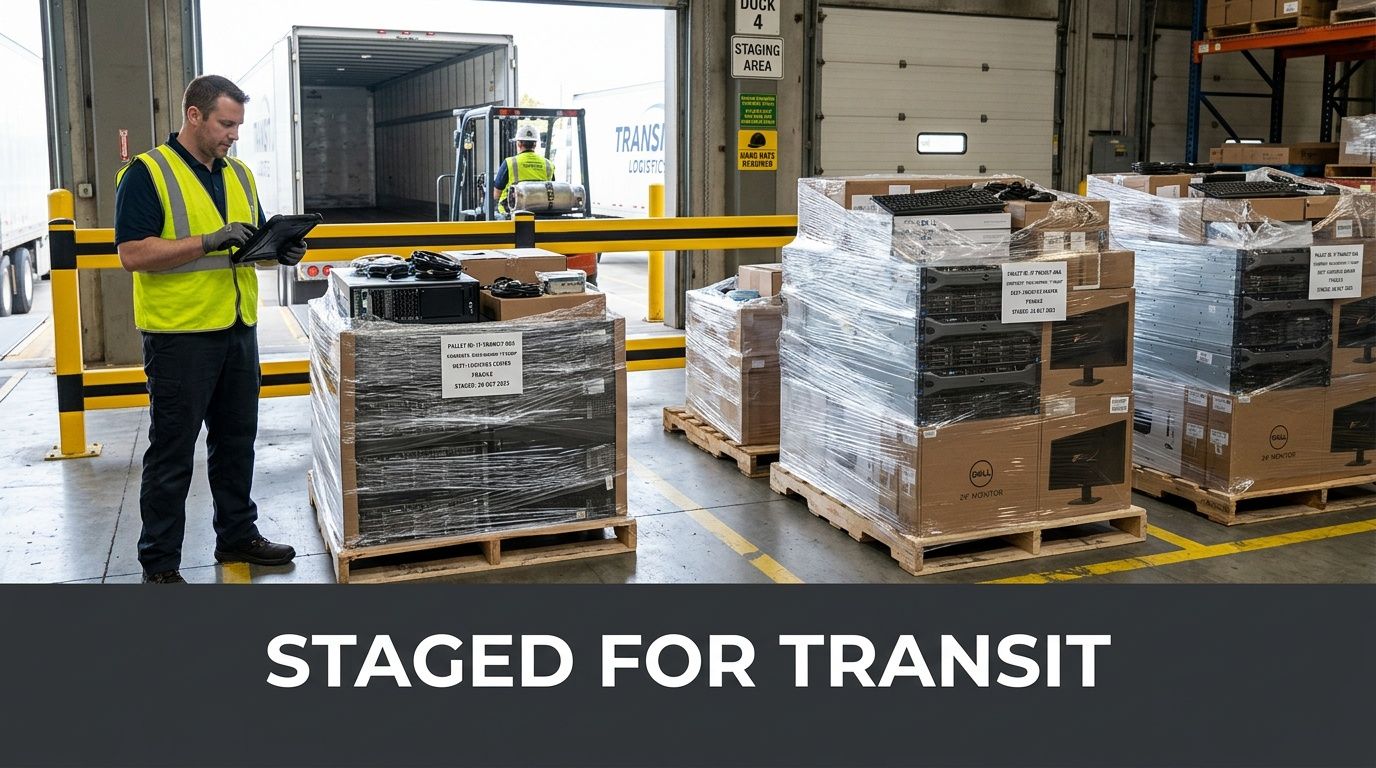
Long before our truck pulls up to your Atlanta facility, the most important work has already been done. A smooth, secure pickup all comes down to how you stage your assets. This is the first link in the chain of custody, and getting it right makes all the difference.
For any large-scale project, like a data center decommissioning, you absolutely need a dedicated and controlled staging area. We always recommend setting this space up as close to your loading dock as possible. This simple step drastically cuts down on the internal movement of sensitive equipment, reducing the risk of a device getting misplaced or seen by the wrong person.
Differentiating Your E-Waste
The first order of business in staging is to sort your equipment. It's a common mistake to treat all e-waste the same, but for security's sake, you need to separate devices that carry data from those that don't.
Items Requiring Secure Handling:
- Servers: These are the heart of your operations and are often loaded with proprietary data and customer information.
- Hard Drives (HDDs & SSDs): Even a single loose drive can be a major liability if it contains sensitive files.
- Laptops and Desktops: Every one of these has an internal drive that needs to be properly sanitized.
- Company-Issued Mobile Phones: These are frequently overlooked but can contain a goldmine of sensitive communications and data.
General Electronics:
- Monitors and Displays
- Keyboards and Mice
- Printers and Scanners
- Cables and Power Cords
Segregating these items onto different pallets helps our team immediately prioritize the secure handling of your data-bearing assets. This clear separation isn't just for us—it’s a powerful visual confirmation of your own internal security protocols.
Key Takeaway: The goal is to create clearly defined, easily identifiable pallets. A pallet of servers should never be mixed with a pallet of keyboards. This simple act of organization is a powerful security measure.
Palletizing for Stability and Safety
Once everything is sorted, it’s time to get it onto pallets. This is about more than just neat stacking; it's about building a stable, safe load for transport. I've seen too many poorly stacked pallets become a safety hazard on the loading dock or, worse, tip over and damage equipment.
- Build a Strong Base: Always start with the heaviest items at the bottom. This creates a low center of gravity and a much more stable pallet.
- Use Shrink Wrap Generously: Once the pallet is stacked, wrap it multiple times with good quality shrink wrap. This is what holds everything together and prevents items from shifting or falling off.
- Label Everything Clearly: Every single pallet needs a clear label. Something simple like "SERVERS – DATA DESTRUCTION REQUIRED" or "GENERAL E-WASTE – MONITORS" works perfectly.
This whole process is also a fantastic opportunity to highlight your company’s commitment to corporate social responsibility. Why not frame it as a “Recycle for a Cause” campaign? We’ve seen clients use powerful messaging like, “Your old tech can house a veteran and grow a forest,” to connect the act of recycling with a tangible, positive outcome.
For a deeper dive into preparation, feel free to check out our guide to prepare your electronics for recycling. Getting this stage right not only boosts safety and security but also helps you tell a great story about your company's positive impact.
Managing Loading Dock Access and Safety
The loading dock is the heart of any pickup operation. It's where the action happens. But let's be honest, it's also one of the riskiest spots in any commercial facility. Getting the access and safety protocols right isn't just a "nice-to-have"—it’s essential for protecting your people, our team, and your assets. A well-managed process means we get in and out smoothly, without causing a headache for your daily operations.
The numbers don't lie. A staggering 25% of all industrial accidents happen right on the loading dock. This fact alone highlights just how crucial it is to have professionals managing the pickup. You can dig deeper into these precarious safety statistics and facts on bhhcsafetycenter.com.
Coordinating Vehicle Access
Clear communication about your dock's setup is the first step to a flawless pickup. We typically use a 26-foot box truck for most jobs, and it needs a clear path to get in and out. Before we roll up, take a quick look to ensure the route to the dock is free of parked cars, dumpsters, or other delivery trucks that could block our way.
We get it. In a bustling area like Atlanta, this isn't always simple.
- Tight Maneuvering Space: Is your facility on a narrow street or have a tricky turn to get into the dock? Just give us a heads-up. We can map out the driver's approach ahead of time.
- Shared Docks: If you share a dock with other tenants, scheduling is everything. We often find that booking a pickup during off-peak hours works best to avoid playing traffic cop.
- Low Clearance: Don't forget to look up! Low-hanging pipes, canopies, or building overhangs can be a real problem for a tall truck.
Our trained, professional team is your greatest asset in navigating these logistical challenges. We are experienced in operating within diverse commercial environments across Atlanta, from sprawling industrial parks to congested downtown high-rises.
Prioritizing Safety and Security
A safe loading dock is a secure one. That period when assets are being moved from your building to our truck is when your facility is most exposed. Solid Access Control measures are the foundation for managing who is in the area, preventing someone from accidentally wandering into a hot zone.
Our team members are always in uniform, so you know exactly who is handling your equipment. We’ll coordinate with your on-site staff to secure the area, making sure bay doors are only opened once our truck is securely in position. This simple, controlled procedure dramatically cuts down on risk and maintains the integrity of your building's security from start to finish.
For a deeper dive into securing physical entry points, check out our guide on Atlanta access control systems. When we work together on a clear plan, we make sure every e-waste pickup is as secure as it is seamless.
Ensuring a Secure Chain of Custody
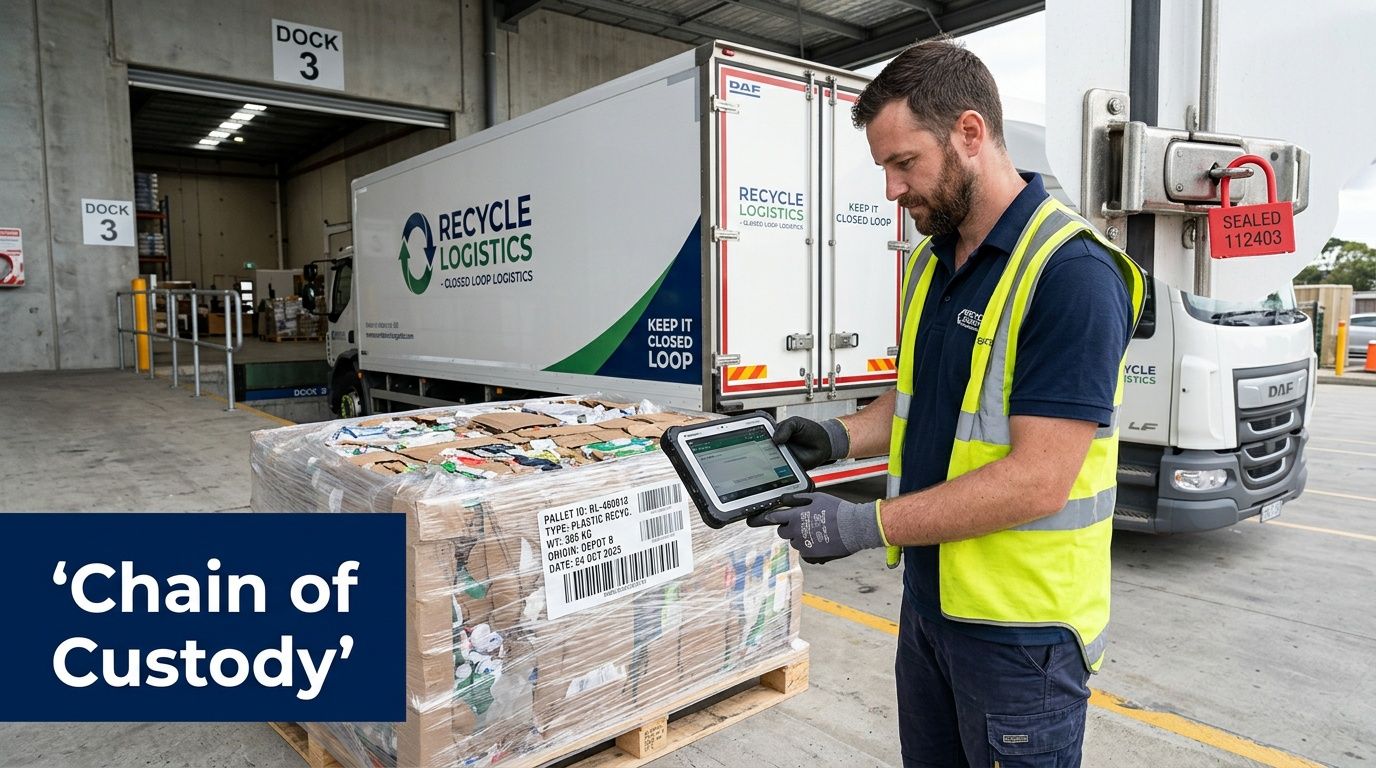
For any organization in healthcare, finance, or government, the moment your IT assets leave the loading dock is a moment of truth. This is where a secure chain of custody must begin. Any gap in the process, no matter how small, can open the door to a significant data breach.
That’s why our uniformed, easily identifiable personnel initiate security protocols the second they arrive at your dock. We don't just load and leave. We kick off a meticulous process designed for total accountability, ensuring your sensitive data is protected from the very start.
On-Site Asset Scanning and Verification
The secure handoff begins with immediate, on-site asset scanning. As pallets are moved from your staging area onto our truck, our team scans the barcode or serial number of every single key asset. This simple action is incredibly important.
First, it creates an instant digital record that confirms exactly what we are taking possession of. Second, it lets your team verify the transfer against your own inventory lists in real-time, right there at the loading dock. This initial scan is the first entry in a detailed, unbroken chain of custody log that follows your equipment all the way to its final disposition.
This hands-on verification at the dock is absolutely critical for our HIPAA or DoD-regulated clients. It provides the first auditable step in a fully compliant data destruction lifecycle, giving you the initial proof needed to stand up to any regulatory scrutiny.
Locked, Sealed, and Tracked Transit
Once your assets are loaded, the security measures continue. Our trucks aren't just locked; they are sealed with uniquely numbered security tags. That seal number is recorded on the Bill of Lading you receive before we even pull away, which guarantees the vehicle remains unopened until it reaches our secure facility.
On top of that, our entire fleet is equipped with GPS tracking. This gives us a complete, verifiable record of the truck’s journey from your loading dock to our processing center. It eliminates any questions about the route taken or any unauthorized stops along the way.
- Uniformed Personnel: Our team is always in uniform and carries identification, so you know exactly who is on your property handling sensitive assets.
- Sealed Vehicles: Tamper-evident seals provide concrete proof that your equipment remained secure during the entire transit process.
- GPS Tracking: We can provide a complete transit report upon request, offering an extra layer of security and total peace of mind.
This comprehensive approach turns a standard pickup into a powerful demonstration of your company's commitment to data protection. For businesses with a large-scale e-waste stream, we offer free pickup for 50+ devices, along with Plant-A-Tree certificates and Veteran Support Impact Reports for your CSR documentation.
Choosing our secure service also earns you a ‘Recycled with Purpose’ digital badge, turning your compliance efforts into a marketable win. To see what happens at the end of this journey, you can learn more about how we provide a hard drive certificate of destruction.
Finalizing Paperwork for Full Compliance
Once the truck door closes and our team pulls away from your loading dock, the physical part of the job is over. But in many ways, the most critical phase is just beginning: the paperwork. This isn't just about ticking boxes; it's about creating an ironclad record that proves compliance, protects your organization, and tells a powerful story.
The first piece of that story is handed to you right there on the dock: the Bill of Lading (BOL). This document is more than a receipt. It's the official record that formally transfers custody of your assets from you to us, marking the start of a secure chain of custody. It’s a foundational piece of the puzzle for meeting general DOT compliance for trucking companies and a key first step in your audit trail.
From Compliance Docs to Impact Reports
Shortly after the pickup, you’ll receive a set of crucial compliance documents electronically. Think of these as your shield—proof that every single asset was handled exactly as promised.
Certificate of Recycling: This is your confirmation that all non-data-bearing assets—things like monitors, keyboards, and cables—were processed in an environmentally sound manner, keeping them out of landfills for good.
Certificate of Data Destruction: For anything that held sensitive information, this certificate is your guarantee of security. It verifies that we destroyed all data according to rigorous standards like HIPAA, SOX, and DoD 5220.22-M. This is the auditable proof you need for total peace of mind.
These documents are essential for protecting you from regulatory scrutiny and the nightmare of a data breach. But we believe the story doesn't have to end with just compliance.
We turn a compliance necessity into a report on your company's positive social and environmental impact. The documentation proves not only what you disposed of, but also the good it accomplished.
Receiving Your Personalized Impact Certificates
This is where we go a step further. Along with the standard paperwork, we send you personalized Impact Certificates. These aren't generic forms; they detail the tangible, positive outcomes generated specifically by your retired equipment.
We've found that when our partners see the real-world results of their project, they become true advocates. Imagine getting a certificate that says your old tech helped plant 3 trees or provided aid for a military veteran. It transforms a routine disposal into a celebrated achievement and a lasting relationship.
This documentation gives you a powerful narrative for your ESG reports, turning what could have been a logistical headache into a success story worth sharing.
Common Questions About Your E-Waste Pickup
Coordinating a major e-waste pickup from your company's loading dock can bring up a lot of questions, especially in a busy metro area like Atlanta. We've handled thousands of them. Based on our experience, here are the answers to the most common queries we get, designed to help you plan an efficient and secure pickup.
Getting Your Pickup on the Calendar
To get your pickup scheduled, we just need a few key details. The basics are what you'd expect: your Atlanta-area address, who our main on-site contact will be, and a rough estimate of what kind of gear you have and how much of it there is.
But the real key to a seamless pickup is information about your loading dock. Letting us know the dock height, whether it's a shared space, or if there are specific time restrictions helps us dispatch the perfect truck and team. It’s all about making the process quick and keeping disruptions to a minimum. You can find more specifics on our free electronic recycling pickup service.
Sorting Your Assets for Security and Efficiency
Properly separating your equipment beforehand is a game-changer for both security and speed. We always recommend creating separate, clearly labeled pallets for different categories of electronics.
- Secure Pallets: This is for any asset that ever held sensitive data. Think servers, company laptops, and even loose hard drives.
- General E-Waste Pallets: Use these for everything else—items without data storage like keyboards, monitors, mice, and cables.
This simple sorting step is crucial. It lets our team immediately identify and prioritize the secure handling of your most sensitive materials the moment we arrive. It’s a small action that makes a huge impact on maintaining a secure chain of custody right from the start.
Navigating Tricky Loading Docks
Don't worry, logistical challenges are what we do best. Many Atlanta businesses operate out of buildings with shared, small, or less-than-ideal loading docks. If that sounds like your situation, just give us a heads-up when you schedule the pickup.
We can easily adapt. We might arrange the pickup during off-peak hours to avoid creating a traffic jam for your neighbors, or we can send a smaller truck that’s better suited for navigating tight spaces. Our goal is to work around your limitations without disrupting your business.
The Paperwork: Establishing Chain of Custody
Once our team has loaded all your assets onto the truck, our driver will provide your on-site contact with a Bill of Lading (BOL). This document is your initial receipt, and it's a critical piece of the compliance puzzle.
The BOL officially transfers the chain of custody for your assets from your organization to ours, right there at your loading dock. It's the official start of our secure, documented process.
Remember, loading dock safety is a shared responsibility. Every year, over 94,000 forklift-related injuries are reported in the U.S., and about 6,580 of those incidents involve forklifts falling from the edge of a loading dock, often due to open doors or missing barricades. Ensuring a clear, safe area is paramount for everyone involved. To learn more about this common hazard, you can discover more insights about unsafe loading dock trends on ritehite.com.
Ready to turn your old electronics into a force for good? Partner with Atlanta Green Recycling for a secure, compliant, and impactful e-waste solution. We're turning e-waste into hope by partnering with businesses, schools, and cities across Atlanta to create a greener community and support our veterans. Schedule your pickup today at https://www.greenatlanta.com.