
Recycle Laptops at Best Buy: A Guide for Atlanta Businesses in 2026

If you’ve got an old laptop gathering dust at home, you’ve probably heard of Best Buy’s recycling program. It’s one of the most accessible, well-known options out there—a simple walk-in service designed for everyday consumers looking to get rid of personal electronics without a lot of hassle.
Think of it as the baseline for e-waste recycling. It’s free, convenient, and available at stores nationwide. For a single person or a family, it's a solid choice.
But this is also where the story ends for businesses. Let’s break down how their program works, because understanding its limitations is key to seeing why companies in Atlanta need a far more robust, mission-driven solution.
How the Program Actually Works
For an individual, the process is as simple as it sounds. You just gather up your old tech, drive to your local Best Buy, and head to the customer service desk. No appointments, no complicated paperwork.
But the devil is in the details, especially when you’re not just recycling one device.
- What You Can Bring: They accept laptops, desktops, tablets, and most other computer accessories completely free of charge. This is a huge win for consumer accessibility.
- The Daily Limit: Here’s the first major roadblock for businesses. The program strictly limits you to three items per household, per day. Trying to offload an office worth of equipment this way is simply a non-starter.
- Who Handles Data Security: Best Buy's official stance is that you are responsible for wiping all personal data from your devices before you drop them off. The initial burden of data sanitization falls squarely on your shoulders.
Now, let's create a quick summary table to see all of this at a glance.
Best Buy Laptop Recycling at a Glance
This table breaks down the core features of Best Buy’s consumer program, making it easy to see where it shines and where its limitations lie for anyone managing more than a few personal devices.
| Feature | Details for Best Buy Program |
|---|---|
| Cost | Free for accepted items. |
| Convenience | High for individuals; walk-in service available at any store. |
| Accepted Items | Laptops, desktops, tablets, printers, cell phones, and most accessories. |
| Volume Limit | Three items per household, per day. A major constraint for businesses. |
| Data Destruction | Responsibility of the owner. No certified data destruction service is provided for standard drop-offs. |
| Documentation | No Certificate of Destruction or recycling documentation is provided for standard drop-offs. |
| Business Suitability | Low. Not designed for bulk recycling, secure data management, or compliance needs. |
As you can see, while it’s a fantastic public service, it’s not built for the scale, security, and compliance demands of a business.
To be fair, Best Buy has made a massive contribution since starting this initiative back in 2009, collecting well over 2 billion pounds of e-waste. In a single recent year, their program diverted nearly 86 million pounds of electronics from landfills, with laptops being a huge part of that.
For any Atlanta business managing IT assets, however, the volume caps and lack of certified data destruction create immediate logistical and compliance headaches. Check out our guide on the differences between consumer and business recycling to see why a dedicated B2B partner isn’t just a nice-to-have—it’s a necessity.
Why a Simple Factory Reset Is Never Enough
Before you even think about recycling a laptop—whether at Best Buy or with a professional service—let’s talk about your data. It’s the single most critical step, and one that’s dangerously misunderstood. So many people assume hitting "delete" or running a factory reset wipes the slate clean.
That couldn't be further from the truth.
Simply deleting files just removes the shortcut your computer uses to find them. The data is still there, and it can often be recovered with easily accessible software. A factory reset is a bit more thorough, but it was never designed for the kind of security a business needs.
Think about it from the perspective of an Atlanta law firm or healthcare provider. Recycling a fleet of old laptops only to have lingering client records or patient data fall into the wrong hands is a nightmare scenario. The legal fallout and damage to your reputation could be catastrophic.
The Real Meaning of Data Sanitization
True data sanitization isn't about deleting files; it's about making them completely and permanently unrecoverable. This process goes far beyond the basic tools on your laptop and relies on specific, verifiable methods to protect sensitive information. It's a critical step that consumer-focused recycling programs often leave entirely up to you.
There are really only two ways to achieve this level of security:
- Software Wiping: This involves using specialized software to systematically overwrite the entire hard drive with random characters—a sea of ones and zeros—multiple times. Following a standard like DoD 5220.22-M ensures the original data is completely obliterated beyond recovery.
- Physical Destruction: For the ultimate peace of mind, or for drives that are no longer functional, nothing beats physical shredding. The hard drive is mechanically torn into tiny, unsalvageable fragments.
This quick overview shows the typical consumer recycling journey, and you’ll notice the first step—all the prep work—is on you.
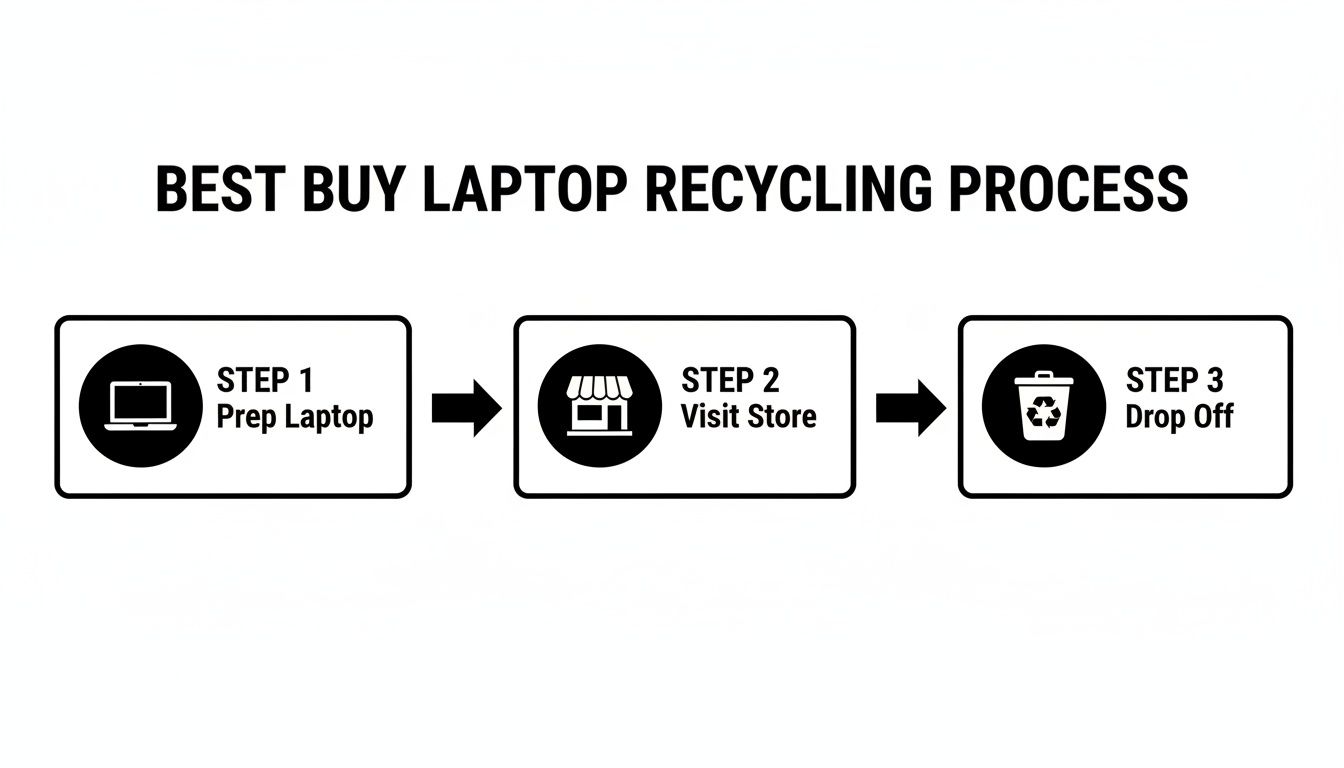
As you can see, wiping your data is your responsibility before you ever walk into the store.
The Business-Grade Security Gap
This is exactly where the DIY approach falls apart for businesses. Best Buy's program is a fantastic service for individuals, and they rightly advise users to wipe their data before dropping off devices. But a business operates under a completely different set of rules and risks.
For any organization, especially those handling sensitive information, just hoping an employee performed a proper wipe is a huge gamble.
A standard retail receipt can't prove you met compliance standards like HIPAA or SOX. Without a Certificate of Destruction, the legal liability for any data left on those devices remains squarely on your company's shoulders.
You need a certified, auditable process that officially transfers that liability away from your organization. A professional partner provides documented proof that your data is truly gone for good.
If you’re curious about what goes into a proper wipe, our guide on how to clear a laptop hard drive walks through the technical details.
The Hidden Risks of Retail Recycling for Businesses
The convenience of a retail drop-off is great for personal use. But when it comes to business, that simple solution can run head-on into some serious corporate responsibilities. For Atlanta businesses, using programs like those at Best Buy to recycle laptops and other company assets can introduce practical roadblocks and major compliance risks that are easy to overlook.
Think about it. Your company is upgrading 150 laptops. Can you imagine the logistical headache of trying to haul that many devices—three at a time, per day—to a local big-box store? It’s not just clunky; it’s a huge waste of employee time and company resources that should be focused on your actual business.
The Compliance Black Hole
Beyond the sheer impracticality, the biggest risk is what you don't get: proper documentation. When you're dealing with business assets, a simple store receipt is completely useless for proving you've met strict data privacy regulations.
- No Chain of Custody: The second a laptop leaves your office, you need a documented paper trail showing it was handled securely every step of the way. A retail drop-off offers no auditable chain of custody, leaving a giant hole in your security protocols.
- No Certified Data Destruction: Your company is legally on the hook for the data on those devices. Without a Certificate of Data Destruction, you have zero verifiable proof that sensitive information was wiped clean according to standards like HIPAA, SOX, or GDPR.
- Lingering Liability: This lack of formal paperwork means all liability stays with your company. If a data breach is traced back to a device you thought was properly recycled, the legal and financial fallout lands squarely on your desk.
Here’s a real-world scenario we see all the time. A local healthcare provider needs to retire laptops full of protected health information (PHI). To stay compliant with HIPAA, they must be able to prove every single hard drive was sanitized correctly. A retail drop-off gives them no such guarantee.
Without an auditable, legally defensible paper trail, you are essentially recycling on faith. This is a gamble no modern business can afford to take, especially when dealing with client, patient, or proprietary corporate data.
The Documentation You Actually Need
For any corporate IT asset disposition, your main goal should be to officially transfer liability away from your company. This is only possible with a solid documentation package that a retail program simply isn't set up to give you. You need specific, auditable records that will hold up in an audit and shield your organization from risk.
A professional recycling partner closes this loop by providing the essential paperwork, including serialized inventory lists and certificates that confirm both data destruction and environmentally sound recycling. It’s the only way to be sure your company is completely protected. Understanding the difference between a consumer drop-off and a corporate service is vital—the risks of choosing the wrong path are just too high. You can dive deeper into these challenges in our comprehensive overview of how to recycle laptops at Best Buy for business needs.
The Smart Solution for Atlanta's Business E-Waste
Retail drop-off programs are great for personal electronics, but they simply aren't designed to handle the scale, security, and compliance needs of a business. So, what’s the right way for Atlanta companies to manage their end-of-life IT assets? It’s about moving beyond a simple disposal checklist and partnering with a mission-driven service. This is where we turn e-waste into hope.
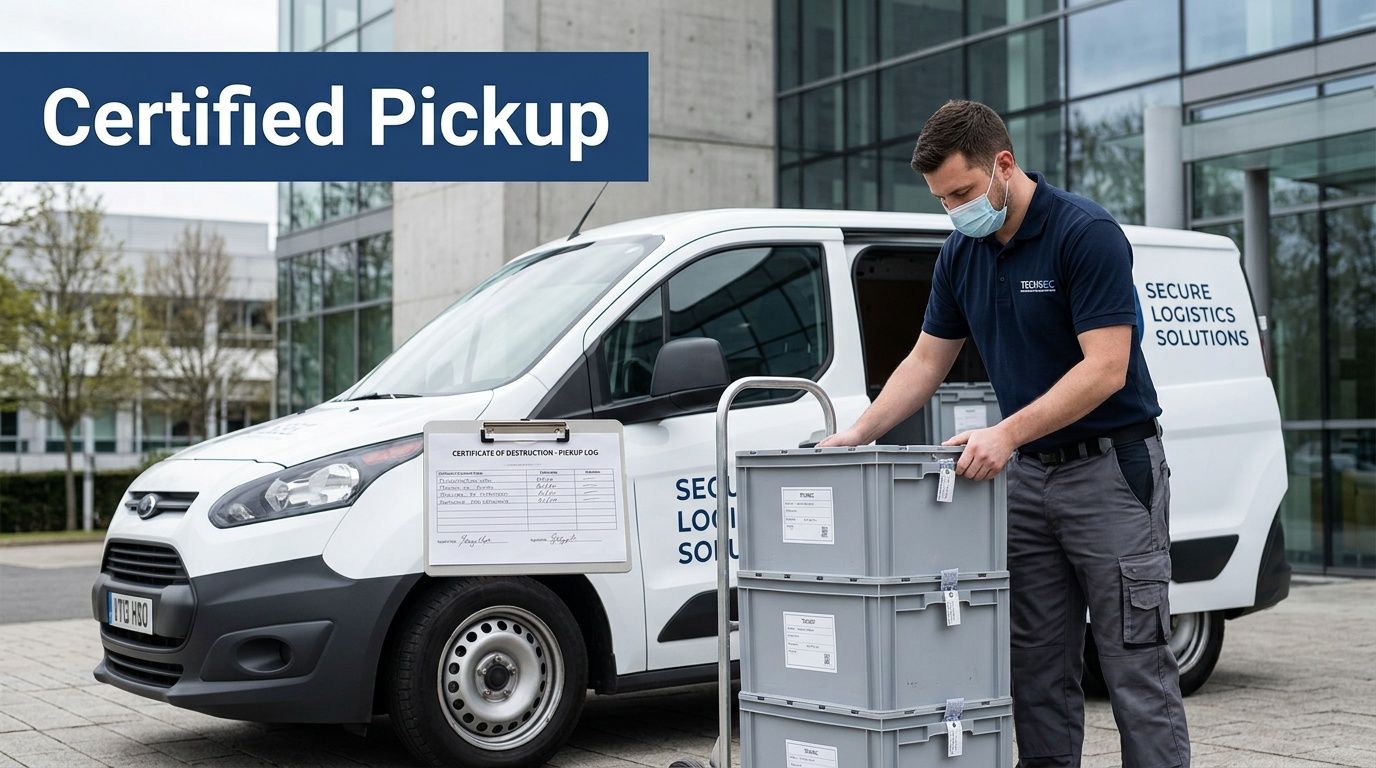
Forget the logistical headache of tasking your employees with runs to a retail store. A true business-to-business solution starts with on-site service tailored to your workflow. Green Atlanta offers free, scheduled pickups for any Atlanta business retiring 50 or more devices. Our professional logistics team handles everything, meaning your staff can stay focused on their actual jobs, not hauling old equipment across town.
Closing the Compliance and Security Loop
The biggest weakness of any retail recycling program is the massive gap it leaves in your security and compliance chain-of-custody. A professional ITAD service is built from the ground up to close that gap, turning a major business risk into a documented, responsible process. When a company goes through a major change like a move or closure, properly handling e-waste is a critical part of any professional office decommissioning plan.
We tackle the critical issues of data security and legal liability with a proven, layered process:
- Certified Data Destruction: We use government-approved software that meets both DoD 5220.22-M and NIST 800-88 standards. This process overwrites every bit of data on your hard drives, making sensitive information completely unrecoverable.
- Physical Hard Drive Shredding: For drives that are dead on arrival or require the ultimate security guarantee, we offer physical destruction. The media is shredded into tiny, unrecognizable fragments, giving you absolute certainty the data is gone for good.
This dual-service model gives you the flexibility to choose the right level of security for different assets.
The most important outcome is the official transfer of liability. When we take possession of your assets, you receive a Certificate of Destruction for every single serialized device. This auditable document is your proof of compliance, shielding your business from the legal and financial fallout of a potential data breach.
A Strategic Partnership, Not Just a Pickup Service
Choosing a dedicated ITAD provider isn't just about getting rid of old equipment. It’s about finding a partner who understands how to protect your organization and align with your operational goals. While you might recycle laptops at Best Buy for one or two personal devices, a corporate solution has to deliver much more.
Our "Recycle for a Cause" partnership approach means every step—from the initial pickup to the final documentation—is handled with precision. We collaborate with local schools, VFW chapters, and the city to create a greener Atlanta, turning your company’s e-waste into a tool for community engagement.
If you’re ready for a dedicated partner, see how our laptop recycling company can build a custom plan for your business. It’s time to move past the limits of retail programs and adopt a solution built for the real demands of modern business.
Turn Your E-Waste Into a Powerful ESG Statement
Getting rid of old IT equipment is usually just another task on a long checklist. But what if that routine chore could do more than just clear out a storage closet? What if your old tech could house a veteran and grow a forest?
Properly handling e-waste isn't just about data security and compliance anymore. It's a massive opportunity to strengthen your company's Environmental, Social, and Governance (ESG) credentials. That stack of old laptops can become a genuine highlight in your next sustainability report.
This is where your choice of recycler really matters. Dropping off laptops at a big box store is one thing, but partnering with a cause-driven service turns a simple disposal task into a celebrated achievement for your brand.

A Mission That Builds Your Story
We built our "Recycling That Restores Lives and Landscapes" program around a powerful idea: every device you recycle with us has a direct, positive impact. We partner with local Atlanta nonprofits to ensure your company's old tech directly funds vital veteran support programs and contributes to USDA-managed reforestation projects.
It's not a vague promise. It's a tangible outcome you can actually talk about. Imagine being able to share this with your team, your customers, and your stakeholders:
“This year’s old tech helped house five veterans and funded the planting of 500 trees in a protected forest.”
This is the kind of direct, human connection that turns a recycling program into a powerful story. It gives your marketing and HR teams something real to share in reports, on social media, or in employee newsletters. You're not just meeting a requirement; you're contributing to causes that people genuinely care about.
Documentation That Proves Your Impact
To make that story stick, you need proof. We provide real, tangible documentation that goes beyond the standard Certificates of Destruction for your compliance files. These are assets you can use to showcase your social and environmental contributions.
- Veteran Support Impact Reports: These reports detail exactly how your company's recycling efforts contributed to veteran aid, giving you powerful content for CSR reporting.
- Plant-A-Tree Certificates: You get a certificate quantifying your environmental impact, showing the exact number of trees planted on your company’s behalf.
- “Recycled with Purpose” Eco-Badge: We provide a digital badge for your website and sustainability reports, signaling your commitment to a circular economy with a social mission.
These documents aren't just feel-good extras; they are strategic tools. They give you the hard data and the emotional narrative needed to make your ESG profile shine. Suddenly, your e-waste isn't a liability—it's a documented win for your community and the planet.
To see more on how this works and the full benefits of e-waste recycling, our detailed guide offers even more insight.
By partnering with a mission-driven recycler, you're not just disposing of old laptops. You’re making a clear statement about your company's values, turning a routine task into a source of pride and a measurable ESG victory.
Your Top Questions About Corporate Laptop Recycling, Answered
If you're a decision-maker in Atlanta, you've probably got a few lingering questions about how to handle your company's old laptops. It's tempting to think about the convenience of a big-box store like Best Buy, but for a business, that's rarely the full picture.
Let's dig into the common questions we hear from companies just like yours. Understanding the differences between a retail drop-off and a dedicated corporate program is key to making the right choice for your business's security and reputation.
What Kind of Documentation Will We Receive for Compliance Audits?
This is where the difference between a consumer-grade service and a professional one really shows. When you partner with us, you don't just get a receipt—you get a full-blown documentation package designed for audit-readiness.
This includes a serialized inventory of every single asset, official Certificates of Data Destruction that verify the erasure process meets standards like DoD 5220.22-M, and Certificates of Recycling. We also provide detailed Veteran Support Impact Reports and Plant-A-Tree Certificates, giving you concrete data for your annual ESG and CSR reporting.
Is Your Data Destruction Process HIPAA Compliant?
Yes, absolutely. Our entire process is built from the ground up to meet and surpass the strict data security requirements of regulations like HIPAA, SOX, and GDPR.
It starts with a documented chain of custody from the moment we arrive at your facility. We then use data sanitization methods compliant with NIST 800-88 and DoD standards, ensuring any sensitive corporate or patient data is destroyed forever. This isn't just about wiping files; it's about protecting you from the massive financial and reputational risks of a data breach.
Security, compliance, and scale—those are the three pillars that separate a true B2B partner from a retail program. Best Buy is a great option for an individual with a personal laptop. But our solution is built for business, providing scheduled on-site pickups, a legally defensible chain of custody, and certified proof of data destruction for your records. Plus, we have the logistics to handle hundreds of devices at once.
More than that, we help turn a compliance headache into a genuine ESG win. By recycling with us, you get a measurable return for your brand’s commitment to social responsibility, all backed by documentation.
My Company Has Fewer Than 50 Laptops. Can You Still Help?
Of course. While our free pickup service is designed for corporate recycling drives of 50 or more devices, we pride ourselves on offering flexible and cost-effective options for businesses of all sizes.
We frequently co-host recycling drives with local Atlanta nonprofits, VFW chapters, and environmental groups, or can provide a custom quote for your specific needs. The goal is to ensure that even small and medium-sized Atlanta businesses can access enterprise-grade security and recycling, regardless of volume. You shouldn't have to wait for a massive IT refresh to handle your e-waste responsibly.
Ready to turn your e-waste into a secure, compliant, and impactful part of your ESG strategy? Contact Green Atlanta today to schedule your corporate pickup and receive your documentation for veteran support and reforestation. Visit us at https://www.greenatlanta.com.