
Computer Recycling Services for Companies Atlanta GA

Most Atlanta companies don’t decide to look for a recycler because sustainability suddenly became a morning priority. They do it because an IT closet is full, a lease is ending, a server refresh is underway, or someone finally asks what’s sitting on those old hard drives.
That moment matters more than it seems. Retired desktops, laptops, servers, monitors, network gear, and storage media are not just clutter. They hold regulated data, occupy expensive square footage, and create a disposal problem that can turn into a compliance problem fast. For healthcare systems, schools, government offices, and growing businesses across the metro area, the practical question isn’t whether to recycle. It’s how to do it in a way that protects data, keeps operations moving, and creates a documented outcome you can stand behind.
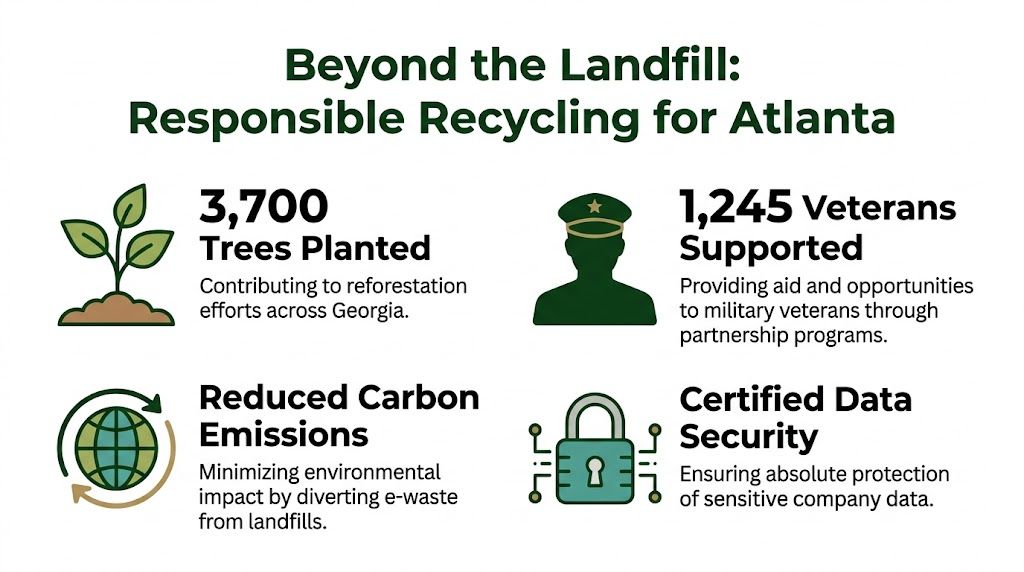
In Atlanta, that decision can also do more than clear space. Done well, computer recycling becomes part of a company’s environmental program, a cleaner closeout process for IT assets, and a visible community contribution tied to veteran support and tree planting.
Your Atlanta Business Has an E-Waste Problem and an Opportunity
The common Atlanta office scene is familiar. One room holds retired laptops from the last hardware refresh. A few printers are stacked near broken monitors. There’s a box of loose hard drives nobody wants to touch because nobody wants to be responsible for what’s on them.
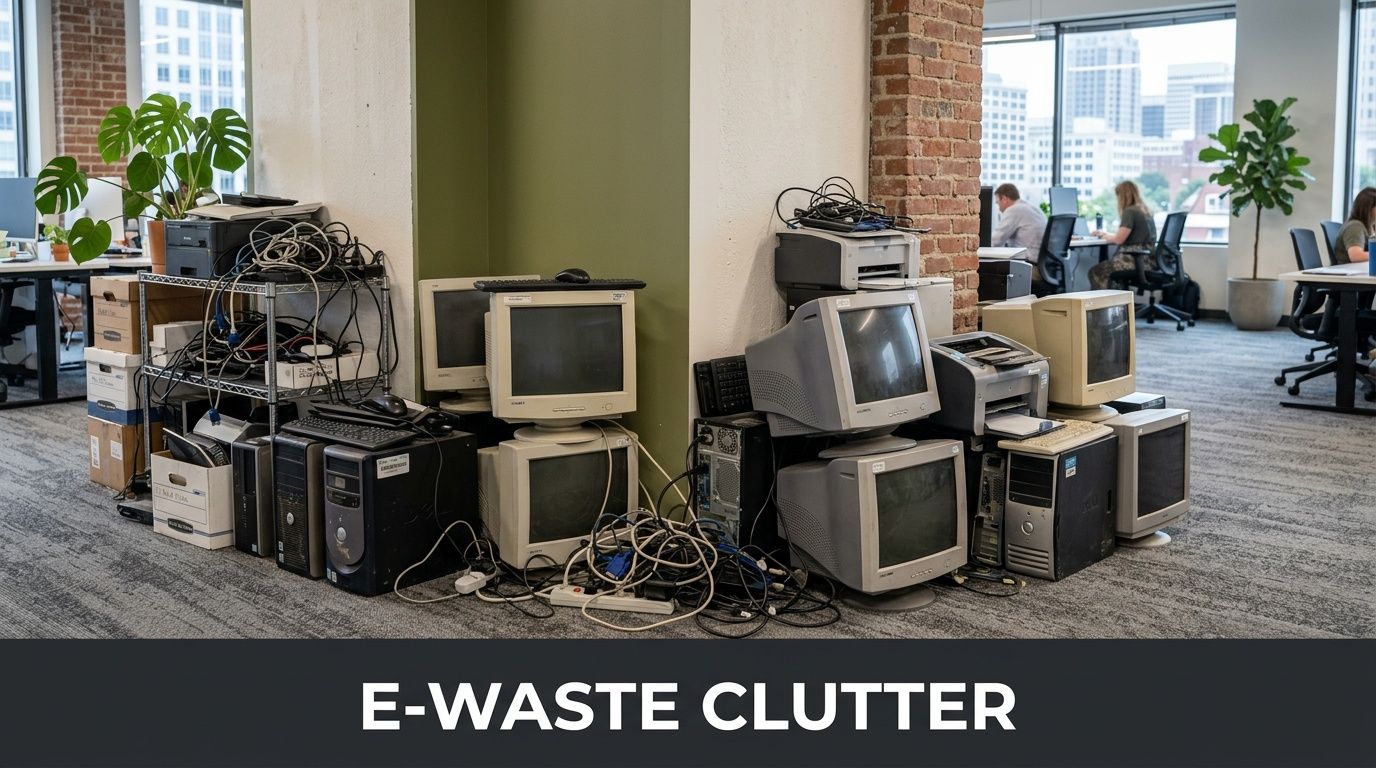
For many companies, that pile sits longer than it should. The reason usually isn’t neglect. It’s uncertainty. Facilities teams don’t want to move regulated devices without a process. IT wants proof of destruction. Finance wants to know whether there are fees, resale credits, or both. Leadership wants the issue gone without creating another one.
That’s why Computer Recycling Services for Companies Atlanta GA is no longer a side task. It’s part of responsible asset management. A qualified partner can pick up equipment, document chain of custody, handle secure data destruction, and turn a disposal headache into a cleaner operating environment.
What changes when you treat e-waste like a business process
When companies formalize the work, three things usually improve at once:
- Storage pressure drops: Old equipment stops consuming office, warehouse, and back-room space.
- Risk gets contained: Hard drives and other media move through a defined destruction workflow instead of sitting idle.
- The outcome becomes usable: Documentation supports audits, internal controls, and sustainability reporting.
Teams that manage this proactively also gain a better rhythm for future refresh cycles. A clear process for pickups, accepted items, and reporting makes the next decommission much easier than the first.
For Atlanta organizations with recurring surplus equipment, a dedicated business electronics recycling program in Atlanta usually works better than ad hoc drop-offs or piecemeal hauling. It gives IT, compliance, and operations one shared path instead of three disconnected ones.
Old tech is rarely just old tech. In a business setting, it’s inventory, liability, and opportunity sitting in the same pile.
Beyond the Landfill Why Responsible Recycling is Non-Negotiable
Improper disposal creates three kinds of damage. Data exposure. Compliance trouble. Reputation loss. Any one of them is enough to justify a formal recycling program.
The scale of the waste stream alone shows why informal disposal stopped being acceptable years ago. In 2007, the U.S. Environmental Protection Agency reported that over 63 million computers were discarded annually nationwide, highlighting the growth of e-waste and the need for formal IT asset disposition services in markets such as Atlanta, according to EPA-referenced Atlanta computer recycling data.
Data security is the first line item
A retired device is still a data-bearing asset until it has been wiped or destroyed. That matters for any company, but especially for healthcare providers, financial offices, legal teams, schools, and public agencies. If drives leave your control without documented sanitization, the risk doesn’t disappear because the equipment is old.
What doesn’t work is casual handling. A quick delete, a factory reset, or handing equipment to a general junk hauler doesn’t create a defensible record. Auditors and internal security teams look for a real process, not assumptions.
Compliance is operational, not theoretical
Atlanta businesses often think of recycling as an environmental issue first. In practice, it’s also a records, privacy, and asset control issue. A compliant workflow includes pickup procedures, serialized tracking where needed, data destruction records, and clear handling for non-working devices.
For internal stakeholders, the useful question is simple: can your recycler show what happened to each class of asset, especially storage media? If the answer is vague, the vendor isn’t reducing risk. They’re shifting it back to you.
Brand reputation follows disposal behavior
Clients, employees, students, donors, and boards increasingly expect consistency. A company can’t talk about sustainability and then treat e-waste like bulk trash. The same goes for social responsibility claims that aren’t backed by traceable practices.
That’s why many firms now want a recycling partner that supports both compliance and a stronger environmental story. If you’re evaluating broader waste reduction practices beyond electronics, it’s worth reviewing other eco-friendly disposal and recycling options that show how local diversion programs can be structured around responsible handling instead of landfill convenience.
The better alternative is documented diversion
Responsible recycling means more than “we hauled it away.” It means assets were received, sorted, sanitized, processed for reuse where appropriate, and recycled through compliant channels when reuse wasn’t possible. It also means your business can explain that process internally and externally.
A practical environmental baseline is understanding the broader impact of electronic waste on landfills and communities. Once teams see e-waste as both a risk stream and a recoverable material stream, they stop treating it like back-room clutter and start treating it like managed infrastructure.
If a vendor can’t explain chain of custody in plain language, don’t let them touch your drives.
Deconstructing the Process What to Expect from a Recycling Service
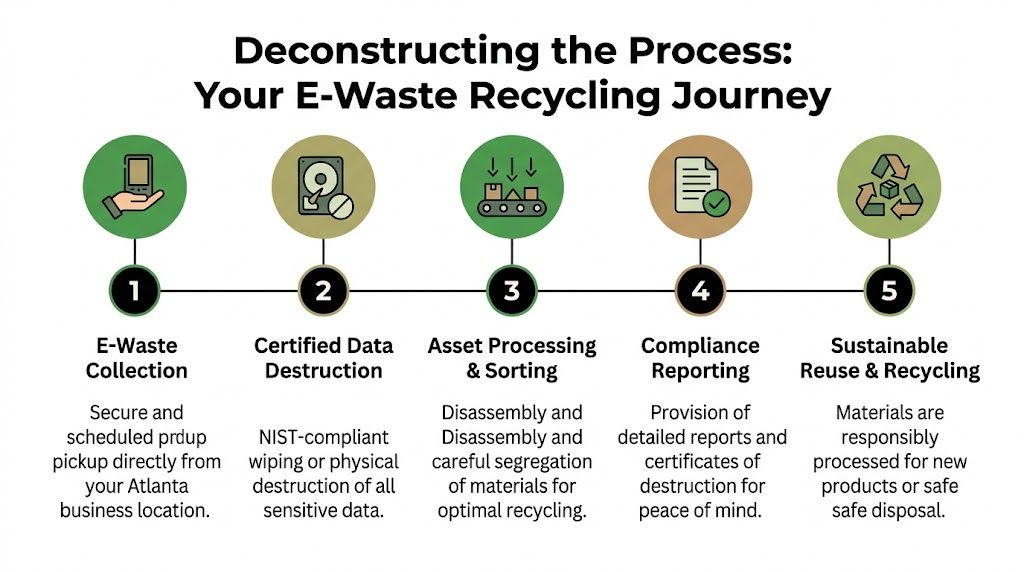
A professional recycler shouldn’t make you guess what happens after pickup. The process should be clear before the first pallet moves. For Atlanta companies, that usually breaks into three parts: data destruction, logistics, and downstream asset handling.
Secure data destruction comes first
If a device stores data, it needs a documented decision. Wipe it, shred it, or isolate it until one of those happens. In Atlanta computer recycling services for companies, DoD 5220.22-M 3-Pass data sanitization remains a common standard. It overwrites hard drives three times and is described as 99.9%+ effective against forensic tools in Atlanta computer recycling guidance on secure wiping.
That matters because not every device should be handled the same way. Working drives may be eligible for secure wiping and remarketing. Failed drives, damaged media, or highly sensitive assets often need physical destruction instead.
What good vendors specify up front
- Wiping protocol: Ask what standard is used and how completion is verified.
- Shredding option: Confirm how non-functional or high-risk media is physically destroyed.
- Certificates: Make sure you’ll receive destruction records, not just a verbal assurance.
- Exceptions handling: Ask how locked, failed, or unusual devices are separated and documented.
Logistics should reduce work, not create it
The second test is operational. A recycler should be able to handle office pickups, loading dock transfers, data center removals, and multi-floor clear-outs without turning your team into movers. That includes packing, labeling, secure transport, and sensible scheduling.
Many projects succeed or stall. The technical recycling side may be fine, but if pickup windows are vague or the crew can’t handle real-world site conditions, your internal team loses time coordinating around them.
Practical rule: Ask who is doing the physical removal, what they need from your site, and whether they can work around business hours, elevators, loading docks, and security protocols.
Decommissioning is more than pickup
For larger projects, especially data centers, hospitals, campuses, and office consolidations, decommissioning requires planning. Systems may need to be powered down in sequence. Equipment may need to be unracked, bundled, staged, and inventoried before it can leave the building.
That’s where a dedicated IT asset disposition service in Atlanta becomes useful. It connects the physical removal of assets with reporting, downstream processing, and compliance documentation.
Atlanta Green Recycling is one example of a provider that offers pickup, DoD-standard wiping, hard drive destruction, bulk equipment removal, and data center decommissioning support for business clients. Those are the service categories to look for, regardless of which vendor you evaluate.
What happens after the truck leaves
A mature recycler doesn’t stop at collection. Assets are typically sorted into reuse, refurbishment, parts recovery, or material recycling streams. Reusable equipment may be tested and processed for secondary use. End-of-life equipment is dismantled into commodity streams such as metals and plastics.
For the client, the important deliverables are usually these:
- Confirmation of pickup and receipt
- Data destruction records
- Asset tracking or serialized reporting when required
- Summary of what was reused, recycled, or otherwise processed
What doesn’t work is a vague all-in promise with no paper trail. If your business can’t prove what happened to retired equipment, then the process was incomplete.
Turn E-Waste into an ESG Win for Your Atlanta Company
Most companies already understand the compliance side of electronics recycling. The bigger missed opportunity is reporting. Disposal gets treated like a maintenance function when it can also support sustainability disclosures, internal impact reporting, and employee-facing CSR communication.
That gap is real. An underserved angle in Atlanta computer recycling services is integrating recycling into ESG and CSR reporting. Providers often mention compliance but rarely offer quantifiable metrics or customizable reporting for disclosure frameworks. That matters because 78% of S&P 500 companies are described as reporting on e-waste in their 2026 CSR reports in Beyond Surplus commentary on ESG reporting gaps in e-waste services.

Documentation is what makes recycling reportable
If your recycler only gives you a pickup confirmation, your sustainability team can’t do much with it. If they provide structured records, the same event becomes useful for audits, board updates, annual reports, and procurement reviews.
The most useful outputs tend to include:
- Certificates of destruction: These support privacy, legal, and records-management needs.
- Asset summaries: Helpful for internal controls and refresh-cycle accountability.
- Diversion documentation: Useful for sustainability narratives and waste reduction tracking.
- Impact-specific records: These can support employee engagement and CSR storytelling.
A good starting point is understanding the broader business benefits of e-waste recycling, then deciding which documents your ESG, compliance, and procurement teams need.
Why cause-based reporting changes the conversation
Atlanta companies can separate basic disposal from visible impact. A standard recycler may help you remove equipment. A mission-aligned recycler can help you document how that event also supported community outcomes.
That’s useful for several reasons. It gives operations teams a better story to bring to leadership. It gives HR and communications something concrete to share. It gives procurement a stronger rationale for choosing a vendor whose work aligns with company values, not just disposal needs.
Practical examples companies can use internally
| Reporting need | Useful recycling output | Why it helps |
|---|---|---|
| Audit trail | Certificate of destruction | Supports regulated data handling |
| Sustainability summary | Diversion and processing report | Helps document waste reduction activity |
| Employee communications | Cause-based impact certificate | Makes the outcome tangible and local |
| Supplier responsibility review | Clear chain-of-custody documentation | Strengthens vendor governance |
The strongest ESG programs make impact visible
A company recycling drive is easy to ignore if employees never see the outcome. It becomes memorable when the recycler issues a Plant-A-Tree certificate, a Veteran Support Impact Report, or a digital badge such as Recycled with Purpose that a company can display in a sustainability update or partner page.
That kind of visibility also helps with retention and culture. People respond when a hardware refresh doesn’t end with “equipment removed,” but with “old assets were handled securely and contributed to work that restores natural areas and supports veterans.”
Recycling becomes an ESG asset when the documentation is specific enough for compliance teams and human enough for everyone else.
Recycling That Restores Lives and Landscapes in Georgia
The most compelling recycling programs don’t end at compliance. They connect retired equipment to something people can feel. That matters in Atlanta because companies want practical vendors, but they also want partners whose work reflects the city’s sense of community, service, and stewardship.

A strong message for that is simple: your old tech can house a veteran and grow a forest. It works because it translates an abstract activity into two clear outcomes. The box of laptops in a storage room is no longer just surplus gear. It becomes a source of local social value and environmental renewal.
Why this model resonates with Atlanta companies
Plenty of organizations already run volunteer days, donation drives, and sustainability campaigns. Electronics recycling fits naturally into that rhythm because every office accumulates devices over time. Instead of treating those devices as a back-end waste issue, companies can use them as the center of a mission-driven campaign.
That’s especially effective around moments that already carry public meaning:
- Veterans Day: Pair corporate clean-outs with veteran support messaging.
- Earth Day: Tie office recycling to reforestation and landfill diversion.
- Arbor Day: Link technology turnover to tree planting commitments.
- Office moves and refresh cycles: Turn operational change into a visible values story.
The story employees remember
People don’t usually remember who hauled away old monitors. They do remember a campaign with a clear cause. They remember the internal email that said obsolete technology would be handled securely and would also contribute to veteran aid and environmental restoration. They remember the follow-up certificate, the photos, the volunteer tie-in, or the nonprofit partner mentioned by name.
That’s why cause-based recycling works so well for business engagement. It gives facilities, IT, HR, and sustainability teams a shared language. One project satisfies operational needs while supporting community-centered goals.
What makes the story credible
- Specific local partnerships: Veteran groups, shelters, VFW chapters, schools, and environmental nonprofits make the impact feel grounded.
- Visible follow-through: Certificates, impact updates, and seasonal campaigns keep the mission from sounding generic.
- Operational integrity: The cause only strengthens the brand if the underlying recycling process is secure and documented.
A lot of companies try to bolt purpose onto a vendor relationship after the fact. The stronger approach is to choose a recycling model where purpose is already built into the workflow. Then the mission doesn’t compete with compliance. It rides alongside it.
Checklist for Choosing Your Atlanta Computer Recycling Partner
Choosing a recycler shouldn’t come down to who answers the phone first. You’re selecting a vendor that will handle data-bearing devices, move assets through your facility, and represent your company’s environmental judgment. That deserves a tighter review.
One useful baseline is cost structure. Certified computer recycling services in Atlanta often process a majority of standard commercial IT equipment free of charge because recovered material value offsets processing costs, according to Georgia computer recycling service comparisons. That’s good news, but it doesn’t mean every quote is equal. The details still matter.
Start with capability, not marketing
A polished website doesn’t tell you whether a vendor can handle a hospital loading dock, a school district equipment room, or a downtown office tower with strict access rules. Ask operational questions early.
You want to know whether the vendor can pick up from your location, handle your equipment types, provide wiping or shredding, and document the outcome in a way your internal teams can use.
Vendor Selection Checklist for Atlanta Computer Recycling
| Evaluation Criteria | What to Look For | Why It Matters |
|---|---|---|
| Certifications and standards | Ask whether the vendor works within recognized recycling and data-destruction frameworks | Reduces compliance uncertainty |
| Data destruction methods | Confirm whether drives are wiped, shredded, or both, and how exceptions are handled | Protects sensitive business data |
| Documentation | Request sample certificates of destruction and asset reports | Shows whether the process is audit-friendly |
| Pickup logistics | Ask about loading dock support, packing, stairs, elevators, and site coordination | Prevents disruption on service day |
| Accepted equipment | Verify what they take, including servers, desktops, laptops, networking gear, and monitors | Avoids last-minute exclusions |
| Fee structure | Ask what is free, what may carry charges, and which items are considered special handling | Prevents billing surprises |
| Decommissioning support | Check whether they handle unracking, disconnects, and staged removals | Important for server rooms and data centers |
| ESG and impact reporting | Ask whether they provide environmental summaries or cause-based certificates | Makes the work usable for CSR and communications |
| Service area coverage | Confirm metro Atlanta coverage and any constraints for satellite locations | Helps multi-site organizations plan efficiently |
| Mission alignment | Evaluate whether the vendor’s community impact fits your company values | Strengthens the partnership beyond disposal |
Questions worth asking on the first call
What happens to drives that can’t be wiped?
You want a direct answer, not a broad promise.Can you provide sample documentation before pickup?
A serious vendor can usually show the format of what you’ll receive.Do you support multi-site pickups or phased projects?
Important for school systems, health networks, and distributed offices.How do you handle special items?
CRTs, damaged equipment, and unusual media often require separate handling.
A broader list of Atlanta IT asset disposition companies and service considerations can help procurement and IT teams compare vendors against the same criteria. That’s especially useful when multiple departments are involved in the decision.
The right recycler makes your team’s work easier before pickup, during pickup, and after pickup. If they only talk about collection, keep looking.
Schedule Your Pickup and Start Making an Impact Today
If your company has a room full of retired technology, waiting doesn’t improve anything. It usually makes inventory harder to track, raises the odds of mishandled storage media, and keeps useful space tied up with obsolete equipment.
A well-run recycling program solves several problems at once. It removes clutter. It gives IT and compliance a documented process for data-bearing devices. It creates an orderly path for office moves, refresh cycles, and decommissions. It also gives your company a cleaner sustainability story, especially when recycling is tied to visible community outcomes like veteran support and tree planting.
For Atlanta businesses, the practical next step is simple. Build a pickup around the equipment you already need to move. Identify which items contain data. Decide what documentation your IT, compliance, procurement, and sustainability teams want back. Then schedule service with a recycler that can handle the logistics and prove the result.
The best programs are easy to start. They don’t require your team to become e-waste specialists first. They require a clear list of assets, a pickup plan, and a vendor with the right workflow.
Frequently Asked Questions About Corporate Recycling
What kinds of equipment are usually accepted?
Most corporate recycling programs accept common business IT equipment such as desktops, laptops, servers, monitors, networking gear, peripherals, and storage devices. Acceptance can vary for specialty items, damaged equipment, and older display types, so it’s smart to confirm your inventory list before pickup.
Is there a minimum for business pickup?
Some Atlanta business recyclers structure pickup around bulk volumes, especially for office cleanouts and refresh cycles. If you have a smaller batch, ask whether drop-off, aggregation, or a scheduled future pickup makes more sense.
What happens to devices that still contain data?
Data-bearing devices should go through either secure wiping or physical destruction, depending on their condition and your internal requirements. If a drive can’t be wiped or shouldn’t be reused, shredding is usually the safer path.
How should we prepare for pickup day?
Start with an equipment list. Separate devices that contain storage media from simple peripherals. Mark any equipment that needs special handling, and make sure your site contact can coordinate access, loading, and any building rules.
Can recycling support our CSR or ESG reporting?
Yes, if the recycler provides useful documentation. Certificates of destruction, processing summaries, and impact-oriented records make the outcome much easier to include in internal updates and sustainability reporting.
If your business is ready to clear out obsolete IT equipment without losing control of security, compliance, or community impact, connect with Atlanta Green Recycling. A structured pickup can turn surplus tech into documented recycling, stronger ESG reporting support, and visible local good.