
Environmental Impact of Electronic Waste: Why It Matters

The environmental impact of electronic waste isn't just a talking point; it's a full-blown global crisis. Every year, we discard millions of tons of electronics packed with toxic materials, and the consequences are piling up fast.
These old devices don't just sit harmlessly in a landfill. They leach hazardous stuff like lead and mercury straight into our soil and water. At the same time, we're throwing away valuable, non-renewable metals, which puts even more strain on our planet's finite resources.
It’s no exaggeration to say this makes e-waste the fastest-growing and one of the most hazardous waste streams on the planet.
The Growing Mountain of E-Waste
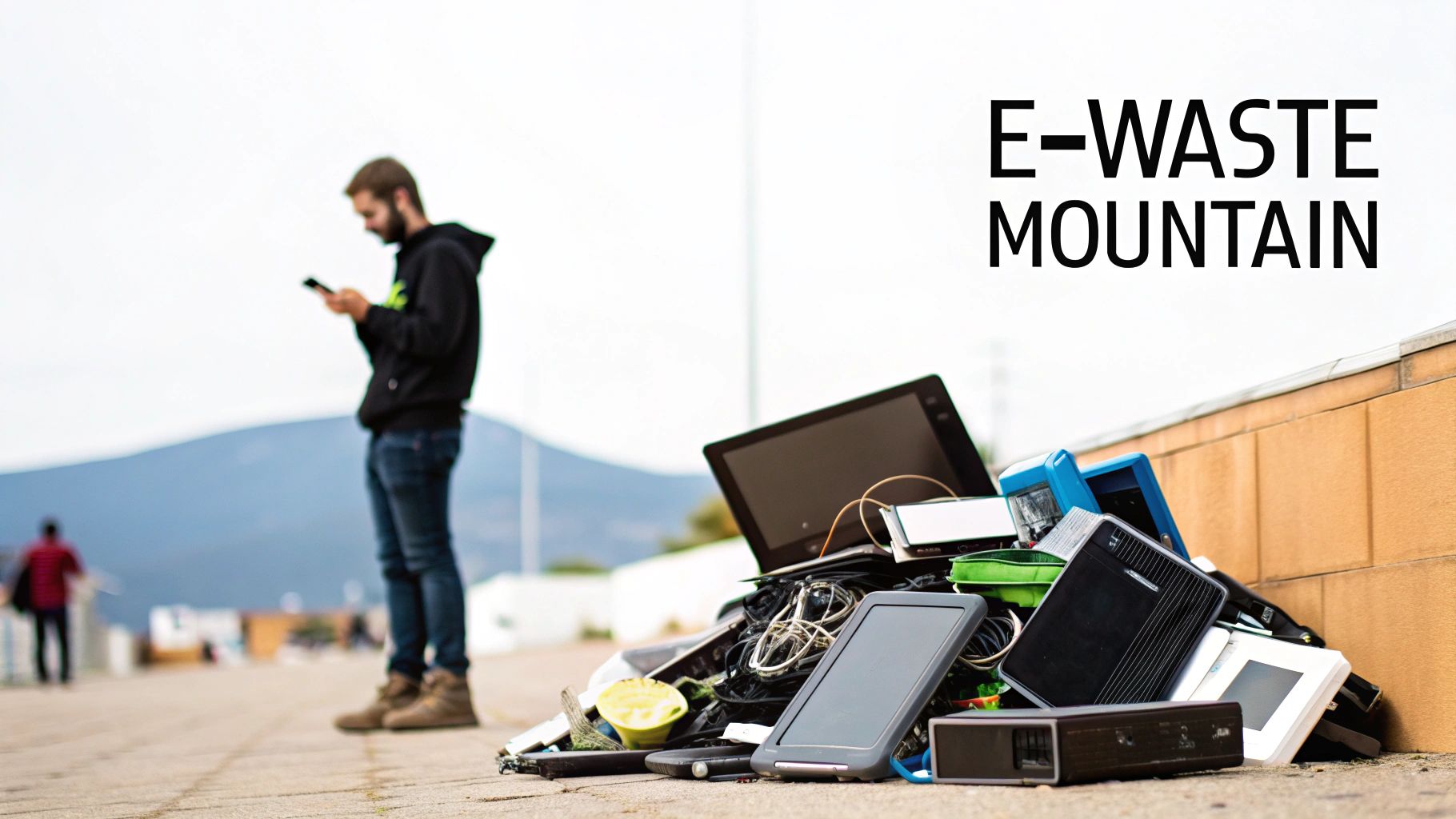
Picture a mountain of old gadgets that’s growing faster than any other kind of trash coming out of our homes. That’s the reality of electronic waste, or e-waste. Our constant hunger for the newest smartphones, laptops, and TVs—fueled by lightning-fast innovation cycles—has created a disposal problem we've never seen before.
Every year, that digital mountain gets bigger, and the environmental risks climb right along with it. The sheer volume is staggering and, frankly, it's accelerating at a scary pace.
A Global Issue With Local Roots
It’s tough to wrap your head around the true scale of the e-waste crisis. The world generated a record-breaking 62 million tonnes of e-waste in 2022 alone. To put that in perspective, that’s up from about 34 million tonnes in 2010—an 82% increase in just over a decade.
And the trend isn't slowing down. Projections show we're on track to hit 82 million tonnes annually by 2030.
This isn't some far-off problem; it starts right here in our own homes and offices. Every old computer, forgotten tablet, or broken monitor in Atlanta adds to this global challenge. When we just toss these devices in the bin, they don’t magically disappear. Instead, they start a toxic journey that can poison the world around us.
The core of the e-waste problem is a simple, dangerous disconnect: we treat highly complex, resource-intensive products as if they're disposable. This mindset completely ignores both the toxic materials inside and the hidden value we're throwing away.
Understanding the Core Threats
The dangers of e-waste really boil down to two main problems: toxic pollution and the depletion of natural resources. These two threats are tangled together, creating a vicious cycle of environmental damage. To help clarify, here's a look at the major threats we're facing.
Key Environmental Threats from E-Waste
This table breaks down the primary dangers that come from tossing our old electronics.
| Threat Category | Description of Impact |
|---|---|
| Toxic Pollution | Electronics are full of hazardous materials like lead, mercury, cadmium, and brominated flame retardants. When left in landfills, these toxins seep into the ground, contaminating soil and groundwater that can eventually find its way into our food supply. |
| Resource Depletion | Your old phone is also a tiny treasure chest, filled with valuable materials like gold, silver, copper, and platinum. Throwing it away means we lose these finite resources forever, forcing destructive mining operations to dig up more from the earth to keep up with demand. |
Recognizing these interconnected threats is the first step. By understanding the global e-waste crisis, we can start making smarter choices right here at home to reverse this damaging trend.
What's Really Inside Your Old Electronics
That old smartphone in your drawer or the dusty computer in the closet is more than just plastic and glass. It's a miniature cocktail of complex, and often hazardous, materials. On the surface, it seems harmless, but locked within its circuits is a collection of substances that can cause serious environmental damage if not handled correctly.
The sleek design of modern electronics masks a hidden danger. When these devices end up in a landfill, they begin to break down, and that's when the real trouble starts. They're built with a variety of heavy metals and chemicals, chosen for specific electronic properties, that can become potent environmental poisons.
A Cocktail of Hidden Toxins
Think of an old electronic device like a puzzle box. Each component, from the circuit board to the display screen, contains specific materials that are essential for it to work. The problem is, many of them are toxic.
Here are some of the most common culprits lurking inside your tech:
- Lead: Found in the solder on circuit boards and in the glass of older CRT monitors, lead is a powerful neurotoxin. It can cause severe damage to the nervous system, kidneys, and reproductive systems of both humans and wildlife.
- Mercury: This toxic metal is hiding in LCD screens, monitors, and various switches. Even tiny amounts of mercury can contaminate water sources, where it builds up in fish and works its way up the food chain.
- Cadmium: Used in rechargeable batteries and certain semiconductors, cadmium is a known carcinogen. It can accumulate in the soil, harming microorganisms and poisoning the crops we eat.
- Brominated Flame Retardants (BFRs): These chemicals are added to plastic casings and circuit boards to reduce fire risk. Unfortunately, they are persistent pollutants that don't break down easily and can disrupt hormonal systems in animals.
This hazardous mix is what makes the environmental impact of electronic waste such a pressing issue. In 2022, global e-waste contained a massive amount of hazardous substances that can leach into soil, water, and air, posing huge risks. This is why specialized handling is crucial, as you can see in the UN's e-waste analysis at ewastemonitor.info.
From Landfill to Food Chain
So, how exactly do these toxins get from a discarded laptop into our environment? It starts when rainwater trickles through a landfill. This water dissolves the chemicals and heavy metals from the e-waste, creating a toxic soup known as leachate.
This toxic leachate is the primary vehicle for contamination. It seeps deep into the ground, poisoning the soil and contaminating underground aquifers that often supply our drinking water and irrigate farmland.
Once in the water, the journey doesn't stop. These pollutants are absorbed by plants and small organisms, starting a dangerous climb up the food chain. A small fish might absorb mercury from the water, a larger fish eats it, and eventually, that contamination can end up on our dinner plates.
This process, known as biomagnification, concentrates these toxins at each level, making top predators—including humans—the most vulnerable. To understand more about this cycle, you can explore our detailed guide on what e-waste is and how it impacts health and the environment. This pathway from a simple discarded device to widespread environmental contamination is why just throwing electronics away is never a safe or responsible option.
How Local Actions Create Global Consequences
The environmental impact of electronic waste can feel like a distant problem, something happening "somewhere else." The reality is, the habits we form right here in cities like Atlanta have a direct and powerful ripple effect across the globe.
Our consumption patterns in developed nations are the primary engine fueling this crisis. It’s a direct line connecting our living rooms to contaminated landscapes thousands of miles away.
This connection starts with a simple metric: per capita e-waste generation. This is just a fancy way of saying the average amount of electronic junk each person produces. When you look at the data, a stark picture of global imbalance emerges. The responsibility for creating e-waste is not shared equally.
The Uneven Burden of E-Waste
High-income countries are, by far, the biggest culprits when it comes to generating the world's e-waste. While we enjoy the latest and greatest tech, the environmental cost is often outsourced. The numbers don't lie.
In 2022, Europe and the Americas were churning out e-waste at alarming rates—16.2 kg and 13.3 kg per person, respectively. Zoom in on a country like the UK, and the number jumps to about 23.9 kg per person. That adds up to a staggering 1.6 million tonnes of e-waste from the UK alone every single year.
What's worse, only about 54% of that is formally collected. This highlights a massive, dangerous gap in responsible disposal. All that overconsumption creates a mountain of discarded devices that have to go somewhere, and unfortunately, they often end up where they shouldn't.
The Hidden Journey of Discarded Devices
A huge portion of the West's e-waste embarks on a hidden, often illegal, journey. To sidestep the high costs and strict regulations of proper recycling at home, an alarming amount of e-waste is shipped to developing nations in Asia and Africa. It’s frequently mislabeled as "donations" or "second-hand goods" to get around international laws.
Once it arrives, it fuels an informal recycling economy. Lacking proper tools and safety gear, workers—often including children—are forced to use crude, dangerous methods to extract valuable materials. They might burn plastic casings to get to copper wires or use acid baths to dissolve circuit boards for tiny flecks of gold. This process releases a toxic plume of chemicals directly into the air, soil, and water.
This informal recycling process is a human and environmental catastrophe. It exposes entire communities to a daily cocktail of lead, mercury, and cadmium, leading to severe, long-term health problems and creating vast, contaminated "digital dumpsites."
This visualization shows just how easily toxins from a single discarded device can poison the environment and work their way up the food chain.
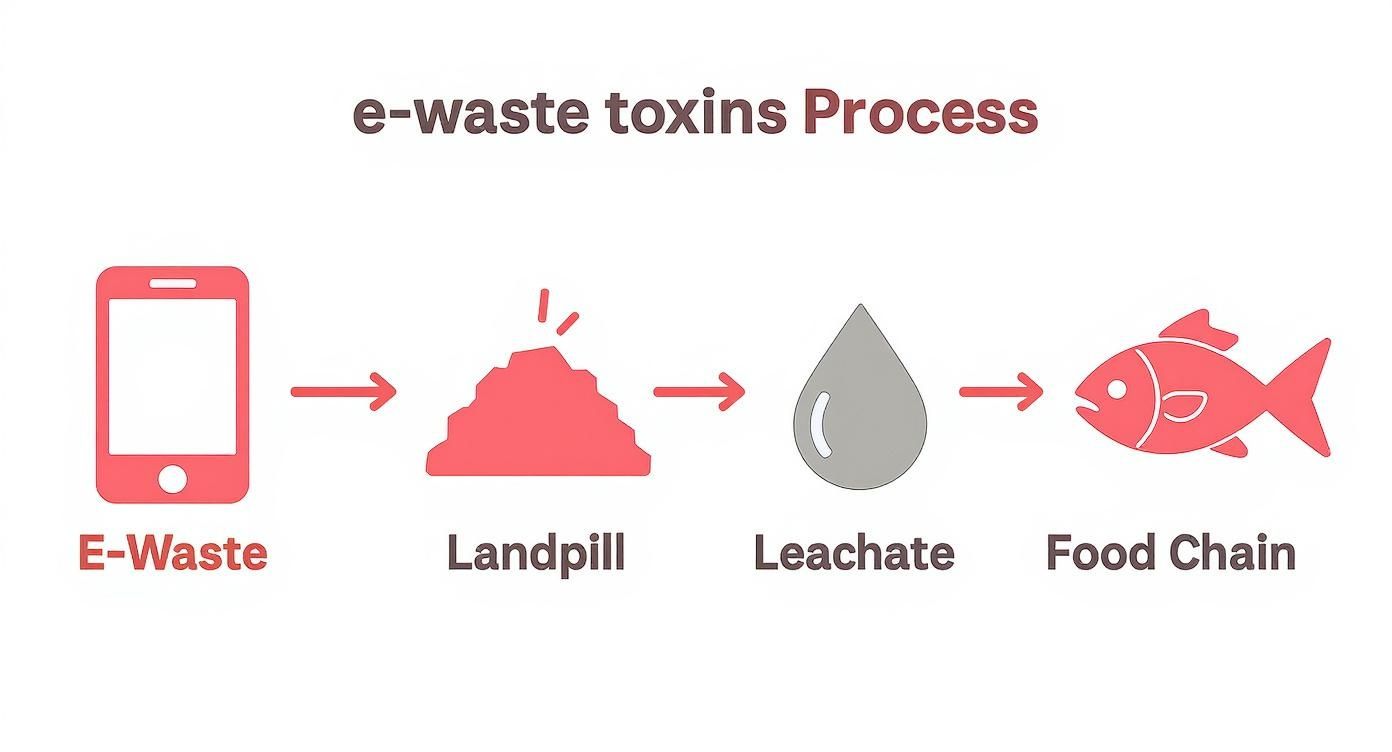
This flow is a critical pathway where hazardous materials leach from landfills into water sources. From there, they accumulate in wildlife and eventually land on our plates, posing a direct threat to human health.
This global chain reaction, stretching from a home in Atlanta to a village across the ocean, underscores the immense responsibility we carry. The choices we make here matter everywhere. Opting for certified, local solutions isn't just about cleaning up our own backyard; it's about breaking a destructive global cycle.
By ensuring our old devices are handled properly, we can stop this toxic export at its source. For anyone looking to take immediate action, exploring professional services for recycling in Atlanta is a critical first step.
Why E-Waste Is A Buried Treasure
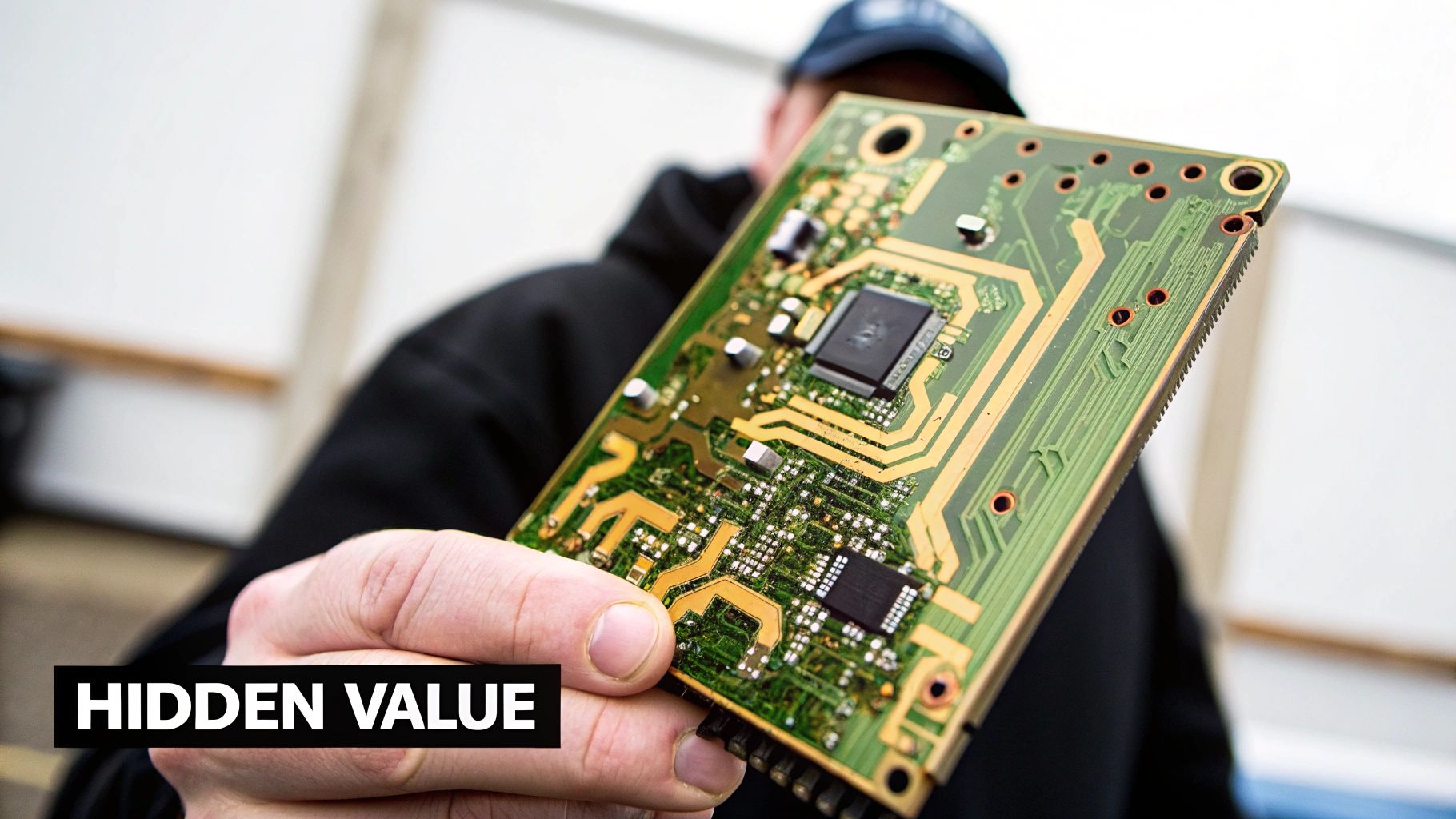
It’s time to stop thinking of e-waste as just "trash" and start seeing it for what it really is: a hidden goldmine. That old laptop or dusty smartphone isn't just a potential hazard—it's a dense repository of valuable resources we're literally throwing away. Changing our perspective reveals an incredible economic opportunity hiding in plain sight.
While we often talk about the environmental impact of electronic waste because of its toxic materials, there's another side to that coin. We're also losing the immense value of the materials locked inside these devices, metals that took a huge amount of energy and money to mine in the first place.
The Urban Mine Inside Your Devices
Every gadget you own is like a small, concentrated "urban mine." Instead of digging into the earth for new materials, we can recover high-value elements directly from the electronics we've already used. It’s not just better for the planet; it's also incredibly efficient.
Just think about what’s inside a typical phone or computer:
- Gold and Silver: Used in tiny amounts on circuit boards and connectors for their fantastic conductivity. It might not seem like much per device, but it adds up fast when you collect thousands of them.
- Copper: A workhorse metal for wiring and connectors, copper is one of the most common and easily recoverable materials in e-waste.
- Platinum and Palladium: Found in things like hard drives and specific circuit components, these rare metals are exceptionally valuable.
Globally, the e-waste stream holds billions of dollars worth of these materials. Incredibly, a ton of discarded cell phones can contain more gold than a ton of ore pulled from a traditional mine. Tossing these devices in a landfill is exactly like burying treasure.
By treating e-waste as a resource, we transform a linear "take-make-dispose" model into a circular one. This circular economy keeps valuable materials in circulation, reducing our dependence on destructive and costly new mining operations.
The Economic Case for a Circular Economy
The concept of a circular economy offers a powerful solution here. Rather than endlessly extracting raw materials from the ground, we can reclaim them from our old products. This shift has massive benefits, both economically and environmentally.
Mining is an unbelievably resource-intensive process. It demands enormous amounts of energy, water, and land, often causing deforestation, habitat loss, and major carbon emissions. Recycling metals we already have is far more efficient. For instance, recycling aluminum uses about 95% less energy than making it from raw bauxite ore.
This powerful economic argument shows that responsible recycling isn't just a nice thing to do for the planet—it's smart business. By recovering and reusing these materials, we can stabilize supply chains, create green jobs, and unlock significant financial value that would otherwise be lost forever. If you want to dive deeper into this, check out our guide on ways to repurpose e-waste and create new revenue streams.
Ultimately, this perspective helps us see that every recycled device is a small but important step toward a more sustainable and prosperous future.
Recycle for a Cause in Atlanta
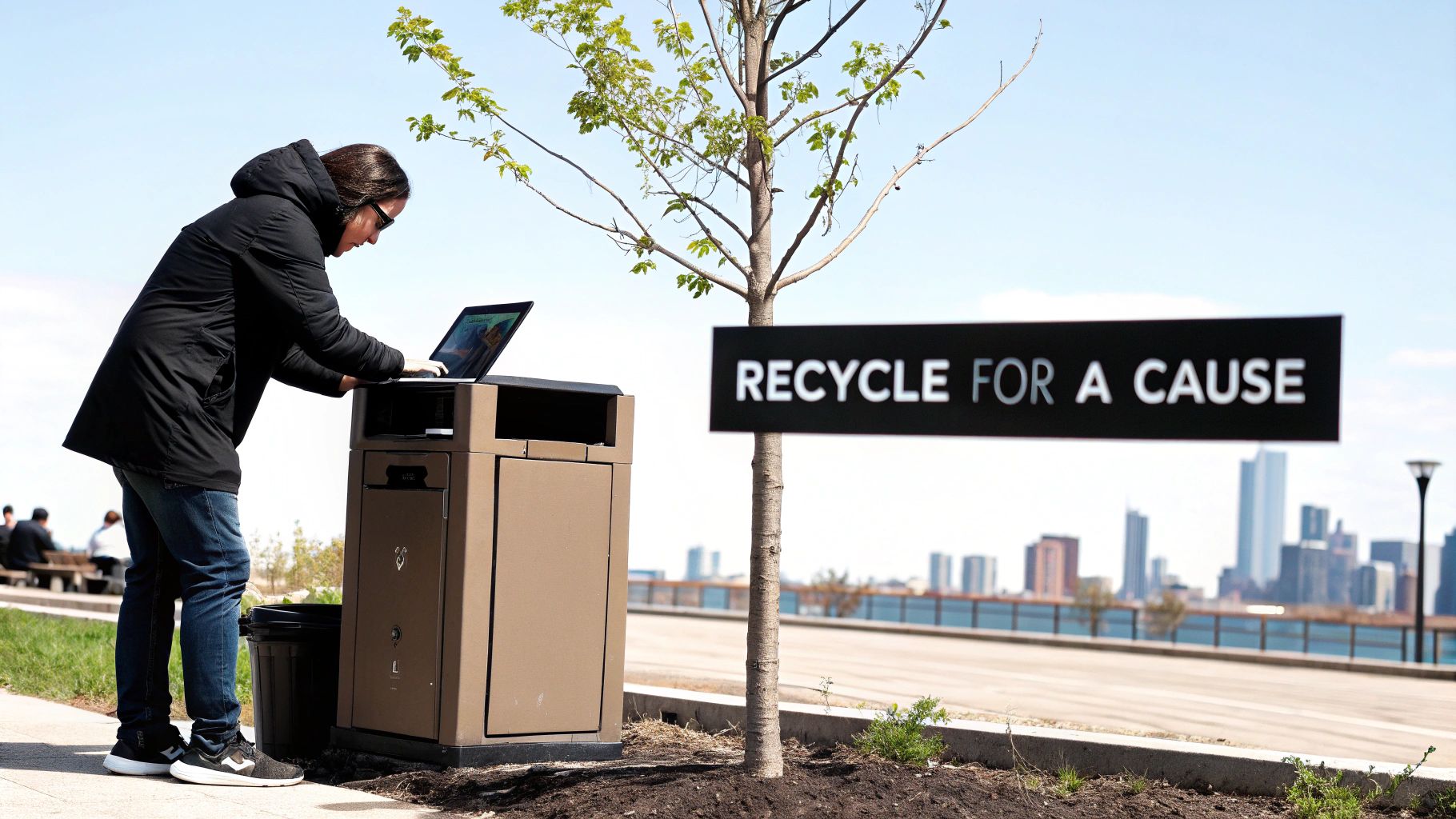
Knowing the environmental cost of e-waste is one thing. Turning that knowledge into real, tangible action is what truly counts. Right here in Atlanta, you have the chance to do so much more than just keep electronics out of the landfill—you can turn your old, unwanted tech into a powerful force for good.
We've built a unique model where responsible recycling creates a ripple effect of positive change. Your old devices don't just avoid polluting the environment; they become direct funding for veteran support programs and help reforest our nation's woodlands. It’s a simple concept with a powerful impact.
Your Old Tech Can House a Veteran and Grow a Forest
This is more than just a tagline for us—it’s the heart and soul of our "Recycle for a Cause" campaign. We connect your simple act of dropping off old electronics to real, life-changing results. That dusty laptop in your closet? It has the potential to provide critical aid for a veteran transitioning back to civilian life. That box of old office computers can fund the planting of an entire grove of new trees.
We believe in total transparency. On our website, you can see our live impact counters tracking our collective progress in real-time, with stats like “1,245 veterans supported” and “3,700 trees planted.” This isn't just data; it's social proof of what we can accomplish together as a community.
The real power of this initiative is its ability to turn a single act of responsible disposal into a double victory. You're not just solving an environmental problem; you're actively participating in social and ecological restoration.
To make an even bigger difference, we run special donation drives around key dates like Earth Day, Arbor Day, and Veterans Day. We team up with local organizations for community collection events and big PR pushes to maximize our impact.
How You Can Participate in Atlanta
Getting involved couldn't be easier, whether you're an individual or a business. We’ve designed the process to be as smooth as possible, removing the usual hassles that stop people from recycling their old electronics.
For businesses, we’ve framed this as an easy win for your ESG (Environmental, Social, and Governance) goals. We offer free pickups for 50 or more devices, making corporate e-waste disposal incredibly simple. Afterward, we’ll provide your company with official Plant-A-Tree certificates and Veteran Support Impact Reports—perfect for your CSR documentation.
Your Recycling Impact
See how recycling different types of electronics translates into direct support for our causes. Each device, big or small, contributes to something meaningful.
| Device Type Recycled | Veteran Support Impact | Environmental Impact (Trees Planted) |
|---|---|---|
| Laptop or Desktop Computer | Provides essential supplies for one veteran. | Funds the planting of 3 trees. |
| Tablet or Smartphone | Contributes to a veteran's meal program. | Funds the planting of 1 tree. |
| Servers or Network Gear | Supports job training and placement services. | Funds the planting of 5+ trees. |
This table gives you a clear picture of how your contribution makes a difference, connecting a specific action to a specific, positive outcome.
Turning Recyclers into Advocates
Our goal is to build a lasting relationship with everyone who participates. We want to turn one-time recyclers into passionate, long-term advocates for the cause.
After you recycle with us, you’ll get a personalized impact certificate sent right to your email, showing exactly what you accomplished—for example, “You planted 3 trees and helped 1 veteran.”
We also encourage you to spread the word. Through our referral program, when you refer a friend or another business, we’ll plant an extra tree in your name as a small thank you. Our monthly impact newsletter keeps you in the loop with real stories from the veterans we've supported and updates on our reforestation projects. It’s all about building a community to create a greener, more supportive Atlanta for everyone.
An Easy ESG Win for Your Company
In today's business world, corporate responsibility is far more than a buzzword; it's a non-negotiable part of a strong brand. Everyone from investors to customers wants to see a real, tangible commitment to Environmental, Social, and Governance (ESG) principles. Tackling the environmental impact of electronic waste is one of the most direct and powerful ways to build up your company's ESG profile.
Working with a dedicated e-waste recycler does more than just securely destroy data and dispose of old tech. It gives you a compelling, measurable story to tell in your sustainability reports. It turns a simple logistical task into a visible, positive act—making it one of the easiest and most effective ESG wins a company can score.
This simple shift in perspective turns a potential liability into a showcase of corporate citizenship. Instead of just being a line item for disposal costs, it becomes a direct investment in your community and the planet's health.
Turning E-Waste into a CSR Asset
Managing old IT assets is a standard part of operations for any company, but how you manage it can truly set you apart. We’ve designed a straightforward process that makes it easy to convert your retired electronics into tangible contributions that echo your corporate values, all with minimal effort on your part.
Our corporate recycling drives are built for total convenience. We offer free pickup for businesses with 50 or more devices, handling all the logistics so your team doesn't miss a beat. Once your devices are collected, the real value for your CSR program begins to take shape.
- Veteran Support Impact Reports: We create detailed reports showing exactly how your company's e-waste contributed to programs that aid veterans. This provides a powerful social story for your ESG reporting.
- Plant-A-Tree Certificates: You’ll get official certificates detailing the number of trees planted because of your recycled electronics, giving you a clear, quantifiable environmental metric to share.
- Secure Data Destruction: All your data is wiped according to the strictest industry standards, so your company's information security is never at risk.
This documentation gives you the hard proof needed for official CSR reporting, turning a routine IT clean-out into an achievement worth celebrating.
Showcase Your Commitment with Purpose
Showing your commitment to sustainability shouldn't be complicated. To help our partners share their positive impact, we created a digital badge program. Companies that recycle with us earn the “Recycled with Purpose” eco-badge, a clear symbol of their dedication to community support and a circular economy.
This digital badge is instant social proof. You can display it on your website, include it in sustainability reports, or share it on social media to immediately communicate your proactive stance on responsible e-waste management to clients, partners, and employees.
By partnering with us, you're not just recycling; you're aligning your brand with a mission that helps restore both lives and landscapes. We even publish case studies on LinkedIn to highlight how our corporate clients are hitting their sustainability goals, providing a clear model for others to follow. Choosing the right partner makes all the difference, and our guide to selecting the best electronic waste recycling companies can help you make an informed decision.
Ultimately, this partnership transforms your e-waste from a problem you need to solve into a story you get to tell—a story of environmental stewardship, social responsibility, and a genuine commitment to making a difference.
Common Questions About E-Waste Recycling
Diving into the world of electronics recycling can definitely bring up a lot of questions. We get it. As you start to realize the sheer scale of the e-waste problem, it's only natural to wonder about the specifics of doing it right.
This section is all about giving you clear, straightforward answers to the most common questions we hear from folks and businesses right here in Atlanta. Let’s clear up any confusion so you can feel confident you’re making the best choice for the planet, our community, and your own data security.
Is It Really That Bad to Throw Electronics in the Trash?
Yes, it’s a huge deal. Tossing old electronics into your regular trash bin is one of the worst things you can do with them.
When e-waste gets buried in a landfill, the toxic stuff inside—we’re talking lead, mercury, and cadmium—inevitably leaks into the soil and groundwater. That contamination is a direct threat to local ecosystems and our health. It’s why proper recycling is so critical.
Beyond the toxic materials, you’re also throwing away incredibly valuable resources like gold and copper. When we bury those metals, it just means more destructive mining operations have to fire up to meet the demand for new gadgets, digging the environmental hole even deeper.
What Happens to My Personal Data?
This is easily the biggest concern we hear, and for very good reason. Your privacy is paramount.
Any reputable, certified recycler will put data security at the very top of their priority list. At Atlanta Green Recycling, for instance, every single device that comes through our doors goes through an ironclad data destruction process that meets the strictest industry standards.
This isn’t just a simple delete. It's a process that guarantees your sensitive information is completely and permanently wiped clean before any recycling or refurbishment even begins. For our business clients, we even provide official certificates of data destruction, giving you a paper trail for compliance and total peace of mind.
The most important thing to remember is this: responsible recycling is a secure process. When you choose a certified partner, you’re guaranteeing that your data is handled by professionals, eliminating the risk of it ever falling into the wrong hands.
How Can I Be Sure My E-Waste Is Recycled Responsibly?
The key is to look for certifications. To make sure your old electronics are handled ethically and safely, you absolutely want to partner with a certified recycler.
Look for credentials like R2 (Responsible Recycling) and e-Stewards. These aren't just fancy logos; they signify that a company is held to the highest possible standards for environmental protection, worker safety, and data security. Certified recyclers undergo regular, tough audits to prove they aren’t just shipping hazardous e-waste off to developing countries.
Choosing a certified partner gives you the confidence that your old devices are being managed in a way that truly helps the environment, rather than just passing the problem on to someone else.
Ready to turn your e-waste into a force for good? At Atlanta Green Recycling, we make it easy for your business to recycle responsibly while supporting veterans and reforestation efforts. Schedule your free corporate pickup and get your "Recycled with Purpose" badge today. Learn more at https://www.greenatlanta.com.