
A Guide to Facility Maintenance for Atlanta Businesses

When you think about what makes a business successful, you probably picture a great product, a sharp marketing team, or a packed storefront. But behind the scenes, there’s an invisible engine keeping everything from the lights and AC to the servers and security systems running perfectly. That engine is facility maintenance, and for Atlanta's bustling businesses, it's the bedrock of operational stability.
A solid facility maintenance strategy isn't just about fixing what’s broken. It's about preventing the break in the first place, ensuring your entire operation runs without a hitch and protecting your most valuable physical assets.
What Is Facility Maintenance and Why Is It Critical for Atlanta Businesses?

Think of your building like a high-performance vehicle. You wouldn't just drive it until the engine seized up before getting an oil change, right? Facility maintenance is that same proactive mindset applied to your entire workplace. It’s the comprehensive, ongoing process of keeping every part of your facility—and everything in it—safe, efficient, and in prime condition.
This approach is about foresight. It’s about anticipating problems before they can disrupt your business, protecting your property’s value, and maintaining a safe, comfortable, and productive environment for your team.
The True Scope of Facility Maintenance
A common mistake is thinking facility maintenance just covers the four walls and a roof. In reality, it’s a far broader discipline that touches every physical component supporting your business. A truly effective program covers:
- Structural Integrity: Keeping the building’s foundation, walls, and roofing sound and up to code.
- Mechanical Systems: Proactively servicing HVAC, plumbing, and electrical systems to prevent surprise failures and optimize energy use.
- Safety and Compliance: Managing fire suppression systems, emergency lighting, and ensuring you meet all local Atlanta building codes.
- Asset Management: Methodically tracking and maintaining every physical asset, from office desks and chairs to mission-critical IT hardware.
For many Atlanta companies, this also extends to the property's exterior. This often involves specialized commercial property maintenance services to handle everything from landscaping to exterior building upkeep.
Facility maintenance is not an expense; it is an investment in operational resilience, safety, and long-term asset value. A breakdown in maintenance is a breakdown in business continuity.
The Three Pillars of Modern Facility Maintenance
To build an effective maintenance strategy, it's crucial to understand the different approaches available. Each has a specific purpose, and the best programs blend all three to create a comprehensive plan that minimizes downtime and controls costs.
| Maintenance Type | Primary Goal | Best For |
|---|---|---|
| Preventive Maintenance | Stop problems before they start | Critical systems like HVAC, fire safety equipment, and electrical panels. |
| Corrective Maintenance | Fix issues as they arise (the "break-fix" model) | Non-critical assets where failure doesn't cause major disruption. |
| Condition-Based Maintenance | Use data and sensors to predict when a failure is imminent | High-value, complex machinery and mission-critical IT infrastructure. |
By combining these three pillars, facilities managers can move from a purely reactive state to a much more strategic and predictive one, saving significant time, money, and headaches down the line.
The Growing Challenge for Atlanta Businesses
Here’s the tough reality: keeping these complex systems in good shape is getting harder. The average age of industrial assets has climbed to 24 years—the oldest it's been in nearly 70 years. These aging systems demand more specialized attention than ever before.
This is happening at the exact moment a huge wave of experienced technicians is heading into retirement. This growing talent gap creates a perfect storm, making a proactive maintenance plan not just a good idea, but an absolute necessity for survival.
It's precisely this challenge that has many Atlanta organizations looking for smarter solutions. By adopting modern tools, companies can automate monitoring, predict failures, and do more with fewer hands on deck. If you're curious about these advancements, our guide on how to integrate smart building tech into your facility is a great place to start.
Choosing Your Maintenance Strategy
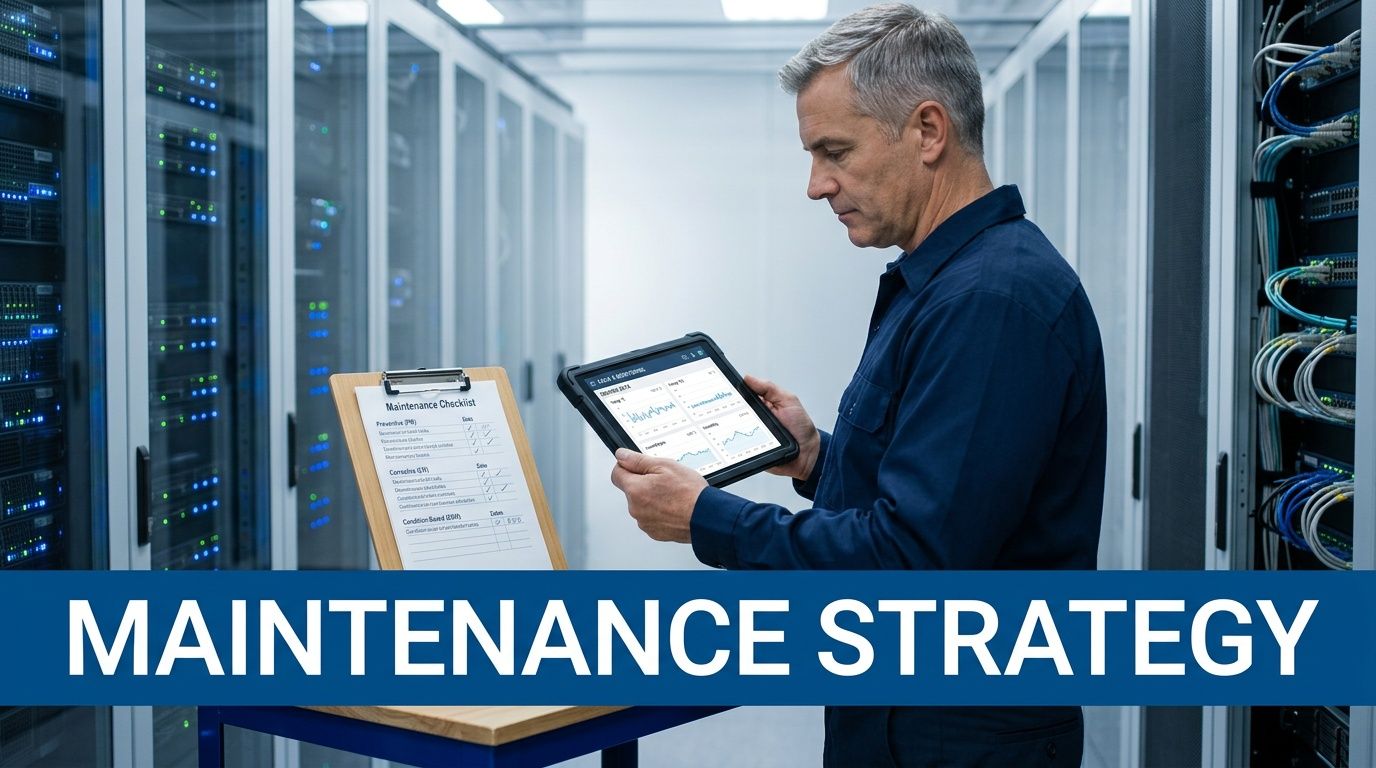
When it comes to maintenance, there's a common trap: treating every piece of equipment the same. Applying a single, rigid strategy across your entire facility is a surefire way to waste money and get blindsided by failures. The real key to effective facility maintenance is building a flexible playbook, not just relying on one play.
Think of it like this: a great coach wouldn't run the exact same play on every down. You need a mix of proactive, reactive, and even predictive moves to keep your operations running smoothly. Let’s break down the core strategies you can blend to create a powerful, cost-effective maintenance program for your Atlanta facility.
Preventive Maintenance: The Scheduled Check-Up
This is your first line of defense, the foundation of a solid maintenance plan. Preventive maintenance (PM) is all about a fixed schedule. It's the same reason you get your car's oil changed every 5,000 miles—you don't wait for the engine to start smoking.
The whole point is to service equipment before it breaks, extending its life and preventing those middle-of-the-night emergency calls. It’s proactive, it’s predictable, and it saves a world of headache.
Examples of Preventive Maintenance:
- Swapping out HVAC filters every quarter to keep the air clean and the system running efficiently.
- Testing fire alarms and sprinkler systems twice a year to make sure they’re ready when you need them.
- Inspecting and cleaning server room cooling units every other month to stop a critical server from overheating.
Corrective Maintenance: The Emergency Response
Sometimes, things just break. That's where corrective maintenance comes in. You might know it as "reactive" or "break-fix" maintenance. A server goes down, a pipe bursts, a light flickers out—and you send someone to fix it. It's the "firefighting" part of the job.
While you can't eliminate every unexpected failure, a plan that relies on this approach is a recipe for chaos and high costs. It usually means more downtime and more extensive damage. Still, it’s a necessary tactic for non-critical assets where the cost of a preventive plan just doesn’t make sense.
A well-built facility maintenance plan is all about minimizing emergencies. By focusing on preventive and predictive work, you get to control your schedule, instead of letting equipment failures control you.
Condition-Based Maintenance: The Smart Approach
This is where things get really interesting. Condition-based maintenance (CBM) is a predictive strategy that moves beyond a simple calendar schedule. Instead of servicing equipment just because "it's time," you perform maintenance only when data tells you it's actually needed.
Think of it like the "check engine" light in a modern car. It doesn't pop on every 5,000 miles; it illuminates when a sensor detects a real issue that needs your attention. By using sensors to monitor an asset’s condition in real-time—like temperature, vibration, or power usage—you can catch problems before they cause a full-blown catastrophe.
To get your operations running at peak efficiency, weaving in robust facility management best practices is crucial. Taking a look at resources like these 10 Facility Management Best Practices can spark some valuable ideas for your own program. For Atlanta businesses, this smart approach might mean tracking server rack temperatures or analyzing a motor’s vibrations. As you refine these methods, you’ll find that a strong business sustainability strategy goes hand-in-hand, creating a more resilient and efficient operation from top to bottom.
Integrating IT Asset Disposal into Your Maintenance Plan
In an increasingly connected world, the job of a facility manager has changed. It's no longer just about the HVAC system, the plumbing, or the roof. Today, managing a facility means overseeing the constant flow of technology that powers your Atlanta business—every server, laptop, and monitor.
This shift means IT Asset Disposal (ITAD) is no longer just an "IT problem." It’s a core facility management responsibility, one that has a direct line to your building's security, operational rhythm, and regulatory compliance.
Beyond the Janitorial Closet: The Risk of Storing Old Tech
We’ve all seen it. The storage closet or forgotten corner of the warehouse where retired electronics go to die. But this common practice isn't just inefficient; it's a huge risk. Each one of those devices is a ticking liability.
Imagine an old server packed with sensitive customer data or a stack of hard drives holding years of employee records. Without a clear and secure disposal plan, these forgotten assets create serious vulnerabilities.
- Data Breach Risks: Devices that haven't been properly wiped are a goldmine for data thieves. A single breach can lead to devastating financial penalties and sink your company's reputation.
- Environmental Fines: Georgia has specific regulations for handling electronic waste (e-waste). Tossing them in the dumpster can lead to steep fines and legal trouble.
- Wasted Space: Every square foot of your facility costs money. Using that valuable real estate to store obsolete, depreciating assets is a direct hit to your operational budget.
Turning a blind eye to old electronics is like leaving the back door of your building unlocked. Responsible IT asset disposal is a fundamental part of securing your facility and protecting your business from threats you can't even see. This is where your e-waste becomes a story of hope.
This fusion of tech and facility management is happening everywhere. In fact, the global smart building market is projected to shoot past $229 billion by 2026, all thanks to investments in IoT-enabled systems for real-time monitoring. This trend makes it clear: facility managers need to be tech-savvy in every part of their job, especially when it comes to retiring old assets.
Reframing Disposal as a Maintenance Task
So, how do you handle it? Start treating your electronic assets with the same strategic lifecycle approach you apply to your HVAC or electrical systems. When a server is decommissioned, it's not the end of the story—it's simply the final stage of its maintenance cycle.
This change in perspective is everything. It shifts the conversation from, "Where do we put this?" to "What is our secure process for this?" By creating a standard workflow for retiring electronics, you replace chaos with control. You turn a potential liability into a predictable, well-managed operation.
For Atlanta businesses looking to build a solid process, it’s important to know what a professional service looks like. A comprehensive IT Asset Disposal program must include secure data destruction, certified recycling, and detailed documentation to guarantee compliance and give you peace of mind.
By making responsible e-waste management a planned part of your facility maintenance routine, you protect your data, stay on the right side of environmental laws, and even get valuable space back. This proactive approach turns a hidden risk into a strategic advantage—a critical piece of modern operational excellence.
Choosing Your Atlanta E-Waste Recycling Partner
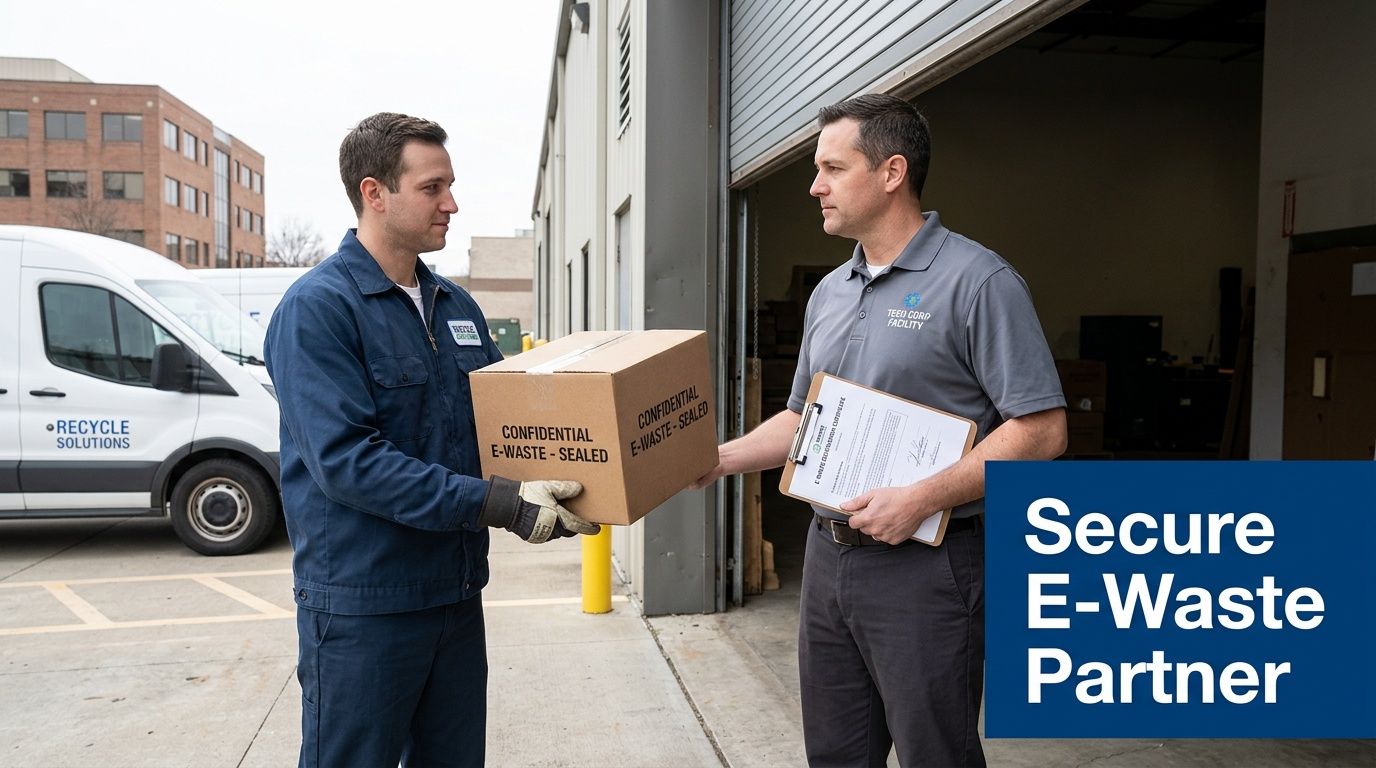
Let's be honest—picking an e-waste vendor can feel like a high-stakes decision for any facility manager. It is. The partner you choose has a direct line to your company's data security, environmental compliance, and even your public image. In a strong facility maintenance plan, your recycling vendor isn't just someone who hauls away old tech; they're an essential part of your risk management team.
For businesses here in Atlanta, that means you need a partner who goes beyond simply picking up boxes. You need an organization that delivers a secure, transparent, and fully compliant process from the moment they arrive at your door. One wrong move can expose your company to massive liability, which makes this vetting process one you can't afford to rush.
Essential Certifications and Data Security
Before you even get to a conversation about price, you need to talk about certifications and data security. These aren't just nice-to-haves; they are your first line of defense, proving a vendor operates legally, ethically, and securely. Without them, you’re flying blind.
A partner worth their salt will be proud to show you their certifications. Think of them as a third-party guarantee that their process is solid. When you're talking to a potential vendor, make sure you see proof of these:
- R2v3 or e-Stewards Certification: These are the gold standards in our industry. They’re your assurance that your old assets are handled in an environmentally responsible way and that worker safety is a top priority.
- NAID AAA Certification: This one is all about data. It validates a vendor’s entire data destruction process, from how they hire their people to the security protocols at their facility. It's a critical benchmark for keeping your sensitive information safe.
- DoD 5220.22-M Compliance: This isn't a certification, but a standard for sanitizing data. Your partner needs to show they follow this—or the similar NIST 800-88 standard—to wipe hard drives and other media so the data can never be recovered.
Choosing a vendor without top-tier certifications is like hiring a security guard without a background check. The potential for a breach is just too high to justify the risk.
Look for Turnkey Solutions and a Local Touch
Once you’ve locked down security and compliance, it’s time to think about operations. The best partners don’t create more work for you; they simplify the entire process. A true turnkey solution takes the logistical headaches off your plate, freeing you and your team to get back to your core facility duties.
This is where a local Atlanta partner with its own trucks and team really shines. It means more flexible scheduling, faster pickups, and a clear, unbroken chain of custody for your assets.
A quality partner should provide:
- Secure, In-house Logistics: They use their own trained staff and their own fleet of trucks—not random third-party contractors. This ensures your assets are secure the second they leave your building.
- On-site Services: Look for a team that can handle packing, palletizing, and even shredding hard drives right at your facility for that extra layer of security.
- Detailed Asset Reporting: You should always get a full inventory list and official certificates of data destruction for every single serialized asset. This paperwork is non-negotiable for your internal audits and compliance records.
We know making the right choice can be tough, which is why we put together a detailed guide to help you compare Atlanta e-waste disposal companies and learn what questions to ask.
By putting certified security, complete services, and detailed reporting at the top of your list, you’ll find an e-waste partner who does more than just dispose of old gear. You’ll find one who actively protects your organization, turning a routine task into a cornerstone of your facility maintenance and risk management strategy.
Turn Your E-Waste into an ESG Win
What if that stack of old electronics in the storage closet wasn't just a line item on your facility maintenance checklist? What if it was actually a golden opportunity to tell a great story about your company?
More and more, everyone from investors to customers is looking closely at a company's Environmental, Social, and Governance (ESG) performance. And believe it or not, responsible electronics recycling is one of the simplest, most direct ways to give your ESG profile a real boost.
By choosing the right recycling partner, you can reframe a routine operational task into a powerful statement about your company's values. For Atlanta corporations, it’s a straightforward ESG win that can turn a cost center into a genuine source of brand pride.
Aligning Operations with Corporate Values
When you team up with a recycler that has a clear social and environmental mission, e-waste disposal stops being a logistical headache and becomes a strategic move. The story writes itself when your old tech directly funds positive, tangible outcomes that resonate with your employees, customers, and the entire community.
Think about it this way: your company's retired laptops and servers aren't just securely wiped and broken down. Their disposal could help plant new forests in depleted areas or provide critical support for local veterans. This kind of dual-impact model makes an otherwise hidden part of your facility maintenance program a visible, powerful testament to what your company stands for.
By partnering with a mission-driven recycler, your company can turn e-waste into hope. Every device you retire becomes a tool for restoring lives and landscapes.
This approach hits the "S" (Social) and "E" (Environmental) in ESG head-on. You're not just checking a compliance box; you're actively contributing to the well-being of society and the planet. In a crowded market, that's a story that sets you apart.
Building Your ESG and CSR Story
A strategic partnership also makes it incredibly easy to track, document, and share your impact. This transforms your recycling program from a simple necessity into a cornerstone of your Corporate Social Responsibility (CSR) reports and marketing. Here’s how you can make it work for you:
- Corporate Recycling Drives: Get your whole team involved by hosting a company-wide recycling event. A partner can offer a free pickup for 50 or more devices and provide materials that showcase the good you're doing together.
- Impact Reports for CSR: Get concrete proof of your contribution. Documents like "Veteran Support Impact Reports" and "Plant-A-Tree" certificates are perfect for your annual sustainability reports and board presentations.
- "Recycled with Purpose" Eco-Badge: A mission-driven partner can provide you with a digital badge for your website, email signatures, and marketing materials. It’s a simple, visual signal of your company’s commitment to sustainability and community support.
Ultimately, this changes the whole conversation around e-waste disposal. It’s no longer just another task to get done. It becomes a story you can proudly share—a story of turning old technology into new opportunities for people and the planet.
Alright, we’ve covered the what and the why. Now it’s time for the how.
All the best strategies in the world don't mean much without a solid plan to put them into action. This is where we shift from theory to a concrete roadmap for your Atlanta organization. Let's walk through the steps to build a top-notch facility maintenance and e-waste program that shores up your operations, security, and sustainability.
Making the leap from a reactive, "put-out-the-fire" approach to a structured, proactive one can seem daunting. The trick is to break it down into manageable chunks. It all starts with one simple, foundational step: figuring out what you actually have.
Phase 1: Get a Handle on Your Assets
You simply can’t maintain what you don’t know you own. The first, and most important, move you can make is to conduct a full inventory of your facility and its IT assets. This isn't just about counting boxes; it's a deep-dive health check on the very backbone of your business.
Your audit needs to capture a few key things:
- All Critical Equipment: Catalog every major system, from the HVAC units and electrical panels keeping the lights on to the servers, network switches, and computers your team uses daily.
- Key Asset Details: For each piece of equipment, document its age, general condition, purchase date, warranty status, and any maintenance history you have on file.
- Dependency Mapping: This is crucial. You need to understand how everything connects. Which servers run your most important software? Which network gear supports your most critical departments?
This audit gives you the baseline data you need to stop guessing and start making informed decisions. It shines a light on your biggest risks and shows you exactly where your maintenance budget will make the biggest difference.
Phase 2: Set Your Goals and Pick Your Strategy
Once your audit is done and you can see the whole picture, you can set clear, measurable goals. What are you actually trying to achieve?
Maybe you want to slash emergency repair costs by 20%. Perhaps the goal is to squeeze another year of life out of your current IT hardware. Or maybe it’s all about ensuring 100% compliance with data destruction standards for retired assets.
With those goals in mind, you can choose the right mix of maintenance strategies for different types of equipment:
- For your most critical, high-value systems (like the cooling in your data center), a predictive or condition-based approach makes the most sense.
- For essential but less complex gear (like the main office HVAC), a simple preventive schedule is perfect.
- For low-cost, non-essential items, sticking with a corrective (break-fix) approach is often good enough.
A great facility maintenance plan is about balance. It’s not about preventing every single failure, but about preventing the ones that can truly hurt your business.
Phase 3: Choose Your Partners and Make It Official
Now you’re ready to select your partners and formalize the whole process. This means finding and vetting a certified e-waste recycler who can handle your security and compliance requirements. For Atlanta businesses, it’s best to look for a local partner with R2v3 or e-Stewards certification and a documented, secure process for data destruction.
As this visual shows, the right partnership transforms a simple disposal task into a real Environmental, Social, and Governance (ESG) victory.
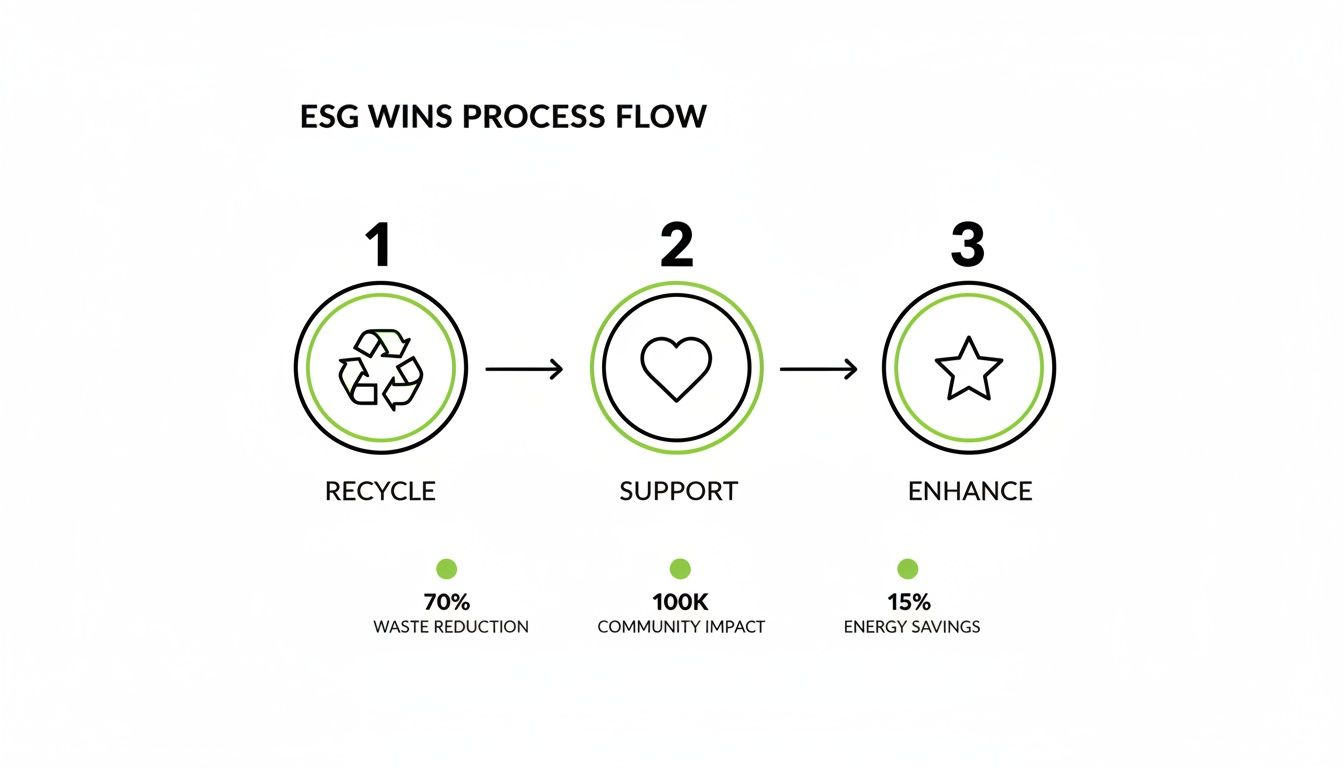
When you connect your recycling efforts to genuine social and environmental benefits, you create a powerful story about your company's commitment to corporate responsibility.
The final piece of the puzzle is putting it all in writing. We've created a simple checklist below to help you get started on your own implementation plan.
Facility Maintenance and E-Waste Implementation Checklist
Here is a step-by-step checklist to guide you through launching a comprehensive maintenance and asset disposal program for your Atlanta-based organization.
| Phase | Action Item | Key Consideration |
|---|---|---|
| 1: Assessment | Conduct full inventory of facility & IT assets. | Document age, condition, warranty, and maintenance history for each item. |
| 1: Assessment | Map asset dependencies. | Understand which systems are critical for core business functions. |
| 2: Planning | Define program goals (e.g., reduce downtime by X%). | Goals should be specific, measurable, achievable, relevant, and time-bound (SMART). |
| 2: Planning | Select maintenance strategies (preventive, corrective, etc.). | Use a blended approach; match the strategy to the asset's criticality. |
| 3: Execution | Vet and select a certified e-waste vendor. | Look for R2v3 or e-Stewards certification and a local Atlanta presence. |
| 3: Execution | Create a formal documentation of your process. | Include maintenance schedules, disposal protocols, and contact lists. |
| 3: Execution | Train staff and communicate the new plan. | Explain the "why" to get buy-in from all departments. |
| 4: Review | Set KPIs and schedule regular performance reviews. | Track metrics like Mean Time Between Failure (MTBF) and repair costs. |
| 4: Review | Refine the program based on data and feedback. | A good program is never static; it evolves and improves over time. |
This checklist provides a solid framework, but remember to adapt it to your company's unique needs. For a deeper dive into the disposal process itself, our guide on the 5 steps to dispose of electronic waste at your business offers more specific procedures.
Make sure you communicate the new plan across the entire organization. When you explain the "why"—the improved security, the operational stability, and the positive community impact—you empower your whole team to become part of building a more resilient and sustainable operation.
Got Questions? We've Got Answers.
When it comes to managing the intersection of facility maintenance and electronics recycling, a lot of questions can pop up. It’s a complex world, but we're here to provide clear, straightforward answers for Atlanta's facility and IT managers.
Where Do I Even Start With a Facility Maintenance Plan?
The very first, most critical step is to figure out what you actually have. You can't maintain what you don't know exists. This means rolling up your sleeves and conducting a thorough asset inventory.
Get in there and catalog all your critical equipment—everything from the big HVAC systems and plumbing down to every last server, computer, and piece of network hardware. For each item, you’ll want to note its age, current condition, any maintenance history you have, and its expected lifespan. This audit becomes your roadmap for prioritizing tasks, scheduling preventive care, and budgeting for the future.
How Can We Use E-Waste Disposal to Support Our CSR Goals?
This is where your e-waste program becomes a powerful storytelling tool. Instead of seeing it as just a disposal task, view it as a chance to make a real impact. Partner with an Atlanta-based recycler that has a clear social mission. For example, some partners use the value from recycled electronics to support veteran aid programs and fund reforestation projects. This dual-impact model turns your old tech into a force for good. You can then use the impact reports and certificates they provide—like "trees planted" or "veterans supported"—in your annual CSR documentation, on your website, and in company communications to showcase your commitment to community and sustainability.
Certified data destruction isn't just a good idea; it's a non-negotiable shield protecting your organization from a catastrophic data breach. Simply hitting 'delete' or reformatting a drive just won't cut it.
Why Is Certified Data Destruction Such a Big Deal?
Here's the thing: when you just delete files or reformat a hard drive, that data can often be recovered by someone with the right tools. It leaves your business wide open to risk.
Certified data destruction methods, like those following DoD 5220.22-M standards, use specialized software to overwrite your data multiple times, scrambling it into a completely unrecoverable state. For any business in Atlanta, especially those in healthcare, finance, or tech, skipping this step is a massive gamble. A single data breach can lead to crippling legal penalties, huge financial losses, and a hit to your brand's reputation that's hard to come back from.
Ready to build a secure and responsible e-waste disposal process that elevates your entire facility maintenance program? Atlanta Green Recycling provides certified, turnkey solutions for businesses all over the metro area. Let's turn your old technology into a force for good. Schedule your free pickup today.