
Atlanta Facility Maintainance: 2026 Modern Guide


Effective facility maintenance is so much more than just fixing what's broken. It's a strategic function that keeps your operations running smoothly and, frankly, protects your bottom line. For any Atlanta business, this means getting out of the reactive "firefighting" mode and into a proactive approach that stops costly failures before they ever start.
The Hidden Costs of Reactive Facility Maintenance
Staring down unplanned downtime is a nightmare scenario for any business in Atlanta. The "fix it when it breaks" philosophy might feel like it's saving money in the short term, but it's a strategy that quietly bleeds companies dry through hidden costs, operational chaos, and even damage to your reputation.
The financial fallout alone can be staggering. In the world of facility maintenance, one reality hits hard: unplanned downtime costs businesses an eye-watering average of $260,000 per hour across all industries. That isn't just a statistic—it's a catastrophe for any operation relying on its equipment, from manufacturers to the data centers that power Atlanta's digital economy.
Even as smarter maintenance strategies become more common, these unexpected costs are a persistent threat for too many managers. You can see more on these trends and their financial impact in this detailed report.
The real damage from reactive maintenance isn't just the final repair bill. It's the lost production, the missed deadlines, the idle workforce, and the customer trust that evaporates when you can't deliver.
The Domino Effect of Failure
A single equipment failure rarely happens in a vacuum. In a busy facility, it can set off a chain reaction that throws your entire operation into disarray. Imagine a critical HVAC unit failing in your Atlanta office building during a sweltering July week. The immediate cost is the emergency repair, which always comes at a premium.
But then the secondary costs start to pile up:
- Lost Productivity: Employees can't work comfortably, causing a major drop in output and morale. You might even have to send people home.
- Operational Disruption: In sectors like healthcare or tech, a climate control failure can halt critical processes, compromise sensitive equipment, and even put you in violation of compliance standards.
- Escalating Repairs: What could have been a cheap part replacement during a routine check now demands a complete system overhaul. This is especially true with older infrastructure, as the average age of industrial assets continues to climb, making breakdowns more frequent.
This reactive cycle creates a constant state of emergency, pulling your team away from planned work and long-term improvements. If you're looking for ways to get ahead of these problems, you might find our insights on integrating smart building tech helpful.
Reframing Maintenance as an Investment
The only way to break this costly cycle is to shift your perspective entirely. Proactive facility maintenance isn't an expense; it’s a crucial investment in your company's resilience and profitability.
By identifying and addressing potential issues before they cause a shutdown, you transform your maintenance budget from a reactive emergency fund into a strategic tool for growth. This proactive stance is what separates the leaders from the laggards in a competitive market like Atlanta, where uptime is a key differentiator. It gives you control over your costs, extends the lifespan of your assets, and ensures your facility runs smoothly, predictably, and profitably. In the sections that follow, we'll dive into how to build a plan that makes this a reality.
Building Your Proactive Maintenance Master Plan
Tired of putting out fires? Shifting from a reactive to a proactive mindset is how you finally get a handle on your facility’s health and, more importantly, your budget. A proactive maintenance master plan isn’t just a glorified to-do list; it’s a strategic system designed to stop failures before they happen, get more life out of your equipment, and keep your operations running smoothly.
For any facility manager in Atlanta, this plan is your roadmap to operational excellence. Let's walk through how to build one that actually works.
The first move is always a thorough asset audit. It’s simple: you can't manage what you don’t know you have. This means getting a complete inventory of every piece of equipment, but you need to go deeper than just a simple list.
For every asset, you’ll want to capture key details:
- Asset Details: Make, model, serial number, and when it was installed.
- Operational History: A log of every past failure, repair, and maintenance check.
- Criticality: How bad would it be if this broke? Is it an inconvenience or a full-blown crisis?
- Current Condition: A quick assessment to establish a health baseline.
This audit is the bedrock of your entire maintenance strategy. Without this data, you’re just guessing.
Prioritizing Your Assets
With a full inventory in hand, it’s time to prioritize. Let’s be real—not all equipment is created equal. A server rack cooling unit going down in a hospital is a catastrophe. The ice machine in the breakroom? Not so much. You need to classify your assets based on how critical they are to keeping the lights on.
A simple Tier 1, 2, and 3 system works wonders. Tier 1 assets are your mission-critical workhorses; if they fail, everything stops. Tier 2 assets are important, but you have backups or workarounds. Tier 3 assets are non-essential. This ranking is what tells you where to spend your time and money for the biggest return.
This is all about breaking the costly cycle of reactive maintenance, which drains budgets and causes unnecessary downtime.
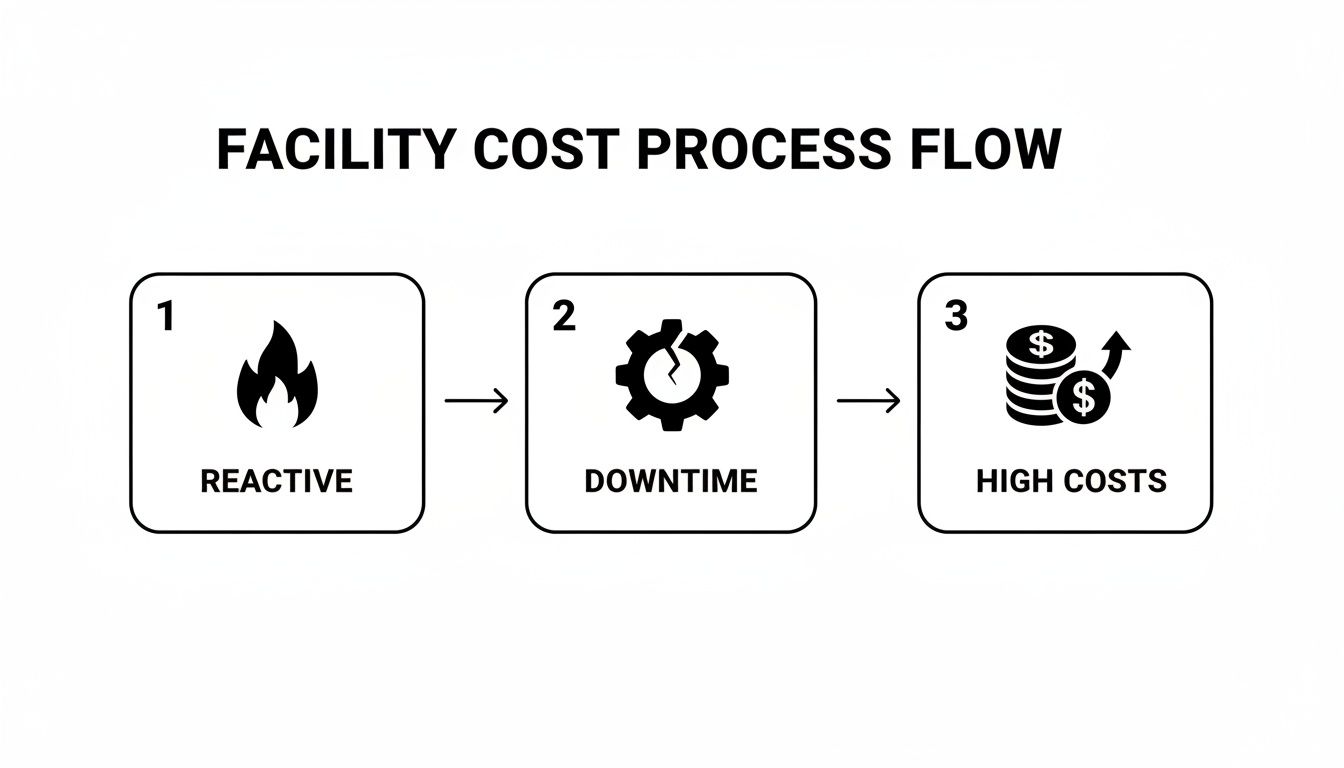
As you can see, simply reacting to failures (the fire icon) cascades directly into operational downtime (the broken gear) and skyrockets your costs (the dollar sign). A proactive plan is designed to stop this chain reaction in its tracks.
Choosing The Right Maintenance Strategy
Now that you know what you have and what’s most important, you can pick the right maintenance strategy for each asset. Applying a one-size-fits-all approach is a classic mistake that leads to wasted resources. To build a truly effective plan, it’s essential to integrate proven facility management best practices into your decision-making.
Let’s look at how different maintenance strategies compare and where they fit best.
Comparing Maintenance Strategies
| Strategy | Description | Best For | Average Cost Impact |
|---|---|---|---|
| Reactive | "Run-to-failure." Repairs are only performed after a breakdown occurs. | Low-cost, non-critical Tier 3 assets that are easily and cheaply replaced. | High (emergency labor, unplanned downtime) |
| Preventive | Maintenance performed on a fixed schedule (e.g., quarterly) to prevent failures. | Tier 1 & 2 assets with known failure patterns, like HVAC systems or generators. | Medium (scheduled labor, parts) |
| Predictive | Uses sensors and data analysis to predict exactly when a failure will occur. | Highly critical Tier 1 assets where downtime is catastrophic, such as data center servers. | Low (optimized labor, minimal downtime) |
By matching the strategy to the asset's importance, you start spending smarter. Critical equipment gets the five-star treatment it needs, while you avoid over-investing in less important items. This targeted approach is the core of smart facility management.
Of course, a solid inventory is key. If your assets include IT equipment, you can dive deeper into creating one with our guide on IT asset management best practices.
Leveraging A CMMS For Automation And Tracking
Your master plan needs a home, and that home is a Computerized Maintenance Management System (CMMS). This software is the engine that runs your whole strategy, automating schedules, tracking work orders, and managing spare parts. It’s what turns your plan from a static spreadsheet into a living, breathing system.
A CMMS is the difference between a plan on paper and a plan in action. It’s your single source of truth, ensuring nothing gets missed and giving you the data to constantly improve.
Think about it: when a preventive maintenance task is due for a Tier 1 air handler, the CMMS can automatically generate a work order, assign it to the right technician, and even attach a checklist of required actions. Once the work is done, the tech updates the record. This creates a continuous feedback loop, making your future planning even more accurate. This level of organization is what gives you real control and helps you eliminate those costly surprises for good.
Navigating Atlanta's Maintenance Workforce Challenges
You can have the most buttoned-up maintenance plan in the world, but it’s not worth the paper it’s printed on without the right people to make it happen. For facility managers here in Atlanta, that’s become one of the toughest parts of the job. It feels like we’re fighting a war on two fronts: a massive skilled labor shortage and operational costs that just keep climbing.
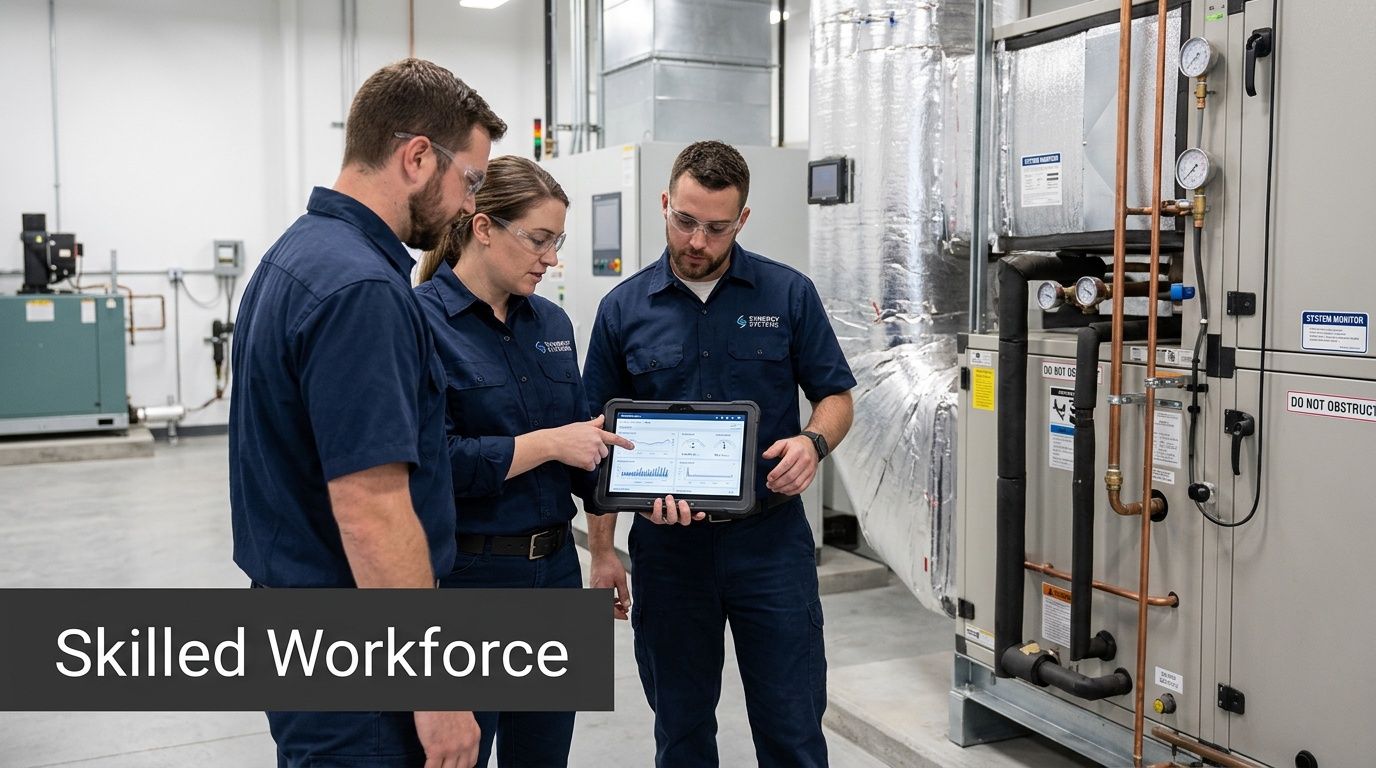
This workforce crisis is changing the game everywhere. We’re looking at a global shortage of 2 million skilled technicians by 2026, a gap that hits every industry from manufacturing to healthcare. What’s worse, a "silver tsunami" is washing over the field. A staggering 69% of maintenance professionals are over 50, and experts predict 40% of the entire manufacturing workforce could retire by 2030.
When these veterans walk out the door, they take decades of hands-on knowledge with them. We’re already seeing the impact—mean time to repair is creeping up, partly because new hires just don't have the same troubleshooting instincts. It's wild to think that only about half of industrial plants are using CMMS tools to get a handle on this, while the rest are stuck with clunky spreadsheets. You can get a clearer picture of the issue by exploring more on these maintenance trends and insights.
This isn't some far-off problem; it's hitting Atlanta businesses right now. It means critical systems are down longer, we’re all scrambling for the same few qualified techs, and our budgets are stretched thin.
Bridging the Skills Gap With Smart Solutions
So, how do you keep your facility running smoothly when experienced technicians are a rare find? The answer isn't just about hiring more people—it’s about empowering the team you already have and getting creative with how you fill the gaps.
A great place to start is by investing in your own crew through upskilling and cross-training programs. When your senior HVAC tech retires, their know-how shouldn't vanish. Set up mentorships and formal training to pass that expertise to your junior staff. This not only makes your team more flexible but also shows them you're invested in their growth—a huge win for retention.
Next, let technology lend a hand. IoT (Internet of Things) sensors are a massive help for lean maintenance crews. These little devices can monitor your equipment's health 24/7, shooting you an alert long before a catastrophic failure. This lets a small team manage a huge portfolio of assets way more effectively, moving them from tedious manual check-ups to strategic, data-backed repairs.
You don't have to do it all in-house. Strategic outsourcing is a facility manager's best friend. Pinpoint those specialized, non-core tasks—like complex generator maintenance or secure e-waste recycling—and bring in vetted outside experts. This frees up your team to focus on the daily critical operations they know inside and out.
Taming the Maintenance Budget
The other elephant in the room is the budget. The same issues driving the labor shortage are making everything more expensive. Higher demand for technicians means higher wages, and thanks to supply chain headaches, just getting a spare part can be a costly, time-sucking ordeal.
To regain control, you have to be deliberate with your spending. Energy optimization is a fantastic place to find savings. Your HVAC and lighting systems are almost always the biggest energy hogs in the building. Upgrading to energy-efficient models and installing smart controls can free up a surprising amount of cash that you can then put toward other pressing maintenance needs.
Finally, it’s time to get serious about vendor contract negotiations. Stop auto-renewing those agreements. Make it a habit to benchmark your current vendors against the market to ensure you’re getting a fair price and good service. For big, recurring needs like e-waste disposal, partnering with a local, mission-driven provider like Atlanta Green Recycling can slash transportation costs and add significant value to your company’s ESG profile.
By gathering data that clearly shows leadership the cost of downtime versus the cost of prevention, you can build a rock-solid case for your maintenance budget and get the resources you truly need.
Integrating E-Waste Recycling Into Your Maintenance Cycle
When you think about your facility maintenance plan, you’re probably thinking about HVAC, plumbing, and preventative upkeep. But what about the lifecycle of your IT equipment? A truly comprehensive plan doesn’t stop when a server or laptop fails; it covers that asset all the way through to its final, responsible disposal.
This is where IT asset disposition (ITAD) comes in. It’s a critical, yet often neglected, part of the maintenance cycle. Done right, it creates a streamlined, compliant, and even profitable process for handling your retired electronics.
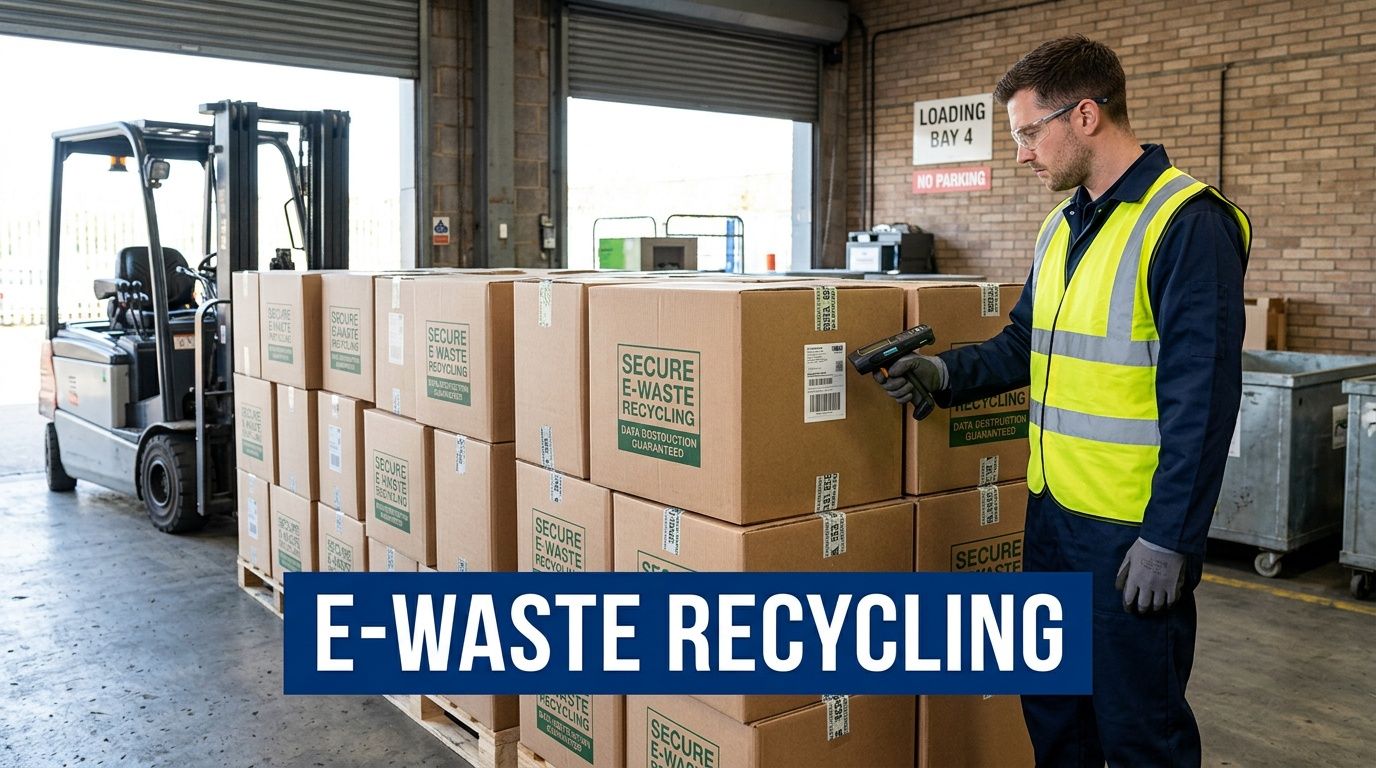
For many facility managers in Atlanta, that back closet piled high with old computers, monitors, and cables is a familiar sight. This isn’t just clutter. It's a ticking time bomb of security risks, compliance headaches, and missed opportunities. By formally integrating an e-waste plan into your maintenance routine, you can turn that liability into a strategic asset.
Laying the Groundwork for a Compliant E-Waste Plan
The first move is to shift from a reactive, ad-hoc process to a documented, repeatable one. It starts by treating your retired IT equipment with the same level of care you give your active assets.
You need a clear inventory of every device slated for disposal—make sure to log serial numbers and assess their condition. This simple step is fundamental for maintaining a clear and defensible chain of custody.
Next up is data security. And no, simply deleting files doesn't cut it. Your plan must mandate secure, DoD-compliant data destruction to completely eradicate sensitive company and customer information. This is non-negotiable, particularly for businesses in regulated fields like healthcare and finance where a data breach can result in crippling fines and reputational damage.
A well-defined e-waste strategy isn't just about environmental responsibility—it's a critical component of your risk management and data security framework. It protects your brand, your customers, and your bottom line.
For many Atlanta businesses, the logistics of managing all this in-house are just too much. A turnkey partner like Atlanta Green Recycling takes the entire burden off your shoulders. We can handle everything from onsite de-installation and secure packing to GPS-tracked transport, ensuring your assets are managed securely from the moment they leave your facility.
Explore our full range of services for electronic recycling in Atlanta to see how a dedicated partner can streamline this entire workflow for you.
From a Simple Task to a Major Brand Win
Here’s where a modern e-waste plan becomes a game-changer. Instead of being a line-item cost, responsible electronics disposal can become a powerful pillar of your corporate social responsibility (CSR) and environmental, social, and governance (ESG) programs. You can transform a routine maintenance task into a compelling, mission-driven marketing story that resonates with the tagline: "Recycling That Restores Lives and Landscapes."
When you partner with a recycler focused on social impact, your old tech doesn’t just get shredded. It creates a powerful narrative you can share with stakeholders, customers, and employees, turning a simple transaction into an act of hope.
With Atlanta Green Recycling, your e-waste directly supports two incredible causes:
- Veteran Support: A portion of the value recovered from your recycled materials goes directly to aiding veterans. We even have an impact counter on our website showing live stats like "1,245 veterans supported."
- Reforestation: For every qualifying pickup, we plant trees in our national forests, helping to combat deforestation. Our site tracks this with a "3,700 trees planted" counter.
Suddenly, you're not just "getting rid of old computers." You are actively supporting veterans and helping reforest the planet. Our "Recycle for a Cause" campaign makes this clear with messaging like: “Your old tech can house a veteran and grow a forest.”
Turning Your Impact Into Tangible ESG Metrics
This dual-impact model gives you the concrete, reportable metrics that today's investors and customers demand. It shifts your ESG reporting from vague promises to verifiable, documented actions. Imagine presenting your leadership team with an annual Veteran Support Impact Report that quantifies exactly how your company's recycling efforts made a difference.
This strategy offers several clear ways to demonstrate your commitment:
- Corporate Recycling Drives: Offer businesses free pickup of 50+ devices, then deliver Plant-A-Tree certificates and Veteran Support Impact Reports for their CSR documentation.
- Impact Certificates: After each pickup, individuals and companies receive formal documentation, including Plant-A-Tree certificates, perfect for annual sustainability reports or even just a personal sense of contribution.
- "Recycled with Purpose" Badge: We provide a digital badge for you to display on your website and in CSR materials, clearly signaling your commitment to ethical, impactful recycling.
This approach effectively turns a facility maintenance function into a powerful brand-building engine. A message like, "Your company can turn e-waste into forests," resonates deeply in today's mission-driven marketplace, helping you attract both customers and top talent who want to align with companies that do good.
Choosing The Right Partners For Maintenance And Disposal
Picking the right vendors is easily one of the most important calls you'll make for your facility. These partners, whether for routine upkeep or specialized e-waste disposal, can become either a huge asset or a massive liability. The right one brings efficiency and peace of mind; the wrong one is a fast track to risk and operational headaches.
Every facility manager is used to vetting partners for services like cleaning or building repairs. If you're looking for guidance, even an expert guide to a commercial pressure washing service shows how deep due diligence should go. But those principles become even more critical when you're dealing with IT assets, where data security and environmental compliance are on the line.
Non-Negotiable Criteria For E-Waste Partners
When it's time to handle IT asset disposition (ITAD), the stakes couldn't be higher. A bad choice can directly lead to data breaches, steep compliance fines, and environmental penalties. Your vetting process has to be rock-solid, starting with certifications that serve as a trusted seal of approval.
Don't even consider a partner without these key credentials:
- R2 (Responsible Recycling) Certification: This is the gold standard in the electronics recycling world, ensuring a vendor adheres to best practices for environmental safety, data security, and worker protection.
- e-Stewards Certification: Another top-tier certification, e-Stewards is famous for its strict rules against exporting hazardous e-waste to developing nations.
- NAID AAA Certification: Focused squarely on data destruction, this certification verifies a vendor's process for sanitizing and destroying data meets the most rigorous security standards.
A vendor missing these is a serious red flag. A partner who holds them shows a proven commitment to handling your most sensitive assets and data with the care they demand. For a deeper dive into what separates the pros from the amateurs, take a look at our guide to selecting IT asset disposition companies.
The Local Advantage For Atlanta Businesses
For businesses here in the Atlanta metro area, partnering locally with a provider like Atlanta Green Recycling offers real, tangible benefits. Working with a company in your own backyard simplifies logistics, cuts costs, and forges a stronger link to the community you serve.
Just think about it. Local service means faster response times for pickups and onsite de-installations. It also dramatically lowers transportation costs and the carbon footprint that comes with shipping assets across the country. Best of all, when you partner locally, you're directly reinvesting in the Atlanta economy and can even engage in community events.
Choosing a local, mission-driven partner turns a routine operational necessity into a powerful act of community support. Your disposed assets directly fuel positive change right here in Georgia.
Turning Disposal Into A Demonstrable ESG Win
The best partnerships don't just solve a problem—they help you achieve your larger goals. A modern e-waste partner should do more than just haul away old gear; they should give you the tools and documentation to strengthen your ESG and CSR programs.
This is where a vendor’s mission becomes your strategic advantage. At Atlanta Green Recycling, we built our entire business model on this idea. Our dual-impact mission—supporting veterans and funding reforestation—transforms your e-waste from a liability into a purpose.
After every single service, we provide the concrete documentation your stakeholders want to see:
- Veteran Support Impact Reports: These reports detail exactly how your recycled assets helped contribute to veteran aid programs.
- Plant-A-Tree Certificates: You get formal proof showing the number of trees planted in your company’s name.
- "Recycled with Purpose" Digital Badge: We provide a badge for your website and sustainability reports that powerfully communicates your commitment to ethical disposal.
This level of reporting and transparency makes your choice of vendor a simple, powerful, and easily defensible decision. You’re not just managing facility waste; you’re building a better brand story, one recycled device at a time.
Your Top Atlanta Facility Maintenance Questions Answered
Running a facility in Atlanta brings its own unique set of challenges. Between juggling budgets, keeping up with compliance, and ensuring everything runs smoothly, it's easy to feel like you're spinning plates. I get it. Facility and IT managers often ask me for practical advice on the same handful of tough issues.
Let's cut through the noise. Here are my straight-to-the-point answers to the questions I hear most often, packed with advice you can put into practice today.
How Can I Start a Predictive Maintenance Program on a Tight Budget?
This is a big one, and the good news is you don't need a six-figure budget to get started. The trick is to think small, prove the concept, and then use your success to ask for more.
Forget outfitting the entire facility at once. Instead, pinpoint your most critical, high-risk assets—those Tier 1 machines where a failure would be absolutely catastrophic for your operations.
Focus your initial, modest budget on just these few pieces of equipment. You can make a real impact by:
- Using affordable sensors to track key health indicators like vibration and temperature.
- Digging into the data you already have in your CMMS to identify historical failure patterns.
- Running a small pilot program on a single system to show exactly how it works.
Once you have a win, you can walk into your boss's office with concrete proof. A statement like, "We spent $1,000 on these sensors and it helped us prevent a $50,000 shutdown," is incredibly powerful. The savings from just one avoided disaster will fund your pilot program many times over and make the case for expansion for you.
How Do I Convince My Leadership to Invest More in Maintenance?
If you want to secure more budget, you have to change the conversation. Stop talking about maintenance as a necessary evil or a cost center. It’s time to frame it as what it truly is: a profit driver.
Your leadership team responds to data that affects the bottom line. So, let's give it to them. Use your CMMS and asset history to build a clear business case. Show them the staggering cost of unplanned downtime contrasted with the modest investment in prevention.
For example, don't just say you need money for repairs. Present the data: a scheduled $500 repair prevented a potential outage that costs your company $260,000 per hour. Highlight how extending the life of your assets defers massive capital expenditures down the road.
Shift the conversation from "We need more money for repairs" to "This investment in maintenance will increase operational uptime by 15% and save us X dollars in emergency costs."
And don't stop there. Connect your maintenance plan to the company's bigger goals. A well-maintained facility is a safer facility, which reduces liability. Even better, show how responsible practices—like managing e-waste through our "Recycle for a Cause" program—deliver powerful ESG and CSR benefits that build brand reputation and win over customers.
What Are the Biggest E-Waste Compliance Risks for Atlanta Businesses?
This is where things get serious. For any business in Atlanta, mishandling e-waste isn't just bad for the planet; it's a huge legal and financial risk. It's not a single issue but a minefield of environmental, data security, and liability concerns.
First, you have federal laws like the Resource Conservation and Recovery Act (RCRA), which strictly governs how you dispose of hazardous materials found in most electronics. Then you have data privacy regulations. If you're in healthcare, HIPAA violations carry massive fines. If you handle data from EU citizens, GDPR does, too.
But the biggest vulnerability I see is a broken chain of custody. If your company’s old hard drive ends up in the wrong place and someone recovers sensitive data, the fault lands squarely on your shoulders. This is why partnering with a certified e-waste vendor is non-negotiable. For every single data-bearing device, you need a formal Certificate of Destruction. That document is your ironclad proof that you did everything right.
We've gathered some of the most pressing questions from facility managers like you. Here are the quick-hit answers to help you navigate these challenges.
Your Facility Maintenance Questions Answered
| Question | Answer Summary |
|---|---|
| How can I start a predictive maintenance program on a tight budget? | You don't need a massive upfront investment. We’ll detail how to start small by focusing on your most critical assets, using affordable sensors, and leveraging the data you already have in your CMMS to spot failure patterns. The key is to pilot the program and use the demonstrated ROI to get buy-in for scaling up. |
| What are the biggest e-waste compliance risks for an Atlanta business? | This answer will cover federal laws like RCRA, crucial data privacy regulations like HIPAA and GDPR, and the absolute necessity of maintaining a clear chain of custody. We'll explain how partnering with a certified local vendor like Atlanta Green Recycling shields you from these risks through secure data destruction and fully compliant processing. |
| How do I convince my leadership to invest more in maintenance? | I'll give you talking points to frame maintenance as a profit driver, not a cost center. The answer will focus on using data to contrast the staggering cost of downtime against the modest cost of prevention. You'll learn to highlight improved asset longevity, enhanced safety, and the powerful ESG and CSR benefits that come from responsible practices like our 'Recycle for a Cause' program. |
Budgeting for these programs is a real challenge, especially when U.S. facilities spend skyrocketed to a level 47% higher in early 2026 than in 2019. With 84% of facility leaders worldwide citing operating costs as their top concern, finding smart, efficient solutions is more critical than ever. The data is clear: predictive maintenance can deliver 30-40% savings over reactive methods. You can explore more of the latest facilities spend trends on servicechannel.com.
Ready to transform your facility maintenance and e-waste disposal from a cost center into a strategic advantage? Atlanta Green Recycling provides turnkey solutions for businesses across the Atlanta metro area, ensuring your IT assets are managed securely, sustainably, and with a powerful social impact. Schedule your pickup with Atlanta Green Recycling today!