10 IT Asset Management Best Practices for 2025

In today's complex digital environment, tracking IT assets on a spreadsheet is a recipe for inefficiency and risk. Effective IT Asset Management (ITAM) has become a strategic discipline essential for optimizing costs, tightening security, and ensuring regulatory compliance. A well-executed ITAM strategy offers a complete, real-time view of your technology ecosystem, from initial procurement and software licensing to secure, responsible disposal. For organizations in the Atlanta metro area, from healthcare institutions handling HIPAA data to data centers undergoing decommissioning, mastering these processes is not just an IT task; it's a core business function.
This guide moves beyond generic advice to provide a comprehensive roundup of 10 critical it asset management best practices. We will explore actionable strategies that transform your IT assets from a logistical headache into a strategic advantage. You will learn how to implement automated discovery systems, optimize software license compliance, and establish a robust asset lifecycle management (ALM) framework. Furthermore, we will cover the essentials of vendor contract management, IT asset security, and compliant disposition that aligns with the highest standards for corporate ESG goals.
Our focus is on providing practical implementation details and fresh perspectives, ensuring you can immediately apply these concepts to your operations. Whether you are a corporate IT department, a government agency, or a university managing surplus equipment, these best practices will help you gain control, enhance efficiency, and unlock the hidden value within your IT infrastructure.
1. Automated Asset Discovery and Inventory Management
Effective IT asset management begins with a foundational truth: you cannot manage what you do not know you have. Manual tracking methods using spreadsheets are prone to human error, quickly become outdated, and fail to capture the dynamic nature of modern IT environments. Automated asset discovery and inventory management is the practice of using specialized software to continuously scan your networks and catalog every piece of hardware, software, and cloud instance, creating a single, reliable source of truth.
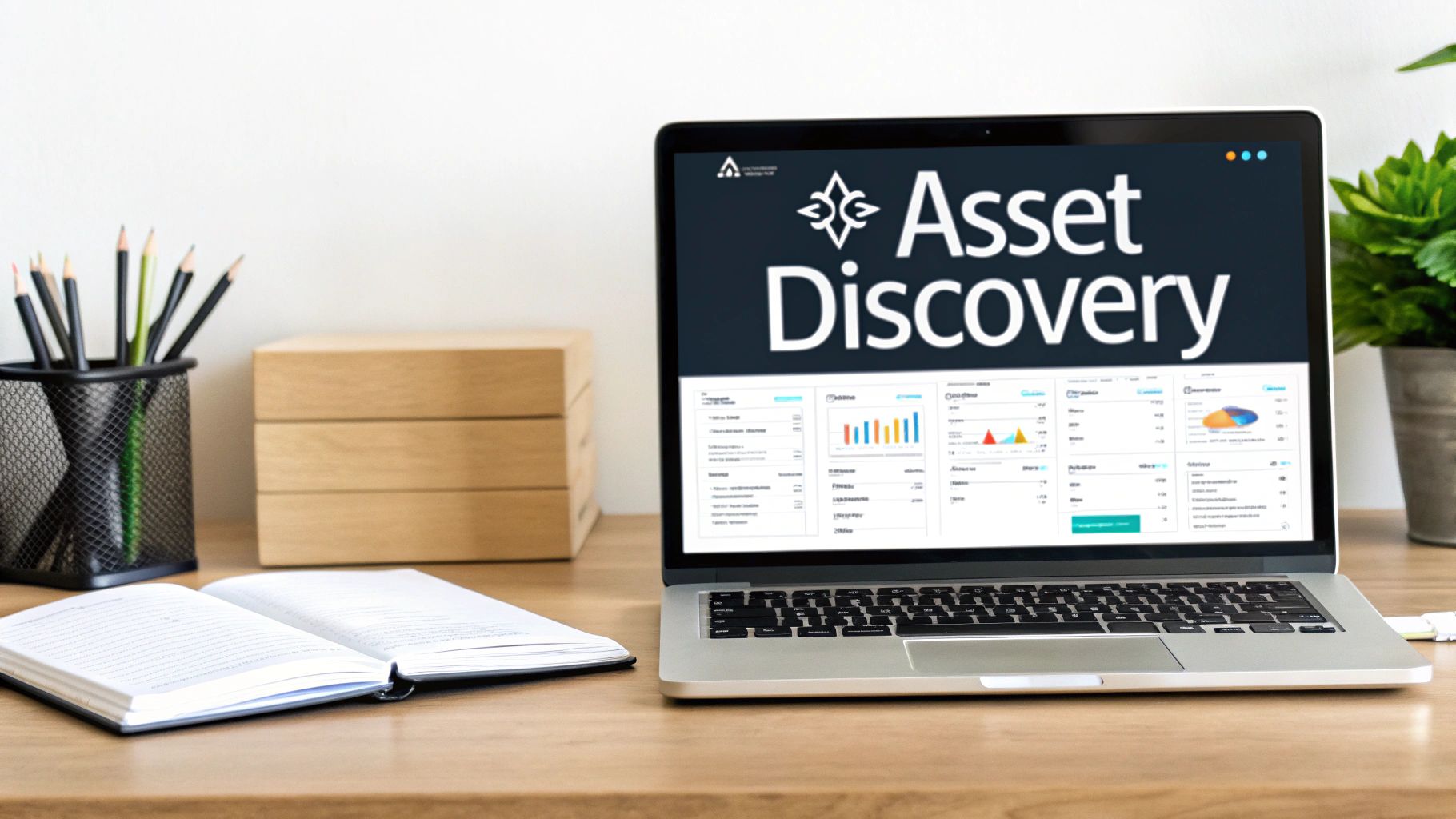
This automated approach provides real-time visibility, eliminating shadow IT and ensuring that every asset is accounted for from acquisition to retirement. By maintaining a comprehensive and current inventory, organizations in the Atlanta metro area and beyond can make informed decisions about procurement, security, and lifecycle planning. This level of detail is a cornerstone of modern it asset management best practices.
How to Implement Automated Discovery
Transitioning from manual to automated systems requires a strategic approach to ensure accuracy and efficiency. To move beyond manual methods and fully embrace automation, exploring the best asset tracking software is a critical step.
- Establish Clear Asset Standards: Before launching your first scan, define your asset classification rules. This includes naming conventions, ownership assignment, and status categories (e.g., active, in repair, awaiting disposal).
- Schedule Scans Intelligently: Run comprehensive network scans during off-peak hours to minimize any impact on performance. For dynamic environments like the cloud, use APIs for continuous, event-driven discovery rather than periodic scans.
- Integrate and Validate: Connect your discovery tool with your IT service management (ITSM) platform, like ServiceNow or Jira. This enriches asset data with incident history and user information. Regularly cross-reference the discovered assets with procurement records to identify discrepancies.
- Leverage Local Partnerships: For organizations like schools and universities in the Atlanta area, this detailed inventory can identify surplus equipment perfect for donation. Partnering with a local initiative can streamline the process and ensure devices are handled responsibly. Learn more about programs for donating electronics for schools to see how your assets can gain a second life.
2. Software License Compliance and Optimization
Beyond hardware, the intangible assets of your organization, specifically software licenses, represent a significant financial investment and a major compliance risk. Software license compliance and optimization is the systematic practice of tracking, documenting, and managing all software deployments against their corresponding license entitlements. This ensures your organization avoids costly penalties from vendor audits while eliminating wasteful spending on unused or underutilized licenses.
An unmanaged software portfolio can lead to severe financial repercussions and operational inefficiencies. By establishing a clear process for monitoring licenses from procurement through retirement, organizations in the Atlanta metro area can gain control over their software environment. This proactive management is a critical component of modern it asset management best practices, turning a potential liability into a strategic advantage.
How to Implement Software License Management
Developing a robust software asset management (SAM) program requires a blend of precise documentation, strategic vendor relations, and the right technology. It's about creating a sustainable system, not just conducting a one-time audit.
- Establish a Centralized License Repository: Consolidate all purchase records, entitlement documents, and renewal dates into a single, accessible system. This creates a definitive source of truth for all software agreements, from Microsoft Enterprise Agreements to Adobe Creative Cloud subscriptions.
- Conduct Regular Internal Audits: Proactively perform license reconciliation audits, especially before major renewal periods. Use automated discovery tools to scan networks and compare installed software against your license repository to identify compliance gaps or optimization opportunities.
- Foster Strong Vendor Relationships: Maintain open communication with your software vendors. Understanding their licensing models and upcoming changes can help you negotiate better terms and avoid compliance pitfalls. This is especially true for complex cloud-based licensing like Atlassian or ServiceNow.
- Optimize and Re-harvest Licenses: Implement a process for reclaiming and reallocating unused software licenses. When an employee leaves a role, their licensed software can be harvested and assigned to a new user, preventing unnecessary purchases and maximizing the value of every dollar spent.
3. Asset Lifecycle Management (ALM)
Viewing IT assets as static items on a list is a recipe for inefficiency and risk. Asset Lifecycle Management (ALM) is the strategic practice of managing the entire lifespan of an asset, from initial procurement and deployment to ongoing maintenance, and finally, its secure retirement. This holistic approach ensures every piece of equipment delivers maximum value throughout its productive life and is disposed of in a compliant and responsible manner.
By tracking assets through each distinct phase, organizations gain deep insights into total cost of ownership, performance, and replacement schedules. For data centers and corporations in the Atlanta area, this proactive management is a key component of effective it asset management best practices, preventing unexpected failures, controlling costs, and ensuring a smooth transition when hardware reaches its end-of-life.
How to Implement Asset Lifecycle Management
A successful ALM program relies on well-defined policies and automated workflows that guide an asset from one stage to the next. This structured approach prevents assets from getting lost in the shuffle and ensures their value is maximized before retirement.
- Define Clear Policies for Each Phase: Document specific procedures for acquisition, deployment, maintenance, and retirement. For instance, specify the criteria that trigger an asset's end-of-life process, such as age, repair history, or performance degradation.
- Establish Standard Naming Conventions: Create a consistent and logical system for naming and tagging assets upon acquisition. This simplifies tracking and ensures every device, from an IBM System x server to a user's laptop, is easily identifiable in your inventory system.
- Create Automated Workflows: Use your ITAM or ITSM software to automate status changes and notifications as an asset moves between lifecycle phases. For example, when an asset is marked "awaiting disposal," an automatic ticket can be generated for the disposition team.
- Plan for Responsible Disposition: The final phase of the lifecycle is critical for data security and environmental compliance. Partnering with a certified vendor ensures this process is handled correctly. Learn more about what is IT asset disposition to understand how a structured approach can turn your retired tech into support for veterans and reforestation efforts.
4. CMDB (Configuration Management Database) Implementation
While an automated inventory tells you what you have, a Configuration Management Database (CMDB) tells you how it all fits together. A CMDB is a centralized repository that stores information about all your IT components (called Configuration Items, or CIs) and, most importantly, the relationships between them. It acts as the definitive single source of truth, linking hardware, software, people, and processes to provide complete visibility into your entire IT infrastructure.

Implementing a CMDB moves beyond a simple asset list to create a dynamic map of your services. For example, it can show which servers support a critical application, which users are affected if a specific router fails, and what software licenses are tied to a particular department. This relational context is a cornerstone of advanced it asset management best practices, enabling faster incident resolution, better change management, and more accurate impact analysis.
How to Implement a CMDB
A successful CMDB implementation is a phased journey, not a one-time project. It requires careful planning, governance, and a commitment to data quality. Understanding key elements like Configuration Management Databases (CMDB) and the Common Service Data Model (CSDM) is crucial for effective IT infrastructure management. For more on this, refer to the detailed explanation of ServiceNow CMDB and CSDM concepts.
- Start Small and Expand: Begin by mapping a single critical business service. Identify all the CIs involved, from servers and applications to databases and network gear, and define their relationships. This proves value quickly and provides a template for future expansion.
- Automate Data Population: Manually populating a CMDB is unsustainable. Integrate it directly with the automated discovery tools mentioned earlier to ensure CI data is always accurate and up-to-date, reflecting the real-time state of your environment.
- Establish Strong Governance: Before you begin, define clear policies for data ownership, CI classification, and data maintenance. Who is responsible for validating the accuracy of server data? What process must be followed to add a new application CI? Answering these questions prevents the CMDB from becoming unreliable.
- Regularly Audit and Reconcile: Schedule routine audits to compare the CMDB's data against discovery sources and procurement records. This reconciliation process identifies and corrects discrepancies, maintaining the integrity and trustworthiness of your CMDB as the single source of truth.
5. Mobile Device Management (MDM) and BYOD Policy
In an era of remote work and constant connectivity, the line between personal and company devices has blurred. Mobile Device Management (MDM) is a systematic approach to securing and managing the fleet of smartphones, tablets, and laptops accessing corporate data, whether they are company-owned or part of a Bring Your Own Device (BYOD) program. This practice is essential for balancing user flexibility with stringent organizational security and asset tracking.
Effective MDM allows IT departments to provision devices, enforce security policies, distribute applications, and remotely wipe sensitive data if a device is lost or stolen. For organizations in the Atlanta metro area, from healthcare institutions handling HIPAA data to corporate offices, implementing a robust MDM and BYOD strategy is a non-negotiable component of modern it asset management best practices, protecting sensitive information no matter where it is accessed.
How to Implement MDM and a BYOD Policy
Deploying a successful mobile device strategy requires a clear framework that prioritizes security without hindering productivity. Leading platforms like Microsoft Intune, Jamf Pro for Apple ecosystems, and VMware AirWatch provide the tools to enforce these policies consistently.
- Establish a Clear BYOD Policy: Before allowing personal devices to connect, create a formal policy that outlines user responsibilities, data ownership, privacy expectations, and security requirements. This document should be signed by every participating employee.
- Use Containerization for Data Separation: Implement solutions that create a secure, encrypted "container" on personal devices for all corporate data and applications. This isolates company assets from personal apps and information, protecting both the user's privacy and the company's security.
- Enforce Strict Security Protocols: Mandate security measures across all managed devices, including strong passwords or biometrics, multi-factor authentication (MFA), and automated screen locks. Ensure devices are configured to receive and install security updates and patches automatically.
- Plan for End-of-Life: Integrate mobile devices into your asset disposition plan. When devices are retired, partner with a certified recycler. Your "Recycle for a Cause" campaign can turn this routine process into a powerful ESG statement, showing how old corporate tech helps support veterans and reforestation efforts.
6. Financial Asset Tracking and Cost Allocation
IT assets are not just operational tools; they are significant financial investments with a quantifiable impact on the company's bottom line. Financial asset tracking and cost allocation is the systematic process of monitoring the total cost of ownership (TCO) for each asset, including acquisition, maintenance, and depreciation, and then assigning those costs to the specific business units or departments that use them. This transforms IT from a generalized cost center into a transparent, value-driven partner.
This practice provides the data needed for accurate budgeting, precise financial reporting, and insightful cost-benefit analyses of technology investments. By linking costs directly to usage, organizations gain a clear understanding of where their IT budget is going, enabling better financial planning and accountability. This level of financial detail is a critical component of advanced it asset management best practices.
How to Implement Financial Asset Tracking
Integrating financial management with your IT asset inventory requires close collaboration between IT and finance departments. This alignment ensures that asset data is consistent, accurate, and compliant with accounting standards.
- Align with Accounting Standards: Classify all IT assets in your inventory system using categories that directly map to your organization's financial accounting standards (e.g., hardware, software licenses, infrastructure). This simplifies reconciliation and reporting.
- Establish Standardized Depreciation Schedules: Work with your finance department to define and apply consistent depreciation methods and schedules (e.g., straight-line over three or five years) for different asset classes. Automate these calculations within your asset management platform.
- Automate Cost Allocation: Use your IT asset management tool to automatically assign costs to the appropriate cost centers based on asset ownership or departmental usage. This eliminates manual journal entries and reduces administrative overhead.
- Conduct Regular Reconciliation: Schedule regular audits to reconcile the asset data in your IT inventory with the records in your company's fixed asset register. This crucial step identifies and corrects discrepancies, such as unaccounted-for or "ghost" assets that are still being depreciated.
7. IT Asset Security and Data Protection
IT asset management extends far beyond simple inventory; it's a critical component of your cybersecurity posture. A security-focused approach ensures that every device and system, from acquisition to retirement, complies with stringent security standards, including encryption, access controls, and data protection protocols. This practice mitigates significant risks associated with lost, stolen, or improperly decommissioned assets, which can otherwise lead to devastating data breaches and compliance failures.
By integrating security into the asset lifecycle, organizations in Atlanta can proactively manage threats instead of reacting to them. This visibility and control are fundamental to modern it asset management best practices, ensuring that sensitive corporate and customer data remains protected on every laptop, server, and mobile device. Tools like Microsoft Defender for Business and CrowdStrike provide the asset visibility needed to enforce these crucial security policies.
How to Implement IT Asset Security
Integrating robust security measures across your asset inventory requires a systematic and multi-layered strategy. This approach protects data both during an asset's useful life and at its end-of-life stage.
- Enforce Universal Encryption: Implement full-disk encryption (like BitLocker for Windows or FileVault for Mac) on all endpoints as a non-negotiable baseline. This ensures that even if a device is physically compromised, the data remains inaccessible.
- Establish Strong Access Controls: Use multi-factor authentication (MFA) and role-based access control (RBAC) to ensure that users can only access the data and systems necessary for their roles. Regularly audit these permissions to remove excessive privileges.
- Create Clear Data Classification Policies: Not all data is equal. Classify data based on sensitivity (e.g., Public, Internal, Confidential, Restricted) to apply appropriate security controls and handling procedures for each asset.
- Implement Secure End-of-Life Procedures: When an asset is retired, data protection remains paramount. Partnering with certified vendors ensures that data is destroyed according to NIST or DoD standards. For a detailed guide on this critical final step, see these instructions on how to properly delete a hard drive before recycling. This is a key part of any corporate ESG or CSR partnership, turning e-waste into hope while guaranteeing data security.
8. Vendor and Contract Management for IT Assets
Managing the lifecycle of your IT assets extends beyond your internal processes; it is deeply intertwined with the vendors who supply, support, and ultimately retire them. Strategic vendor and contract management is the practice of systematically overseeing these relationships to optimize financial performance, reduce risk, and ensure service quality. This involves everything from negotiating favorable terms with providers like Microsoft or Dell to tracking warranty expirations and holding partners accountable to their Service Level Agreements (SLAs).
A disciplined approach to vendor management prevents budget overruns, avoids service disruptions, and ensures you receive the maximum value from your technology investments. For organizations in the Atlanta metro area, from hospitals to data centers, having well-managed vendor relationships is a critical component of a robust it asset management best practices framework. This ensures that when an asset reaches its end-of-life, the disposition process is handled by a trusted partner who meets all compliance and security standards.
How to Implement Vendor and Contract Management
Building a strong vendor management program requires a centralized, proactive approach rather than a reactive one. It transforms procurement from a simple transaction into a strategic advantage.
- Centralize and Consolidate: Maintain a central repository for all vendor contracts, SLAs, and contact information. Where possible, consolidate spending with fewer strategic vendors to increase your negotiating leverage and simplify management.
- Track Key Dates and Performance: Actively monitor contract renewal dates, warranty expirations, and service level performance. Use automated alerts to ensure you review agreements well before renewal deadlines, giving you time to renegotiate or explore alternatives.
- Establish Strong Relationships: Move beyond transactional interactions. Build strong professional relationships with key vendor contacts and account managers. These partnerships are invaluable for resolving issues, getting support, and learning about new technologies or cost-saving opportunities.
- Select Certified Disposition Partners: When it comes to asset retirement, partner selection is critical for compliance and security. Working with reputable e-waste recycling companies that offer transparent reporting and certifications like R2 or e-Stewards ensures your data is secure and your brand is protected.
9. IT Asset Reporting and Analytics
An IT asset inventory, no matter how accurate, is only as valuable as the insights it provides. Simply collecting data is not enough; true IT asset management excellence comes from transforming raw data into actionable intelligence. IT asset reporting and analytics is the practice of using business intelligence (BI) tools and data visualization to analyze your asset landscape, identify trends, and forecast future needs, enabling data-driven strategic decisions.
This analytical approach moves beyond simple counts and statuses to uncover deeper insights into asset performance, cost, and risk. By creating clear dashboards and automated reports, IT leaders in Atlanta can communicate the value of their assets to executives, justify budget requests, and optimize spending. This shift from reactive tracking to proactive analysis is a hallmark of sophisticated it asset management best practices.
How to Implement IT Asset Reporting and Analytics
Adopting a data-first mindset for asset management involves selecting the right tools and defining clear objectives. This ensures your analytics efforts directly support key business outcomes.
- Define Key Performance Indicators (KPIs): Align your analytics with business goals. Track metrics like Total Cost of Ownership (TCO) per asset, asset utilization rates, software license compliance percentages, and the average age of hardware.
- Create User-Friendly Executive Dashboards: Use tools like Power BI or Tableau to build intuitive, visual dashboards. These should provide a high-level overview of asset health, financial performance, and risk exposure, allowing stakeholders to grasp complex data at a glance.
- Establish Data Refresh and Distribution Schedules: Ensure your data is always current by setting up automated data refresh cycles. Automate the distribution of key reports to relevant stakeholders, such as department heads or the finance team, to keep everyone informed.
- Leverage Analytics for ESG Initiatives: Organizations can use asset reports to identify equipment ready for retirement. Partnering with a program that offers transparent impact reporting allows companies to showcase their ESG contributions, such as the number of devices recycled and the community benefits generated. This "Recycling That Restores Lives and Landscapes" approach turns a standard operational task into a powerful story for CSR documentation.
10. IT Asset Governance and Compliance Framework
A robust IT asset management strategy is incomplete without a formal governance and compliance framework. This structure establishes clear policies, defines roles and responsibilities, and enforces accountability for how IT assets are managed throughout their lifecycle. It transforms ITAM from a reactive inventory task into a proactive, strategic function that aligns with business objectives and mitigates risk.
Implementing a governance framework ensures that all asset-related activities adhere to regulatory requirements like HIPAA or Sarbanes-Oxley, industry standards such as ISO 20000, and internal corporate policies. This systematic approach is a cornerstone of effective it asset management best practices, providing a defensible and auditable record of every asset's journey. By formalizing these processes, organizations can prevent compliance failures and make informed decisions that support both security and financial goals.
How to Implement a Governance Framework
Building an effective governance framework requires top-down support and a clear, documented approach. The goal is to create a sustainable system that guides daily operations and strategic planning.
- Establish a Steering Committee: Create a cross-functional committee with members from IT, finance, legal, and security to provide oversight. This group should be responsible for approving policies, reviewing performance, and championing the framework across the organization.
- Document and Communicate Policies: Clearly document all asset management policies, from procurement and deployment to disposal. Make these documents easily accessible to all employees and conduct regular training to ensure everyone understands their role and responsibilities.
- Integrate with ITIL or COBIT: Adopt a proven framework like ITIL or COBIT to guide your governance structure. These frameworks provide established controls and processes that can be tailored to your organization's specific needs, saving you from reinventing the wheel.
- Ensure Compliant Disposition: Your governance must extend to asset retirement. Partnering with a certified vendor ensures your end-of-life processes meet legal standards. To learn more about how this applies to sensitive information, explore the critical steps for ensuring data security during electronics recycling in Atlanta and see how a documented process protects your organization.
Top 10 IT Asset Management Best Practices Comparison
| Approach | 🔄 Implementation Complexity | ⚡ Resource Requirements | 📊 Expected Outcomes | 💡 Ideal Use Cases | ⭐ Key Advantages |
|---|---|---|---|---|---|
| Automated Asset Discovery and Inventory Management | 🔄 Moderate–High: initial deployment, integrations, permissions | ⚡ Medium: discovery tools, network access, maintenance staff | 📊 Real‑time inventory, fewer manual errors, faster audits | 💡 Dynamic multi‑cloud or heterogeneous networks needing visibility | ⭐ High visibility, rapid audit readiness, shadow‑IT detection |
| Software License Compliance and Optimization | 🔄 Moderate: mapping entitlements to deployments, vendor complexity | ⚡ Medium: SAM tools, license experts, usage telemetry | 📊 Reduced compliance risk; typical 15–30% cost savings via optimization | 💡 Organizations with many commercial licenses or frequent renewals | ⭐ Cost reduction, audit‑ready records, stronger negotiation leverage |
| Asset Lifecycle Management (ALM) | 🔄 High: cross‑department workflows and long timelines | ⚡ High: procurement/finance coordination, lifecycle tooling | 📊 Maximized asset ROI, planned replacements, compliant disposal | 💡 Enterprises managing large hardware fleets or long‑lived assets | ⭐ Improved ROI, environmental compliance, predictable replacements |
| CMDB (Configuration Management Database) Implementation | 🔄 Very High: CI modeling, data governance, complex integrations | ⚡ High: CMDB platform, discovery integrations, governance team | 📊 Single source of truth, improved change/impact analysis, faster MTTR | 💡 Organizations requiring relationship mapping and ITSM alignment | ⭐ Centralized CI mapping, stronger change control and incident resolution |
| Mobile Device Management (MDM) and BYOD Policy | 🔄 Moderate: policy design and device diversity management | ⚡ Medium: MDM platform, licenses, support and user training | 📊 Better mobile security, remote management, higher user productivity | 💡 Remote/hybrid workforces and heavy mobile device usage | ⭐ Protects data on devices, enables BYOD control, remote wipe capability |
| Financial Asset Tracking and Cost Allocation | 🔄 Moderate–High: accounting rules, depreciation models, integrations | ⚡ Medium: finance system integration, accounting expertise | 📊 Accurate financial reporting, chargebacks, TCO and ROI visibility | 💡 Organizations needing tight cost allocation and budget forecasting | ⭐ Financial accuracy, improved budgeting, cost transparency |
| IT Asset Security and Data Protection | 🔄 High: multi‑layer controls, policy enforcement, continuous monitoring | ⚡ High: security tools, skilled personnel, ongoing monitoring | 📊 Lower breach risk, regulatory compliance, faster incident response | 💡 Regulated industries or high‑risk environments handling sensitive data | ⭐ Strong data protection, compliance alignment, incident readiness |
| Vendor and Contract Management for IT Assets | 🔄 Moderate: contract tracking, SLA monitoring, negotiation effort | ⚡ Medium: procurement/legal resources, contract repository | 📊 Better terms, cost savings, improved vendor performance | 💡 Organizations with many vendors or significant vendor spend | ⭐ Cost reduction via negotiation, SLA enforcement, warranty tracking |
| IT Asset Reporting and Analytics | 🔄 Moderate: depends on data quality and integration effort | ⚡ Medium: BI tools, data engineering, analyst resources | 📊 Actionable insights, trend forecasting, KPI visibility for decisions | 💡 Leaders needing dashboards, forecasts, and optimization signals | ⭐ Data‑driven decisions, identifies optimization opportunities |
| IT Asset Governance and Compliance Framework | 🔄 High: policy creation, organizational change, documentation | ⚡ Medium–High: governance committee, training, audit processes | 📊 Consistent compliance, reduced audit risk, clear accountability | 💡 Organizations scaling controls or in regulated sectors | ⭐ Regulatory alignment, operational consistency, audit defensibility |
Turn Your E-Waste into a Force for Good
Mastering the lifecycle of your technology assets is no longer just an operational task; it's a strategic imperative. Throughout this guide, we've explored the core pillars of effective IT asset management best practices, from automated discovery and software license optimization to robust security protocols and compliant governance frameworks. By implementing these strategies, you transform your IT infrastructure from a simple cost center into a streamlined, secure, and value-generating engine for your organization.
You learned the importance of creating a single source of truth with a Configuration Management Database (CMDB) and the necessity of managing the complexities of mobile devices and BYOD policies. We covered the financial nuances of asset tracking, the critical role of vendor contract management, and the power of data-driven insights through comprehensive reporting and analytics. Each of these practices works in concert to reduce risk, cut unnecessary costs, and ensure your organization remains agile and compliant in a rapidly evolving technological landscape.
However, the journey doesn't end when an asset is marked for retirement. The final step, disposition, is arguably one of the most critical, carrying significant risks related to data security and environmental compliance, but also presenting a profound opportunity.
The Final Step: From E-Waste to ESG Excellence
Responsible IT Asset Disposition (ITAD) is the capstone of a truly mature asset management strategy. It’s where your organization’s commitment to security, compliance, and corporate social responsibility (CSR) is put to the test. Simply wiping a drive or sending old equipment to a standard recycler is a missed opportunity. The best practice is to partner with a certified specialist who can guarantee data destruction, provide an unbroken chain of custody, and turn your e-waste into a tangible positive impact.
This is where your IT department can become a hero in your company’s Environmental, Social, and Governance (ESG) narrative. Imagine turning a server room decommission into a powerful story for your annual CSR report. This is the new frontier of it asset management best practices: extending the value of an asset beyond its operational life and into the community.
Key Takeaway: The final phase of the asset lifecycle, disposition, is not an afterthought. It is a strategic opportunity to mitigate risk, meet sustainability goals, and create a powerful, positive brand story.
Partnering for Purpose: A New Model for ITAD
At Atlanta Green Recycling, we’ve built our entire model around this principle. Our tagline is “Recycling That Restores Lives and Landscapes,” because we believe your retired assets can do more. We transform the standard ITAD process into a dual-impact mission that directly benefits U.S. veterans and supports vital reforestation projects.
By choosing us, your company doesn't just check a box for secure disposal. You actively participate in a "Recycle for a Cause" campaign. Here's how it works:
- Corporate ESG/CSR Partnerships: We make it easy for Atlanta-area businesses to achieve their ESG goals. We offer free pickups for 50 or more devices and provide you with official Plant-A-Tree certificates and Veteran Support Impact Reports. This documentation is perfect for your sustainability reporting and stakeholder communications.
- Uncompromising Security and Compliance: We adhere to the highest standards, including R2v3, ISO 9001, and DoD 5220.22-M data destruction protocols, ensuring your sensitive data is handled with absolute integrity.
- Tangible Impact Tracking: We believe in transparency. Our partners can see the direct results of their contributions, turning abstract recycling efforts into measurable good: the number of trees planted and the real-world support provided to veterans. Your old tech can literally help house a veteran and grow a forest.
This is the ultimate expression of it asset management best practices; it’s a holistic approach that sees an asset’s value through to its final, positive-impact end.
Ready to transform your IT asset disposition from a simple task into a cornerstone of your corporate social responsibility program? Partner with Atlanta Green Recycling to ensure your retired assets are handled securely, sustainably, and in a way that gives back to our community and planet. Visit Atlanta Green Recycling to schedule your free pickup and join our mission to turn e-waste into hope.