
Superintendent of Building: The Complete 2026 Guide


A tenant calls at 12:17 a.m. Water is pushing out from behind a wall on the third floor. The hallway carpet is soaking through, a ceiling stain has appeared in the unit below, and the resident wants an answer now, not when the office opens.
In that moment, nobody asks for a marketing plan or a quarterly budget update. They need the superintendent of building.
The right super knows where the shutoff is, which plumber will answer, how to protect the elevator, what to document for the owner, and how to calm residents while the problem gets contained. That is why experienced owners and property managers stop thinking of the super as “the maintenance person” and start seeing the role for what it is: the on-site operator who protects the building every day.
For owners in Atlanta, that role has become broader. A modern super still handles leaks, locks, boiler rooms, vendor access, and resident complaints. But now the job also touches compliance, documentation, sustainability, and specialized waste streams that did not matter much a generation ago. Electronics are one of the clearest examples. Offices, multifamily buildings, schools, and mixed-use properties all generate outdated devices, drives, printers, and networking gear. If nobody owns that process, risk builds fast.
Some owners also now expect their building operations to support broader environmental and community goals. That makes the superintendent a practical partner in smart building programs, vendor oversight, and disposal workflows that are clean, documented, and easier to defend in an audit. If you are rethinking operations, this overview on smart building planning is a useful companion.
Introduction The Unsung Hero of Your Property
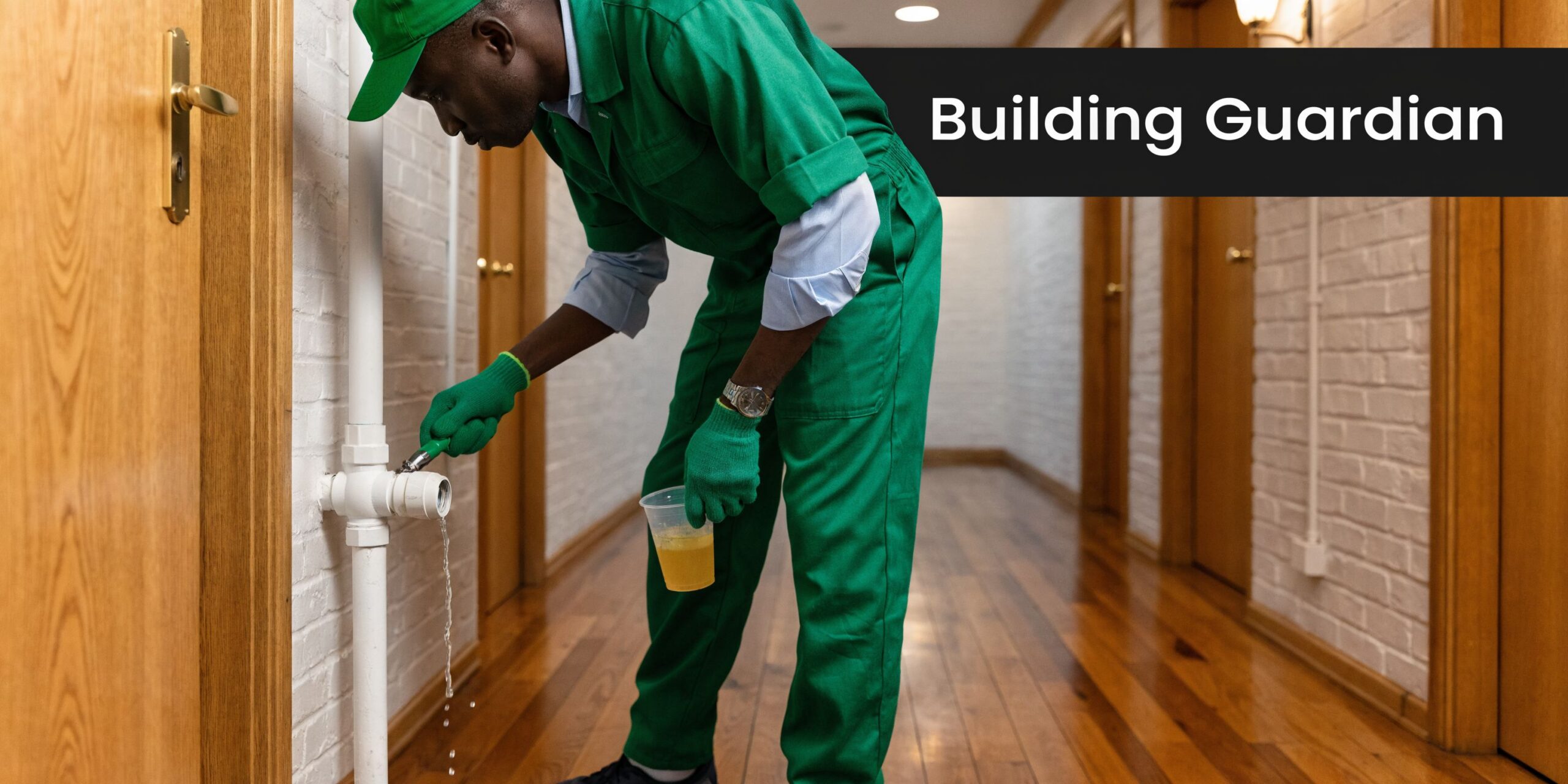
A superintendent earns trust in the small moments and the messy ones.
Residents notice when hallway lights get replaced before complaints pile up. Owners notice when vendor work is checked before invoices are approved. Boards notice when recurring problems stop recurring because someone on site finally tracked the root cause instead of just treating symptoms.
Why owners often underestimate the role
Many people hear “super” and think of a handyman with keys. That description is too small.
A building superintendent in U.S. and Canadian residential properties manages daily operations and serves as the main contact for repairs. Compensation often includes free housing and scales with building size, and the role is especially important in co-ops and condos because the super is present around the clock and directly affects building condition and finances. In the U.S., multifamily properties make up 20% of the 140 million housing units noted in the source, which shows how much of the housing stock depends on competent on-site operations (Apartment List on building superintendents).
What strong supers do differently
The best supers combine three kinds of judgment:
- Technical judgment: They understand plumbing, electrical, HVAC, roofs, doors, and common-area systems well enough to spot bad work early.
- Operational judgment: They know which issue must be handled first, which vendor to call, and what can wait until morning.
- People judgment: They can speak to tenants, boards, contractors, and owners without escalating every inconvenience into a conflict.
A super protects value by shortening the time between “something is wrong” and “someone competent is already handling it.”
This is why the role matters. Not because it sounds traditional, but because buildings run better when one accountable person owns the day-to-day reality on site.
What Is a Superintendent of Building Role and Scope
Think of the superintendent as the captain of the ship.
The property manager may set the route, handle budgets, report to ownership, and make broader policy decisions. The superintendent of building is on deck. They hear the noise in the mechanical room, smell the electrical issue before it turns into an outage, and see which contractor is doing rushed work in the basement corridor.
The core scope of the role
At its most practical level, the superintendent manages the building’s daily operating condition. That includes repairs, routine upkeep, resident requests, inspections, vendor access, and recordkeeping. In many buildings, the super also watches supplies, tracks recurring issues, and reports conditions that affect long-term capital planning.
Typical scope includes:
- Maintenance oversight: Plumbing leaks, HVAC concerns, doors, locks, lighting, walls, flooring, roofs, and shared equipment.
- Resident response: Receiving complaints, deciding urgency, coordinating fixes, and following up.
- Vendor supervision: Letting contractors in, confirming the work area, checking completion, and documenting what happened.
- Compliance support: Helping the property stay aligned with building rules, safety procedures, and operational standards.
- Administrative discipline: Maintenance logs, invoices, work notes, and reports to owners or managers.
For properties that need clearer role separation, this breakdown of a building manager role can help owners decide where superintendent duties begin and where management duties should stay.
Where readers get confused
The most common confusion is between a building superintendent and a construction superintendent.
They are not the same job.
A building superintendent manages an occupied or operating property after it exists. A construction superintendent oversees the creation of a project on site, coordinating daily work, quality control, code compliance, and subcontractors while the building is being built. That construction role is distinct from the project manager, who handles finances and long-range planning from the office, according to South Coast Improvement’s construction superintendent guide.
Why the distinction matters
If you hire for the wrong profile, you create frustration fast.
A candidate who is excellent at tenant service and apartment turnover coordination may not be the right person to run a major capital project with multiple trades. On the other hand, a candidate from heavy construction may know sequencing and site control but struggle with resident diplomacy, recurring service requests, and the constant relationship work of an occupied building.
That is why a superintendent of building should be evaluated as an operations leader, not just a repair technician.
Superintendent vs Property Manager A Clear Comparison
Owners mix up these roles all the time, and the confusion causes hiring mistakes.
When a board expects the property manager to solve every live building problem, response slows down. When an owner expects the superintendent to handle strategy, leases, owner reporting, and financial planning, that also fails. Strong properties separate the functions clearly, then make the two roles work together.
Side by side in plain language
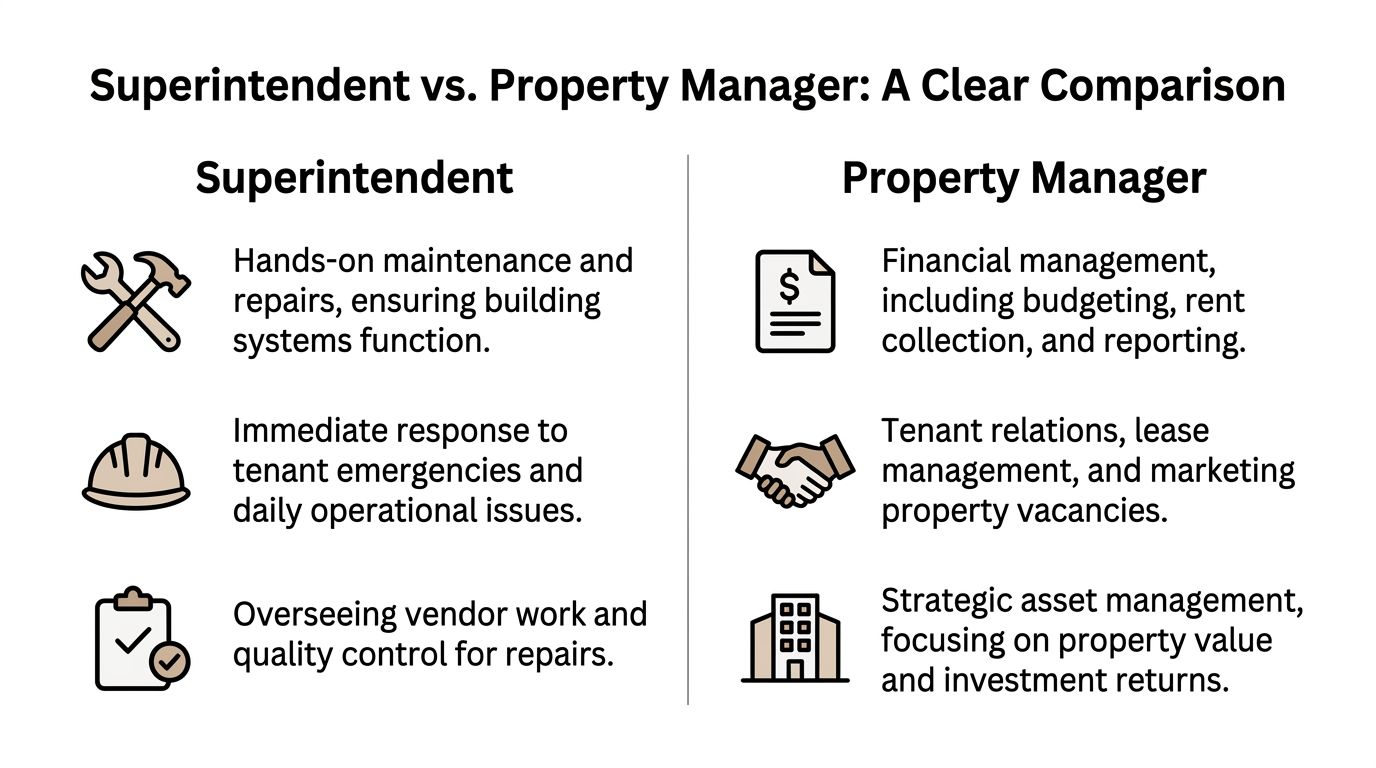
The superintendent is the on-site operator. The property manager is the administrative and financial manager.
Here is the simplest comparison:
| Role | Main focus | Works from | Typical daily concern |
|---|---|---|---|
| Superintendent | Physical building operations | On site | Repairs, emergencies, vendor access, inspections |
| Property manager | Financial and administrative oversight | Office and site visits | Budgets, contracts, owner communication, rent and policy matters |
What the superintendent handles better
A superintendent usually owns the parts of the job that require physical presence and immediate judgment.
That includes:
- Emergencies: A leak, outage, lock issue, or unsafe condition needs a person who is there.
- Work verification: Contractors need supervision. Somebody must check whether the job was done right.
- Daily condition control: Small issues become expensive when nobody sees them in real time.
What the property manager handles better
The property manager usually owns the tasks that depend on planning, reporting, and coordination above the building level.
That often means:
- Budgeting and owner reporting
- Contract administration
- Policy enforcement and board communication
- Leasing, tenant files, and higher-level vendor negotiations
If your organization is mapping support roles across office and property operations, this look at the office manager office function is useful because it highlights how on-site execution differs from administrative coordination.
The superintendent solves today’s building problems. The property manager protects the asset over time. You need both, but they should not be doing the same job.
How the partnership should work
The cleanest arrangement is simple.
The property manager sets expectations, approves budgets, reviews reporting, and escalates ownership decisions. The superintendent keeps the building stable, informed, and responsive. When they communicate well, owners get fewer surprises, residents get faster answers, and vendors stop exploiting gaps between office and site.
A weak property often does not lack effort. It lacks role clarity.
Core Responsibilities and Essential Skills for Success
The superintendent of building role gets easier to understand when you stop treating it as one job and start treating it as four jobs done by one person: operator, coordinator, inspector, and communicator.
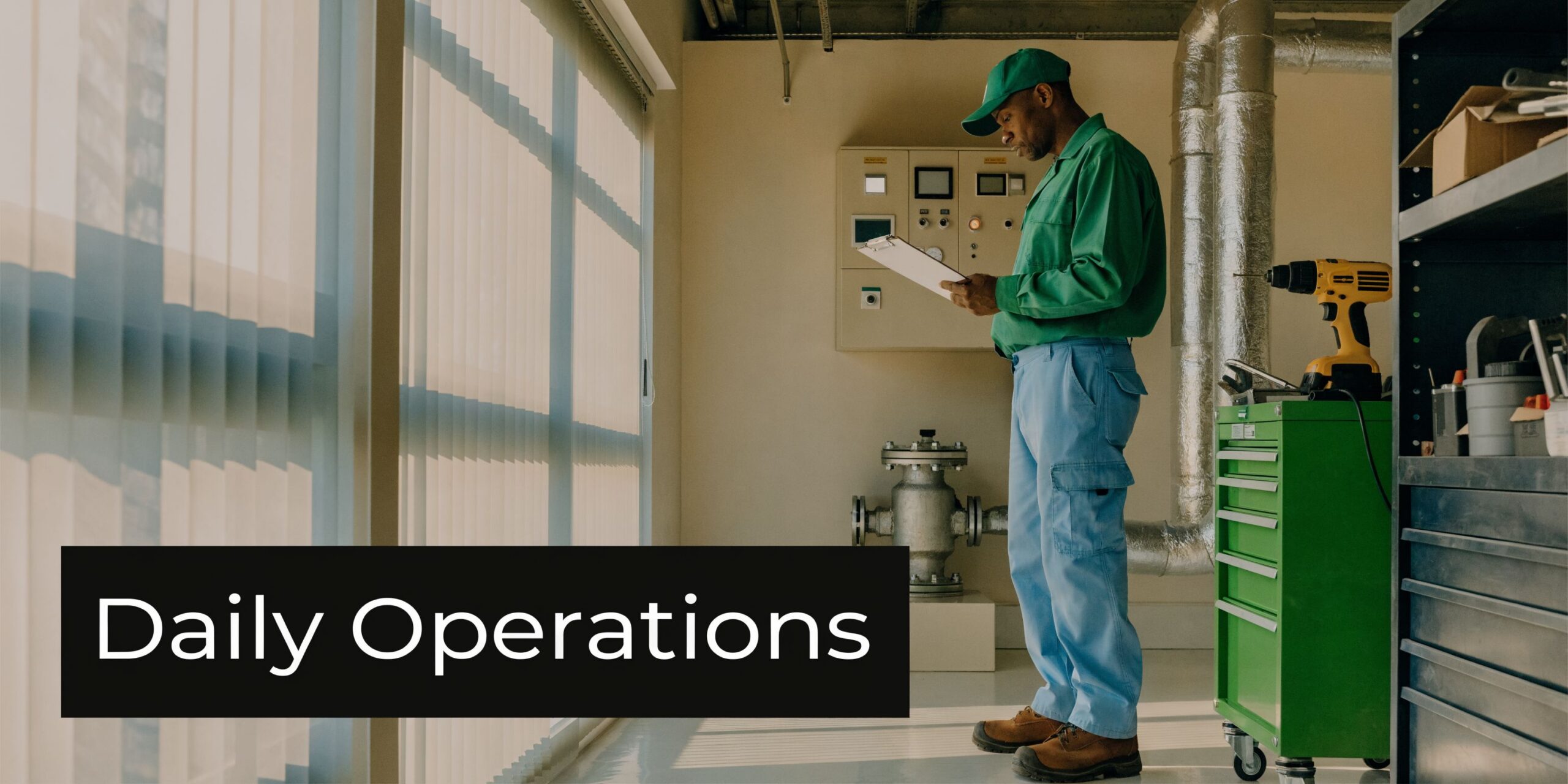
Maintenance and building systems
A super is usually the first person to notice whether systems are healthy or drifting toward failure.
That does not mean they personally perform every repair. It means they understand the building well enough to identify symptoms, take first-response steps, and bring in the right trade when needed.
Common responsibilities include:
- Mechanical awareness: HVAC, boiler or plant operations, pumps, and ventilation issues.
- Basic repair work: Doors, drywall patches, flooring problems, appliance issues, light fixtures, and hardware replacement.
- Preventive routines: Walking the property, checking common systems, and spotting wear before residents report it.
- Turnover readiness: Making units, common areas, and service spaces ready for occupancy or inspection.
Vendor management and sequencing
Here, average supers and exceptional supers separate.
A skilled superintendent does not just call vendors. They sequence them. If the electrician arrives before the leak is contained, the visit is wasted. If the IT disposal team shows up before access is cleared and pickup staging is ready, the building creates confusion for tenants and contractors alike.
That kind of coordination mirrors a broader superintendent skill described in construction operations. A superintendent must sequence trades to prevent interference, using scheduling tools to maintain visibility. That real-time coordination depends on technical knowledge of critical path analysis and resource leveling so trade dependencies do not trigger cascading delays (Coram on superintendent coordination).
In a building context, that translates into practical decisions such as:
- Contain first: Stop active damage or isolate the area.
- Clear access: Reserve elevators, unlock service rooms, notify affected parties.
- Stage vendors in order: Plumber before painter. Electrician after water issue is made safe. Electronics recycler after asset list and pickup zone are ready.
- Document completion: Notes, photos, work orders, and invoice review.
For teams building more consistent operating procedures, these Top 10 Facility Management Best Practices offer useful guidance on inspections, routines, and accountability.
Compliance, records, and communication
The super’s paperwork matters more than many owners realize.
Good records create continuity when staff changes, support disputes with vendors, and help managers understand whether an issue is random or recurring. For a fuller view of how these workflows support operations, this overview of facility maintenance is worth reviewing.
Essential communication duties include:
- Resident updates: Clear timing, realistic expectations, no vague promises.
- Owner reporting: Short, factual updates on incident, action taken, next step.
- Vendor instructions: Access rules, scope boundaries, cleanup expectations, sign-off process.
If the super cannot explain what happened, what was done, and what still needs action, the building is operating on memory instead of management.
Skills that matter most
The strongest supers usually share the same mix of hard and soft skills:
- Mechanical fluency across common building systems
- Calm triage under pressure
- Diplomatic communication with residents and boards
- Quality control instincts that catch incomplete work
- Basic digital discipline for work orders, logs, and scheduling
- Vendor judgment about who is reliable, who needs supervision, and who should not be called back
This describes the essential job. It's not just fixing things, but making sure the whole repair ecosystem works.
Hiring the Right Superintendent for Your Atlanta Property
A pipe leaks at 6:30 a.m. A delivery crew blocks the loading area. A tenant calls about a server closet full of old electronics that cannot go in the dumpster. The superintendent you hire will shape how that day ends.
That is the hiring standard.
A strong Atlanta super does more than keep the building running. They protect tenant experience, control vendor quality, maintain records that hold up under scrutiny, and recognize where routine operations connect to compliance and ESG goals. In many properties, especially mixed-use, office, healthcare, and larger multifamily sites, that includes knowing when a disposal issue is really a chain-of-custody issue.
What to screen for first
Start with ownership mindset.
The best candidates talk like site operators, not roaming troubleshooters. They notice patterns, guard access, watch contractors closely, and treat every repair as part of a larger system. A good super works like an air traffic controller for the property. Different vendors, residents, building systems, and deadlines are all moving at once, and someone has to keep them from colliding.
In practical terms, you are looking for a person who can make sound decisions without waiting for constant direction. Atlanta properties often depend on that judgment because service calls, tenant needs, and vendor schedules rarely arrive one at a time.
Better interview questions
Basic trade questions only tell you whether a candidate has touched equipment before. Better questions show how they think, document, and supervise.
Ask questions like these:
- “Tell me about a time two vendors needed the same area at once. How did you sequence the work?”
- “How do you decide whether to fix something in-house or call a specialist?”
- “When a resident or tenant is upset and the contractor is delayed, what do you say first?”
- “What records do you keep after an emergency repair?”
- “How do you confirm a vendor finished the job properly before you approve it?”
- “If a tenant leaves behind computers, printers, or networking equipment, how do you decide what disposal process applies?”
That last question matters more than many owners expect. It shows whether the candidate can spot the line between ordinary maintenance and regulated or high-risk vendor work.
Signs you are talking to a strong candidate
Strong candidates answer with a sequence. First they secure the area. Then they communicate. Then they document. Then they verify the result. That order matters.
Look for these signals during the interview:
- Specific examples: They describe shutoffs, access control, photos, logs, and follow-up steps.
- Vendor discipline: They explain how they set scope, monitor cleanup, and reject incomplete work.
- Good judgment: They know their limits and call specialists before a small issue turns into building-wide disruption.
- Record habits: They keep notes that help managers, owners, and future staff understand what happened.
- Risk awareness: They recognize that some materials, especially electronics with data or batteries, need a documented vendor process.
A weak candidate speaks in general promises. A strong one describes repeatable routines.
Tools support the hire
Even a capable superintendent will struggle if work orders, service history, and vendor activity live in text messages and memory. Clean systems make good judgment visible. They also help owners evaluate performance without guessing.
If you are tightening operations, this article on facility maintenance management software is a practical starting point for work orders, asset tracking, and task visibility.
One Atlanta hiring question that owners should not skip
Ask each finalist how they handle electronics left behind during tenant turnover, office refreshes, or renovation work.
You do not need a superintendent to act as an IT manager. You do need one who understands that old monitors, printers, drives, and similar equipment can trigger security, disposal, and reporting concerns that ordinary trash hauling does not solve. In Atlanta, where many properties are balancing tenant expectations with ESG commitments, that awareness is a strategic advantage.
The right hire protects the building twice. First through day-to-day operations, then through smart vendor decisions that reduce compliance risk and turn messy tasks into documented, defensible process.
The Modern Superintendent's Role in E-Waste and ESG
Many owners still overlook one of the fastest ways a superintendent can add strategic value: managing e-waste correctly.
That includes old laptops from a tenant move-out, surplus office monitors, retired printers, networking gear from a renovation, storage drives from a medical office, and outdated equipment left behind in back rooms because nobody wants to touch it. In Atlanta properties, this shows up in commercial towers, mixed-use sites, healthcare spaces, schools, and multifamily buildings with shared office or amenity areas.

Why this belongs on the superintendent’s radar
A major gap in property management guidance is e-waste handling. The U.S. generated 6.9 million metric tons of e-waste in 2019, and only 15% was recycled, according to the cited guidance. That creates compliance risk under RCRA and also creates a chance for superintendents to add value by working with certified recyclers that convert disposal into a documented ESG win (Hauseit on building super e-waste guidance).
For many buildings, the problem is not bad intent. It is operational drift.
Old electronics get set aside “for later.” A tenant asks where to leave obsolete devices. A clinic closes a suite. A school swaps out a lab. A server closet gets cleaned. If the superintendent has no defined process, the property ends up with clutter, uncertainty, and possible data risk.
What a smart e-waste workflow looks like
A strong superintendent does not need to dismantle drives or certify destruction personally. They need to control the workflow.
That usually means:
- Identify the material: Separate electronics from general maintenance debris.
- Flag sensitivity: Drives, servers, office copiers, and healthcare equipment may require data-focused handling.
- Choose the right vendor: Use a recycler that can document chain of custody, pickup, and disposition.
- Prepare the site: Access, loading zones, staging rooms, and tenant communication should be ready before pickup day.
- Keep proof: Certificates and service records should be stored with building or management files.
If your property team is building a cleaner process for this in the metro area, this page on electronic recycling in Atlanta is a good local reference point.
E-waste is not just a janitorial issue. It is a compliance, data, and reputation issue that happens to move through the building.
Where ESG enters the picture
Owners increasingly want operations that do more than avoid mistakes. They want procedures that are easier to report, easier to defend, and easier to align with broader environmental or community goals.
That is where vendor choice becomes strategic.
A mission-driven recycler can help a building transform a disposal task into a story the ownership group can use. Cause-based messaging like “Your old tech can house a veteran and grow a forest” works because it turns an invisible back-of-house task into something tangible and human. Seasonal recycling drives around Veterans Day, Earth Day, or Arbor Day can also give office properties, schools, and multi-tenant sites a practical way to engage occupants.
For companies with ESG or CSR goals, documented pickups, impact certificates, and clear reporting support internal sustainability communication. Some organizations also respond well to visible recognition, such as a “Recycled with Purpose” style badge or campaign language that connects tech recycling to community benefit.
For the superintendent, the lesson is simple. The better the vendor partnership, the more value the building gets from the same operational task.
Conclusion More Than Maintenance A Strategic Partner
The superintendent of building is no longer just the person with the keys, the toolbox, and the emergency phone.
A good super protects the property through judgment, visibility, and control of daily operations. They keep maintenance moving, supervise vendors, calm residents, document incidents, and stop minor issues from becoming major losses. That already makes the role indispensable.
The stronger insight is that the role has expanded. Buildings now depend on supers to support compliance, oversee specialized service partners, and handle categories of risk that go beyond pipes and paint. E-waste is one of the clearest examples. When the superintendent treats disposal, data-sensitive materials, and vendor documentation seriously, the property becomes safer, cleaner, and easier to manage.
That is why smart owners hire for more than repair skill. They hire for coordination, communication, and operational maturity.
The modern superintendent is not just maintaining a building. They are helping manage the asset, the risk profile, and the reputation attached to it.
If your Atlanta property needs a compliant, organized way to handle retired electronics, bulk IT equipment, or data-sensitive devices, Atlanta Green Recycling offers local e-waste pickup and business-focused recycling support. Their team works with organizations across the Atlanta metro area on secure electronics disposal, documentation, and mission-driven recycling programs that can support both operational needs and community impact.