
A Guide To The Modern Office Manager Office In Atlanta


The role of an office manager has completely transformed. It's no longer just about keeping the administrative wheels turning; it's now the strategic core of modern business, especially in a bustling hub like Atlanta. Today’s office manager juggles everything from employee experience to critical compliance, including the massive—and often underestimated—responsibility of managing the entire lifecycle of company technology.
The Evolving Office Manager In Atlanta
Long gone are the days when an office manager's job revolved around ordering supplies and coordinating schedules. In Atlanta's competitive business landscape, your role is far more strategic. You've become a central figure in operational efficiency, corporate culture, and even risk management.
This guide is here to tackle a crucial, yet frequently overlooked, part of your duties: managing your company's technology from the moment it's purchased to its final disposal.
This isn't just about clearing out old equipment from a storage closet. It’s about turning a routine operational task into a strategic asset. When you handle IT asset disposition the right way, you can guarantee ironclad data security, help your company smash its sustainability goals, and even give its brand reputation a serious boost in the community.
A Role of Growing Importance
The modern office manager is no longer just a "task manager"—they're a strategic partner, a vital hub connecting departments from HR and IT to finance. This unique position offers a huge opportunity to add value far beyond traditional administrative work.
Below is a quick look at how the responsibilities have expanded, turning this role into a cornerstone of a well-run company.
Key Responsibilities Of The Modern Office Manager
| Responsibility Area | Core Tasks | Strategic Impact |
|---|---|---|
| Operational Efficiency | Managing vendors, optimizing office layout, implementing new processes. | Reduces costs, improves productivity, and streamlines workflows across the business. |
| Employee Experience | Onboarding new hires, organizing company events, maintaining office culture. | Boosts morale, increases employee retention, and makes the company a great place to work. |
| Facility & Asset Management | Overseeing maintenance, managing office supplies, coordinating technology lifecycles. | Ensures a safe and functional work environment and protects company assets and data. |
| Compliance & Risk | Ensuring workplace safety, managing data security for e-waste, handling documentation. | Mitigates legal and financial risks, protects sensitive company and client information. |
| Financial Oversight | Budgeting for office expenses, tracking spending, finding cost-saving opportunities. | Directly contributes to the company's bottom line and ensures financial responsibility. |
As your duties expand, so do the challenges. You're at the forefront of planning for major operational shifts, like an office move. For anyone facing that task, an ultimate office relocation checklist can be an absolute lifesaver. This is also especially true for office managers who pull double duty with building management responsibilities.
You can turn a routine office cleanout into a powerful story about corporate responsibility. By partnering with a mission-driven recycler, your old electronics can support veterans and help reforest our landscapes, creating a tangible impact you can share with stakeholders.
This guide will give you a clear roadmap for mastering one of the most critical aspects of your expanded role—responsible e-waste management. You’ll learn exactly how to protect your company, champion sustainability, and make a real difference, all while making your own operations run smoother than ever.
Managing Your Office IT From Purchase To Disposal
Think of your office technology as having a complete lifecycle—a story with a beginning, a middle, and an end. As the person steering the ship, your role is to oversee this entire journey. While buying new gear is the first chapter, the final one—end-of-life—is arguably the most critical for protecting your company.
When managing office IT from purchase to disposal, some companies find value in options like refurbished iPhones as a cost-effective and environmentally sound choice. But no matter how a device enters your ecosystem, it must eventually exit securely. This is where having a clear, simple process becomes your best defense against data breaches and compliance nightmares.
This process flow diagram shows how the office manager's role has shifted from purely administrative tasks to a more strategic function at the company's core.
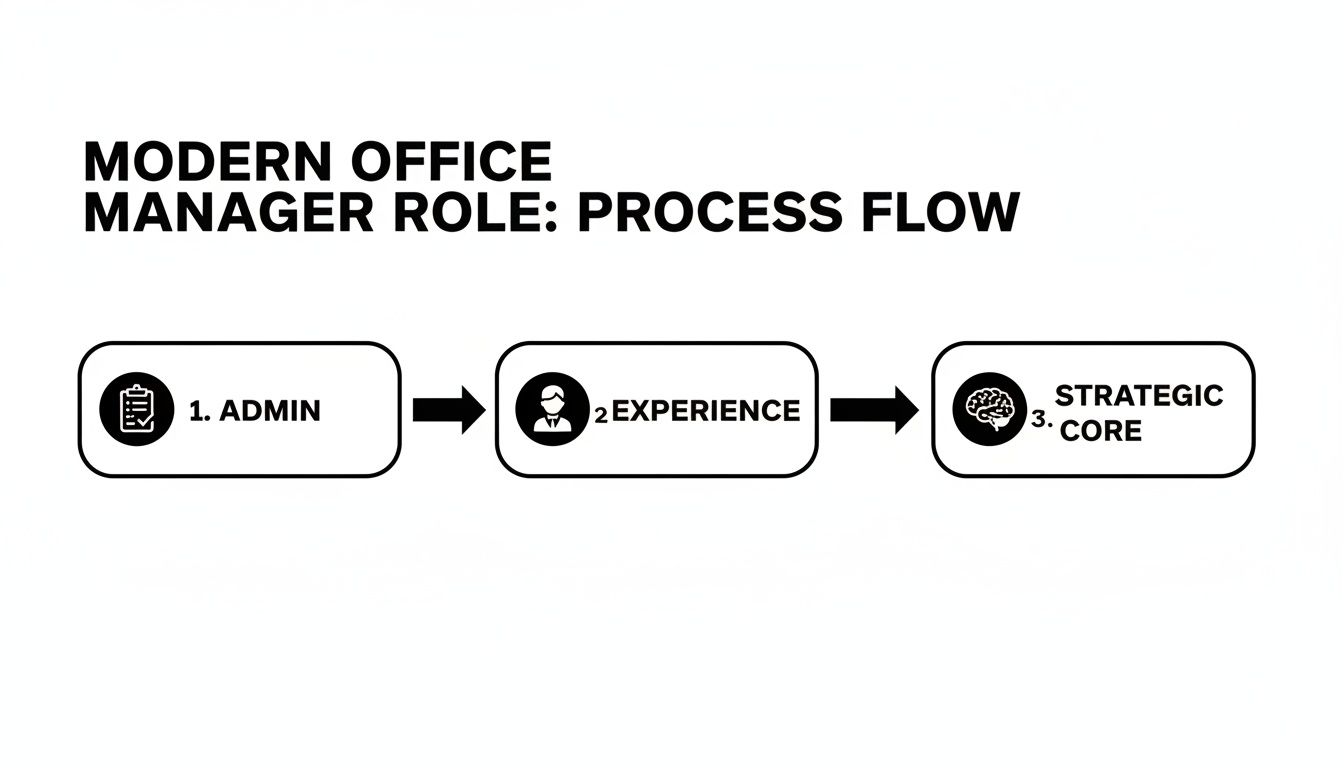
This evolution means managing assets at their end-of-life is no longer just another task. It's a key strategic responsibility that protects the entire organization from risk.
Creating A Centralized E-Waste Hub
The first step toward a smooth disposal process is to stop letting old tech pile up in random closets or under desks. You need to designate a specific, secure area in your office as the official e-waste hub. This could be a locked storage room, a caged-off section of a warehouse, or even a set of clearly labeled, sturdy bins.
The goal is simple: create one single place where all decommissioned electronics go. This prevents stray devices from getting lost, stolen, or improperly thrown out—all scenarios that could expose your company to significant risk.
Tracking Assets For Secure Disposal
Once you have a hub, the next step is tracking what goes into it. You don't need a complicated, expensive system for this; a simple spreadsheet will do the job perfectly well. When a device is retired and moved to the hub, just log it.
Your asset disposal log should include:
- Device Type: (e.g., Laptop, Server, Monitor)
- Asset Tag/Serial Number: This is crucial for creating a clear audit trail.
- Former User/Department: Helps in tracking where sensitive data might have resided.
- Date Retired: Marks the exact day the device was taken out of service.
This log is so much more than an inventory list. It becomes the foundation for your Certificate of Destruction, proving every single device was accounted for and handled correctly.
Think of data destruction as the digital equivalent of a high-security document shredder. Just deleting files leaves data easily recoverable, but professional data sanitization overwrites the information so completely that it’s impossible to get back, permanently protecting your company secrets.
Understanding Data Destruction Methods
"Data destruction" isn't just a buzzword; it's a non-negotiable security step. There are two primary methods a certified recycling partner will use, and it's important to know the difference between them.
- DoD-Level Data Sanitization: This is a software-based method that overwrites the entire hard drive with random characters, often multiple times. The term comes from the Department of Defense's 5220.22-M standard, and it makes the original data completely unrecoverable. This is the ideal method for drives that may be refurbished and reused.
- Physical Shredding: For devices that are obsolete, broken, or contain extremely sensitive information, physical destruction is the ultimate guarantee. The hard drives are fed into an industrial shredder that chews them into tiny, unusable metal fragments. There’s absolutely no coming back from that.
Following these steps transforms a potential liability into a secure, repeatable, and documented process. Properly managing the final chapter of your IT assets protects your company from a data breach and reinforces your role as a strategic guardian of the business. You can learn more about how a dedicated partner can help you with this by exploring our specialized services for the modern office manager.
Navigating Data Compliance For Atlanta Businesses
Let's be honest, compliance paperwork can feel like a massive headache. As an office manager, you’re on the front lines, tasked with protecting your company’s sensitive information. In a bustling business hub like Atlanta, that’s a heavy responsibility. Getting the rules right isn't just about dodging fines—it's about safeguarding your company's reputation.
Many industries, from healthcare to finance, have to follow strict data protection laws. Think of these rules less as red tape and more as essential guardrails designed to keep personal and financial data from getting into the wrong hands. For any office manager juggling an Atlanta office, knowing these rules is a huge part of the job.
Understanding Key Data Protection Laws
While the list of regulations can seem endless, a couple of key laws pop up again and again for businesses in the Atlanta metro area. Once you understand the why behind them, staying compliant becomes much more straightforward.
- HIPAA (Health Insurance Portability and Accountability Act): This is the big one for any company handling Protected Health Information (PHI). We’re not just talking about hospitals and clinics. Law firms, insurance agencies, and even tech companies with healthcare clients fall under its umbrella. A PHI breach can lead to absolutely staggering fines and kill a company’s reputation.
- FACTA (Fair and Accurate Credit Transactions Act): This law is all about consumer credit information. If your business ever looks at data from credit reports—like credit scores or background checks—you are legally on the hook to destroy that information properly. It must be completely unreadable and impossible to piece back together.
For businesses in highly regulated fields like healthcare, government, or data centers, the office manager is often the one making sure all the i's are dotted and t's are crossed for compliance and asset disposal. It's a critical role that's reflected in hiring trends and compensation, as noted by sources like Addison Group's research on administrative jobs.
The Certificate Of Destruction: Your Legal Shield
When you work with a certified e-waste recycler, the single most important piece of paper you’ll get is the Certificate of Destruction. This is so much more than a simple receipt. It’s a legal document that acts as your official proof of compliance.
Think of a Certificate of Destruction as your get-out-of-jail-free card in an audit. It formally transfers liability for the data on your old devices from your company to your recycling partner, proving you took the necessary steps to protect sensitive information.
This certificate lists out every single asset that was destroyed, right down to the serial numbers on the hard drives and the method used (like DoD-level wiping or physical shredding). If you’re ever facing an audit or legal question, this document is the undeniable proof that you did everything right. If you want to get into the nitty-gritty, you can learn more about the specifics of a Certificate of Destruction and why it’s so critical.
Your Essential Documentation Checklist
Never, ever cut corners on documentation when picking an e-waste partner. Your provider absolutely must give you a complete paper trail that will satisfy any auditor and keep your business safe. Before you sign on the dotted line, make sure your partner provides the following.
Essential Documents from Your E-Waste Partner:
- A Signed Service Agreement: This clearly lays out the scope of work, security protocols, and who is responsible for what.
- Chain of Custody Forms: These forms track your devices from the moment they leave your office until they are destroyed. It ensures nothing gets "lost" along the way.
- Certificate of Destruction: The final, most crucial document confirming your data is gone for good.
- Recycling and Sustainability Reports: These reports detail the environmental impact of your recycling efforts—perfect for your company’s ESG or corporate social responsibility reports.
When you start looking at compliance this way, it stops being a chore and becomes one of your best risk management tools. It’s a fundamental part of running a responsible business that protects your Atlanta company from serious financial and reputational damage.
How To Choose The Right E-Waste Partner In Atlanta
Choosing who handles your company's old electronics is a much bigger deal than just finding the lowest price. As an office manager, you know you're not just clearing out a storage closet. You're the gatekeeper for your company's private data, its commitment to the environment, and its public reputation. This isn't a task for a simple pickup service; it calls for a true partner.
For any Atlanta business, picking that partner is a crucial decision. You absolutely need someone who can deliver on their promises of secure, compliant, and responsible recycling. The wrong choice can quickly spiral into a nightmare of data breaches, compliance fines, or environmental mishaps—all of which land squarely on your company's shoulders.
But get it right? You can turn a routine operational task into a genuine strategic win.
Beyond The Price Tag: Vetting For Real Value
When you start comparing e-waste vendors, the cheapest quote is often a red flag, not a bargain. A suspiciously low price can easily hide serious risks, like cutting corners on data destruction or illegally shipping your old equipment overseas. A partner you can actually trust will be an open book about their process and won't flinch at your toughest questions.
Before you sign any contracts, you need to make sure you have the full picture. A good vetting process can make all the difference.
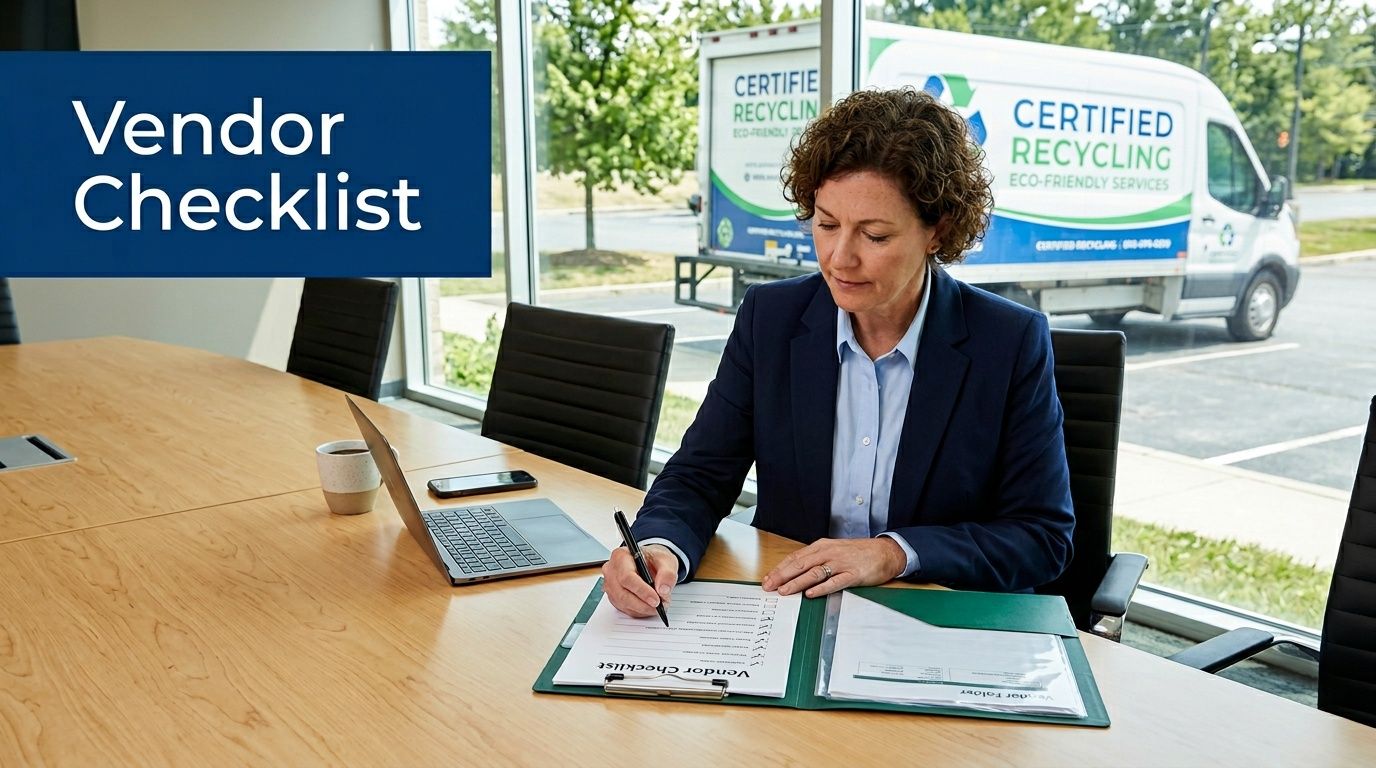
To help you compare apples to apples, we've put together a checklist of what to look for when evaluating potential e-waste partners in Atlanta. Think of this as your roadmap to finding a secure, certified, and reliable vendor.
E-Waste Vendor Vetting Checklist
| Evaluation Criterion | What to Look For | Why It Matters |
|---|---|---|
| Industry Certifications | R2 or e-Stewards certification. Ask for their certificate number. | These are the industry's gold standards, guaranteeing ethical handling, environmental safety, and data security. A lack of certification is a non-starter. |
| Data Destruction Methods | Clear explanation of DoD-level data wiping and physical shredding options. | You need proof that your sensitive company and client data is 100% unrecoverable. "Deleting" files isn't enough. |
| Chain of Custody | The ability to provide a complete, auditable trail from your office to final disposition. | This documentation proves your assets were handled securely every step of the way, eliminating the risk of equipment "disappearing." |
| Downstream Vetting | Transparency about whether they use downstream partners and how those partners are vetted. | If they outsource any part of the process, you need assurance that their partners meet the same high standards for security and compliance. |
| Insurance & Liability | Proof of liability insurance, including data breach and pollution liability coverage. | This protects your company from financial fallout in the unlikely event that something goes wrong. |
| Reporting & Certificates | A commitment to provide Certificates of Destruction and detailed asset reporting. | This is your final, official proof for compliance audits and internal records that you handled everything by the book. |
This checklist gives you a solid framework for your conversations. A vendor who can confidently check all these boxes is one worth considering. A vendor who hesitates or can't provide clear answers is probably not the right fit for your business.
Think of it like this: you wouldn't hire a key employee without checking their background and references. You shouldn't entrust your company's data and reputation to a recycler without doing the same deep dive.
Finding A Partner Who Shares Your Mission
While top-notch security and compliance are the absolute baseline, the best partnerships go even deeper. They align with your company's values and help you tell a more positive story to your employees, customers, and leadership.
More and more, the modern office manager is asked to contribute to corporate ESG (Environmental, Social, and Governance) goals. Your choice of recycling vendor is a powerful, and often overlooked, way to do just that.
This is where recycling stops being a simple transaction and starts becoming a source of pride. What if your vendor had a dual mission, tying responsible electronics recycling to a powerful social cause? Suddenly, that office cleanout becomes an act with a measurable, positive impact.
The story you can tell completely changes. You’re no longer just getting rid of old junk; you’re actively making a difference. You can find services that make this possible right here in Atlanta, allowing you to combine environmental action with community support.
The Dual-Impact Differentiator
When you partner with a mission-driven recycler, you get so much more than a service. You get a story—one that resonates with everyone.
- Veteran Support: Your company’s retired assets can help fund programs that provide housing, job training, and vital support for local veterans and their families.
- Reforestation Projects: Each pickup you schedule can contribute directly to planting trees, helping to restore forests and combat climate change.
This approach elevates your role from a purely operational one to a creator of positive community impact. When you schedule a pickup, you’re not just clearing space—you’re building your company's legacy as a responsible corporate citizen.
To see how a certified partner manages the logistics from pickup to final disposition, take a look inside a local e-waste recycling center and see the process for yourself.
Turn E-Waste Into A Powerful ESG And CSR Asset
What if that storage closet full of old IT equipment could actually build your company’s reputation? As an office manager, you’re in a unique position to turn what looks like a simple disposal problem into a major strategic win. When you partner with a mission-driven recycler, you make direct, measurable contributions to your company's Environmental, Social, and Governance (ESG) goals.
This changes the game entirely. You’re no longer just overseeing an operational task; you're creating real value and a compelling corporate story. Imagine handing your leadership team official "Veteran Support Impact Reports" and "Plant-A-Tree" certificates that came directly from your recycling program. This is how you transform a routine clean-out into a powerful asset.

Make Your Company An ESG Leader
For the modern office manager, contributing to Corporate Social Responsibility (CSR) isn't just a "nice-to-have" anymore—it’s a core part of the role. And frankly, responsible e-waste disposal is one of the most straightforward and impactful ways to get it done.
When you team up with a recycler focused on this kind of dual impact, the benefits go way beyond just clearing out old tech. You’re actually crafting a powerful narrative that resonates with employees, customers, and stakeholders.
Your old tech can house a veteran and grow a forest. This isn’t just a feel-good slogan; it’s a tangible outcome. Emotional storytelling connects the simple act of recycling with real-world impact, turning your e-waste into a source of pride for the entire company.
This approach gives you a clear path to becoming an ESG champion within your organization.
Turning Recycling Into Reportable Metrics
The trick is to work with a partner who gives you the right paperwork. You need more than a basic Certificate of Destruction; you need proof of your positive impact that you can proudly feature in official company reports.
A forward-thinking partner makes this process incredibly simple. For example, Atlanta Green Recycling provides an easy ESG win for Atlanta companies, offering free pickup for 50+ devices and then delivering "Plant-A-Tree" certificates and "Veteran Support Impact Reports"—perfect for your CSR documentation.
This documentation includes:
- Veteran Support Impact Reports: These detail exactly how your company's recycled assets helped fund programs supporting local veterans.
- Plant-A-Tree Certificates: A clear quantification of the trees planted in your company’s name, contributing directly to reforestation efforts.
- "Recycled with Purpose" Eco-Badge: A digital badge your marketing team can display on the company website and in sustainability reports, showcasing your commitment.
These aren't just symbolic gestures. They are concrete, reportable metrics that show your company’s dedication to social and environmental good. You can find out more about the benefits of e-waste recycling and see just how far the advantages can stretch.
By choosing a partner with a strong social mission, you get the tools to champion sustainability from your desk. You effectively turn a cost center into a value creator, building a stronger brand and a better community—one recycled device at a time.
Alright, you’ve got the why, the what, and the how. Now it's time to put it all into motion.
Feeling ready to clear out that clutter and make a real impact? Let's turn that motivation into a simple, straightforward game plan. We’ve broken the whole process down into four clear steps, designed specifically for a busy office manager like you.
This isn't about adding another huge project to your plate. It's about taking decisive action, one easy step at a time.
1. Get a Quick Count of Your Inventory
Before you can schedule anything, you need a rough idea of what you’re dealing with. Don’t worry, this doesn’t need to be a formal, line-by-line audit. The goal here is a quick, high-level overview.
Take a walk through your office, peek into those storage closets, and check any other nooks where old tech might be gathering dust. Grab a notepad or open a simple spreadsheet and start a list. Just note the type of device (laptops, monitors, servers, etc.) and a rough count. This quick tally is exactly what a recycling partner needs to get the ball rolling.
2. Schedule Your Pickup
With your inventory estimate in hand, you're ready to make the call. Reaching out to a partner like Atlanta Green Recycling is simple. To make the process seamless, just have a few key details ready.
Your partner will likely ask for:
- A Point of Contact: Who on your team will be managing the pickup?
- Your Location: The physical address, plus any helpful notes like building access or where the loading dock is.
- Your Inventory Estimate: That simple list of items and quantities you just made.
- Special Requirements: Be sure to mention if you have any unusually large items or if you need on-site data destruction services.
For businesses in the Atlanta area with 50 or more devices, we can offer free pickup services. This completely removes the cost barrier, turning a big, daunting project into a simple, hassle-free task.
3. Prep for a Smooth Pickup Day
To make sure pickup day is as quick and painless as possible, it helps to gather all your e-waste in one spot. If you’ve already set up that central collection hub we talked about, you’re golden. If not, now’s the time to move everything to an easily accessible area, like a ground-floor room or a spot near the loading dock.
You don't need to worry about boxing everything up perfectly. A professional crew will handle all the heavy lifting, packing, and secure loading. Your main job is just to point them in the right direction. This keeps the whole process moving quickly with minimal disruption to your workday.
4. Receive Your Proof of Impact
Once your equipment is off-site, the job isn't quite done—in fact, the best part is still on its way. In just a few business days, you'll receive a full package of documentation.
Think of this as your "proof of impact." It’s much more than a receipt. It’s a collection of official documents that validate your company's responsible choices and provide powerful material for your ESG and CSR reports.
Your documentation will include a Certificate of Destruction, which covers your legal compliance needs. But just as importantly, you'll get tangible proof of your positive social and environmental impact, like Plant-A-Tree certificates and Veteran Support Impact Reports. You just turned a simple office cleanout into a fantastic story of corporate responsibility that you can share with pride.
Your Top E-Waste Questions in Atlanta, Answered
As you get a handle on the bigger picture of running a modern office, you're bound to have some very practical questions about managing old electronics in Atlanta. We get it. Here are some clear, no-nonsense answers to the questions we hear most often from office managers just like you.
What’s The Minimum for a Free Pickup in Atlanta?
This is a common one. Most certified recycling partners, including us, offer free pickups once you have a certain amount of equipment. The magic number is usually around 50 qualified items—think computers, laptops, or servers.
This service makes it incredibly easy and budget-friendly for any business to finally tackle that cluttered storage closet and get rid of outdated tech securely.
How Can I Guarantee Our Data Is Destroyed?
This is easily the most important question, and the answer comes down to one thing: paperwork. A reputable partner will always provide a Certificate of Destruction.
This isn't just a generic receipt. It's a detailed document that lists the unique serial numbers of the hard drives that were destroyed and exactly how it was done. For total peace of mind, only work with a vendor that provides a fully documented, secure chain of custody from the moment they pick up your equipment.
What Documentation Helps With CSR and ESG Reports?
Your documentation should do more than just check a legal box. A true mission-driven partner will give you tangible proof of the good your company is doing.
Instead of just basic forms, look for a vendor who delivers:
- Impact Reports that detail the real-world social good your recycling created, like support for local veteran programs.
- Plant-A-Tree Certificates to quantify your environmental contribution—perfect for slotting right into your sustainability reports.
- A digital "Recycled with Purpose" Eco-Badge you can proudly display on your company’s website and in marketing materials.
These aren't just pieces of paper; they transform your routine e-waste cleanout into a powerful story for your company's CSR and ESG goals.
Do You Take More Than Just Computers?
Absolutely. A full-service IT Asset Disposition (ITAD) provider is set up to make a complete office cleanout simple. Reputable recyclers will take a whole range of electronics off your hands.
We're talking about monitors, printers, networking gear, servers, keyboards, tangled piles of cables, and old company cell phones. This all-in-one approach means you just have to make one call to handle everything, which saves you a ton of time and coordination.
Ready to turn your e-waste from a nagging liability into a positive asset? The team at Atlanta Green Recycling is here to help. We offer secure, compliant, and mission-driven electronics recycling that directly supports local veterans and reforestation projects.
Schedule your free pickup today and get your Certificate of Impact.