
Atlanta Building Superintendent: ESG & Impact in 2026


If you're a building superintendent in Atlanta, you know the job isn't what it used to be. The days of focusing solely on leaky pipes and flickering lights are long gone. Today, you're on the front lines, leading your building's push for sustainability and making a real community impact.
In a competitive market like Atlanta, tenants aren't just looking for a space—they're looking for a partner in corporate responsibility. And you're the one who can make it happen.
The Superintendent's New Role in Sustainable Operations
Let's be honest, the modern building superintendent is now a key player in hitting those big Environmental, Social, and Governance (ESG) goals. You're implementing green initiatives that go way beyond just changing lightbulbs.
A huge—and often overlooked—part of this is figuring out what to do with all the old electronics. Every time an office gets a refresh or a tenant moves out, a mountain of old computers, monitors, and servers gets left behind. How you handle that e-waste says everything about your building's commitment to doing the right thing.
Tossing it in a dumpster? That's not just irresponsible anymore; it's a missed opportunity. A smart e-waste recycling program can flip a compliance headache into a powerful story about corporate citizenship. For the building managers and owners you work with, this is a tangible win that boosts the property's reputation and attracts tenants who care.
From Maintenance Manager to ESG Champion
You have a unique view of the entire building's operations, seeing opportunities for efficiency that no one else can. This now includes everything from resource management to waste reduction. You're not just the person who fixes things anymore—you're the person driving meaningful change.
Putting a strategic e-waste program in place gives your building a serious edge:
- Sharpens Your ESG Metrics: Properly documented recycling gives you hard data for sustainability reports. This helps the building hit its corporate responsibility targets.
- Wipes Out Liability: When you partner with a certified recycler, you get proof that all data on old devices has been completely destroyed. This protects your tenants and your building from a potential data breach nightmare.
- Builds Stronger Tenant Relations: Offering a simple, responsible way for tenants to get rid of their old electronics is a high-value amenity. It shows you're committed to service and the planet.
Creating Impact Beyond the Building
The best programs I've seen take it a step further. They connect recycling to a greater cause. Imagine being able to tell your tenants that their old office gear isn't just being recycled—it's being repurposed to help local veterans and fund reforestation projects right here in Georgia. This dual-impact model turns a simple operational task into a story people want to be a part of.
By championing an e-waste initiative, you're not just managing waste. You're creating a real, verifiable positive impact that resonates with everyone—tenants, management, and the entire Atlanta community. It firmly positions you as a leader in modern, responsible property management.
To make your operations even tighter, you could also look into robust asset tracking best practices to keep an eye on equipment from purchase to disposal. This kind of proactive approach helps cut down on waste and fits perfectly with a sustainability-first mindset.
Launching Your Building's E-Waste Recycling Program
As a building superintendent, your plate is already full. I get it. The idea of starting a new program might sound like just another headache, but rolling out an e-waste recycling initiative is one of the simplest, highest-impact moves you can make. It's a strategic play that cuts costs, boosts your building’s profile, and keeps your tenants happy.
Before you do anything else, you need to get the green light from building management or the property owner. Don't just bring them a problem; walk in with a solution. You want to frame this not as an expense, but as an undeniable win for everyone involved.
This is where you connect your day-to-day operations with the bigger picture of the building's value.
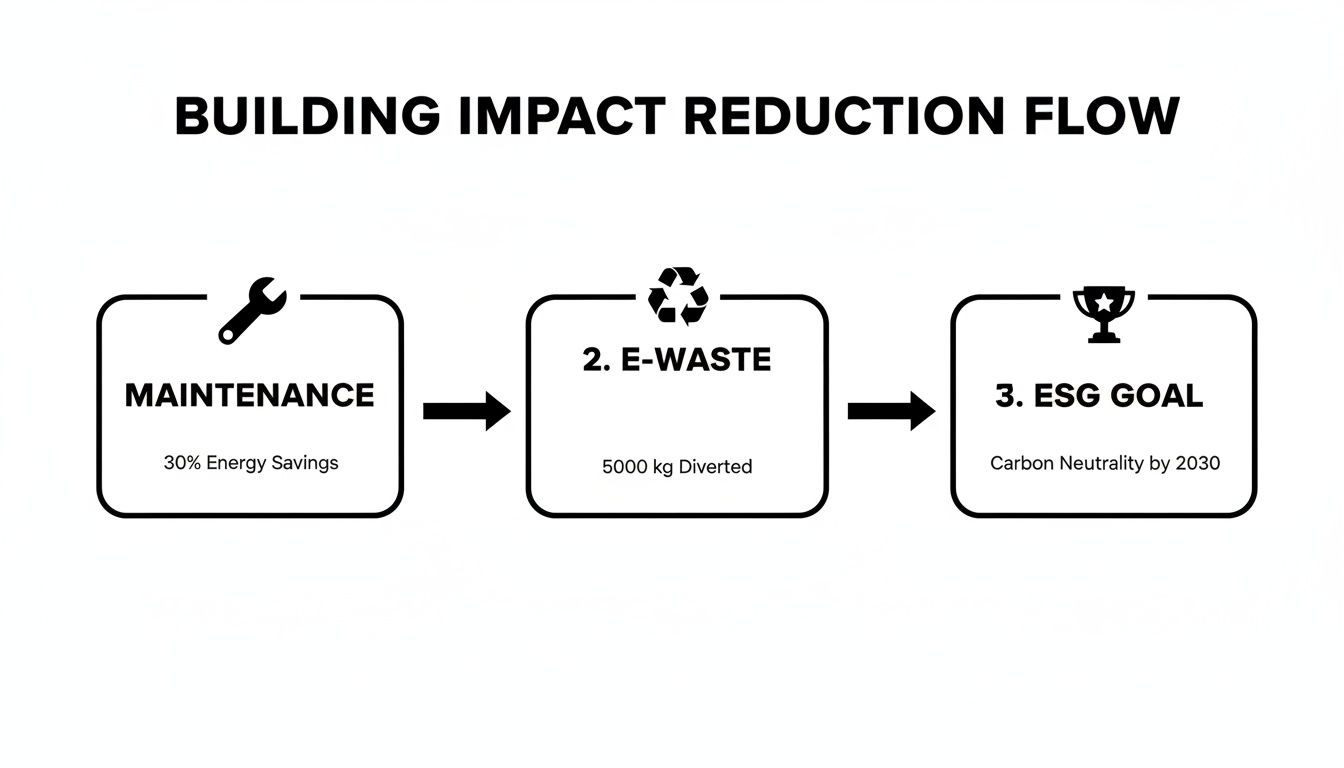
As you can see, modern building management isn't just about fixing leaks. It's about bridging maintenance with smart initiatives like e-waste recycling to hit those high-level ESG goals that ownership cares about.
Getting Management On Board
When you sit down with management, lead with the most compelling argument: direct cost savings. Disposing of old electronics, especially in large quantities, adds up. A certified partner like Green Atlanta Recycling often provides free pickup for qualifying amounts (usually 50+ devices), which means you can erase a line item from your operational budget overnight.
Next, talk their language—ESG and CSR metrics. Today's corporate tenants are under pressure to prove their sustainability efforts. By offering a documented, responsible recycling program, you're handing them a powerful story for their own corporate reports. Suddenly, your building isn't just a space; it's a partner in their success.
Finally, bring it home with tenant satisfaction. This is a practical amenity that solves a real problem for them. It shows you're on top of things and in tune with modern business needs.
Your pitch to management is straightforward: "We can eliminate a disposal cost, strengthen our building's ESG credentials, and give our tenants a valuable service—all for free. This is a no-brainer."
Picking the Right Collection Spot
With approval in hand, your first practical task is to find a home for the e-waste. The key here is to find a balance between easy access for tenants and solid security. You can’t have old computers and hard drives sitting out in the open.
From my experience, here’s what works best:
- A locked storage room near the loading dock or on a main floor is the gold standard for security.
- A cornered-off section of a mailroom or another monitored common area can also work, as long as it’s clearly marked and not in a main thoroughfare.
- For big office clear-outs, the best approach is scheduling a direct pickup right from the tenant’s suite. It bypasses the need for a central spot altogether.
Whatever you choose, make sure it’s clearly signed with instructions for scheduling a drop-off. Convenience and security are the two most important factors for success.
Spreading the Word to Tenants
A program is only as good as its communication plan. You don’t need a huge marketing blitz—just clear, simple messaging that tells tenants what they need to know.
Kick things off with a simple email to all tenants and staff. Explain the what, why, and how.
- What: We’ve launched a new, free e-waste recycling service.
- Why: To help you securely dispose of old tech, protect the environment, and support our community.
- How: Here’s where to bring items or who to contact for a pickup.
Follow up with reminders in your monthly newsletter or with a few posters in elevators and break rooms. The goal is to make participation effortless. To give them more specifics, you can always point them toward our detailed guide on electronic waste recycling services.
A superintendent's role is evolving. It's becoming more strategic, with a median salary now at $82,720 and strong job growth in specialized sectors. Implementing a certified e-waste program is exactly the kind of cost-free, high-value initiative that demonstrates your operational savvy and reinforces your importance to the entire organization. You’re not just managing a building; you’re increasing its value.
E-Waste Program Launch Checklist
This checklist breaks down the launch process into manageable phases, from initial planning to getting the word out. Follow these steps to ensure a smooth and successful rollout for your building's new e-waste program.
| Phase | Action Item | Key Consideration |
|---|---|---|
| 1. Planning | Secure management buy-in. | Prepare a business case focusing on cost savings, ESG benefits, and tenant satisfaction. |
| Select a recycling vendor. | Vet for certifications (R2, e-Stewards), data security, and free pickup services. | |
| 2. Logistics | Designate a collection area. | Choose a secure, accessible location like a locked storage room or a monitored mailroom corner. |
| Create clear signage. | Include instructions for drop-off, contact information, and a list of accepted items. | |
| 3. Communication | Draft an announcement email. | Clearly explain the what, why, and how of the program to all tenants and staff. |
| Prepare follow-up materials. | Create simple posters for common areas (elevators, break rooms) or a blurb for newsletters. | |
| 4. Launch | Send the initial announcement. | Officially kick off the program and open the collection area. |
| Monitor the first few weeks. | Be available to answer questions and ensure the process is running smoothly for tenants. |
By following this simple roadmap, you can launch a program that adds tangible value to your property with minimal effort. It’s a win for your budget, your tenants, and your own professional standing.
Driving Tenant Participation With A Cause
Let’s be honest. You can set up the most efficient e-waste program in Atlanta, but it’s just collecting dust if your tenants don’t actually use it. The real secret to getting people on board isn't just another memo tacked to the bulletin board. It's about connecting the simple act of recycling to a cause they can feel good about.
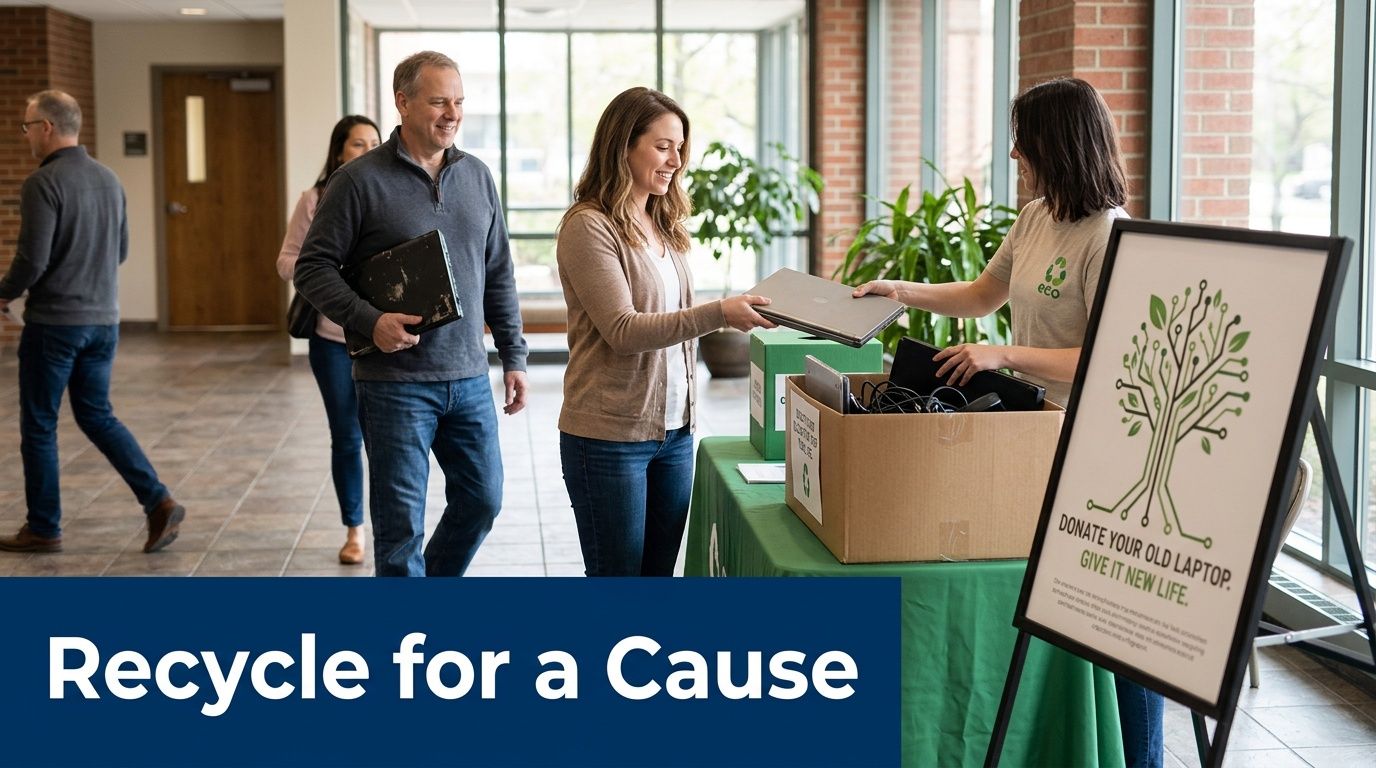
Think about what sounds more compelling. "Please recycle your old electronics," or "Your old laptop can help a veteran and grow a forest"? When you frame your recycling program with a dual-impact mission, it’s no longer just a chore. It becomes a story people want to be part of.
Crafting Your "Recycle for a Cause" Message
This is where your program comes to life. Your goal is to create simple, powerful messages you can use everywhere—emails, newsletters, and even posters in the lobby or elevator. You want to make the link between a tenant's action and the positive impact immediate and crystal clear.
Make sure your messaging always hits on the two core benefits:
- Social Impact: We're helping support local veterans.
- Environmental Impact: We're planting trees in our national forests.
This approach does more than just get rid of old tech. It builds a sense of community and shared purpose, showing tenants that building management is invested in making a real difference.
Key Takeaway: Your program isn't just about waste disposal; it’s about transformation. Every device recycled becomes a tangible contribution to restoring lives and landscapes. This is the story you need to tell.
Ready-To-Use Communication Templates
We know you're busy, so we've put together a few effective templates you can adapt for your building. After all, clear communication is half the battle.
Email Announcement Template:
- Subject: Turn Your Old Tech into Hope: Our New E-Waste Program Is Here!
- Body: We’re excited to launch a new, free e-waste recycling program that does more. When you recycle your old electronics with us, you’re not just clearing out clutter—you’re helping support local veterans and planting trees. Your old phone or laptop can make a real difference.
Lobby Poster Slogan Ideas:
- "Your Old Tech Can House a Veteran and Grow a Forest."
- "Recycle Here. Restore Hope. Replant Our Future."
- "Turning E-Waste into Hope."
These messages are short, memorable, and hit the right emotional notes. They transform a mundane task into an opportunity for tenants to do something good, which drives much higher participation than a standard recycling notice.
This kind of partnership is a smart move, especially for building superintendents in the Atlanta area. You're often the go-to person for managing IT asset decommissioning for offices, schools, and hospitals in your building. Since superintendents are 77% more likely to work at private companies, you are perfectly positioned to implement ESG-aligned programs that include secure data destruction and environmental contributions. If you're curious, you can discover more insights about these job demographics on Zippia.com.
Timing Your Drives for Maximum Impact
While having a bin available year-round is great, you can create huge waves of participation by organizing special collection drives around key dates. This builds a sense of urgency and gives you a natural reason to promote the program heavily.
Consider organizing high-visibility events around these holidays:
- Veterans Day (November): This is the perfect time to focus on the veteran support angle. Tie your messaging directly to honoring those who have served our country.
- Earth Day (April): Shift the spotlight to the environmental benefits. Center your messaging on sustainability, conservation, and reforestation.
- Arbor Day (Late April): A fantastic opportunity to highlight the tree-planting component of the program and share how many trees have been planted thanks to your tenants.
By creating these seasonal pushes, you keep the program fresh in tenants' minds and create multiple opportunities to boost engagement throughout the year. If you need some inspiration, take a look at our guide on how to host a successful electronic recycling event. These drives make your e-waste program a visible success story, reinforcing its value to both tenants and building management.
How To Choose A Secure E-Waste Recycling Partner
As a building superintendent, you've got a lot on your plate. Choosing an e-waste recycling partner might feel like just another task, but it’s one of the most critical decisions you'll make. This isn't just about hauling away old equipment. It’s about protecting your tenants, your building’s reputation, and your own peace of mind from some serious data security and environmental headaches.
Picking the right partner means everything is handled responsibly. The wrong one? You could be walking into a compliance nightmare.
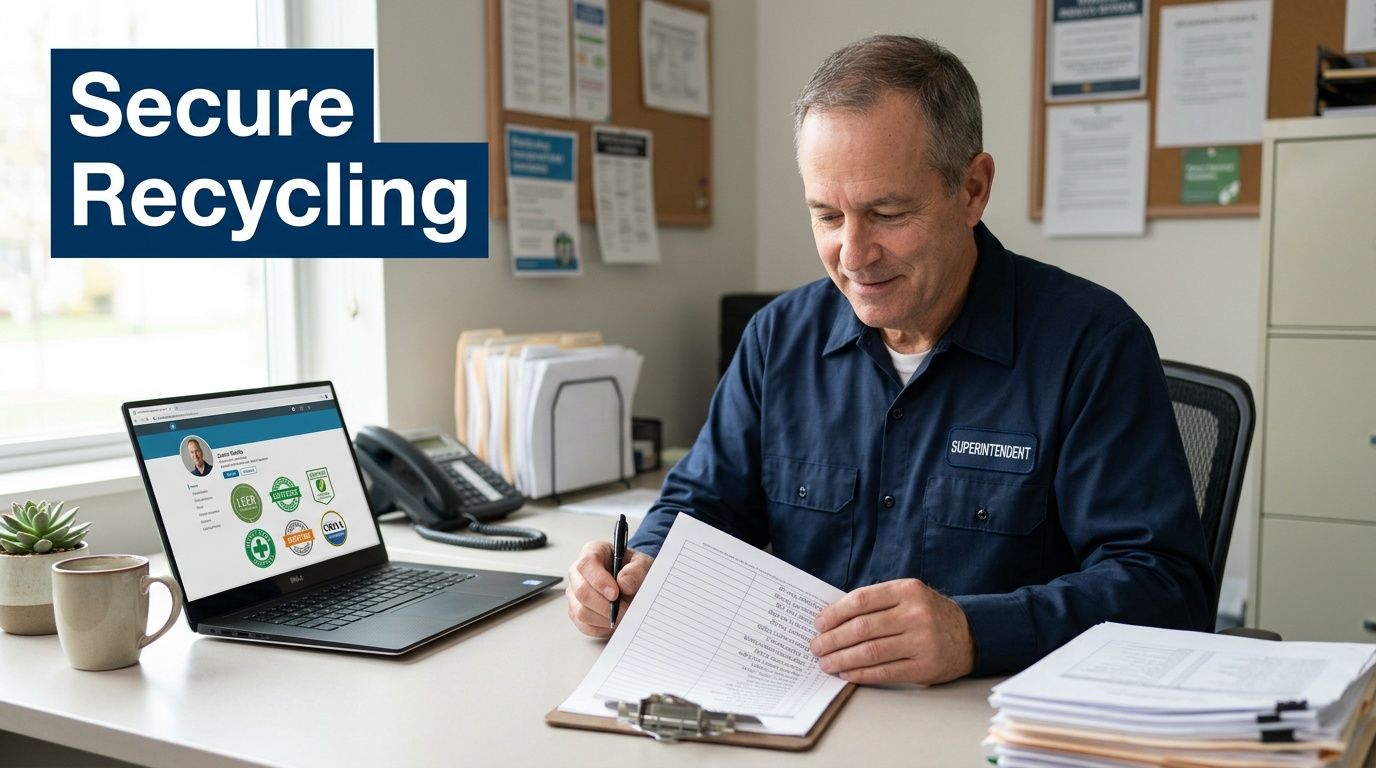
When you're vetting recyclers here in Atlanta, you aren't just hiring a vendor. You're looking for a partner who lets you sleep at night. Let's walk through what really matters.
Start with the Non-Negotiable Certifications
First things first: certifications are not optional. Don't even waste your time with a company that can't show you proof they meet industry standards. These aren't just nice-to-have logos; they are your guarantee that a vendor follows strict, internationally recognized rules for keeping people and the environment safe.
In the world of e-waste, two certifications are the gold standard:
- R2 (Responsible Recycling): This one confirms the recycler follows best practices for worker safety, environmental protection, and data security from start to finish.
- e-Stewards: Often seen as the most rigorous certification, e-Stewards enforces a strict zero-landfill policy and flat-out prohibits shipping hazardous e-waste to developing nations.
Your very first question to any potential partner should be, "Are you R2 or e-Stewards certified?" If they hesitate or say no, thank them for their time and move on. It’s the quickest way to filter out unqualified and risky operators.
Dig Deep into Their Data Destruction Process
Every single laptop, server, or smartphone that gets tossed has sensitive data on it. Forgetting to properly wipe just one hard drive could open the door to a massive data breach, and the liability could fall on you. This is why you need to know exactly how a potential partner destroys data.
A truly reputable recycler will have multiple layers of security. You should be looking for a process that includes both:
- DoD-Standard Wiping: The vendor should use software that meets Department of Defense (DoD) 5220.22-M standards. This is a powerful software-based method to securely erase all data from hard drives that are still functional.
- Physical Shredding: For drives that are broken or for tenants who require the highest level of security, physical destruction is a must. This process literally grinds hard drives into tiny, confetti-like pieces that are impossible to recover.
Always insist on a partner who provides a Certificate of Data Destruction for every single batch of devices. This document is your official proof that you took the right steps to protect tenant and company data. It’s a critical piece of paper that shields your building from liability.
Demand a Transparent Chain of Custody
So, where does all that old electronics go after it leaves your loading dock? A secure partner should be able to answer that question without skipping a beat. A clear chain of custody is essentially a paper trail that documents who handled your building's e-waste at every single step, from pickup to final processing.
This documentation needs to show you:
- Exactly when the equipment was picked up.
- How it was transported.
- Where it was processed and by whom.
- Final confirmation that it was recycled and the data was destroyed.
This isn't just about ticking a box for compliance; it gives you the confidence that your building's e-waste isn’t ending up in a local landfill or on a container ship overseas. When you have this documentation in hand, you can report your sustainability efforts to management and tenants with total confidence.
As you start looking at different options, our guide to Atlanta's top e-waste disposal companies is a great resource to see how the best vendors stack up.
Ultimately, choosing the right partner is about trust. You need someone who ensures your day-to-day operational tasks also support your building's commitment to security and environmental responsibility. A certified, secure recycler doesn’t just take away your junk—they deliver peace of mind.
From Operations to Opportunity: Making Your E-Waste Program a Leasing Superpower
A well-run e-waste program isn't just about smooth logistics—it's one of the most effective marketing tools you have. As a building superintendent, you can spin this operational success into a real leasing advantage, attracting the kind of high-value corporate tenants that property owners love and keeping your current ones loyal. This is where your hard work on the ground level directly boosts the building's bottom line and reputation.
These days, companies aren’t just hunting for square footage. They’re looking for partners who mirror their own commitment to ESG (Environmental, Social, and Governance) and CSR (Corporate Social Responsibility) goals. When a potential tenant tours your property, pointing out a certified, cause-based recycling program can absolutely be a deciding factor. It signals that you’re offering more than just space—you’re providing a responsible, modern business ecosystem.
Turning Impact Data Into Your Leasing Team’s Secret Weapon
Your e-waste program creates a goldmine of data and compelling stories that your leasing team can use to seal the deal. The trick is to package this information in a way that clicks with corporate decision-makers. They want to see tangible numbers and proof they can plug directly into their own sustainability reports.
This is where Impact Reports and digital badges truly shine. A recycling partner like Green Atlanta gives you detailed reports breaking down exactly how many devices were collected, the total weight of waste diverted from landfills, and even the dual impact of trees planted and veteran support.
Just imagine your leasing agent sitting down with a prospect and being able to say:
"Last quarter alone, the tenants in this building recycled over 500 devices. That single effort helped plant 1,500 trees and provided direct support to local veterans. When you lease here, you’re not just getting an office—you're becoming part of a community that creates a measurable, positive impact."
That’s a narrative that transforms a simple building amenity into an irresistible value proposition. It’s a story that sticks.
Weaving Sustainability Into Your Building’s Brand
For this advantage to really work its magic, you can't keep these successes a secret. Work with your property management and marketing teams to broadcast these achievements across every channel you have.
Here are a few practical ways to get the word out:
- Leasing Brochures and Website: Carve out a dedicated section on your building’s commitment to sustainability. Feature a “Recycled with Purpose” digital badge and pull key stats directly from your impact reports.
- New Tenant Welcome Packets: Introduce the program from day one. A personalized welcome certificate saying something like, “Welcome! Your move-in just helped plant 5 trees in your company’s name” makes an immediate impression.
- Annual Building Reports: Dedicate a full page to your ESG wins, with the e-waste program as the headline act. Sprinkle in some testimonials from current tenants about the convenience and positive impact.
This kind of consistent messaging solidifies your building’s identity as a premium, forward-thinking property. For more ideas on how to blend sustainability with your building's infrastructure, check out our insights on smart building tech for modern properties.
You're More Than a Superintendent—You're a Strategic Asset
Your role has grown. You're no longer just maintaining a property; you are actively making it more competitive and valuable. By championing and promoting a successful e-waste program, you prove your strategic importance to the building owner's financial goals.
Think about it. You're the one connecting day-to-day operations with the big picture. You manage crews and supplies, but you also oversee critical functions like IT asset disposal for a huge range of tenants—from schools to data centers. When you partner with a service that turns that routine task into a powerful story about planting trees and helping veterans, you’re creating incredible PR and retention fuel.
When a tenant signs a lease renewal because they genuinely value the building’s commitment to sustainability—a program you put in motion—you've demonstrated your worth far beyond the nuts and bolts of facility management.
You're creating a property that people are genuinely proud to work in. That’s a powerful position to hold, and it all starts by turning a simple recycling program into your building's biggest leasing advantage.
Common Questions From Atlanta Superintendents
As a building superintendent, you’re the one on the ground. When a new program like e-waste recycling rolls out, you're the person everyone—from tenants to property managers—turns to with questions. You need the right answers, and you need them to be practical.
We’ve worked with superintendents all over Atlanta, and the same handful of concerns always comes up. Let’s tackle those head-on so you can get your program running smoothly.
How Do We Handle Bulky Items Like Servers?
This is probably the number one question we get. A collection bin is great for old keyboards and mice, but what happens when a tenant moves out and leaves behind an entire server rack? Or a stack of old, heavy CRT monitors?
These aren't items your maintenance team can just haul down to the loading dock. For these big jobs, you need a recycling partner that offers specialized bulk removal services.
A good recycler will coordinate a scheduled pickup directly from the tenant's suite or your dock. This isn't just a guy with a truck; it’s a full-service operation.
- Onsite Packing and Palletizing: Their crew arrives ready to safely pack and wrap all the heavy equipment for transport.
- De-installation Services: For complex hardware like data center racks, they can handle the dismantling for you.
- Dedicated Logistics: They bring their own trucks and do all the heavy lifting, taking the burden completely off your team.
You or your tenant just makes the call. The recycling team handles the rest. It makes managing even the biggest clear-outs surprisingly simple.
How Can I Guarantee Our Tenants’ Data Is Destroyed?
Nothing is more important than protecting your tenants, and the data on their old devices is a huge liability. A simple promise to "wipe the drives" just doesn't cut it anymore. You need a process you can confidently stand behind.
A certified recycling partner gives you a two-step security guarantee that is completely defensible.
- DoD 5220.22-M Standard Wiping: This is the software-based approach, meeting rigorous Department of Defense standards. It overwrites the data multiple times, making it impossible to recover.
- Physical Shredding: For the ultimate level of security, or for drives that are already dead, nothing beats physical destruction. The hard drives are ground into small metal fragments, making data retrieval physically impossible.
The most crucial part of this entire process is the paperwork. Your recycling partner must provide a Certificate of Data Destruction for every single batch they process. This document is your proof of compliance and your shield against liability. Don't even consider a recycler who can't provide one.
Is There a Cost for Our Building to Participate?
Here’s the question that gets the attention of building owners and property managers. The good news is that for most commercial buildings, the answer is no—there’s no cost to participate.
Reputable e-waste recyclers who specialize in corporate accounts typically provide free pickup services for qualifying quantities of electronics. That threshold is usually around 50 or more devices.
Given that a single tenant refresh or move-out can easily exceed that number, the service essentially becomes a free, value-added amenity for your building. You actually end up reducing your operational costs by avoiding the disposal fees you’d otherwise pay. It turns a potential expense into a clear win for your budget and a great sustainability story for your tenants.
Ready to turn your e-waste from a liability into a leasing advantage? Green Atlanta provides certified, secure, and cause-based electronics recycling solutions for buildings just like yours. We make it easy to protect your tenants, enhance your ESG metrics, and make a real impact on the community.
Schedule your free pickup and get your program started today. Visit us at https://www.greenatlanta.com.