
Responsible E Waste Recycling in Atlanta GA: Responsible E

A retired server leaves a Buckhead office. It doesn’t need to become landfill, and it doesn’t need to become a compliance headache either.
Handled responsibly, that same piece of equipment can move through secure destruction, material recovery, veteran support, and reforestation. That’s the genuine promise behind Responsible E Waste Recycling in Atlanta GA when companies stop treating old tech like trash and start treating it like a managed asset.
Your Old Tech Can Build a Greener Atlanta
A lot of companies call when the pain is immediate. An office move. A storage room packed with dead monitors. A hospital refresh with outdated desktops stacked behind locked doors. What they usually want first is simple. Get it out, make it secure, and keep us compliant.
What changes the conversation is when they realize disposal can do more than reduce risk. It can create visible local impact. A pallet of retired laptops or networking gear can be processed through a system that protects data, keeps hazardous materials out of landfills, and helps fund work that matters beyond the loading dock.

Why Atlanta businesses can’t ignore this anymore
The scale is not small. In the United States, over 3.5 million tons of e-waste are generated annually, making it the fastest-growing segment of municipal solid waste, while only around 17.4% is properly collected and recycled globally, according to Reworx Recycling’s Atlanta e-waste overview.
That matters in Atlanta because this city generates steady turnover from offices, healthcare systems, schools, public agencies, and data-heavy businesses. Old electronics are bulky, non-biodegradable, and often contain both recoverable metals and hazardous substances. If a company treats them like ordinary junk removal, it can lose chain of custody, lose asset value, and create environmental risk in the same move.
Practical rule: If a device ever held data or contains a battery, screen, or circuit board, it shouldn’t move through the same disposal process as office furniture.
Recycling with a cause changes the decision
The most effective e-waste programs I’ve seen in Atlanta work because they connect operations to outcomes people can understand. Not just “we recycled some equipment,” but “your retired tech supported veterans and helped plant trees.”
That kind of dual-impact model changes internal buy-in. IT sees security. Facilities sees a clean exit. Legal sees documentation. Sustainability teams see a story they can use. Employees see that the company didn’t dump old equipment at the edge of town and call it responsibility.
For companies building stronger environmental and community programs, e-waste is often a missed opportunity. It’s one of the few operational tasks that can support both compliance and purpose. If you want a clearer sense of the daily stakes, this breakdown of how e-waste can impact our day-to-day lives is worth reviewing.
Beyond the Bin The Business Case for Responsible E-Waste Disposal
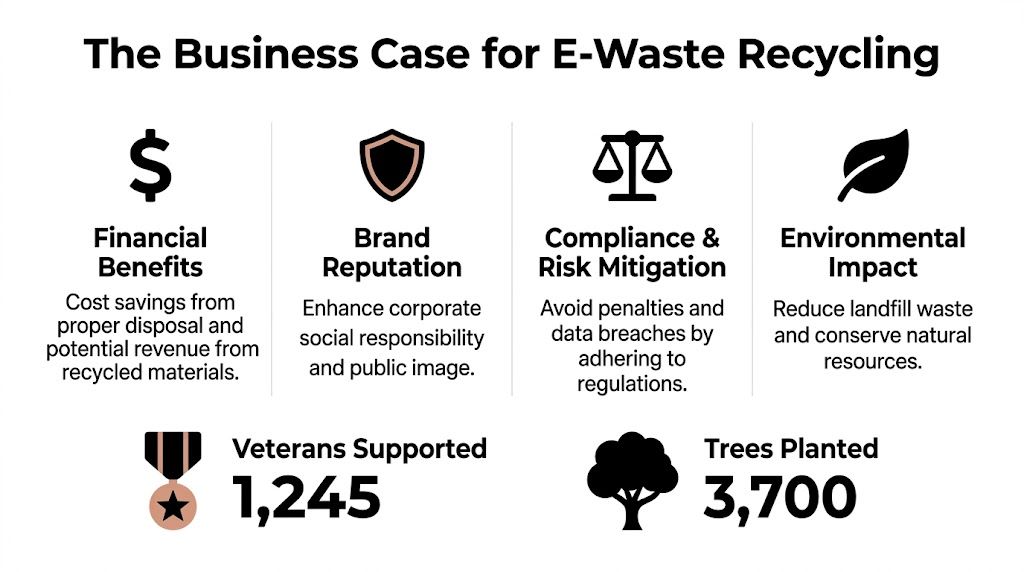
For most corporate clients, the decision isn’t driven by goodwill alone. It’s driven by risk, operations, brand pressure, and reporting needs. The strongest e-waste programs in Atlanta succeed because they solve all four at once.
Stewardship isn’t abstract
Electronics recycling sounds like a back-office task until you look at what comes out of the building. Boards, plastics, batteries, drives, screens, mixed metals. Some of those materials can be recovered. Some need specialized handling because they can’t safely go into ordinary disposal channels.
Atlanta is a major e-waste hub, and responsible recycling practices here can yield over 95% material recovery, helping minimize toxic leaks into the local environment and extend landfill life as global e-waste reaches 50-60 million tons annually, according to Green Atlanta’s explanation of the benefits of e-waste recycling.
For businesses, that environmental outcome translates into reputational value. It gives procurement teams, CSR leaders, and operations staff a defensible answer when customers, boards, or employees ask what happens to retired equipment.
Data risk is the real line item
A monitor with no storage is one thing. A server, laptop, firewall, copier drive, or mobile device is another. Once a device has held protected data, disposal becomes a security project.
What doesn’t work is casual handoff. A facilities cleanout vendor. A scrap buyer with vague paperwork. A staff member dropping devices off without inventory control. Those shortcuts save time only until an audit or breach review begins.
What works is a managed process with:
- Serialized inventory: Asset tags, serial numbers, and quantity counts before anything leaves the site.
- Chain of custody: A documented handoff from your staff to the recycler’s team and transport process.
- Defined destruction method: Wiping when reuse is appropriate, shredding when it isn’t.
- Final documentation: Certificates that your compliance team can retain, not just a pickup receipt.
A recycler should function like a specialist for digital end-of-life risk. Not just a hauler with a truck.
ESG gets stronger when it’s tangible
A lot of ESG language is too broad to mean much. Responsible e-waste is different because the work is visible, auditable, and operational. You can count devices, document transfers, confirm destruction, and report downstream environmental handling.
That becomes more powerful when the recycler’s model includes measurable social benefit. Veteran support and tree planting give companies something many sustainability programs lack: a direct human story connected to a routine business process.
Three ideas tend to resonate with corporate teams:
- Impact counters on the website: Public-facing counters can reinforce transparency around veterans supported and trees planted.
- Corporate recycling drives: Office cleanouts and IT refreshes can become employee-facing ESG moments rather than silent warehouse tasks.
- Digital recognition: A “Recycled with Purpose” style badge can help companies show that their electronics disposal supported both environmental and community goals.
What usually fails
The weak programs all look familiar.
- Lowest-bid selection: Cheap pricing often comes with thin reporting and unclear downstream handling.
- One-time purge mentality: Companies wait until rooms are full, then treat e-waste as an emergency.
- No internal owner: IT assumes facilities owns it. Facilities assumes procurement owns it. Nobody builds a repeatable policy.
Responsible E Waste Recycling in Atlanta GA works best when it’s treated as an asset disposition program, not a cleanup event.
Staying Compliant with HIPAA DoD and Georgia Regulations
Compliance is where a lot of businesses discover that “recycling” is too vague a word. The critical question isn’t whether a vendor accepts electronics. The crucial question is whether your company can prove secure handling, legal disposal, and defensible documentation after the assets leave your site.
HIPAA means more than deleting files
Healthcare organizations in Atlanta deal with one of the clearest examples of end-of-life risk. A retired workstation, copier hard drive, server, or storage array may still contain protected health information long after staff thinks it’s out of service.
That’s why compliant e-waste handling for hospitals, clinics, labs, and medical offices needs a formal process. Deleting files or reformatting a drive isn’t enough for a regulated environment. The organization needs a documented sanitization or destruction method, clear custody records, and proof that the device moved through a controlled disposition path.
When healthcare teams ask what to retain, the answer is usually straightforward:
- Asset identification records
- Pickup and transfer records
- Method of data destruction
- Certificates tied to the relevant devices
- Final recycling or disposition documentation
For Atlanta healthcare groups that are tightening disposal procedures, this guide to secure IT equipment disposal in Atlanta GA is a useful operational reference.
DoD sanitization is about defensibility
Government agencies, contractors, law firms, and high-security businesses often ask for DoD-level sanitization because they need a recognized standard for media handling. In practice, the issue is less about the label and more about whether the method matches the risk.
For some assets, software-based wiping is appropriate if the drive remains functional and the business intends reuse or resale. For damaged drives, failed media, or highly sensitive environments, physical destruction is usually the cleaner answer. The key is that the method must be documented, repeatable, and tied to the actual asset.
A useful analogy is this: a certified e-waste partner should operate like a specialized CPA for your retired digital assets. During an audit, nobody cares that the process sounded professional. They care whether records exist, whether serials match, and whether your controls hold up under review.
Documentation is where audits are won or lost
A 2025 EPA report noted that 40% of U.S. businesses fail e-waste audits due to inadequate documentation, and emerging Georgia regulations are expected to emphasize serialized asset tracking, while only 20% of local providers detail that capability online, according to Montclair Crew’s review of Georgia-certified e-waste recycling companies.
That finding matches what many compliance teams already suspect. The technical destruction step is only half the story. If your recycler can’t provide clear records, your organization may still be exposed.
Keep the paper trail as if you’ll need to defend every retired asset to an auditor who’s never met your team.
What Georgia businesses should verify
Georgia businesses often assume that if there’s no obvious state electronics ban, the process is less formal. That’s the wrong takeaway. Companies still need to manage hazardous components properly and prove that retired assets were handled through compliant channels.
Before signing with any recycler, ask for:
- A sample certificate of destruction
- An explanation of serialized reporting
- Chain-of-custody documentation examples
- Details on downstream recycling and landfill avoidance
- The exact process for drives, SSDs, and failed media
If a vendor answers in generalities, keep looking. Compliance language without operational proof isn’t useful.
From Onsite Removal to Certified Destruction and Recycling
The safest e-waste programs are boring in the best way. They follow a repeatable sequence, they create records as they move, and they don’t leave room for improvisation. That’s what corporate IT teams want during a refresh, office relocation, or data center decommissioning.

Step one is operational control
The process starts before pickup day. A good vendor will ask what types of equipment you have, whether any devices contain data, whether de-installation is needed, and who on your side will approve the transfer.
In Atlanta, onsite pickup matters because many businesses don’t want staff moving sensitive equipment in personal vehicles or leaving it unsecured on a dock. For larger cleanouts, companies often prefer a recycler that uses its own fleet and can handle packing, loading, and building coordination.
Volume thresholds are significant. Some providers structure programs for bulk business pickups, including free pickup for 50+ devices in the Atlanta metro for qualifying jobs. That can simplify planning for offices, schools, hospitals, and multi-floor cleanouts.
Data destruction should match the device and the risk
Once assets are identified, the next question is what happens to the data-bearing media. In this situation, weak vendors often hide behind vague language like “data removed” or “drives processed securely.”
A stronger process separates methods by use case:
- Software wiping: Appropriate when equipment is functional and intended for remarketing or reuse, provided the wipe method is documented.
- Onsite shredding: Often chosen by organizations that want witnessable destruction before media leaves the premises.
- Offsite physical destruction: Suitable when transport controls are strong and the recycler provides complete reporting afterward.
For companies that want to understand the equipment side of physical media destruction, Material Handling USA offers a good look at certified destruction processes and the machinery used for secure shredding workflows.
If a drive is failed, damaged, or too sensitive to trust to software alone, physical destruction is usually the cleaner compliance decision.
Inside the facility, separation matters
Once equipment reaches the processing facility, it shouldn’t move into a generic scrap stream. It should go through controlled sorting and dismantling based on data status, battery presence, screen type, and material category.
Certified Atlanta recyclers implement a zero-landfill protocol that recovers 85-95% of reusable materials, and each ton of e-waste recycled prevents approximately 2.5 tons of CO2e emissions while averting groundwater contamination from 5-10 lbs of lead, according to eWasteATL’s description of local e-waste processing outcomes.
That environmental result depends on careful segregation. Batteries need specialized routing. Hazardous fractions need approved downstream handling. Reusable components need testing and proper disposition. Material streams such as metals, plastics, and glass need to be separated for recovery, not mixed into a disposal pile.
Reporting closes the loop
A business pickup isn’t complete when the truck leaves. It’s complete when the client receives the records needed for security, audit support, and internal reporting.
A standard closeout package often includes:
| Document | What it confirms | Who usually needs it |
|---|---|---|
| Asset inventory | What was collected | IT, facilities |
| Chain-of-custody record | Who handled the assets and when | Compliance, legal |
| Certificate of destruction | Which data-bearing devices were sanitized or destroyed | Security, auditors |
| Recycling documentation | Final environmental handling | Sustainability, procurement |
| Impact summary | Social or community outcomes tied to the project | CSR, marketing |
One example of a local service model is IT asset disposition services in Atlanta GA, which describes how business pickups, secure destruction, and documentation can be combined into a single workflow.
What works and what slows projects down
Projects move faster when the client appoints one internal decision-maker, pre-identifies restricted areas, and separates clearly non-data devices from anything with storage.
They slow down when nobody has a disposal policy, retired devices are mixed with active gear, or pickup day arrives before legal and IT agree on destruction requirements. In practice, most delays come from internal uncertainty, not from the recycler’s truck schedule.
A Checklist for Selecting the Right Atlanta E-Waste Vendor
Choosing a vendor gets easier when you stop asking, “Do you recycle electronics?” and start asking, “Can you prove secure, compliant, and documented handling from pickup through final disposition?”
A good screening process looks a lot like any other risk-based procurement review. If your team already uses a formal vendor due diligence checklist for software or service providers, apply that same discipline here. End-of-life IT vendors touch regulated data, environmental obligations, and brand risk at the same time.
Atlanta E-Waste Vendor Selection Checklist
| Criteria | What to Ask | Why It Matters |
|---|---|---|
| Certifications | Which audited certifications do you hold, and can you show current status? | Certifications help separate true processors from simple collectors or brokers. |
| Data destruction method | Do you wipe, shred, or both, and when do you use each method? | The method must fit the risk profile of the asset. |
| Serialized reporting | Can you report by asset tag or serial number? | Auditors and internal teams often need device-level proof, not batch summaries. |
| Chain of custody | What records do you create at pickup, in transit, and at processing? | A secure process is only defensible if the handoffs are documented. |
| Certificates | Will the certificate identify the relevant devices and destruction method? | Generic “job complete” paperwork won’t satisfy most compliance teams. |
| Environmental handling | Do you operate under a zero-landfill approach, and how are hazardous fractions managed? | This affects both legal exposure and sustainability reporting. |
| Fleet and logistics | Do you use your own vehicles and staff for business pickups? | Direct control usually improves accountability and scheduling clarity. |
| Insurance and liability | What coverage do you carry for transport, handling, and on-site work? | Equipment removal creates property, data, and handling risk. |
| Downstream transparency | Who receives materials after initial processing? | You need confidence that materials won’t be dumped or mishandled later. |
| Social impact reporting | Can you provide veteran support reports, tree-planting summaries, or a partner badge? | If ESG matters to your organization, reporting should extend beyond recycling alone. |
Red flags that deserve immediate follow-up
Some answers should make a buyer slow down.
- “We handle everything.” Ask how, exactly. Broad reassurance without process detail usually means the vendor isn’t used to audit questions.
- “We don’t track serials unless requested.” That may be workable for low-risk scrap, but it’s weak for regulated assets.
- “We can’t share sample documentation.” If they can’t show the paperwork format before pickup, expect trouble later.
What stronger vendors usually provide
The better Atlanta vendors tend to do a few things upfront. They explain what happens on site, what happens in transport, how drives are treated, and what documents the client will receive at closeout. They also understand that buyers now care about both environmental handling and social impact.
That’s where a purpose-driven distinction can matter. If your company reports on CSR or ESG performance, look for a partner that can support a visible outcome such as a “Recycled with Purpose” style badge, plus documentation your communications team can use.
For organizations comparing providers, this list of e-waste disposal companies can help frame the local situation before you start interviews.
Case Studies How Atlanta Companies Create Impact Through Recycling
Abstract policy gets attention from compliance teams. Stories get attention from leadership. The most successful recycling projects usually work because they solve a practical problem first, then create a story the organization is proud to tell.
A healthcare system cleaning out legacy equipment
A regional healthcare group had closets full of aging desktops, printers, and storage devices spread across multiple departments. Their first concern wasn’t environmental messaging. It was whether every data-bearing asset could be tracked through removal and destruction in a way that would hold up during internal review.
The project worked because they didn’t treat it like junk hauling. Their internal team grouped devices by location, separated uncertain media for stricter handling, and required clear closeout paperwork. Once the operational risk was controlled, the organization had something useful for its sustainability committee too. The same cleanup that reduced HIPAA exposure also supported veteran-focused community impact and tree planting.
A growing tech company after an office move
A fast-moving Atlanta tech firm outgrew one office and inherited a common problem. Old monitors in one room. Dead laptops in another. A stack of network gear no one wanted to inventory because half of it came from prior expansions.
What helped wasn’t an elaborate strategy deck. It was a straightforward business pickup process with one internal owner and a clear rule that nothing left the site without documented transfer. After the cleanout, the company had a stronger internal asset disposition policy and a better external story. Their sustainability lead could point to an electronics program that supported both environmental recovery and community benefit, not just disposal.
Some of the best CSR moments start as routine facilities problems that someone finally handles the right way.
A school network using recycling as community engagement
An education client approached e-waste differently. They had surplus classroom technology and wanted a responsible outlet, but they also wanted the program to mean something to staff and families. Instead of keeping the process invisible, they turned collection into a visible initiative tied to a broader community message about stewardship.
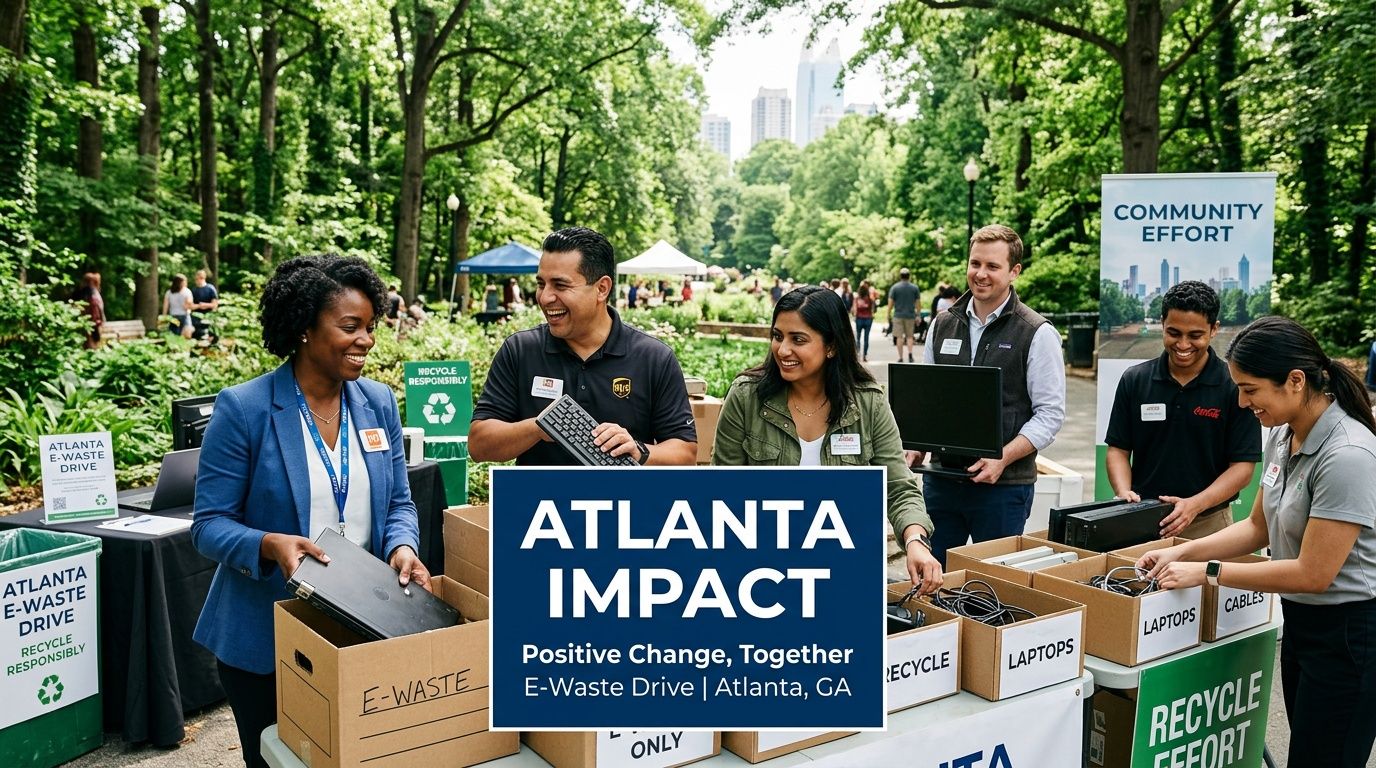
That approach tends to work well in Atlanta. Schools, municipalities, and employers can all connect electronics recycling to local volunteer activity, seasonal drives, veteran support partnerships, and tree-planting campaigns. The equipment still needs secure handling. The difference is that the organization doesn’t hide the impact once the compliance box is checked.
What these projects had in common
They didn’t rely on generic “green” language. They defined ownership, required documentation, and connected the outcome to a purpose employees could understand.
That’s why Responsible E Waste Recycling in Atlanta GA should be part of operational planning, not an afterthought during spring cleaning or an office relocation.
Partner with Atlanta Green Recycling for Impactful IT Asset Disposition
Responsible electronics disposal in Atlanta isn’t just about getting rid of clutter. It’s about protecting data, managing regulated waste correctly, preserving audit readiness, and turning retired equipment into something useful again.
The strongest programs do one more thing. They connect compliance to a visible community outcome. Veteran support and reforestation make e-waste more than a backend obligation. They make it part of a company’s real ESG and CSR footprint.
One local option is Atlanta Green Recycling, which provides business e-waste pickup, secure data destruction, de-installation support, and documentation for organizations across the metro area. For companies with larger refreshes or office cleanouts, that kind of turnkey workflow can reduce internal burden while keeping the process controlled.
If your organization wants disposal that supports both security and social impact, build a repeatable policy now instead of waiting for the next storage room crisis. And if you refer another business into the program, that’s a practical way to extend the community impact even further with an extra tree planted in your name.
Your E-Waste Recycling Questions Answered
Is onsite pickup better than drop-off for businesses
Usually, yes. Business pickups reduce the chance that employees transport sensitive devices informally or leave them unsecured during a move. They also make it easier to keep inventory control and chain of custody intact.
Are free e-waste services always the cheapest option
Not always. Many “free” services carry hidden fees, while stronger B2B partners offer transparent pricing. A SERI 2025 survey found that 70% of Atlanta businesses prefer paid onsite pickup to reduce transport risks, and a 2025 Georgia Tech study estimated that Atlanta firms discard over $50M in reusable IT assets annually, highlighting missed buyback value, according to Equip Recycling’s overview of Atlanta electronics recycling.
What kinds of items should be separated before pickup
Keep data-bearing devices, batteries, networking gear, and display equipment clearly separated if you can. That speeds intake and helps the recycler apply the right destruction and processing method.
Can a recycler help with reuse value as well as disposal
Sometimes, yes. Functional assets may have remarketing or buyback potential depending on age, condition, and type. That’s one reason a proper asset review matters before everything gets classified as scrap.
What’s the biggest mistake companies make
They wait too long, then rush the job. When that happens, active and retired assets get mixed together, records are incomplete, and teams choose convenience over control. This short guide on mistakes you shouldn’t make when recycling e-waste covers the common failures that create avoidable risk.
If your company needs a secure, documented, and community-minded way to manage retired electronics, contact Atlanta Green Recycling to schedule a consultation or business pickup. Your old tech can protect your organization, support veterans, and help grow a greener Atlanta.