
Responsible Business Electronics Recycling Atlanta GA

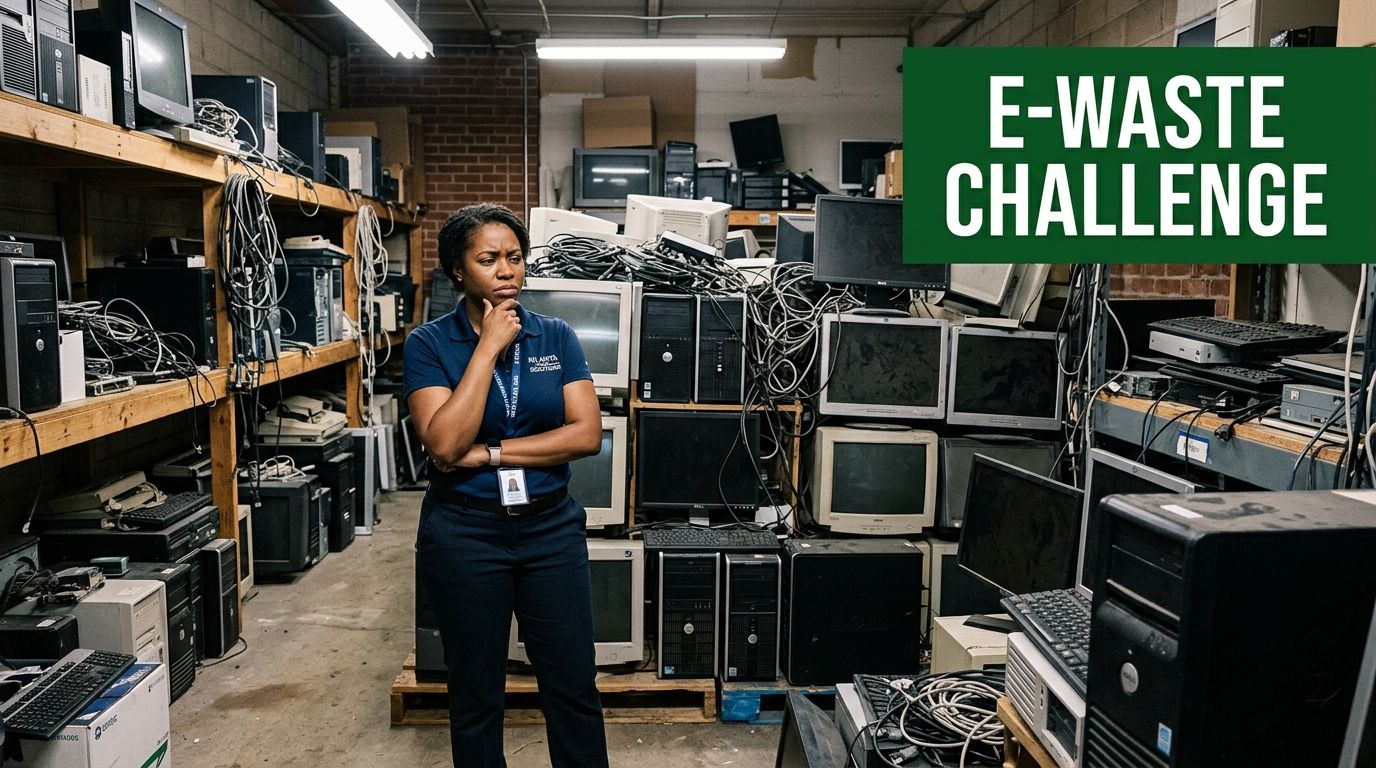
A lot of Atlanta businesses have the same room. Retired laptops stacked on a shelf. Old switches in a cabinet. Printers nobody wants to touch because they may still hold data. A few hard drives in a drawer because someone said they should be destroyed, but nobody owned the project after that.
That backlog is more than clutter. It’s a mix of data risk, compliance exposure, and missed ESG value. If you manage IT, facilities, operations, or procurement, you’re not just trying to get rid of equipment. You’re trying to answer harder questions. Was the data destroyed? Did anything go to landfill? Can we prove what happened during an audit? Did this disposal effort help or hurt our sustainability story?
In Atlanta, that pressure is growing because e-waste isn’t a niche issue anymore. The United States generates over 3.5 million tons of e-waste annually, and that volume has more than doubled since 2000. Globally, e-waste reached 62 million tonnes in 2022, but only 22.3% was properly collected and recycled, according to Reworx Recycling’s summary of EPA and global e-waste data. That gap is exactly why responsible business electronics recycling matters in a city with dense healthcare, education, logistics, and corporate operations like Atlanta.
Your Guide to Responsible Business Electronics Recycling in Atlanta
When a business starts searching for Responsible Business Electronics Recycling Atlanta GA, it’s usually because something forced the issue. An office move. A hardware refresh. A merger. A storage room cleanout. A data center project that can’t wait any longer.
The wrong response is to treat old electronics like ordinary junk removal. That approach ignores the two things that make business e-waste different. First, devices often carry sensitive information long after staff think they’ve been wiped. Second, the equipment itself contains materials that require controlled downstream handling.
What Atlanta businesses usually need
Most organizations don’t need a vague promise that a recycler is “green.” They need an operating model addressing the basics without creating new risk.
That usually means:
- Secure pickup logistics so equipment doesn’t sit exposed in loading docks or public areas
- Documented data destruction for laptops, desktops, servers, and loose media
- Clear chain of custody from pickup through final processing
- Landfill avoidance with accountable downstream vendors
- Reporting that supports internal sustainability goals and external audit requests
The environmental side matters, but business teams also need speed and documentation. If a provider can’t explain how assets are handled, segregated, and reported, they’re asking you to accept blind spots you may later have to defend.
Why this is a business opportunity, not just a disposal task
Handled well, end-of-life electronics can support several goals at once. You reduce data exposure, simplify cleanup during refresh cycles, and give your finance, compliance, and ESG teams something usable instead of a paperwork gap.
Practical rule: If your recycler can remove equipment but can’t produce audit-ready documentation, you’re outsourcing the labor but keeping the risk.
Responsible recycling also creates a better story internally. Employees notice when a company does more than haul things away. Procurement leaders notice when service partners make reporting easier. Sustainability teams notice when disposal programs can be tied to broader goals. If you’re evaluating internal policy or vendor options, it helps to start with the broader benefits of e-waste recycling for businesses and communities, then apply those principles to your own risk profile and asset mix.
Beyond the Blue Bin What Responsible Recycling Involves
Putting electronics in a bin isn’t a strategy. For business equipment, “responsible” has to mean something verifiable. In practice, it comes down to four connected standards: data security, environmental protection, compliance discipline, and social impact you can document.
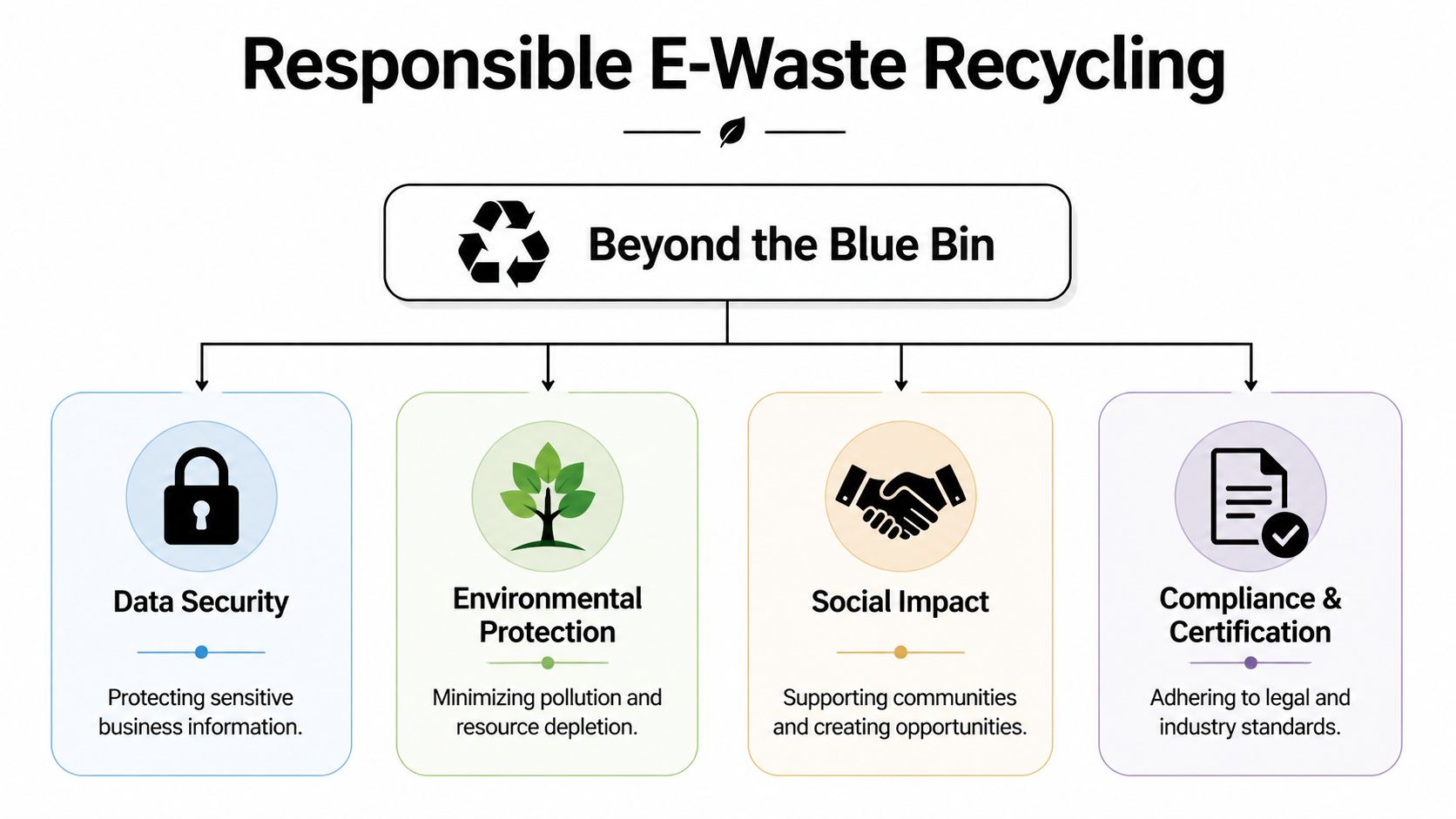
Data security has to be operational, not implied
Businesses often assume a device is safe once it’s powered down or retired from the network. That assumption causes problems. Drives, embedded storage, and retained device memory can all outlive the asset’s useful business life.
A responsible recycler should be able to tell you exactly how data is handled. That includes whether assets are wiped, shredded, or triaged for one path or the other. It also includes who has custody at each step, how media is segregated, and what proof the client receives afterward.
For regulated sectors, this isn’t just good hygiene. It’s part of defensible compliance.
Environmental handling means knowing what happens downstream
A lot of providers say they recycle. Fewer can explain where components go after initial sorting. That’s a major difference.
Electronics contain hazardous materials, and business clients should expect a process that prevents those materials from being dumped, exported irresponsibly, or sent to landfill. The benchmark many Atlanta buyers look for is R2 v3 certification. According to Crus A LLC’s overview of R2 v3 requirements, this certification mandates downstream material tracking and zero export of hazardous e-waste, resulting in 100% landfill diversion rates and safer processing for sensitive materials.
That standard matters because it forces discipline beyond collection. It asks whether the recycler can account for what happens after the truck leaves your site.
Social impact should be real enough to report
A lot of businesses now want their disposal programs to do more than avoid harm. They want them to create visible good. That can mean supporting local workforce initiatives, veteran-focused causes, or environmental restoration tied to recycling activity.
That’s where many “green” claims get thin. If a provider talks about community impact, ask what documentation exists. Ask what the client receives. Ask whether the outcome can be included in CSR or ESG materials without vague language.
Responsible recycling isn’t just about where equipment doesn’t go. It’s about what value gets created after collection.
What responsible looks like in practice
The easiest way to test a recycler’s definition is to ask whether they can show all four pillars at once:
- Security controls: documented sanitization or destruction methods, custody records, asset handling protocols
- Environmental controls: zero-landfill practices, downstream accountability, hazardous material management
- Compliance readiness: certificates, reporting, and procedures suitable for audits
- Purpose beyond disposal: a credible framework for community benefit that isn’t just marketing copy
For a useful operational example, it helps to review what happens to recycled electronics after collection and sorting. That process view tends to reveal quickly whether a vendor is running a real ITAD workflow or acting solely as a pickup intermediary.
The bar is higher for business clients
Residential drop-off logic doesn’t translate well to enterprise environments. Corporate offices, hospitals, schools, and public agencies need more control and more paperwork. They also need providers who understand de-installation, serialized assets, loading constraints, and internal approvals.
That’s why “beyond the blue bin” is the right frame. The bin is just the visible start. Responsible electronics recycling is the system behind it.
The Business Risks of Improper E-Waste Disposal
Most companies don’t get in trouble because they intended to cut corners. They get in trouble because they assumed a vendor had stronger controls than it did.
A familiar example is the office cleanout that gets treated like facilities work instead of information governance. A team clears old devices during a move. Equipment leaves the building. Months later, nobody can produce a destruction record, no one knows who signed custody, and the organization realizes the recycler’s paperwork was little more than a pickup receipt.
The hidden risk is usually documentation failure
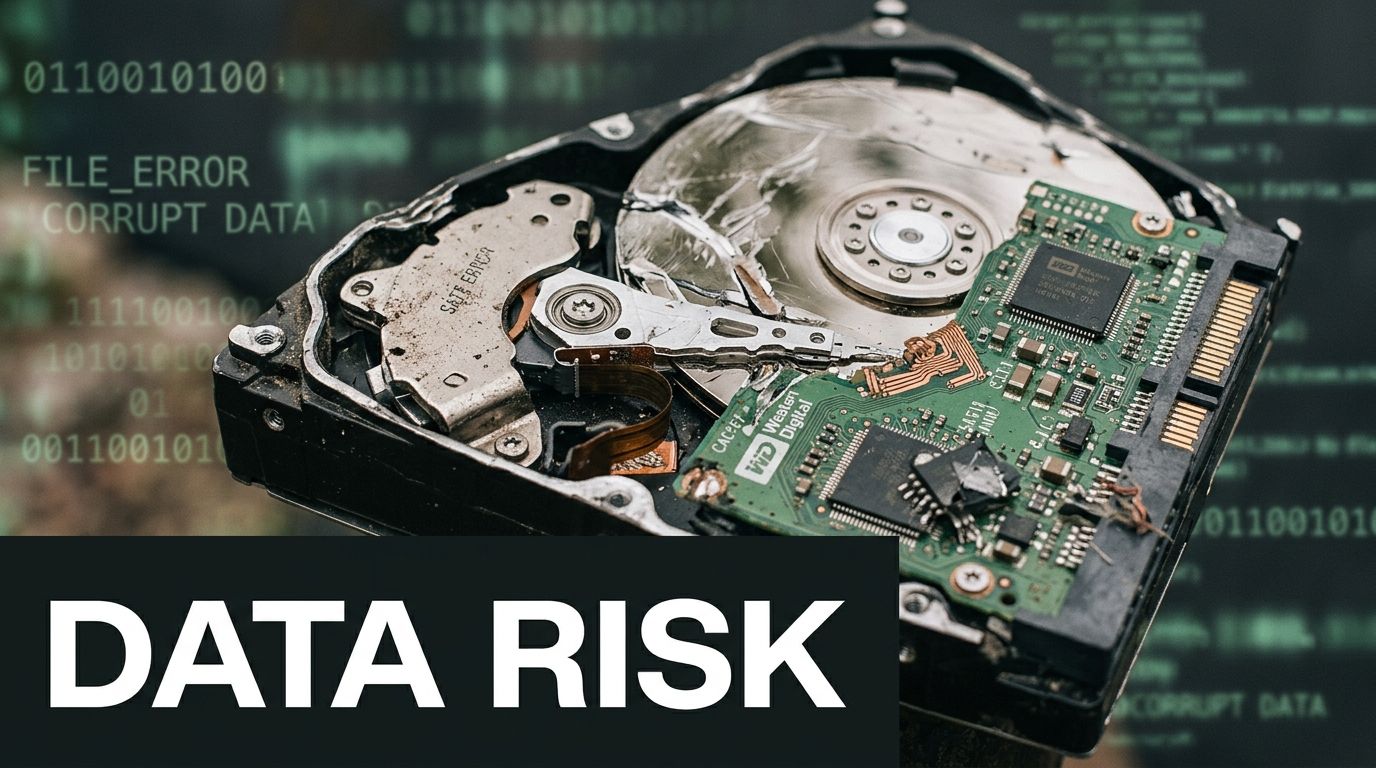
Data destruction is important, but in regulated industries, the inability to prove proper handling can be just as damaging. Healthcare, education, and government teams already know this. Their problem is that many recyclers market generic data destruction without supplying the records auditors specifically request.
According to Equip Recycling’s Atlanta electronics recycling overview, compliance documentation gaps are a major risk for regulated industries. Many recyclers fail to provide the specific chain-of-custody reports and attestations required for HIPAA or FERPA audits, leaving businesses exposed to significant legal penalties.
That’s the part many buyers miss. The issue isn’t just “Was the device destroyed?” It’s also “Can you prove each handoff, control step, and final disposition?”
Brand damage lasts longer than the cleanup
Improper disposal also creates reputational risk. If retired business electronics are mishandled, dumped, or traced to an irresponsible downstream stream, the story rarely stays inside the operations team. Customers, employees, boards, and public stakeholders tend to see it as a values failure, not just a vendor mistake.
If your company has public sustainability commitments, your disposal process has to hold up under scrutiny from people outside the IT department.
That’s one reason responsible business electronics recycling in Atlanta has become a board-level operations issue for some organizations. Disposal now touches privacy, legal, procurement, communications, and ESG.
What usually doesn’t work
Three habits create avoidable exposure:
- Choosing on convenience alone: Fast pickup matters, but speed without custody controls creates blind spots.
- Assuming all destruction certificates are equal: Some documents confirm far less than buyers think.
- Treating e-waste as the last step of a refresh project: By that point, asset tracking is often weaker and internal ownership is fuzzy.
The safer approach is to treat disposition planning as part of the refresh or decommissioning plan from day one. When companies do that, they usually avoid the scramble that causes shortcuts.
Your Vendor Evaluation Checklist for E-Waste Recycling
Most bad recycling decisions happen before the first device is loaded. Procurement asks for pricing. Operations asks about pickup dates. IT asks whether drives are destroyed. Those are fair questions, but they aren’t enough.
A stronger evaluation process looks at whether the vendor can protect your company when something gets audited, challenged, or questioned later.
Start with the proof, not the pitch
Ask for documentation before you ask for branding materials. A serious recycler should be ready to show process evidence, not just marketing claims.
Use this checklist when comparing providers for Responsible Business Electronics Recycling Atlanta GA.
| Criteria to Verify | What to Look For (The Gold Standard) | Why It Matters |
|---|---|---|
| Certification status | Current R2 v3 or equivalent documentation, with scope relevant to your asset types | Confirms the vendor operates under recognized controls for electronics processing |
| Data destruction methods | Clear explanation of wiping, physical shredding, and when each method is used | Helps you match destruction method to the risk level of each device |
| Chain of custody | Sample custody records, handoff procedures, and final disposition reporting | Reduces disputes and supports audits |
| Onsite services | De-installation, packing, palletization, and controlled pickup procedures | Lowers handling errors during office moves, refreshes, and closures |
| Downstream transparency | Explanation of where materials go after sorting and who receives them | Prevents “black box” recycling |
| Reporting quality | Asset lists, certificates, environmental reporting, and client-ready summaries | Makes internal compliance and ESG reporting easier |
| Regulated industry readiness | Evidence the vendor understands healthcare, education, or government documentation needs | Avoids generic processes that don’t fit sector-specific obligations |
| Asset value recovery | Process for identifying refurbishable assets and documenting recovery value | Helps finance teams evaluate whether the program can offset costs |
| Social impact claims | Verifiable reports, certificates, or partnership documentation | Separates real mission impact from vague cause marketing |
| Service footprint in Atlanta | Practical pickup capability, scheduling clarity, and operational responsiveness | Determines whether the provider can handle local rollout without delays |
Questions worth asking on the first call
Some questions reveal maturity quickly. If the answers are fuzzy, keep looking.
- “What records will we receive after pickup?” You want a concrete answer, not “whatever you need.”
- “How do you separate assets for refurbishment, recycling, and destruction?” That shows whether the workflow is disciplined.
- “Who maintains custody once equipment leaves our site?” This matters more than many buyers expect.
- “Can you show a sample certificate and chain-of-custody report?” If they can’t, that’s useful information.
- “How do you support ESG or CSR reporting?” A practical vendor should understand this request.
What works in real procurement reviews
The best internal reviews involve more than one department. IT should review data destruction controls. Compliance or legal should review attestation language. Facilities should confirm pickup logistics. Sustainability or corporate affairs should review reporting outputs if the company wants to use recycling in ESG materials.
A single-department review often misses a critical issue because each team sees only part of the risk.
Due diligence test: If a vendor disappeared after pickup, would your files still tell a clear story about what happened to every asset category?
Watch for soft spots in “free” offers
Free pickup can be perfectly legitimate, especially for larger device counts, but it shouldn’t end the evaluation. Buyers still need to understand how the economics work. Is the vendor relying on refurbishable asset value? Are all assets treated the same? Will low-value loads receive the same reporting quality as high-value ones?
That financial transparency matters because some organizations also want documented recovery value, not just disposal confirmation. If you’re comparing providers, reviewing how IT asset disposition companies structure services and controls can help your team ask sharper questions before signing anything.
A short decision framework for Atlanta teams
If two vendors look similar on paper, use this tie-breaker:
- Choose the vendor with stronger documentation.
- Choose the vendor with clearer downstream accountability.
- Choose the vendor that can support both compliance and ESG reporting without custom improvisation.
That order usually leads to fewer surprises than choosing on convenience or pickup speed alone.
Turning E-Waste into ESG Wins with Atlanta Green Recycling
For many companies, electronics recycling still sits in the “necessary but invisible” category. It gets done, but no one inside the business thinks of it as a meaningful part of the company’s public impact. That’s a missed opportunity.
A more useful model treats recycling as both a control function and a visible contribution. A corporate office retires a batch of laptops, monitors, and networking gear. The pickup solves the operational problem, but the program also produces reporting the business can use. The organization can document landfill diversion, confirm secure destruction of media, and connect the project to causes employees and customers understand immediately: support for veterans and tree planting.
What makes the ESG angle credible
The strongest ESG stories are attached to real operations. They aren’t decorative language added after the fact. In Georgia, responsible recycling providers can achieve over 95% material recovery rates with zero landfill guarantees and give clients metrics for ESG reports, including examples such as diverting 8,000 lbs of electronics from landfills or securely destroying 350 hard drives, according to Crus A LLC’s responsible electronics recycling service page.
That matters because ESG teams need specifics. They need outputs that can sit in sustainability reports, internal board materials, supplier reviews, or employee engagement campaigns without sounding inflated.
Why the social mission belongs inside the recycling program
A dual-impact model is easier for businesses to communicate than a generic “we recycled responsibly” line. If your old tech can support veterans and contribute to reforestation, the act of recycling becomes part of a broader corporate citizenship story.
That’s where cause-based campaigns can work well for Atlanta companies:
- Veterans Day drives: retire old office equipment during annual cleanouts and connect the effort to veteran support
- Earth Day and Arbor Day campaigns: pair recycling with tree-planting certificates for internal and external communications
- Employee engagement programs: let staff see that surplus equipment isn’t just removed, it’s redirected into human and ecological impact
One practical example in this market is Atlanta Green Recycling, which offers business electronics recycling, secure data destruction, pickup logistics, and mission-driven reporting tied to veteran aid and tree-planting initiatives. For companies trying to connect disposition work to CSR deliverables, that type of model makes the recycling line item more useful.
The business case is stronger than many teams assume
Finance leaders often separate sustainability from operational value. In practice, they overlap. Good recycling programs reduce internal friction, simplify reporting, and can support reputation, retention, and procurement goals at the same time. For teams building that internal argument, the economic case for green policies is a useful outside perspective on why environmentally responsible choices often align with business logic.
A disposal project becomes more valuable when legal can defend it, sustainability can report it, and employees can feel good about it.
What to ask for if you want ESG value
If your business wants more than a haul-away receipt, ask for:
- Environmental outcome reporting that your sustainability team can use
- Data destruction documentation suitable for internal controls
- Impact certificates or reports tied to veteran support or tree planting
- A partner badge or recognition asset that can be displayed in CSR materials or supplier communications
That’s how old equipment stops being a back-room problem and starts becoming part of a stronger Atlanta business story.
A Look Inside Our Secure Recycling Process
Good recycling programs feel simple to the client because the provider has done the hard operational work behind the scenes. The handoff should be clean, controlled, and documented from the first scheduling call through final reporting.
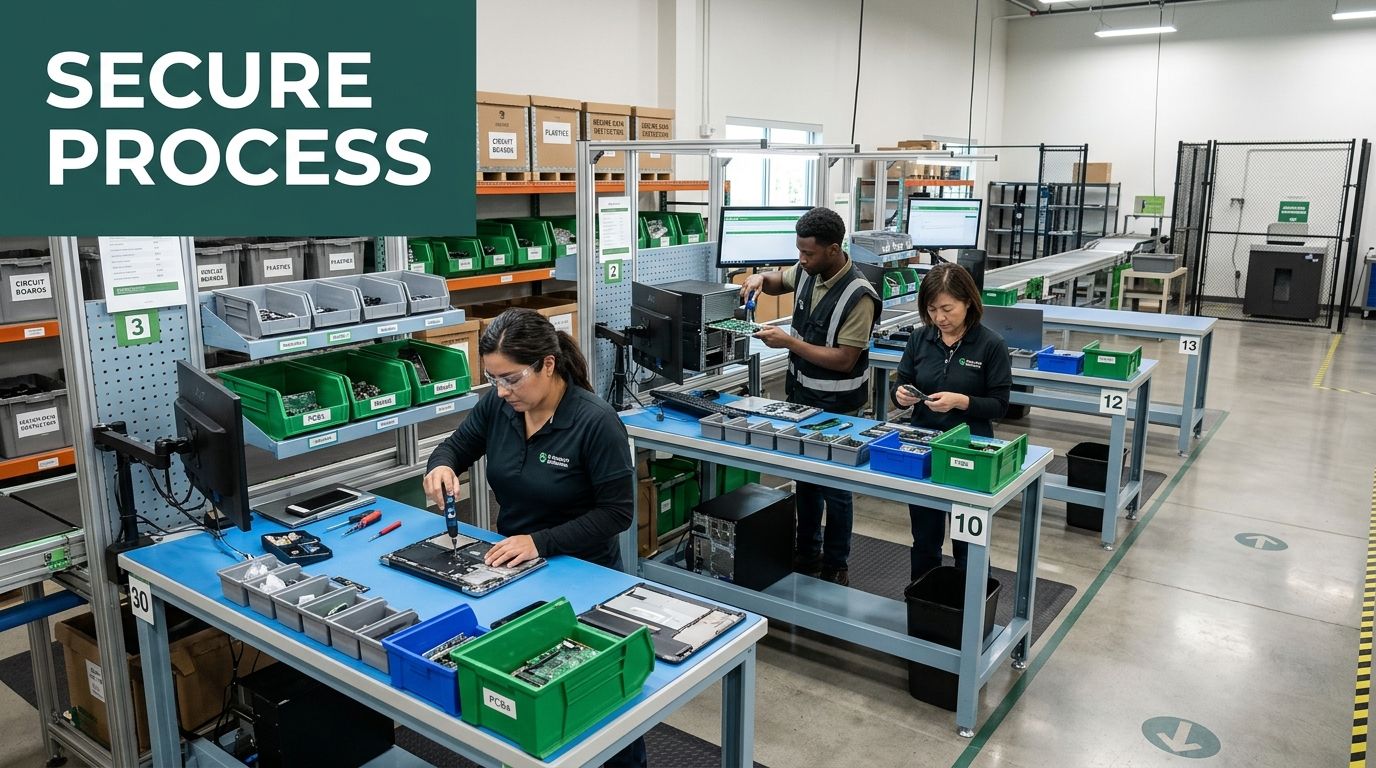
Step one is controlled pickup and intake
The process starts with scoping. A business identifies asset types, volume, site conditions, and whether de-installation or packing support is needed. From there, pickup is scheduled so equipment moves directly into a controlled chain of custody rather than lingering in hallways, docks, or unsecured storage.
For larger office closures or refreshes, onsite coordination matters. Teams need to know what’s being removed, what’s being retained, and what requires special handling.
Next comes triage by asset condition and risk
Once equipment reaches the processing workflow, not every item follows the same path. Some assets are candidates for refurbishment. Some require immediate data destruction. Others move into dismantling and material separation.
This is also where a disciplined ITAD process creates business value. As Atlanta eWaste Solutions notes in its discussion of e-waste ROI and cost recovery, a key differentiator often missed is documenting asset recovery value. When done correctly, that can create revenue streams or documented tax deductions and turn a cost center into a value-driver.
That’s especially relevant for businesses retiring higher-grade IT equipment in batches. The recovery conversation shouldn’t override security or compliance, but it shouldn’t be ignored either.
Data destruction and final reporting close the loop
For devices that need sanitization or destruction, the process should produce documentation your organization can retain. That may include certificates, asset records, and chain-of-custody support depending on the project scope and industry requirements.
A mature provider also gives the client enough visibility into what happened after collection. You shouldn’t have to guess whether assets were reused, dismantled, or processed as commodity materials. If your team wants to understand what secure handling should include, review secure destruction of data for retired business equipment and compare that standard against any vendor you’re considering.
Clients should never have to choose between operational convenience and process integrity. A secure recycling workflow has to deliver both.
Specialized work needs tighter planning
Data center decommissioning, multi-site refreshes, hospital equipment turnover, and school district pickups all require tighter controls than a simple office cleanout. The strongest programs map those constraints in advance, assign clear responsibilities, and preserve documentation at every handoff.
That’s what makes the process trustworthy. Not a slogan. Not a truck. The system.
Partner with Purpose for a Greener Atlanta
Responsible electronics recycling has become part of normal business governance in Atlanta. It protects data. It reduces environmental exposure. It helps regulated organizations document what happened to sensitive assets. It also gives companies a practical way to connect operations with ESG and community impact.
That’s the opportunity many businesses miss. Old electronics can either remain a lingering liability or become part of a cleaner, more accountable story. The difference comes down to process, documentation, and whether your recycling partner treats purpose as something measurable.
For Atlanta organizations, the strongest programs don’t stop at compliance. They create something useful for the broader community. Veteran support, tree planting, and transparent impact reporting turn disposal into a contribution employees can stand behind and leadership can communicate with confidence. “Recycling That Restores Lives and Environments” isn’t just a tagline when the reporting backs it up.
If your team is planning a refresh, move, decommissioning project, or annual cleanout, build the recycling plan before the storage room becomes the problem again. Businesses that want to pair operational cleanup with community engagement can also use a hosted or co-branded electronic recycling event in Atlanta to involve employees, partners, schools, or local organizations in a more visible sustainability effort.
Frequently Asked Questions About Business E-Waste
What types of business electronics can be recycled?
Most business programs accept the equipment Atlanta IT teams replace most often. That usually includes desktops, laptops, servers, monitors, printers, networking gear, hard drives, phones, cables, and other common peripherals.
The accepted list can change based on the vendor, the condition of the equipment, and the type of project. A standard office cleanout is different from a warehouse shutdown or a data center decommission. Confirm the material scope in writing before pickup, especially if you have battery-containing devices, specialty equipment, or anything that may require separate handling.
Is pickup available for larger office cleanouts?
Usually, yes. Many Atlanta-area business recyclers offer pickup for office closures, technology refreshes, relocations, and multi-floor cleanouts. Some providers may waive pickup fees for larger collections, but those thresholds differ, so ask for the volume requirement in writing instead of assuming.
Pickup terms matter as much as pickup availability. Ask who handles loading, how assets are inventoried on-site, whether serialized items are tracked, and what chain-of-custody documentation your team will receive before the truck leaves.
Will we receive proof of data destruction and recycling?
You should expect it. A business recycler should provide records that match the work performed, such as chain-of-custody logs, asset lists, certificates of destruction, and final recycling documentation.
That paperwork matters for more than internal filing. IT managers often need it for auditors, legal, risk, procurement, or leadership reviews after a refresh project. If your organization works in healthcare, education, finance, or government, request sample documents before service so your compliance team can confirm the format works for your policies.
Can electronics recycling support our ESG or CSR reporting?
Yes, if the recycler can document measurable outcomes instead of handing over a generic receipt. Useful reporting may include diversion details, asset counts, and data destruction records that support internal ESG tracking and vendor oversight.
The stronger programs also connect disposal to visible community impact. For Atlanta businesses, that can mean showing employees and customers that retired equipment was handled responsibly while also supporting veterans and tree planting. That turns an operational task into something leadership can report with confidence and staff can feel good about backing.
If your business needs a secure, documented, and mission-driven way to handle retired IT equipment, Atlanta Green Recycling can help you plan pickups, data destruction, and responsible end-of-life processing that supports both compliance and community impact.