
What happens to recycled electronics: From data destruction to reuse

When you hand over an old laptop, server, or smartphone for recycling, it doesn't just vanish into thin air. Instead, it kicks off a highly controlled and fascinating journey. This process involves secure collection, a triage stage to separate reusable gear from scrap, certified data destruction, and finally, a choice: either refurbishment for a second life or careful dismantling to recover precious raw materials like gold, copper, and plastic for new manufacturing. At Green Atlanta, we take it a step further, turning your e-waste into tangible support for veterans and vital reforestation efforts.
Your Old Device's Journey From Drop-Off to New Purpose
Ever wondered what really happens after your electronics leave your hands? Far from being tossed on a heap, your old device begins a carefully managed journey toward a new purpose. It’s a sophisticated workflow that transforms potential e-waste into a valuable resource, all while ensuring your sensitive information is completely protected.
The whole thing is designed to squeeze every last bit of value out of old tech while minimizing the environmental fallout.
It all starts the moment a recycling partner collects your equipment. At a certified facility, every single item is logged and inventoried, creating an unbroken chain of custody. For Atlanta businesses, this is non-negotiable—it’s how you document compliance and back up your ESG reporting.
Right after check-in, technicians perform a critical triage, sorting devices into two main streams. Some are flagged for refurbishment and reuse, while others are routed for material recovery.
The Two Paths of E-Waste Recycling
For any device that ever held data—think computers, servers, or phones—the next step is the most critical of all: secure and irreversible data destruction. This isn't just about dragging files to the trash can. We're talking about using specialized software to overwrite data to Department of Defense standards, making absolutely sure your private information stays private.
After the data is gone for good, the paths diverge.
- Refurbishment and Reuse: Devices that still have life left in them are thoroughly tested, repaired, and restored. This extends their lifespan, provides affordable technology to new users, and is easily the most sustainable form of recycling.
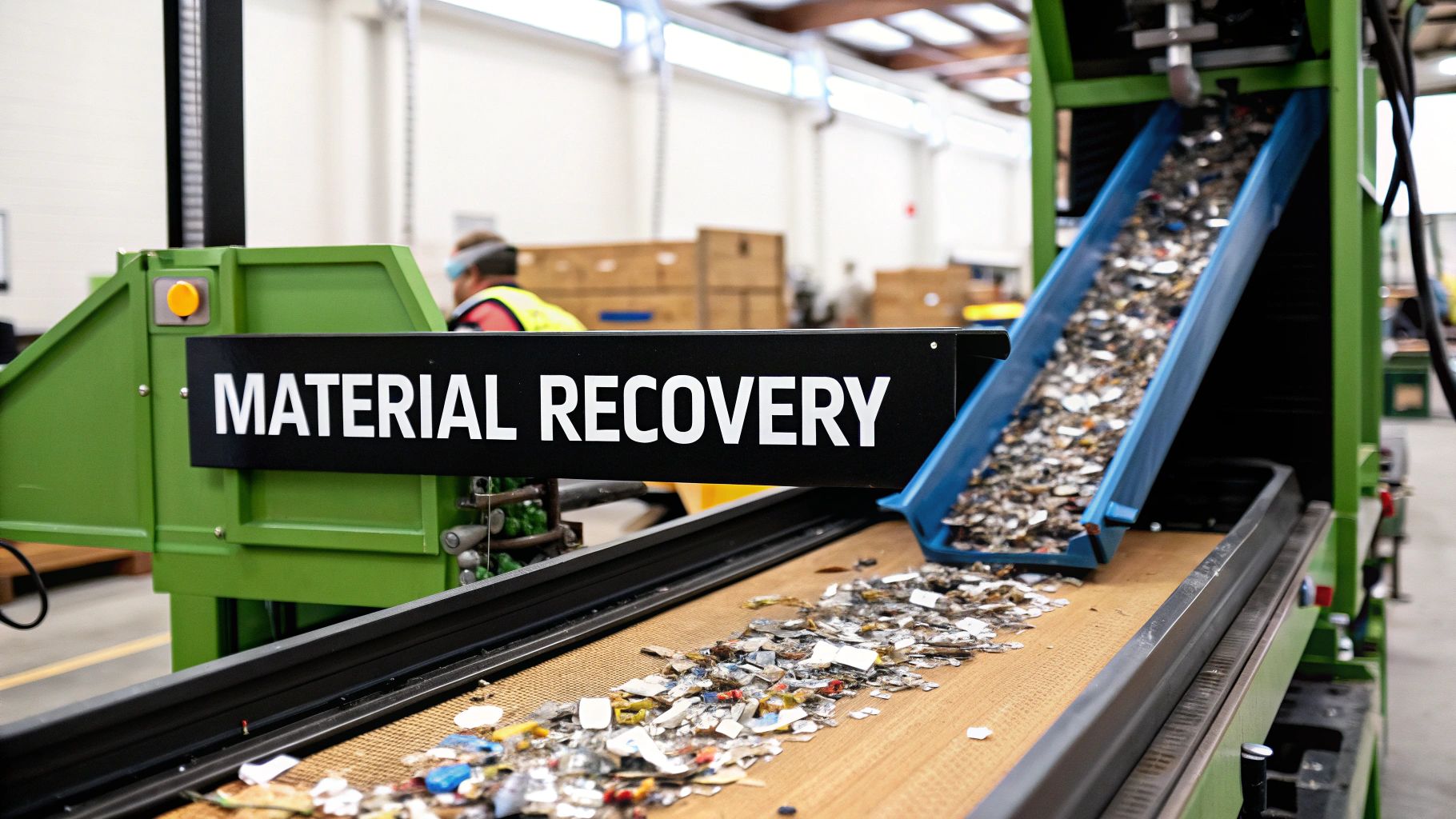
- Material Recovery: Electronics that are truly at the end of the road are carefully taken apart by hand. Hazardous materials are safely removed, and what’s left is separated into clean, sorted streams of metals, plastics, and glass.
These purified materials are then sold back to manufacturers, re-entering the supply chain and cutting down on the need for destructive mining. This is the circular economy in action. To get a more granular look at this process, check out our deep dive into how the computer recycling process works.
To help you visualize this journey, here’s a quick overview of the key stages your device goes through.
The Electronics Recycling Lifecycle At a Glance
This table breaks down the entire process, showing how each step contributes to either giving a device a second chance or reclaiming its core materials for future use.
| Stage | Primary Action | Key Outcome |
|---|---|---|
| Collection & Intake | Devices are logged, tagged, and inventoried. | Establishes a secure chain of custody for tracking and compliance. |
| Triage & Sorting | Technicians assess functionality and condition. | Items are separated into "Reuse" and "Recycle" streams. |
| Data Destruction | All data-bearing devices are sanitized to DoD standards. | Guarantees complete protection of sensitive corporate or personal data. |
| Refurbishment | Functional devices are tested, repaired, and cleaned. | Prepares electronics for resale, extending their useful life. |
| Dismantling | Non-working items are manually taken apart. | Separates hazardous materials from valuable commodities. |
| Material Recovery | Components are shredded and sorted by material type. | Creates pure streams of metal, plastic, and glass for reuse. |
This systematic approach ensures that whether a device is reused whole or broken down into its constituent parts, nothing of value is lost.
This flow chart gives a great visual summary of the core stages, from collection and sorting all the way through to refurbishment and raw material recovery.
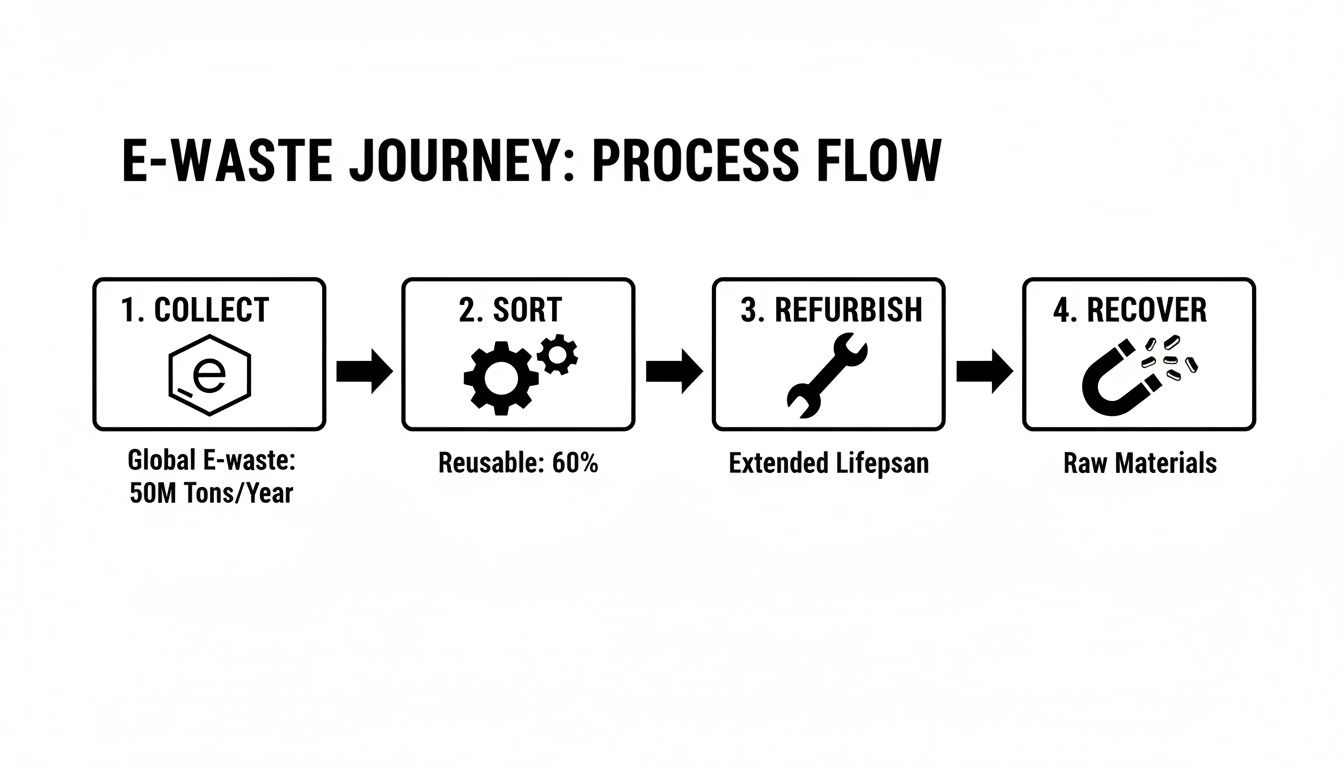
As you can see, every device is routed toward its highest possible value. The goal is always to prioritize reuse first, then recover every last component to make sure nothing goes to waste.
Securing Your Data and Sorting for Value
The moment your old electronics arrive at a recycling facility, a tightly controlled process kicks in. This isn't some chaotic junk pile; it’s a meticulous workflow focused on security and efficiency, where every single device is tracked and handled correctly.
First, everything gets inventoried. This creates a detailed, traceable record and establishes a clear chain of custody—an absolutely critical step for our corporate partners in Atlanta who need this documentation for their ESG (Environmental, Social, and Governance) reports. It’s the bedrock of accountability.
The Triage Process
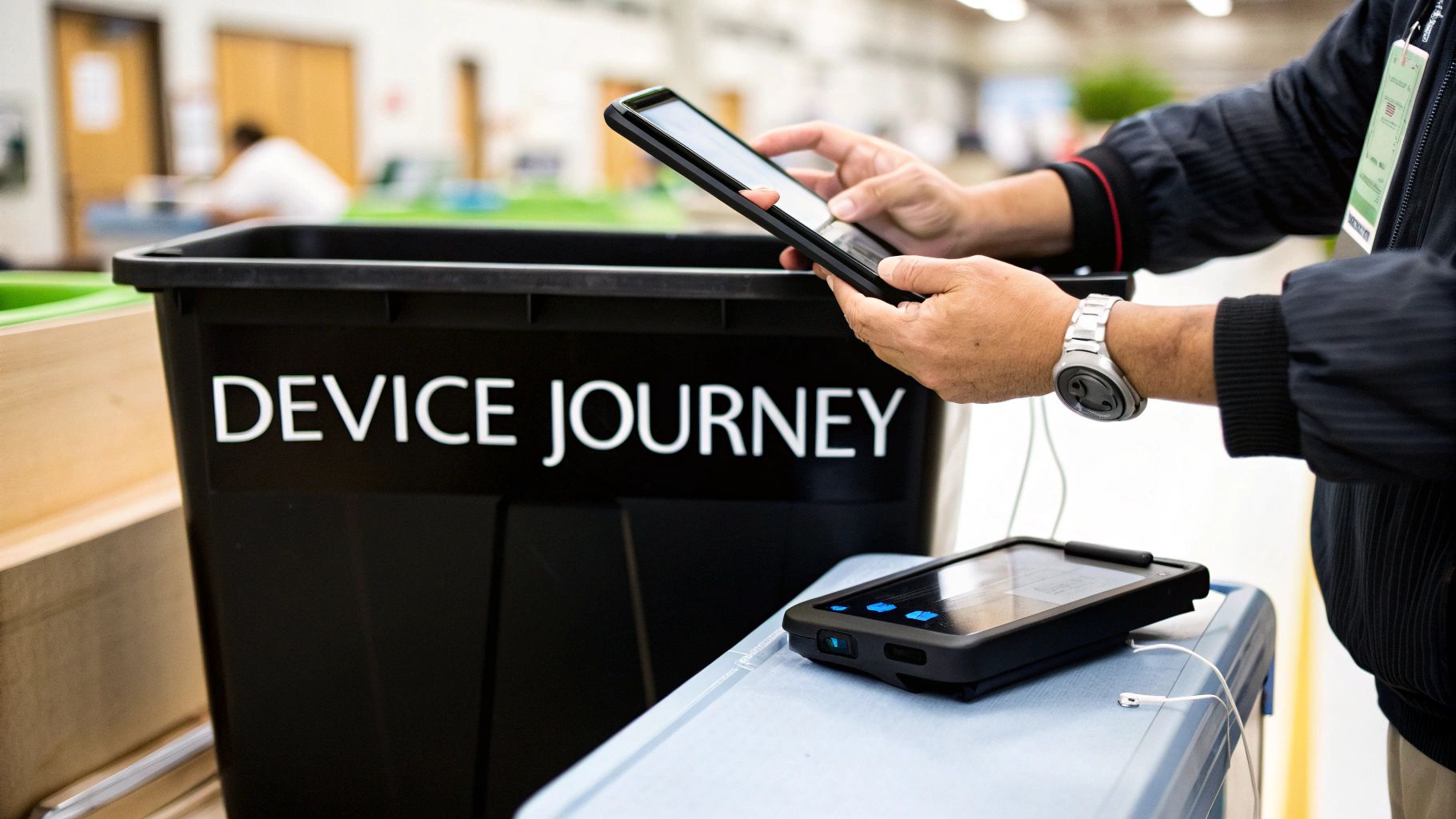
After intake, a "triage" begins. Think of it like a hospital emergency room for old tech. Our experts assess each item to figure out its best possible future. That laptop with a perfectly good processor might be tagged for refurbishment, while a cracked monitor is routed for material recovery.
This sorting stage is vital for maximizing both environmental and economic value. The goal is always to prioritize reuse over recycling whenever possible.
“Your old tech can house a veteran and grow a forest.” This is more than a slogan; it’s the outcome of a careful process. Every device sorted for value helps fund our dual mission of veteran aid and reforestation, turning e-waste into tangible hope and restoration.
The Non-Negotiable Step: Data Destruction
For any device that could hold data—servers, hard drives, company cell phones, you name it—the next step is non-negotiable and paramount: secure data destruction. Just deleting files isn't enough; that data can often be recovered from a formatted drive. Professional data destruction is an entirely different level of security.
We use several methods to guarantee your information is gone for good:
- Software Wiping: This involves specialized software that overwrites the entire hard drive with random data, often multiple times, to meet strict Department of Defense (DoD) standards.
- Degaussing: We use incredibly powerful magnets to completely scramble the magnetic domains on a hard drive, making the data stored there permanently unreadable.
- Physical Shredding: For devices that are obsolete or can't be sanitized, industrial shredders physically obliterate the storage media, reducing them to tiny, irrecoverable fragments.
To make sure your personal information is protected, it's smart to understand the basics of data retention and disposal policies before you hand over any old devices. This knowledge helps you ask the right questions of your recycling partner.
For businesses and individuals alike, this is arguably the most important part of the entire journey. You can dive into the technical details in our complete guide to what data sanitization is and why it matters. The peace of mind that comes from knowing your confidential information is gone forever is invaluable.
Once the process is complete, we issue a Certificate of Data Destruction. This document is your undeniable proof that sensitive information has been properly eliminated, protecting you or your organization from the immense financial and reputational fallout of a data breach. For our corporate clients, this certificate is a key piece of documentation for their compliance records, showing due diligence and a rock-solid commitment to data security.
Giving Tech a Second Life Through Refurbishment
Not every piece of electronics that comes through our doors is destined for the shredder. Far from it. The best possible outcome, both for the environment and for generating value, is to give a device a second chance at life. This is the refurbishment stage, where our skilled technicians turn retired assets into fully functional, quality-checked products.
This whole process kicks off right after the initial sorting, where devices with plenty of operational life left are flagged for reuse. A technician then puts the device through a thorough diagnostic gauntlet, testing everything from processors and memory to ports and screens. Think of it as a comprehensive physical for old technology, identifying exactly what needs a tune-up to get back to peak performance.
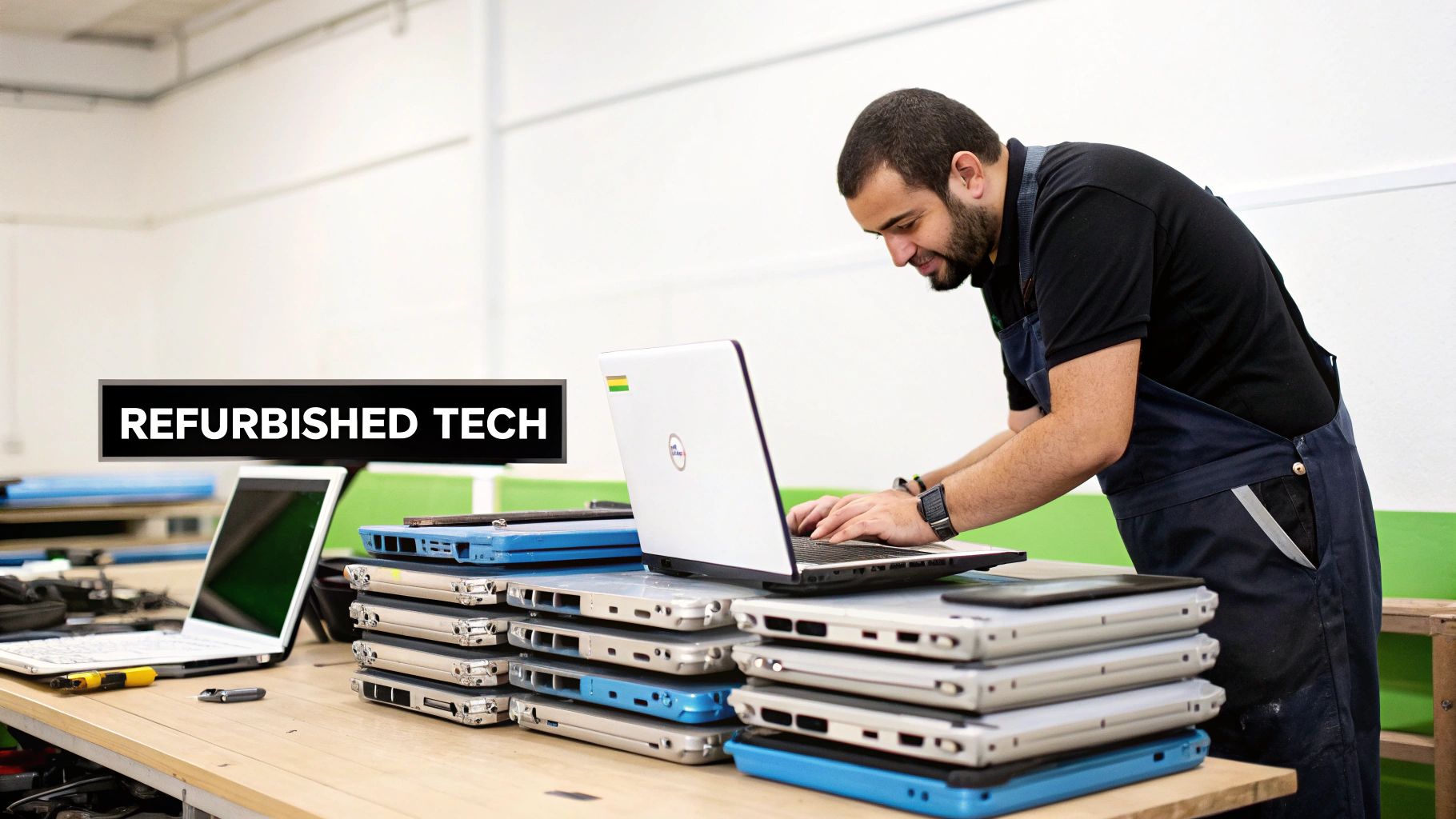
Once the diagnostics are complete, the hands-on work begins. Our techs will swap out worn-out components like aging batteries or cracked screens, buff out dents and scratches, and do whatever it takes to restore the device to full working order.
The Power of Reuse in a Circular Economy
This refurbishment process is the absolute cornerstone of a true circular economy. By extending a device's lifespan, we drastically cut down on the massive carbon footprint and resource drain that comes with manufacturing a brand-new product. Every single refurbished laptop or server is one less that needs to be mined, manufactured, and shipped across the globe.
After being restored and passing a final quality assurance check, these electronics are ready for a new home. We get them back out into the community, providing affordable, high-quality technology to schools, non-profits, and families who might not have the budget for brand-new equipment. That old desktop computer collecting dust in your office? It can be transformed into an essential tool for a student or a small business. We have a whole guide on what to do with an old desktop computer if you're looking for more ideas.
For our corporate partners in Atlanta, this is a huge ESG win. It’s more than just ticking a sustainability box; it can actually generate a financial return on retired assets, turning a disposal cost into a revenue stream. It’s a tangible way to demonstrate a real commitment to corporate social responsibility (CSR).
A Tangible Impact on People and the Planet
Refurbishment doesn't just benefit the environment; it directly fuels our dual mission to support veterans and reforestation. The value we recover from these refurbished electronics helps fund these vital programs. This approach turns a routine IT task into a powerful act of good.
“Turning E-Waste into Hope.” This isn't just a tagline for us—it's the core of what happens here. Each device given a new life also contributes to restoring lives and landscapes, creating a ripple effect of positive change.
But the need for robust reuse and recycling programs has never been more urgent. Despite the mountains of e-waste growing every year, the documented global collection and recycling rate is projected to plummet to just 20% by 2030. Generation is surging five times faster than recycling efforts can keep up. This means for every 100 kg of electronics we recycle, over 80 kg ends up unmanaged. The ITAD sector, which champions this 'refurbish-resell-recycle' hierarchy, is a critical part of the solution, helping to slash emissions by keeping devices in use for as long as possible.
Recovering Precious Materials From Old Electronics
So, what happens when a device is just too old or broken to be given a second life through refurbishment? Its journey is far from over. Instead, it moves into what we call the demanufacturing stage.
This is where things get really interesting. It’s a highly advanced process of breaking down electronics to their most basic, raw components to reclaim valuable materials. This is the moment recycling shifts from reuse to pure recovery, making sure even end-of-life tech has a role to play in a circular economy.
The first step, always, is safety. Our technicians manually remove any hazardous materials—think batteries, ink cartridges, or mercury-filled lamps. These items need special handling to prevent any environmental harm and are sent to specialized facilities that know exactly how to manage them.
Once the hazardous bits are out of the way, the rest of the device—plastic shells, metal frames, and all—is fed into powerful industrial shredders. These machines tear everything down into small, uniform fragments about the size of a quarter. It looks like destruction, but it’s really just preparation. This step makes the complex mix of materials much easier to sort.
High-Tech Sorting for Pure Materials
Once everything is shredded, the real magic begins. This jumbled mess of plastic, metal, and glass enters a sophisticated separation system that uses some clever physics and advanced tech to isolate each material. Think of it as a high-speed assembly line running in reverse.
- Magnetic Separation: First up, massive, powerful magnets pass over the shredded material, yanking out all the ferrous metals like iron and steel. It’s a simple but incredibly effective way to pull them out of the mix.
- Eddy Current Separation: Next, the remaining stream is hit with eddy currents. These create opposing magnetic fields that literally repel non-ferrous metals, kicking things like aluminum, copper, and brass off the conveyor belt into their own collection bins.
- Advanced Optical Sorting: What's left is mostly a jumble of different plastics. This is where infrared and optical sensors come in. These smart cameras can identify the unique signature of various polymers and use precise jets of air to separate them into pure streams.
This multi-stage process results in clean, separated commodities ready for the next phase.
Extracting Gold from Gadgets
Now for the most valuable parts: the circuit boards. These are the electronic nervous systems of our devices, and they contain small but significant amounts of precious metals like gold, silver, palladium, and copper.
"Recycling That Restores Lives and Landscapes.” This isn’t just about plastic and steel. The value recovered from precious metals in circuit boards directly helps us fund our dual mission, turning a tiny fragment of gold from an old server into tangible support for a veteran or a newly planted tree in a U.S. National Forest.
To get those metals out, we use specialized hydrometallurgical or pyrometallurgical techniques. These processes use controlled chemical baths or high heat to dissolve the base materials, leaving behind the purified precious metals. It's a complex science, and you can learn more about it in our overview of electronic circuit board recycling.
The final output isn’t a pile of junk. It’s a collection of meticulously sorted and purified raw materials. These commodities—bales of steel, ingots of aluminum, and refined precious metals—are sold back to manufacturers to create new products.
This dramatically reduces our global reliance on destructive, energy-hungry mining operations. It closes the loop, building a much more sustainable supply chain. For our corporate partners, this final step provides documented proof that they're contributing to a circular economy, strengthening their ESG reporting and brand reputation.
The Global Impact of Responsible E-Waste Recycling
When you zoom out and look at the big picture, turning old technology into a fresh supply of raw materials has a massive and growing global impact. What happens to recycled electronics on a macro scale isn't just about waste management—it's about building a truly sustainable, circular economy for the future.
The sheer economic value is staggering. The global electronics recycling market was valued at USD 43.2 billion in 2025 and is on a trajectory to hit an incredible USD 147.9 billion by 2035. This explosive growth tells you just how much value is locked inside our old devices. You can dig into the full electronics recycling market forecast to see how significant this industry is becoming.
A Story of Two Outcomes
Every single material pulled from an old device—from copper and aluminum to gold and plastic—directly reduces the need for new, environmentally destructive mining operations. That's a huge win for the planet. It conserves natural resources, saves energy, and cuts down on greenhouse gas emissions.
But there's a flip side to this story. We face a significant and urgent challenge: the documented global recycling rate is alarmingly low. Worse, it’s expected to fall even further as e-waste production continues to outpace our ability to manage it. This growing gap represents a massive missed opportunity and a looming threat.
“Where Tech Meets Trees & Transformation.” This isn't just a catchy phrase; it's the core of what responsible recycling is all about. When done right, it moves beyond simple waste management to actively create positive change, turning a global problem into a powerful force for good.
This gap means billions of dollars in valuable, recoverable resources are lost each year, either buried in landfills or shipped off to the highest bidder. When handled improperly, these devices often end up in developing nations. There, unsafe processing methods release toxic materials like lead and mercury, causing severe environmental damage and devastating health crises for local communities.
Global E-Waste Generation vs. Recycling Rates
The numbers tell a sobering story. A comparison of key regions highlights the global disparity between the amount of e-waste being produced and the small percentage that is formally collected and recycled.
| Region/Country | Annual E-Waste Generated (2022) | Formal Recycling Rate |
|---|---|---|
| Europe | 12.3 Mt | 42.8% |
| Asia | 28.6 Mt | 11.7% |
| Americas | 14.1 Mt | 11.6% |
| Oceania | 1.8 Mt | 8.8% |
| Africa | 2.9 Mt | 0.9% |
This data paints a clear picture: while some progress has been made, the vast majority of e-waste worldwide is not being managed through proper channels, representing a lost opportunity for resource recovery and a significant environmental risk.
Making a Local Choice with Global Consequences
The recycling partner you choose has consequences that ripple far beyond your own community. By working with a certified, mission-driven recycler, you are consciously deciding to make your old electronics part of the solution, not the problem.
This single decision supports a system that:
- Protects Vulnerable Communities: It stops hazardous e-waste from being dumped on people who lack the infrastructure to handle it safely.
- Strengthens the Circular Economy: It feeds high-quality, recycled commodities back into the manufacturing supply chain, lessening our collective dependence on mining new materials.
- Creates Tangible Social Good: For businesses in Atlanta, this choice becomes a powerful tool for your ESG and CSR initiatives. When your old tech helps support veterans and plant trees, you are directly contributing to both social and environmental restoration.
Organizations like ours give businesses a way to turn an operational task—disposing of old IT assets—into a meaningful story. We provide Veteran Support Impact Reports and Plant-A-Tree certificates that allow companies to document their positive contributions for stakeholders, employees, and customers. It transforms a simple act of recycling into a measurable "Recycled with Purpose" initiative.
Choosing a certified, responsible recycler is a vote for a healthier planet and a more equitable world. It guarantees that the journey of your old electronics ends not in a landfill, but as a valuable piece of a thriving circular economy that restores both lives and landscapes.
Choosing a Recycler That Makes a Difference
Now that you know what happens behind the scenes, the final piece of the puzzle is picking the right partner for the job. Not all electronics recyclers are created equal, and your choice is what determines if your old tech becomes a genuine win for the planet or just another liability.
Making the right call is about more than just getting old equipment hauled away. It’s about protecting your data, living up to your company’s values, and making an impact you can actually measure.
Your first checkpoint should always be certifications. Keep an eye out for recyclers holding credentials like R2 (Responsible Recycling) or e-Stewards. These aren't just fancy badges on a website; they are tough, third-party audited standards. They guarantee a recycler is hitting the highest marks for environmental safety, data security, and worker protection, acting as your safeguard against shady practices like illegally exporting e-waste.
Beyond the Basics: Finding a Mission-Driven Partner
While certifications set the technical baseline, the real magic happens when you partner with an organization whose mission goes beyond just recovering materials. This is where a routine task can become a powerful story for your brand. Suddenly, electronics recycling isn't just a line item expense—it becomes a pillar of your corporate social responsibility (CSR) and ESG (Environmental, Social, and Governance) goals.
For businesses here in the Atlanta area, this is a golden opportunity. Teaming up with a mission-driven organization transforms your retired IT assets into a genuine force for good. When you work with a recycler that has a dual-impact model, your old tech directly fuels social and environmental restoration.
“Your old tech can house a veteran and grow a forest.” This is the kind of tangible result you get from a purpose-driven partnership. The value recovered from your devices helps fund veteran support programs and contributes to reforestation projects, creating a powerful narrative your team and your customers can rally behind.
This approach is an easy ESG win. You get formal documentation, like Plant-A-Tree certificates and Veteran Support Impact Reports, that quantifies your contribution for annual sustainability reporting. You can even earn a digital “Recycled with Purpose” badge for your website to show everyone your commitment to the community.
Asking the Right Questions to Vet Your Recycler
Before you sign on the dotted line, you have to ask the right questions to make sure a recycler’s values and processes align with yours. When vetting a recycler, look for those who follow robust IT Asset Management practices, which ensures total accountability for your devices from the moment they leave your hands.
Here are a few critical questions to get you started:
- Can you provide a Certificate of Data Destruction? This is non-negotiable. You absolutely need documented proof that every bit of sensitive data has been permanently wiped.
- What is your chain of custody process? A trustworthy partner should be able to track your assets from your facility all the way to their final destination, whether that’s reuse, resale, or recycling.
- Do you have a zero-landfill policy? Make sure the recycler is truly committed to finding a path for 100% of the materials they handle, keeping everything out of the dump.
- How do you support corporate ESG goals? Ask them directly if they provide impact reports or other documents that help you measure and share your sustainability story.
When you go beyond the standard checklist and seek out a partner with a clear social mission, you elevate the entire process. Your company isn't just getting rid of old electronics; it's actively participating in a cycle of restoration that helps both people and the planet. To get a better sense of who’s out there, checking out a list of top electronic waste disposal companies is a great way to explore your options.
Got Questions About Electronics Recycling? We've Got Answers.
Figuring out what actually happens to old electronics can feel like a black box. But when you know what to look for, you can make choices that truly matter. Let's tackle some of the most common questions we hear from businesses and individuals.
The first thing you should always ask about is secure data destruction. Before a single device is touched for recycling, certified professionals must use methods compliant with Department of Defense standards to completely wipe all your information. This isn't just a simple delete—it's a permanent, irretrievable erasure of your sensitive data. Always make sure you get a Certificate of Data Destruction to prove it.
What Is the Most Sustainable Outcome for My Old Tech?
Hands down, the greenest option is always refurbishment and reuse. Giving a laptop, phone, or server a second life massively cuts down on the carbon footprint and resources needed to build a new one.
When a device is truly at the end of its road and can't be refurbished, the next best thing is responsible material recovery. This is where valuable metals, plastics, and glass are carefully separated and reclaimed to be used in brand-new products. It’s a common myth that recycling is just about shredding everything up—a good recycler’s first instinct is always to see if a device's life can be extended.
How Does My Company Benefit From Choosing a Mission-Driven Recycler?
Working with a mission-driven recycler elevates a simple operational task into a genuine win for your ESG (Environmental, Social, and Governance) and CSR (Corporate Social Responsibility) goals. Instead of just getting rid of old assets, you’re actively creating a positive impact you can talk about.
"Your company can turn e-waste into forests.” This isn't just a catchy phrase; it's a real, measurable result. When you partner with us, we provide Veteran Support Impact Reports and Plant-A-Tree certificates. You get concrete documents to include in your sustainability reports.
For an Atlanta-based business, this approach delivers some serious advantages:
- Boost Your Brand Reputation: It shows a clear, authentic commitment to the community and the planet.
- Engage Your Employees: Your team can feel a real sense of pride knowing their old work equipment is doing good.
- Create Marketing & PR Gold: This generates positive, genuine stories perfect for press releases, blog posts, and social media.
We make it easy for our corporate partners to get started with free pickups for 50+ devices. We’ll even give you a digital “Recycled with Purpose” badge to display on your website, showcasing your commitment loud and clear.
How Can I Be Sure My Electronics Are Handled Responsibly?
To make sure your old tech doesn't end up in a landfill or get shipped overseas illegally, you need to look for certifications. A recycler with an R2 (Responsible Recycling) or e-Stewards certification has passed rigorous third-party audits. These guarantee they follow the highest standards for environmental safety, data security, and worker protection.
Other non-negotiables? A transparent chain of custody that tracks your assets from start to finish and a firm zero-landfill policy. These are the hallmarks of a partner you can truly trust.
Ready to turn your old technology into a force for good? At Atlanta Green Recycling, we make it easy for Atlanta businesses to recycle their electronics responsibly while supporting veterans and reforestation. Schedule your free pickup today.