
Atlanta Businesses: How to Recycle Old Laptops

Recycling old laptops is about so much more than just dropping them off at a depot. It’s a delicate process of backing up critical data, completely wiping every trace of information from the hard drive, and then finding a certified recycler you can trust. For any business, getting this wrong isn't an option—it’s a matter of security, compliance, and even your brand's reputation.
The E-Waste Headache for Atlanta Businesses
Take a look around your office. See that closet full of outdated laptops? Each one of those devices is more than just clutter. It's a potential security risk, an environmental liability, and, frankly, a missed opportunity. As technology moves faster than ever, Atlanta companies are finding themselves with a growing mountain of retired IT assets, turning what used to be a small chore into a major operational challenge.
The sheer scale of this problem is hard to wrap your head around. Globally, electronic waste exploded to 62 million tonnes in 2022—a staggering 82% jump from 2010. And it's not slowing down. Projections show that number hitting 82 million tonnes by 2030, a growth rate that’s five times faster than our documented recycling efforts can handle. Laptops and other small IT devices alone made up 4.6 million tonnes of that waste, but only a tiny fraction were handled correctly.
This massive global issue has very real, local consequences for businesses right here in Atlanta. Improper disposal doesn’t just poison the local environment; it opens your company up to devastating data breaches and hefty non-compliance fines.
From Liability to Opportunity
But what if you could look at that pile of old laptops not as a burden, but as a strategic asset? This guide is for Atlanta organizations that are ready to move past the headaches of e-waste. We’ll show you how to securely recycle your old laptops and, more importantly, how to transform that process into a powerful story of corporate social responsibility (CSR).
Imagine turning that equipment graveyard into real-world community benefits. Through cause-based recycling, your retired devices can directly support local veterans and help fund reforestation projects right here in our area. It’s an approach that creates a positive impact that truly resonates with employees, customers, and stakeholders alike.
Our mission is simple: Turn e-waste into hope. We believe in "Recycling That Restores Lives and Landscapes," transforming a routine operational task into a powerful narrative of positive change.
This guide gives Atlanta businesses a clear, actionable path to:
- Protect Sensitive Data: We'll dig into the best methods for data destruction that meet today’s demanding security and compliance standards.
- Navigate Logistics: Learn how to streamline the entire process, from inventory and collection to transporting bulk IT assets.
- Build Your Brand: Discover how to use your recycling efforts to create compelling ESG and CSR initiatives that strengthen your company’s reputation.
- Engage the Community: Partner with us to make a measurable difference, turning old tech into support for veterans and new forests.
By learning how to recycle old laptops with a genuine purpose, you can solve a critical business need while building a stronger, more respected brand in the Atlanta community. You can discover more about the environmental impact of electronic waste and see for yourself why responsible recycling is so critical.
Preparing Your Laptops for Secure and Compliant Recycling
Before a single one of your old laptops heads out the door, there are some crucial steps you can't afford to skip. This is the stage that separates responsible, secure recycling from a potential data breach disaster. It all starts with a clear, detailed asset inventory, giving you complete accountability for every device from your office to its final destination.
This inventory doesn't need to be some complex database. A straightforward spreadsheet listing the make, model, and serial number for each laptop is a fantastic start. The goal here is to create a master list that you can later check against the documentation from your recycling partner. It’s your first move in building an unbreakable chain of custody and ensuring nothing gets lost in the shuffle.
Making Your Data Unrecoverable
While tracking your assets is important, your absolute top priority is making sure the data on those laptops is gone for good. Simply deleting files or hitting "factory reset" just won't cut it. Lingering data can often be pulled back with the right software, leaving your organization wide open to risk.
Preparing devices for recycling is a critical part of the process. For some useful insights on handling sensitive gear, there are professional resources on packing electronics for moving that can offer a fresh perspective. After you've backed up any data you need to keep, you have to decide how to destroy what’s left. A good first question is simple: does the laptop even work anymore?
This decision tree helps visualize that first choice for every device.
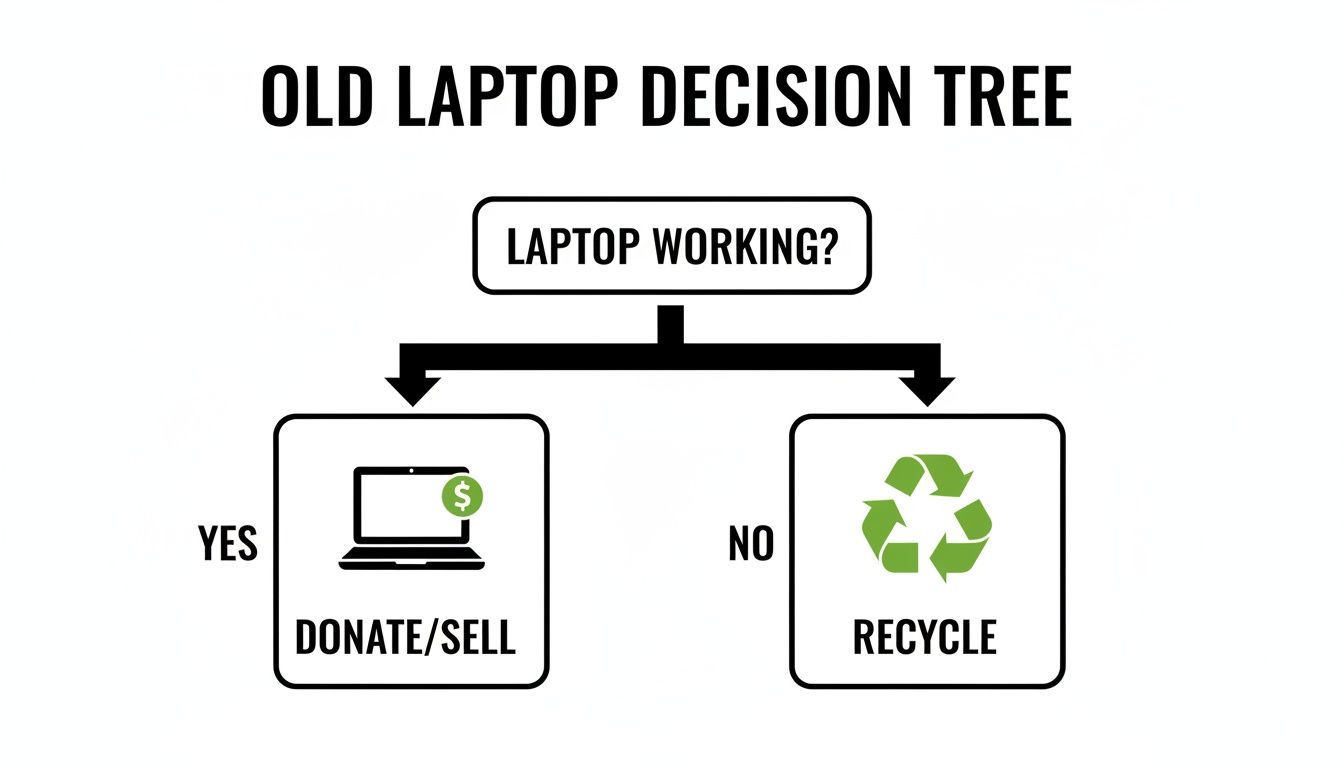
As you can see, the path is clear. Working laptops can be considered for donation or resale, while non-working devices should always be securely recycled.
You really have two main choices for data destruction: software-based wiping or physical destruction. The right one for you will depend on your industry's compliance rules, your internal security policies, and of course, your budget.
Key Takeaway: Don't be fooled by a standard "factory reset." It doesn't guarantee your data is unrecoverable. For real security that meets compliance standards, you have to use certified data wiping software or physical destruction.
If you want to get into the nitty-gritty of making a hard drive's data disappear, take a look at our detailed guide on how to clear a laptop hard drive before you recycle.
Software Wiping vs. Physical Shredding
Software-based data wiping involves using specialized programs to overwrite every bit of data on a hard drive with random characters, usually in multiple passes. This method makes the original data practically unrecoverable and is often more than enough for many organizations. The key is using software that meets standards like DoD 5220.22-M.
Physical destruction, on the other hand, is exactly what it sounds like—we shred the hard drive into tiny, mangled pieces. This is the gold standard for security and is the only choice for organizations dealing with highly sensitive data, like patient records under HIPAA or classified government information. There is zero chance of data recovery from a physically shredded drive.
To help you decide, here’s a look at how the two methods stack up.
Data Destruction Methods Comparison
| Method | Process | Security Level | Best For | Key Consideration |
|---|---|---|---|---|
| Software Wiping | Overwrites drive data with random characters using certified software. | High. Meets DoD standards, making data practically unrecoverable. | Laptops intended for remarketing or donation; standard corporate data. | Allows the hard drive and laptop to be reused, maximizing value and sustainability. |
| Physical Shredding | The hard drive is physically pulverized into small fragments. | Absolute. Data is impossible to recover. | HIPAA-regulated data, financial records, government secrets, end-of-life drives. | Destroys the drive completely, making it unusable. Ideal for maximum security. |
Choosing the right data destruction method is a major decision, but once it’s made, you can move on to the next piece of the puzzle.
Streamlining Your Logistics
With your data destruction plan sorted, it's time to think about the physical side of things. Find a secure, central spot in your office to gather all the retired laptops. This simple step prevents devices from getting misplaced and makes the pickup process incredibly smooth for your recycling partner.
While you’re consolidating the equipment, you can also do a quick sort. Group the laptops that are complete and might be reusable, and separate them from the ones that are clearly damaged or only good for spare parts. This bit of organization helps your recycler process everything more efficiently and can sometimes boost the value you get back from your assets.
Choosing the Right Atlanta Recycling Partner
Handing off those old laptops doesn't mean your responsibility ends—it just means you're trusting someone else with it. This is why picking the right certified e-waste recycler in Atlanta is the most important part of this whole process. You’re not just getting rid of old equipment; you're handing over your company’s data, its reputation, and its environmental promises to a partner.
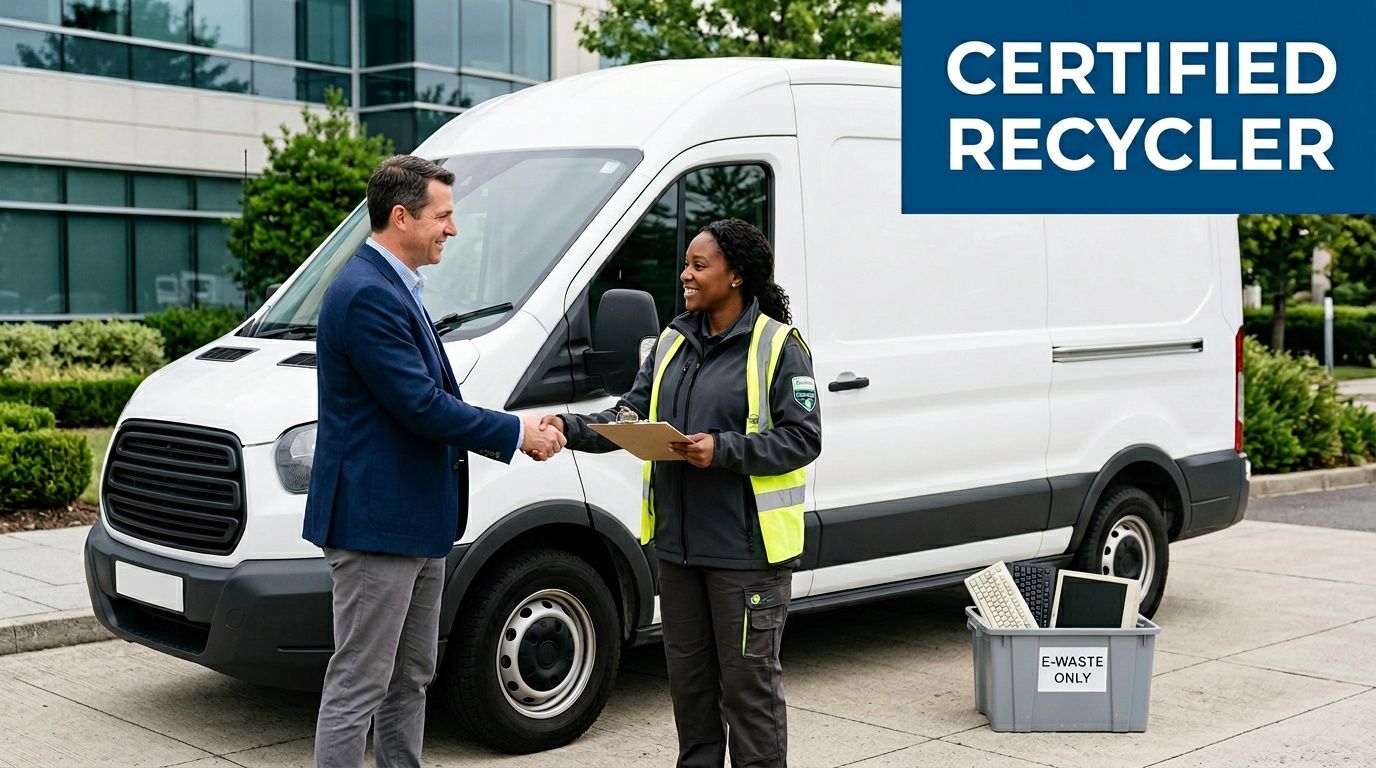
When you start looking at potential partners, there are a few credentials that should be non-negotiable. Certifications like R2 (Responsible Recycling) and e-Stewards are the gold standard for a reason. These aren't just logos to slap on a website; they are proof that a recycler meets the highest standards for data security, environmental safety, and worker protection.
A certified partner is your best defense against your company's old tech ending up in a landfill overseas, which can quickly turn into a legal and PR nightmare.
Partnering for Purpose and Impact
While certifications establish a baseline of trust, the truly great partners offer something more. Try to find a recycler whose mission connects with your own company's values. A "Recycle for a Cause" program can transform a routine task into a compelling story that resonates with your employees and customers.
Imagine being able to tell your team, “Our old laptops helped house a veteran and plant a forest.” That's the real power of a dual-impact model that pairs environmental action with genuine social good.
- Veteran Support: Your recycled laptops can directly fund programs that provide real-world assistance to local veterans.
- Reforestation: A portion of the value from your old tech can go toward planting trees and restoring natural habitats.
Suddenly, a line item in your budget becomes a cornerstone of your Corporate Social Responsibility (CSR) and Environmental, Social, and Governance (ESG) efforts. It’s a straightforward ESG win that both your marketing and HR teams can get behind. If you're serious about making an impact, it’s worth checking out dedicated e-waste disposal companies in Atlanta that build these programs into their services.
Key Insight: When you recycle for a cause, you’re not just getting rid of assets. You are creating positive stories that foster brand loyalty and show a real commitment to your community.
Logistics and Secure Chain of Custody
A top-tier recycling partner should make the entire process of how to recycle old laptops feel simple and secure. For businesses with 50 or more devices, complimentary pickup services should be a standard offering. This isn't just a perk; it's a huge time and resource saver for your team.
One of the most important questions you can ask is whether the recycler owns and operates its own fleet of trucks. Bringing in third-party movers adds another link to the chain of custody, creating a potential weak point where assets could be lost or data compromised. A partner with their own trucks and background-checked employees offers a seamless, secure journey from your office to their facility.
Before you sign any agreement, make sure the partner can provide:
- Adequate Insurance: This protects your business from liability if something goes wrong during transport or processing.
- Onsite Service Options: The ability to have hard drives shredded at your location before they even leave the building provides the ultimate peace of mind.
- Secure Chain of Custody: This is an unbroken, documented record that follows your assets from pickup all the way to their final destruction or recycling.
Finally, insist on getting thorough documentation once the job is complete. A Certificate of Destruction and a Certificate of Recycling are not optional—they are your official proof of compliance and the final pieces of your audit trail. When you pair these with an Impact Report detailing the veteran support and trees planted, your documentation becomes a powerful testament to your company's positive influence.
Turning E-Waste Into a Corporate Social Responsibility Win
What if getting rid of old company laptops could do more than just check a box on an operational to-do list? Smart companies are realizing that a strategic recycling program is a powerful way to build brand reputation and make a real-world impact.
This is where a routine task like IT asset disposition can transform into a fantastic story for your Environmental, Social, and Governance (ESG) and Corporate Social Responsibility (CSR) initiatives. It’s no longer just about disposal; it’s about purpose.

The scale of the e-waste problem really puts this opportunity into perspective. Back in 2018, the U.S. generated a staggering 2.7 million tons of consumer electronics waste. The shocking part? Only 38.5% of that was collected for recycling. The rest often ended up in landfills, where toxic materials can leach into our soil and water.
Launching a "Recycle for a Cause" Campaign
The most powerful way to turn your e-waste into a CSR win is to partner with a recycler whose mission goes beyond just processing electronics. This is how you create a "Recycle for a Cause" campaign that reframes the entire effort. It’s not about getting rid of obsolete tech anymore; it’s about making a tangible difference.
Imagine being able to tell your customers and employees, “Your old tech can house a veteran and grow a forest.” That kind of direct, emotional storytelling connects the simple act of recycling to a positive outcome that truly resonates.
Transparency is everything here. Look for partners who offer live impact trackers on their websites—showing metrics like "1,245 veterans supported" or "3,700 trees planted." This isn't just a gimmick; it's powerful social proof that your company’s contribution is genuinely moving the needle.
Key Takeaway: The narrative you build around recycling is just as crucial as the act itself. When old laptops help support veterans or restore local ecosystems, you create an authentic story that elevates your brand beyond just its products and services.
You can also amplify your message by aligning your efforts with key dates. Think about organizing special corporate recycling drives around Veterans Day, Earth Day, or Arbor Day. These events provide a natural hook for PR campaigns and get your whole team engaged.
An Easy ESG Win for Corporate Partners
For many organizations, showing real progress on ESG goals can feel complicated and abstract. Cause-based electronics recycling offers a surprisingly straightforward and highly visible solution. It’s a clear win for both the "Environmental" and "Social" pillars of any corporate strategy.
To make this a no-brainer for corporate partners, a great recycling provider should offer a simple, all-in-one package:
- Free Bulk Pickup: No-hassle logistics are key. Look for services that offer free collection for businesses recycling 50 or more devices.
- Detailed Impact Reporting: After the recycling is complete, you should receive documentation like a Veteran Support Impact Report and Plant-A-Tree certificates. These are gold for your annual CSR reports, internal newsletters, and even LinkedIn content.
- A Digital Badge: A simple "Recycled with Purpose" badge for your website or sustainability report is a fantastic way to publicly signal your commitment to the Atlanta community.
When you take this approach, your IT asset disposition program stops being a cost center and starts generating real value. To see the full picture, you can learn more about the benefits of e-waste recycling for both your business and the community. This strategic shift proves to your stakeholders that your company is invested in more than just the bottom line—it’s committed to restoring both lives and landscapes.
Verifying Impact and Engaging Your Community
You might think the job is done once your old laptops are packed up and driven away. But in reality, that's just the beginning of the most rewarding part of the process. This is where you get to see the real-world results of your efforts and share that powerful story. It all starts with the paperwork.
For a completely solid audit trail, you need to receive and carefully archive all post-recycling documents. Your recycling partner should give you serialized reports that line up perfectly with the inventory you took at the start. This is how you account for every single device. You can take a closer look at this crucial step by reading our guide on obtaining a Certificate of Destruction. These documents are your official, indisputable proof of compliance.
From Documentation to Advocacy
But that paper trail is more than just proof; it's the foundation of a great story. Sharing the positive impact your company made is your chance to connect with employees, customers, and partners on a deeper level. You’re not just talking about recycling—you’re showing them the tangible good that came from those old machines. It’s a powerful way to turn a routine IT task into a source of genuine pride.
This is more important than ever when you see the sheer scale of the e-waste crisis. In the UK, for instance, 12 million computers were dumped in landfills over just five years. Globally, a staggering 78% of the 62 million tonnes of e-waste generated wasn't properly recycled, making it the world's fastest-growing waste stream. You can learn more about these eye-opening computer waste statistics on collectandrecycle.com. Your verified impact story is a much-needed dose of good news against that backdrop.
Our Philosophy: "Recycling That Restores Lives and Landscapes." We believe every recycled device is an opportunity to create a ripple effect of positive change, turning e-waste into tangible hope for veterans and vital restoration for our local environment.
Keeping the Momentum Going
To make sure this positive story continues long after the pickup, it's vital to choose a partner who provides the tools for ongoing engagement. A great program shouldn't just be a one-off service; it should be a platform for continuous impact.
- Impact Certificates: You should get personalized certificates that spell out your contribution, like, "You planted 3 trees and helped 1 veteran." These are perfect for sharing on social media or in your company’s internal newsletters.
- Monthly Impact Newsletters: A truly invested partner will send you real stories about the veterans being supported and updates on reforestation projects, giving you fresh, authentic content to share.
- Referral Programs: The best way to multiply your impact is to inspire others. Look for a referral program that plants an extra tree in your company's name for every new business you bring on board.
This approach changes everything. What started as a simple transaction becomes a lasting partnership. You’re building a community of advocates working toward a shared goal. Your business goes from simply recycling old laptops to leading a movement that restores lives and landscapes, one device at a time, right here in Atlanta.
Your Top Questions About Laptop Recycling in Atlanta, Answered
When businesses in Atlanta look into recycling their old tech, a few questions always come up. We get it. You need to know about cost, security, and exactly what happens after your equipment leaves your office.
Here are the straight-up answers to the most common questions we hear, clearing up everything from HIPAA compliance to the incredible local impact your old laptops can make.
What Does It Cost to Recycle Laptops for a Business in Atlanta?
This is the first question on everyone's mind, and the answer is usually a pleasant surprise. For most businesses in the Atlanta metro area, recycling a batch of old laptops is completely free.
We offer complimentary pickup services for bulk quantities, which for us typically means 50 or more devices. The value we're able to recover from reusable parts and recycled materials is enough to cover our pickup and processing costs. So, for you, the service is often at no charge.
If you have a smaller batch or need specialized services like having us shred hard drives on-site at your facility, a small, transparent fee might apply to cover the extra logistics. We always provide a clear, upfront quote, so there are never any surprises.
Many of our partners realize that any small cost is an investment, not an expense. When you join a "Recycle for a Cause" campaign, that fee is directly channeled into supporting local veterans and our community reforestation projects, turning a simple task into a major win for your brand's CSR story.
How Do You Handle Laptops with Sensitive HIPAA Data?
We work with many healthcare providers, so we understand that for anything touching HIPAA, there's zero room for error. When it comes to protected health information (PHI), we don't just recommend—we insist on physical hard drive shredding.
This isn't a software wipe; it's total physical annihilation. We run the hard drives through industrial shredders that pulverize them into tiny, unrecognizable metal fragments. Data recovery isn't difficult; it's physically impossible.
Our entire process is tracked through a secure, auditable chain-of-custody protocol from the moment we pick up your devices to their final destruction. For ultimate peace of mind, we can even bring our mobile shredder to your Atlanta location and destroy the drives before they ever leave your sight.
Key Insight: Software wiping simply isn't enough for HIPAA compliance. Physical destruction is the only foolproof method to guarantee complete data elimination, protecting you from breaches and steep regulatory fines.
What Kind of Documentation Will We Receive?
Proper documentation is your proof of compliance, and we make it incredibly thorough and easy to understand. You’ll get a full documentation package that serves as your official audit trail.
Your reporting suite will include:
- Certificate of Recycling: This certifies that your assets were processed responsibly according to all state and federal environmental laws.
- Certificate of Data Destruction: This critical document details the destruction method (DoD 5220.22-M wipe or physical shred) and lists the serial numbers of every single hard drive we destroyed.
- Veteran Support Impact Report: If you're part of our cause-based program, this report shows the tangible social good your old tech created for local veterans.
- Plant-A-Tree Certificate: You'll also receive a certificate showing how many trees were planted in your company's name, giving you a concrete metric for your sustainability reports.
We designed this package to be a ready-made asset for your CSR reports, marketing materials, and internal communications, helping you turn a routine disposal project into a story of impact.
Do You Recycle Electronics Besides Laptops?
Yes, absolutely. Thinking beyond just laptops is the smart way to manage your entire e-waste footprint. We're a full-service IT Asset Disposition (ITAD) partner for businesses all over the Atlanta area.
We can handle just about any piece of corporate technology you need to retire, including:
- Desktops and workstations
- Servers, switches, and other networking gear
- Monitors and large displays
- Printers, copiers, and scanners
- Keyboards, mice, cables, and other peripherals
- Miscellaneous office electronics
Using a single, certified partner for all your "Atlanta tech recycling" needs simplifies everything. It means one point of contact, one set of compliance documents, and one unified process. This saves a massive amount of administrative time and hassle.
Plus, bundling all your e-waste together amplifies your positive impact, allowing you to make a more significant contribution to our mission of supporting veterans and regreening our community. It transforms your electronics lifecycle management into a true cornerstone of your corporate sustainability strategy.
Ready to turn your old laptops into a force for good? Atlanta Green Recycling provides secure, compliant, and impactful electronics recycling for businesses across the Atlanta metro area. Let's create a "Recycled with Purpose" story for your company. Schedule your free pickup today.