
A Guide to Elevator Safety Inspection in Atlanta for 2026

An elevator safety inspection is a formal, top-to-bottom audit done by a certified professional. They’re there to verify that every single part of your elevator system meets the strict government and industry standards. Think of it as a mandatory health checkup for your building's vertical workhorse, ensuring it’s safe for every passenger, every time.
Why Elevator Safety Is More Than Just a Checklist
Imagine your building's elevator is a vertical car, making thousands of trips up and down, day in and day out. Just like any vehicle on the road, it needs expert inspections to guarantee it's operating safely. An elevator safety inspection isn't just another regulatory box to check off a list; it's a fundamental investment in protecting lives, preserving your property's value, and keeping your building running smoothly.
For building owners and managers in a bustling city like Atlanta, the stakes are high. A single elevator malfunction can cause a ripple effect of consequences, from unhappy tenants and business disruptions to serious legal liabilities and, in the worst cases, tragic accidents. It’s why proactive safety management is the absolute bedrock of a well-run property.
The Real-World Risks of Equipment Failure
The sheer scale of elevator use is massive. Across the United States, roughly 900,000 elevators make a staggering 18 billion passenger trips every year. But here’s the sobering reality: incidents involving these systems lead to about 31 deaths and seriously injure around 17,000 people annually. These numbers aren't just statistics; they're a stark reminder of why these checks are so critical.
Putting off or overlooking an inspection is a gamble you can't afford to take. The risks are very real:
- Legal & Financial Liability: Accidents can trigger expensive lawsuits, spikes in your insurance premiums, and hefty fines for non-compliance.
- Tenant Trust & Reputation: A faulty elevator quickly erodes tenant confidence. It can tarnish your building's reputation, making it tough to keep or attract occupants.
- Operational Downtime: An elevator that’s out of service unexpectedly brings daily life and business to a grinding halt, creating major headaches for everyone.
An elevator safety inspection is the most effective tool a property owner has to shift from a reactive to a proactive mindset. It’s about preventing problems before they happen, not just fixing them after an incident.
Adopting a Proactive Safety Culture
When you start viewing inspections as a core part of responsible management, they stop being a chore and become a strategic advantage. It sends a clear message to your tenants, employees, and visitors that you are committed to their safety—something everyone will notice and appreciate. This proactive stance is the key to maintaining a safe, reliable vertical transportation system.
For a deeper dive into creating a holistic safety strategy that covers everything from code compliance to maintenance and modernization, this A Practical Guide to Safer Buildings is an incredibly insightful resource. It really helps frame the bigger picture of why these detailed checks are so important for the long-term health of your property.
To help you get a clearer picture of what's involved, we've put together a quick summary table. This breaks down the main areas an inspector will focus on during a typical elevator safety check here in the Atlanta area.
Quick Guide to Elevator Inspection Requirements
| Inspection Area | Key Focus | Importance |
|---|---|---|
| Mechanical Components | Cables, brakes, motors, sheaves, and door operators. | Ensures the core machinery that moves the cab is in good condition and functioning correctly to prevent falls or entrapment. |
| Safety Systems | Emergency brakes, overspeed governors, door sensors, and alarm buttons. | Verifies that all fail-safes are operational and will activate instantly in an emergency to protect passengers. |
| Electrical Systems | Wiring, control panels, lighting, and communication devices (phones/intercoms). | Confirms that the elevator's "nervous system" is reliable, preventing electrical failures and ensuring passengers can call for help. |
| Cab and Hoistway | Interior condition, ventilation, signage, fire ratings, and pit cleanliness. | Guarantees the physical environment is safe, accessible, and free of hazards that could cause trips, falls, or fire risks. |
| Code Compliance | Adherence to ASME A17.1, local Atlanta/Georgia codes, and ADA requirements. | Confirms the elevator meets all current legal standards, protecting you from fines and liability while ensuring accessibility for all. |
Ultimately, a thorough inspection gives you peace of mind. And for those managing multiple properties, finding a dependable partner to handle these critical checks is essential. If you’re looking for a reliable team, it helps to know what to look for in an Atlanta elevator inspection company.
Decoding Elevator Codes and Regulations in Georgia
If you own or manage a building in Atlanta, navigating elevator safety regulations can sometimes feel like trying to decipher a foreign language. But here’s the bottom line: these rules aren't suggestions. They're mandatory requirements designed to protect every single person who steps into your elevator.
At the heart of it all is the ASME A17.1 Safety Code for Elevators and Escalators. Think of this as the master blueprint for elevator safety across the country, including here in Georgia. It covers everything from design and manufacturing to installation, operation, maintenance, and testing.
And when you look at the sheer volume of elevator traffic, it’s easy to see why these codes are so strict.
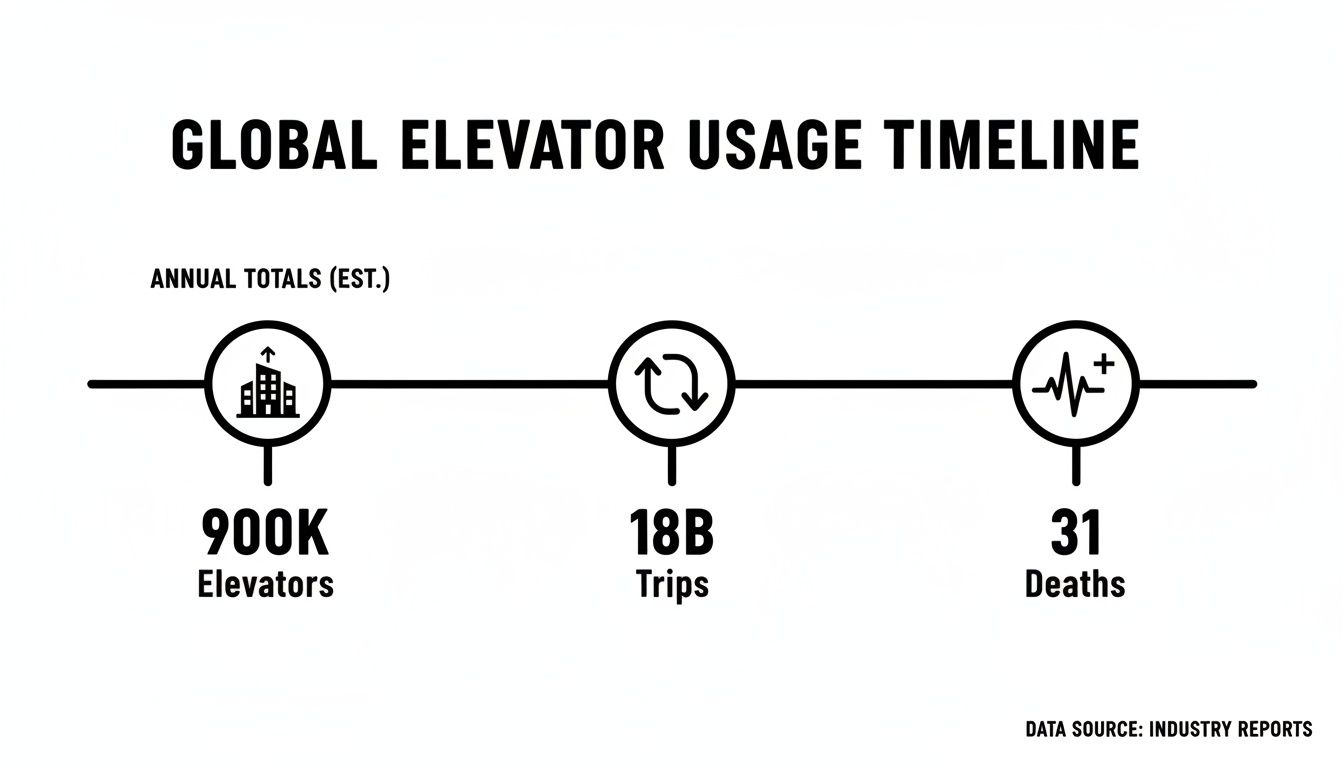
While elevators are incredibly safe overall, the numbers show just how critical it is to stick to the safety playbook. There’s simply no room for error.
Who Enforces the Rules in Georgia
In our state, the Office of Insurance and Safety Fire Commissioner is the agency that holds the authority. They’re the ones who adopt and enforce the ASME A17.1 standards, making sure every elevator in Georgia is up to snuff. For your Atlanta property, they are the final word on compliance.
Ignoring their directives is a risky and expensive game. It can lead to steep fines or even having your elevator shut down entirely—a major disruption no business wants to deal with. The secret to avoiding this headache is getting a handle on the inspection cycle.
A common point of confusion is thinking a maintenance contract automatically covers official inspections. While routine maintenance is absolutely essential for passing an inspection, the formal safety audit must be done by a certified third-party inspector who is completely independent of your service company.
The Inspection Calendar: What to Expect
To keep your operating certificate valid, Georgia law lays out a specific schedule for safety inspections. This isn’t a one-and-done deal; it’s a recurring cycle of checks you need to plan for. As a building owner, you'll be dealing with two main types.
1. Annual Periodic Inspection
This is the check-up you'll have once every year. A certified inspector will come out to perform a detailed visual and operational review of your elevator's most important systems. They're making sure everything is working correctly and that no new safety issues have popped up. This includes:
- Testing emergency phones and alarms.
- Checking door sensors and closing mechanisms.
- Inspecting lights and ventilation inside the cab.
- Reviewing your maintenance logs and records.
2. Five-Year Full-Load Test
Every five years, your elevator is due for a much more rigorous evaluation: the full-load safety test. Just as the name implies, this involves loading the elevator car with its maximum rated weight. The goal is to prove that its most critical safety features—like the brakes and overspeed governors—can safely stop a fully loaded car in an emergency.
This test is more involved and requires careful coordination between your building management, the third-party inspector, and your elevator service provider. Staying on top of these different requirements is critical, and partnering with a knowledgeable firm can make all the difference. To get a better sense of what’s involved, you can learn more about professional elevator inspection services designed to keep Atlanta buildings compliant.
Understanding this compliance calendar is the first step to a stress-free inspection process. It helps you budget your time and resources, ensuring your building stays safe, compliant, and fully operational.
An Inspector's View of Your Elevator System
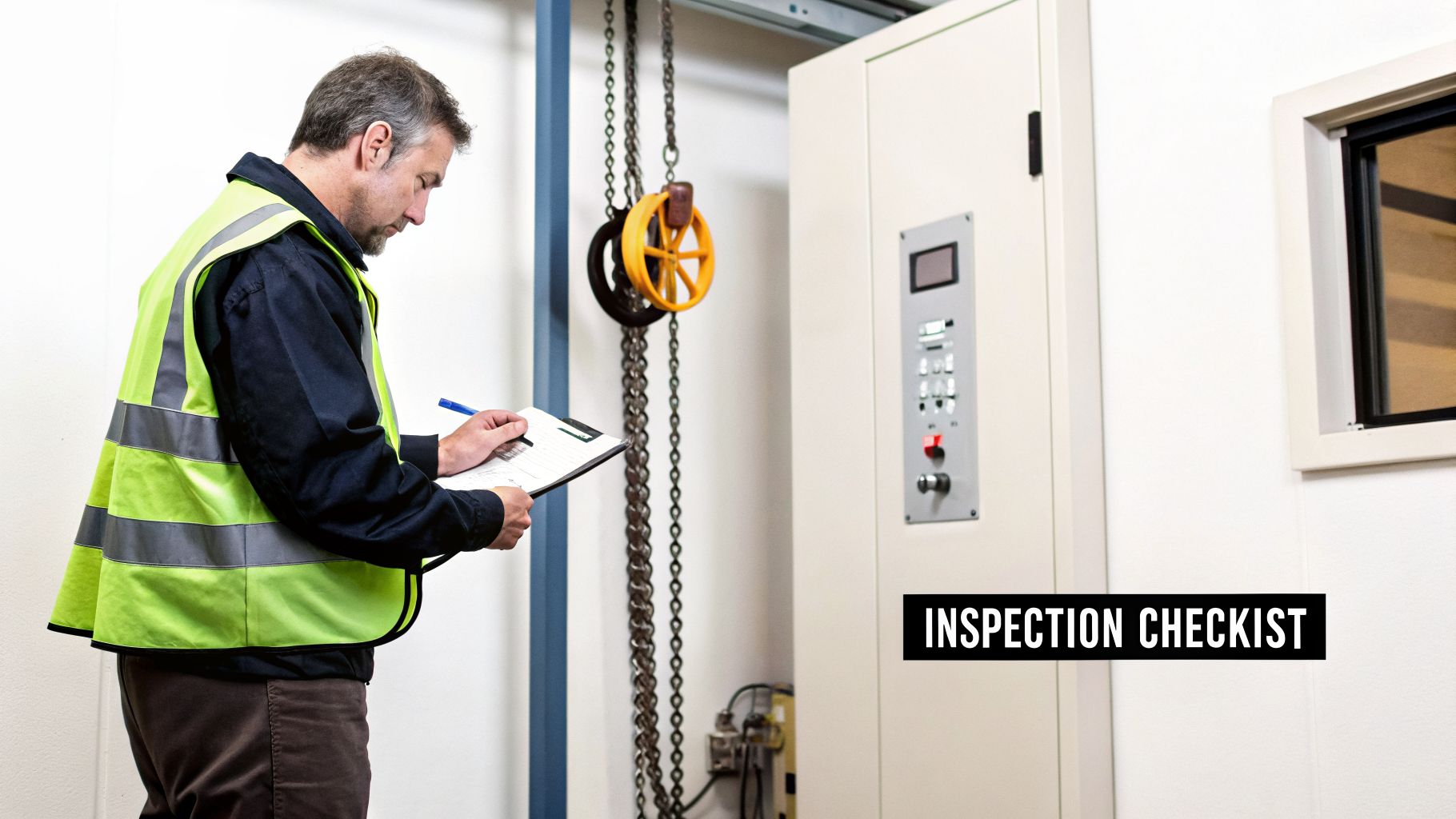
When a certified inspector arrives on-site for an elevator safety inspection, they aren't just taking a quick look. They're performing a deep, methodical audit from top to bottom, seeing the entire system through the critical lens of safety codes and mechanical function. Knowing what they’re looking for really demystifies the whole process.
Think about it like an expert mechanic checking out a used car. They don't just see if the engine turns over; they get under the hood to check the engine, brakes, and electricals to make sure it's truly road-worthy. An elevator inspector does the same thing, systematically checking every critical part to certify it's safe for people to use.
The Mechanical Heart of the Elevator
The first major checkpoint is the elevator’s core mechanical system—the powerful machinery that actually makes the elevator go up and down. This is where raw power meets incredibly precise engineering.
Inspectors will look very closely at the hoist ropes or steel cables. They’re searching for any sign of wear, fraying, rust, or stretching. These ropes are what hold the car, so even a tiny bit of damage is a big deal.
Next up is the braking system, and it’s not just one set of brakes. The main service brake is tested to see how smoothly and accurately it stops the car at every floor.
The most critical mechanical check is almost always the overspeed governor and emergency brakes. You can think of this as the elevator's built-in parachute. An inspector has to verify that it will kick in and slam the brakes on if the car ever starts descending too fast.
Electrical and Control Systems
If the mechanical parts are the elevator's muscle, then the electrical systems are its brain and central nervous system. A good chunk of the inspection happens right in the machine room, where these components live.
The elevator controller is the main hub of it all. The inspector will check its wiring, connections, and logic boards to make sure it's processing everything correctly—from someone pushing a button to the car leveling perfectly with the floor. Outdated or malfunctioning controllers are a very common reason for both performance problems and code violations.
All the backup and emergency systems get put through their paces, too. This includes:
- Emergency Power: When the power goes out, does the elevator automatically move to a specific floor and open the doors? The inspector will verify this function to make sure no one gets trapped.
- Lighting and Alarms: The regular and emergency lights inside the cab must work. The alarm bell and two-way communication system are also tested to ensure a passenger can always call for help.
Making sure these electrical systems are in perfect working order is absolutely non-negotiable. It’s what guarantees reliable day-to-day operation and keeps passengers safe if something unexpected happens. Finding the right partner for this is key, which is why many Atlanta building managers turn to specialized elevator inspection companies to help them through these technical audits.
In-Cab Safety and Passenger Experience
Finally, the inspection moves inside the elevator cab—the part of the system that passengers see and use every single day. These features might seem basic, but they are all governed by strict safety and accessibility rules.
An inspector will spend time testing the door systems. This means checking the door sensors, or "electric eyes," that stop the doors from closing on someone. They also measure the door closing speed and force to make sure it's within safe limits and won't cause an injury.
Other essential checks inside the cab include:
- Emergency Phone/Intercom: A live test is done to make sure there's a clear, working connection to someone who can help.
- Signage and Braille: All the buttons and floor indicators need to have the proper ADA-compliant signs and Braille for accessibility.
- General Condition: The inspector will also take note of the flooring, walls, and handrails to spot any trip hazards or other potential issues.
When you break it down into these three key areas—mechanical, electrical, and in-cab—you can see just how detailed an elevator safety inspection really is. Every single component is part of a complex system built for one primary purpose: getting passengers where they need to go, safely.
Preparing for a Smooth and Successful Inspection
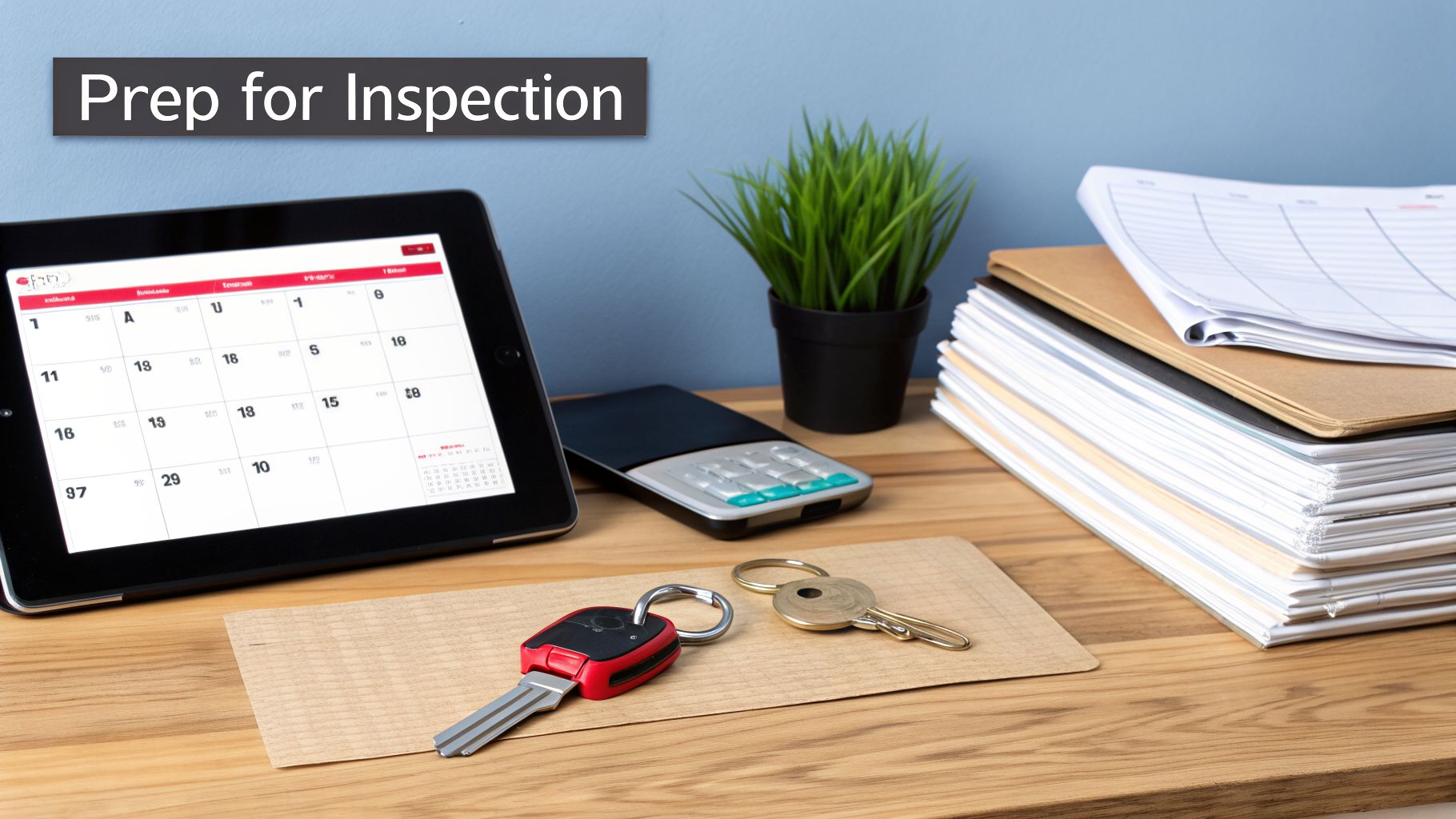
A successful elevator inspection doesn’t just happen on the day the inspector shows up. The real work begins long before they walk through your door, with smart, organized preparation. For facility managers in Atlanta, getting ahead of the game is the best way to guarantee a smooth process, dodge those frustrating re-inspection fees, and get a truly accurate look at your equipment's health.
Think about it like this: you wouldn't start tidying up or hunting for important papers after a home appraiser has already arrived. The same logic applies here. Having all your ducks in a row shows professionalism and helps the entire inspection move along without a hitch.
This isn't just about saving time, either. Solid preparation dramatically lowers the risk of failing an inspection over simple administrative hiccups or access problems that were easily preventable.
Get Your Paperwork in Order
Before the big day, one of the most critical tasks is to track down and organize all your elevator documentation. The inspector will need to see these records to get a clear picture of your maintenance history and confirm you’ve been compliant.
Start by pulling everything together into a single, easy-to-access file. A little organization now prevents a frantic search later and instantly tells the inspector you’re on top of your responsibilities.
Make sure your file includes these essentials:
- Maintenance Logs: These are the detailed records from your elevator service company, outlining every single repair, maintenance check, and part replacement. They are your proof of consistent care.
- Previous Inspection Reports: Keep copies of your last annual and five-year inspection reports handy. This gives the inspector valuable context and shows that any previous issues were properly addressed.
- Current Operating Certificate: The inspector will need to see your current, valid certificate of operation from the state to ensure you're legally cleared to run the elevator.
Bring Your Elevator Service Provider into the Loop
Your elevator maintenance company is your most important ally in this process. They shouldn't just be aware of the inspection; they should be an active part of your preparation team.
Your technician knows your equipment inside and out. That's why it's a best practice to have them on-site during the official elevator safety inspection. Their presence is more than just a convenience—it's a strategic advantage.
Having your elevator technician present during the inspection is a strategic move. They can immediately answer technical questions, perform minor on-the-spot adjustments, and provide a detailed explanation of any recent repairs, which can often prevent a minor issue from being flagged as a violation.
Their expertise can bridge the gap between what an inspector sees and the equipment's recent history, ensuring a fair and accurate evaluation. For more on selecting the best partners, you can explore our resources on local Atlanta elevator inspection services.
Ensure Every Area is Safe and Accessible
An inspector can't do their job if they can't get to the equipment safely. It sounds simple, but blocked access is a surprisingly common—and completely avoidable—reason for a failed or delayed inspection.
Before they arrive, do a quick walkthrough and make sure these key areas are prepped and ready:
- Machine Room: This space has to be clean, brightly lit, and completely free of stored items. Make sure all required safety gear, like an up-to-date fire extinguisher, is in its proper place.
- Hoistway and Pit: The pit at the very bottom of the elevator shaft needs to be clean, dry, and clear of any water or debris. Check that the pit ladder is secure and that the light is working.
- Top of Car: The roof of the elevator cab must be totally clear. The inspector will need to ride on top of the car to examine the hoistway equipment, so it can’t be used as a storage shelf.
When you take these steps, you’re not just aiming to pass an inspection. You're building a foundation for a successful outcome and reinforcing a culture of safety across your entire Atlanta property.
What Are the Most Common Elevator Violations in Atlanta Buildings?
If you want to pass your elevator inspection, it helps to know what trips people up the most. A failed elevator safety inspection isn't just about getting a red tag and dealing with a logistical nightmare; it's a clear signal that there's a safety risk in your building that demands immediate attention. Across Atlanta's commercial and residential properties, we see the same few violations pop up time and time again.
Think of it this way: a smart homeowner often gets a home inspection before selling to find and fix issues before they can tank a deal. Applying that same proactive mindset to your elevator means you can spot and solve these common problems early, ensuring a safer building, avoiding expensive re-inspection fees, and keeping everything running smoothly.
Problems Inside the Cab and at the Doors
It's no surprise that some of the most common violations happen right where passengers interact with the elevator every day. While they might seem like small details, they can create serious risks if ignored.
- Emergency Phone Failure: This is a huge one and a critical life-safety item. If someone gets trapped, they absolutely must have a reliable way to call for help. Inspectors will test this live, and if that phone doesn't connect to a 24/7 monitored line, it's an instant fail.
- Worn or Faulty Door Sensors: That "electric eye" that keeps the doors from closing on someone is non-negotiable. If the sensor is dirty, knocked out of alignment, or just plain broken, it can easily lead to an injury and will be flagged right away.
- Incorrect Door Speed or Force: Doors that slam shut too fast or with too much force are a real hazard, especially for children, seniors, or people with mobility issues. Inspectors measure this to make sure it falls within the strict safety limits set by the ASME code.
These issues are often just the result of normal wear and tear, but fixing them is a must if you want to pass. A good maintenance routine should catch them long before an inspector does.
Machine Room Issues
The machine room is the brain of your elevator system, and unfortunately, it’s a hotspot for code violations. An inspector isn’t just looking at the equipment; they're evaluating the entire room for safety.
A clean, organized, and properly maintained machine room is one of the best signs of a well-run building. From an inspector's point of view, a tidy machine room almost always correlates with a well-cared-for elevator, because it shows a real commitment to safety and operational details.
One of the simplest—and most common—violations is an expired fire extinguisher. Georgia code is very specific about the type of extinguisher required and its inspection schedule. Another frequent red flag is using the machine room for storage. It’s not a janitor's closet or a file room. Any items not directly related to the elevator, from cleaning supplies to old boxes, have to go.
Finally, something as simple as poor lighting can earn you a violation. The room needs to be bright enough for a technician to work safely and see what they're doing.
To give you a head start, we've put together a table of some common problems we see and what you can do about them.
Common Elevator Violations and Remediation Steps
This table is a practical guide to identifying and fixing the most frequent issues that come up during elevator safety inspections.
| Common Violation | Potential Risk | Recommended Action |
|---|---|---|
| Expired Machine Room Fire Extinguisher | Inability to put out an electrical fire, which could become a major safety disaster. | Look at the tag to find the last service date. Call a licensed fire safety company for an annual inspection or a new unit. |
| Inoperative Emergency Phone | Passengers could be trapped inside with no way to call for help, causing panic and delaying rescue. | Contact your elevator service provider immediately to have them test and repair the two-way communication system. |
| Faulty Door Reopening Device | Doors could strike a passenger, leading to injury and creating a serious liability for the building. | Schedule a service visit with your elevator maintenance company to have the sensors cleaned, realigned, or replaced. |
| Outdated Maintenance Logs (Logbook) | You can't prove the elevator has been consistently maintained, which can lead to a failed inspection and legal issues. | Get in touch with your service provider to make sure the logbook is on-site and fully updated before the inspector arrives. |
Getting ahead of these common issues can make all the difference between a pass and a fail. For more tips on staying compliant, you can find more information on https://www.greenatlanta.com/tag/elevator-safety/.
The Future of Elevator Safety Technology
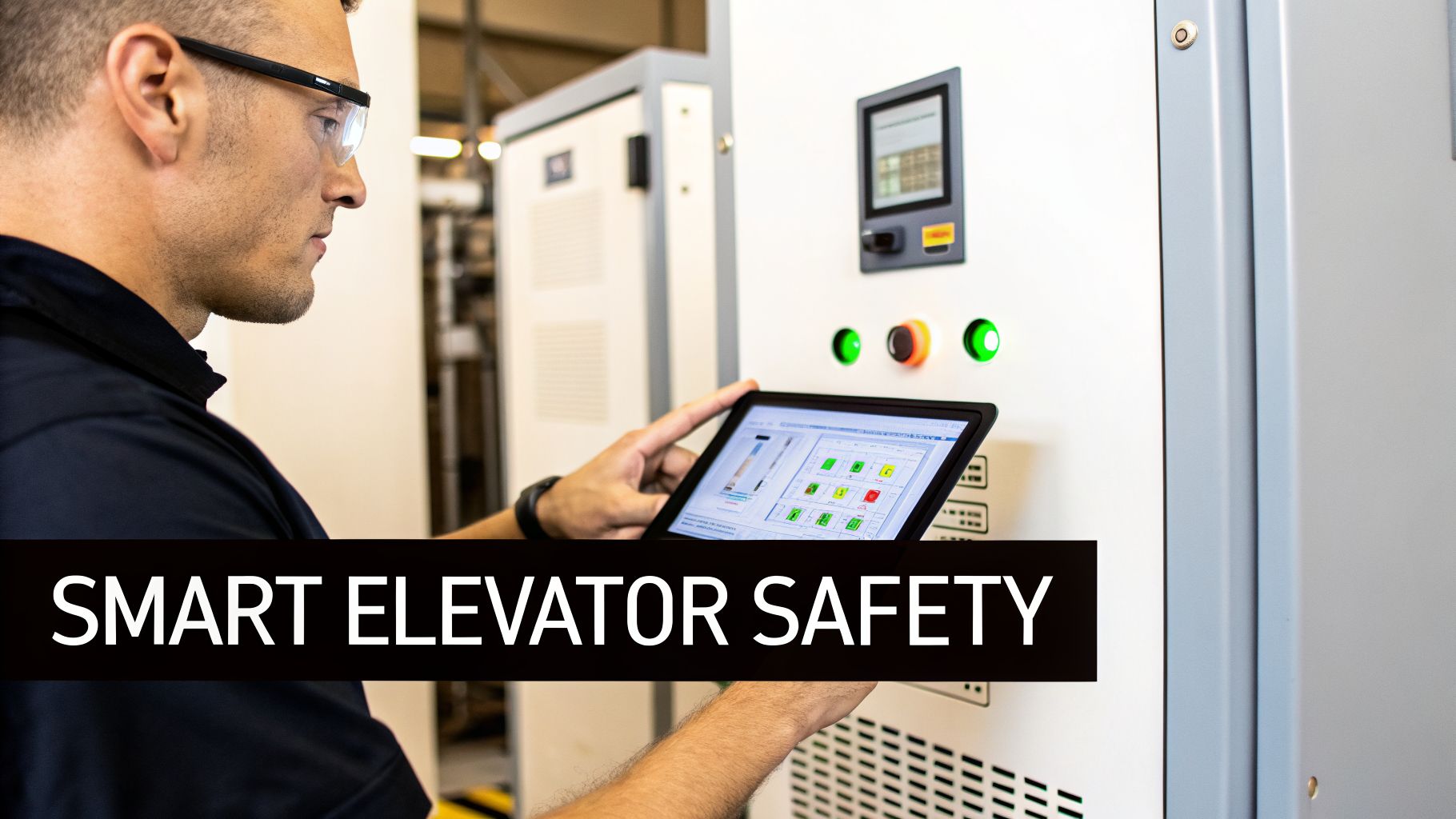
When you think about elevator safety, you probably picture the annual inspection—a technician with a clipboard, running through a long checklist. While those inspections are absolutely critical, the world of elevator technology is taking a huge leap forward. We're moving far beyond just meeting today's compliance standards.
For Atlanta building owners, staying ahead of this curve isn't just about safety; it's about future-proofing your property and giving tenants a seamless, modern experience. The goal is no longer to just react to problems as they happen. It’s about stopping them before they start.
Predictive Maintenance with Smart Sensors
Imagine if your elevator could call for a repair before it ever breaks down. It sounds like science fiction, but that’s exactly what predictive maintenance delivers. The secret lies in embedding a network of smart Internet of Things (IoT) sensors throughout the elevator system.
These tiny but powerful sensors act like a 24/7 health monitor for your elevator. They are constantly tracking key performance indicators, such as:
- Vibrations in the motor
- The temperature of the control panel
- Tension and alignment of hoist ropes
- The performance of door operators
All this data is fed into an AI system that looks for tiny, almost invisible changes in performance that often signal a future failure. When it detects an issue, it can automatically alert a technician—often pinpointing the exact part that needs attention. This means fewer breakdowns, less downtime, and a much smoother path to passing your formal inspections.
Smarter and More Hygienic Systems
Technology is also making the ride itself better, faster, and healthier. You may have already seen destination dispatch systems in busy Atlanta high-rises. They intelligently group passengers going to the same floors, cutting down on stops and getting everyone where they need to go more efficiently.
And in today's health-conscious world, touchless tech has gone from a luxury to a must-have. Innovations like gesture-activated call buttons, smartphone apps that call the elevator for you, and voice commands are quickly becoming the new standard. These features do more than just reduce the spread of germs—they make your building more accessible and convenient for everyone.
This push for cleaner, smarter technology is driving incredible growth. The global Elevator Safety System Market was valued at USD 13,073.86 million in 2022 and is on track to hit USD 22,881.75 million by 2028. A lot of that boom is thanks to the demand for hygienic and touchless solutions. You can dive deeper into the trends with the complete analysis on Research and Markets.
Investing in modern safety technology is no longer just a capital expense—it's a competitive advantage. Buildings with smart, touchless, and predictive systems are seen as safer, more modern, and more desirable to tenants and visitors.
At the end of the day, the future of elevator safety is intelligent, connected, and proactive. For property owners here in Atlanta, embracing these new technologies is the clearest way to boost safety, increase efficiency, and show a genuine commitment to providing a first-class experience in your building.
Frequently Asked Questions About Elevator Inspections
Navigating the world of elevator compliance can bring up a lot of questions. To help Atlanta building owners feel more confident, we've gathered clear, straightforward answers to some of the most common queries about the elevator safety inspection process.
How Often Do I Need an Elevator Inspection in Atlanta?
In Georgia, the general rule is simple: your elevator must undergo a periodic safety inspection every single year. This isn't just a quick check-up; it has to be performed by a state-certified, third-party inspector.
Beyond this yearly requirement, your elevator will also need more intensive evaluations at longer intervals. The most significant of these is the five-year full-load test, a crucial stress test that confirms the emergency braking systems can handle maximum capacity.
It's always a good practice to confirm the exact schedule with the Georgia Office of Insurance and Safety Fire Commissioner, as requirements can shift based on your elevator's specific type and age.
What Is the Difference Between Maintenance and Inspection?
This is a critical distinction that often causes confusion for building owners. The easiest way to think about it is like this:
- Maintenance is the proactive, ongoing care your contracted service company provides to keep the elevator running smoothly. This includes everything from lubrication and cleaning parts to making fine-tuned adjustments and replacing worn components. Consistent maintenance is your ticket to passing an inspection with flying colors.
- An Inspection is a formal, point-in-time audit conducted by a licensed, independent inspector. Their one and only job is to verify that your elevator meets all current safety codes and standards on the day they show up.
In short, maintenance is the daily training and conditioning, while the inspection is the official game day.
What Happens If My Elevator Fails Its Inspection?
Failing an elevator safety inspection is a serious matter, but it's not the end of the world if you act quickly. The inspector won't just leave you guessing; they will provide a detailed report listing all identified violations.
If an elevator fails, your first call should always be to your elevator maintenance provider. They are your primary partner in diagnosing the problem, creating a repair plan, and getting your elevator back into compliance as quickly as possible.
For minor issues, you'll be given a specific timeframe to complete the repairs. However, for critical safety failures—like a non-working emergency brake or a faulty door system—the inspector has the authority to shut down the elevator immediately. It must remain out of service until the issue is fixed and it successfully passes a re-inspection.
Addressing violations promptly is the key to minimizing downtime and, most importantly, ensuring passenger safety.
At Green Atlanta, we champion responsible business practices. While this guide focuses on one critical area of building safety, our core mission is helping Atlanta companies manage their environmental and social impact. We believe that good business and doing good go hand-in-hand. That's why we focus on providing mission-driven recycling solutions that turn your end-of-life electronics into a dual force for good: supporting veterans in need and reforesting our nation's landscapes. By recycling with purpose, Atlanta businesses can easily meet their ESG goals and build a stronger community.