Your Guide to Elevator Inspection Service in Atlanta

An elevator inspection service is, at its core, a detailed health check-up for your building's vertical transportation system. A certified professional comes in to make sure your elevator is up to snuff with Atlanta's strict safety and operational codes. Think of it as a mandatory annual physical for one of your property's most critical assets—a way to catch hidden problems before they become dangerous failures.
Why an Elevator Inspection Is Critical for Your Building
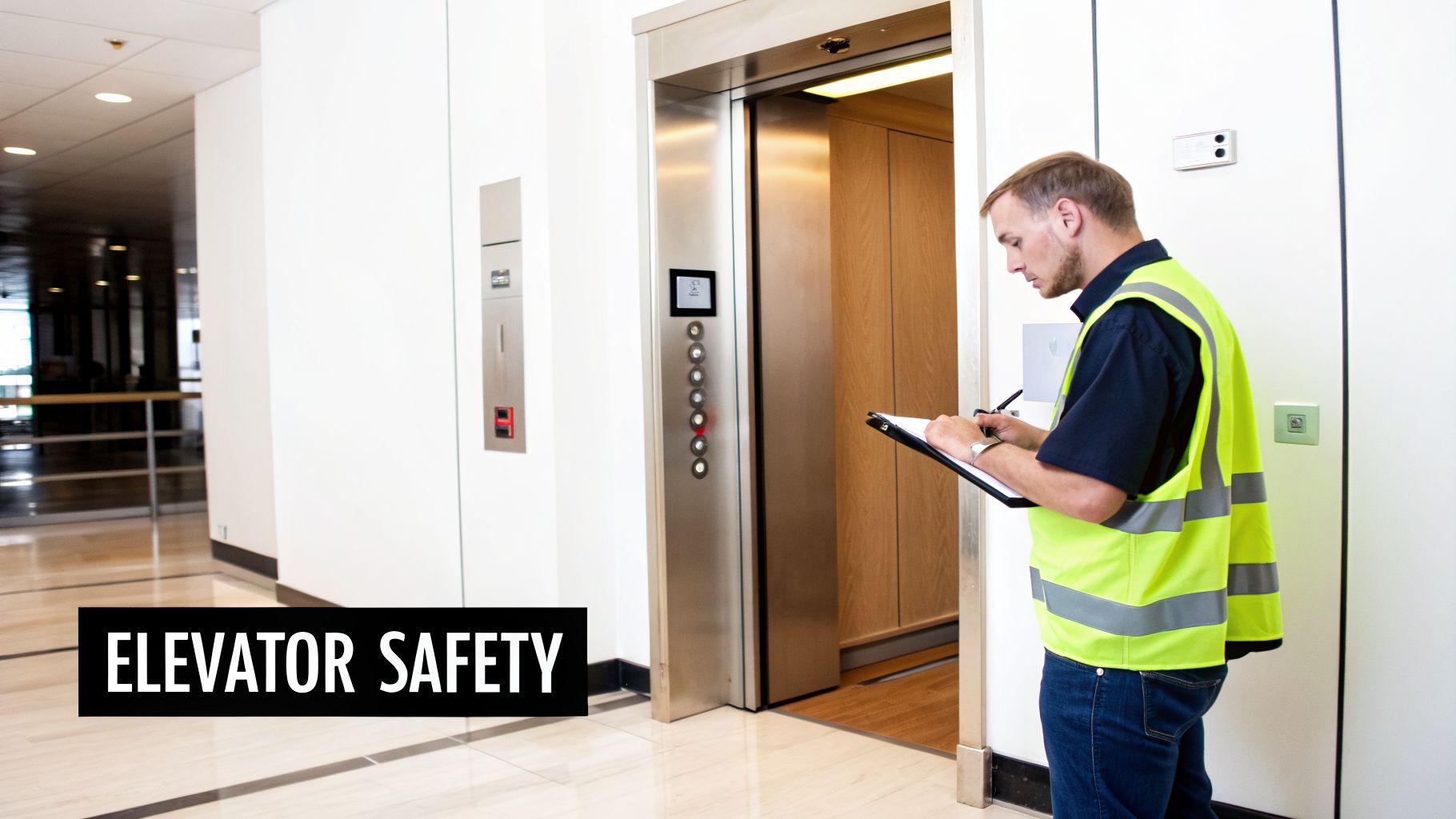
It’s easy to see an elevator as just a machine, but it’s really a complex transit system responsible for the safety of every single person who steps inside. An elevator inspection service offers an unbiased, third-party assessment of its condition, ensuring everything is compliant with both Georgia state and local Atlanta regulations. This isn’t a friendly suggestion; it's a legal requirement for any responsible property manager.
These inspections are anything but a quick look-around. A certified inspector will systematically work through everything—from the mechanical guts and electrical wiring to the emergency brakes and communication systems. This deep dive serves a few vital functions for any Atlanta building owner.
Protecting People and Property
First and foremost, an elevator inspection is about passenger safety. Regular, thorough checks are designed to spot hazards like worn cables, faulty door sensors, or even subtle leveling issues that could cause someone to trip. Finding these issues early creates a much safer environment for your tenants, visitors, and staff.
Beyond the human element, these inspections are crucial for protecting your financial interests. A single accident involving an elevator can open the door to staggering legal and financial fallout.
A documented history of regular, compliant inspections is your strongest defense against liability claims, demonstrating due diligence and a commitment to safety.
This proactive stance doesn't just prevent accidents; it shields your business from expensive lawsuits and protects your hard-earned reputation.
Preserving Your Asset’s Value
Your elevator is a massive investment. Like any major piece of equipment, it needs consistent care to hold its value and run smoothly for years to come. Inspections are the key to identifying small problems before they snowball into major, wallet-busting repairs. A preventative strategy is always more cost-effective than reacting to an emergency breakdown.
The numbers back this up. Properly maintained elevators have 80% fewer safety incidents, a stat that truly highlights the life-saving potential of regular checks. Across North America, elevator-related injuries have actually fallen by 32% in the last decade, largely thanks to better maintenance protocols and monitoring.
It’s a lot like the compliance-driven services you see in other industries. For a company like ours, the demand for certified e-waste handling is booming as environmental rules get stricter. Just as an elevator owner can face penalties for skipping an inspection, a corporate IT manager can be fined for not having the right certifications for data destruction. To see how this ties into day-to-day operations, you can dive deeper into elevator maintenance service reports.
Navigating Elevator Regulations in Atlanta and Georgia
If you manage a property with an elevator in Atlanta or anywhere in Georgia, getting a handle on the legal requirements is job number one. These rules aren't just red tape; they are a critical playbook for keeping your elevators safe and avoiding massive fines, shutdowns, and serious liability. For property managers, knowing these regulations isn't optional—it's essential.
The main authority you need to know is the Georgia Office of Insurance and Safety Fire Commissioner. This is the state agency that sets the bar for all vertical transportation, from elevators and escalators to lifts. They enforce the safety code statewide and are the ones who issue the all-important operating certificates for every unit.
The Foundation of Georgia Elevator Law
At the heart of Georgia's rules is the ASME A17.1 Safety Code for Elevators and Escalators. Think of this as the gold standard for elevator safety across the nation, and Georgia has adopted it as its legal benchmark. When an elevator inspection service in Atlanta comes to your building, they are essentially checking your equipment against the detailed requirements in this code.
A crucial piece of the puzzle, and something inspectors always look at, is ensuring you meet federal standards like ADA elevator compliance. This makes certain your property is accessible to everyone, a non-negotiable part of both state and federal law.
These regulations have created a huge, compliance-focused market. In the US alone, there were 32,679 elevator service businesses growing at a 2.6% clip each year between 2020 and 2025, bringing in $54.9 billion in revenue. For building owners, the return on investment is simple: regular inspections can slash the risk of accidents by up to 80%. It's not a cost; it's an investment in safety.
Types of Elevator Inspections and Their Frequency
Not every inspection is the same. Georgia requires different checks based on an elevator's age and how it's used. Getting these distinctions right is key to staying compliant.
- Acceptance Inspection: This is a one-time, top-to-bottom inspection for any newly installed or heavily modified elevator. An elevator simply can't be put into service until it passes this first test.
- Periodic (Annual) Inspection: This is the yearly check-up most commercial and residential buildings are familiar with. A certified inspector confirms that all safety gear, mechanical parts, and communication systems are working as they should.
- Five-Year Full-Load Test: Every five years, elevators face a much tougher test. This involves loading the car with its maximum rated weight to test safety systems like the brakes and governor under real-world stress.
That Certificate of Operation inside your elevator car? It’s your proof of a successful annual inspection. If that certificate is expired, your elevator is technically operating illegally, leaving you wide open to fines and liability.
Inspection frequency can also change depending on the type of building. While once a year is the norm, places like hospitals or other high-traffic venues might face stricter schedules. For a closer look at the specific rules in our area, you can dig into our resources on local Atlanta elevator codes. Staying on top of this ensures your building stays safe, compliant, and fully operational.
Your Complete Elevator Inspection Checklist
An elevator inspection can feel like a high-stakes exam for your building, but it doesn't have to be a source of anxiety. The best way to demystify the entire process is to understand exactly what an inspector looks for. When you know their focus areas, you can do your own quick walkthroughs, catch obvious issues early, and make the official review a much smoother experience.
Think of it as preparing for an open-book test. The checklist isn't some big secret; it's a methodical review of your elevator's most critical safety and performance systems. We can break it down into four main categories: the machine room, the hoistway and pit, the car interior, and all the exterior components. This way, you can start to see your elevator through the eyes of a professional.
The Machine Room: Where Power Meets Control
The machine room is the true heart and brain of your entire elevator system. This is where you’ll find the powerful motors, sensitive control panels, and all the critical safety devices. It's often an inspector's first stop, since the health of these components determines how reliably everything else operates.
During this part of the inspection, they'll meticulously check:
- Motors, Pumps, and Valves: The inspector is looking for any fluid leaks, unusual vibrations, or signs of overheating. These are the classic telltale signs of mechanical stress that could lead to a sudden breakdown.
- Governor: This device is a non-negotiable overspeed protector. The inspection verifies it's calibrated perfectly and will trip the safety brakes if the car ever moves too fast.
- Control Panel: All the wiring needs to be secure, neatly organized, and completely free from damage. They’ll also confirm that the logic controllers and relays are working exactly as designed, ensuring the elevator responds correctly to every command.
The legal framework that guides these checks is layered, starting with state-level mandates and drilling down to specific local rules.
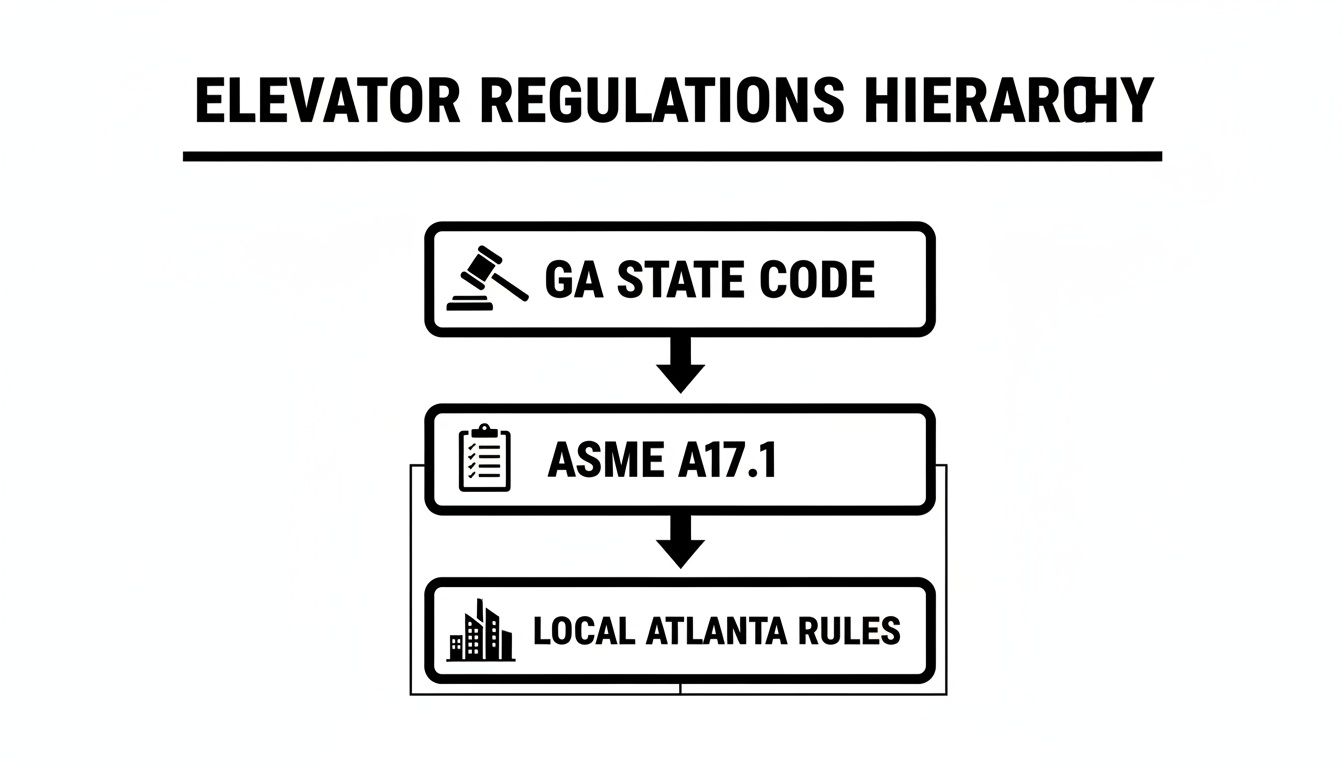
This hierarchy shows that while national standards like ASME A17.1 provide the foundation, inspectors are also enforcing Georgia's specific requirements on top of any additional rules unique to Atlanta.
The Hoistway and Pit: The Elevator's Pathway
Next up is the hoistway—the long vertical shaft the elevator car travels in—and the pit at its base. This area contains the rugged, heavy-duty hardware that’s responsible for actually lifting and guiding the car. Its condition is directly tied to ride quality and the effectiveness of the emergency stopping systems.
An inspector isn't just looking for broken parts; they are looking for signs of wear and tear that predict future problems. A frayed cable or a misaligned rail is a safety incident waiting to happen.
Key checks in this zone include:
- Cables and Ropes: They are closely examined for any hint of rust, fraying, or stretching, all of which could seriously compromise their strength.
- Guide Rails and Rollers: These parts must be perfectly aligned and lubricated to give passengers a smooth, quiet ride. Even a slight misalignment can cause jerky movements and wear parts out prematurely.
- Buffers: Located down in the pit, these heavy-duty shock absorbers are tested to make sure they can safely stop the car in an emergency.
Federal agencies also have their own strict regulations for elevators and personnel hoists, especially on construction sites, which influence the general safety standards that inspectors follow. These detailed requirements underscore the importance of regular maintenance and documented safety procedures.
Inside the Car: The Passenger Experience
The car interior is where safety and user experience truly merge. While your tenants might notice a burnt-out lightbulb, an inspector sees a complex web of safety features that absolutely must work flawlessly, every single time.
Critical car components include:
- Door Operation: The door sensors have to detect any obstruction and immediately reverse direction. The doors should also open and close smoothly, without making excessive noise or moving too fast.
- Leveling Accuracy: This is a big one. The car floor must stop perfectly flush with the building floor. Even a small misalignment of more than a half-inch is a code violation and a serious trip hazard.
- Emergency Systems: The alarm button, the two-way communication phone, and the emergency lighting are all tested to confirm they will function properly during a power outage or an entrapment situation.
Exterior Components: First Impressions and Functionality
Finally, the inspection wraps up by covering all the components outside the car that passengers interact with daily. These elements are all about guiding users and providing essential information about the elevator's status.
Checks include the hall call buttons on each floor, the position indicators showing the car's location, and any fire service recall systems. These features have to be completely reliable to ensure both everyday convenience and passenger safety in an emergency.
For a deeper dive, you can find more resources and articles covering the elevator inspection service and its many facets across our site.
Common Elevator Defects and How to Fix Them
Getting an inspection report back with a list of violations can be a little jarring. But don't think of it as bad news—think of it as a professional’s to-do list for making your elevator safer and more reliable for everyone in your building.
Most problems an elevator inspection service flags fall into just a few common buckets. Once you understand what they are, you can turn that report into an effective, compliant action plan for your maintenance provider.
High-Priority Mechanical and Electrical Failures
Some problems just can't wait. These are the red-flag issues that pose a direct risk to passenger safety and demand immediate attention.
One of the most frequent critical failures is inaccurate floor leveling. You know the feeling—when the elevator car doesn’t stop perfectly flush with the floor, creating an instant trip hazard. A gap of more than a half-inch is an automatic violation. This usually points to worn-out valve controls in hydraulic elevators or brake setting issues in traction units, both of which need a technician to recalibrate.
Another urgent one is malfunctioning door sensors. If the doors don't immediately reverse when something's in the way, it's a huge safety risk. This is often caused by something as simple as dirty photoelectric eyes or as complex as a failing door control module.
And never, ever ignore strange noises. Grinding, screeching, or thudding sounds are your elevator's way of screaming for help. They signal serious mechanical problems like bad bearings, worn guide shoes, or issues with the cables and pulleys that could lead to a complete breakdown.
The most critical distinction to make is between a minor issue and a violation that compromises safety. Any defect related to doors, leveling, brakes, or emergency systems should be treated as an immediate priority, often requiring the elevator to be taken out of service until fixed.
Secondary System and Communication Issues
While not as immediately dangerous as a mechanical failure, problems with communication and other secondary systems can still fail an inspection and cause major issues in an emergency.
A failed emergency phone or alarm is a common write-up. These systems are legally required to work 24/7. The inspector will always test them to make sure they connect to a live monitoring service. If they fail, it's often a disconnected phone line, a dead backup battery, or a bad speaker—all things your service provider can sort out.
Likewise, things like burnt-out lights in the car, flickering floor indicators, or buttons that don’t respond are also frequent dings. They may seem small, but they ruin the passenger experience and can hint at bigger electrical problems brewing beneath the surface. Fortunately, these are usually quick fixes.
To help you translate your report into action, here’s a quick guide to some of the most common issues you might see.
Common Inspection Failures and Recommended Actions
This table breaks down frequent problems found during inspections, the risks they pose, and the typical next steps to get them fixed.
| Common Defect | Potential Risk | Typical Remedy |
|---|---|---|
| Inaccurate Leveling | High (Trip Hazard) | Recalibrate controls, adjust brakes. Immediate action required. |
| Door Sensor Malfunction | High (Impact/Entrapment) | Clean/realign sensors, replace door control module. Immediate action required. |
| Emergency Phone Failure | High (No help in entrapment) | Fix line, replace battery, or repair phone unit. |
| Unusual Mechanical Noises | High (Impending Failure) | Diagnose and replace worn parts (bearings, rollers). Immediate action required. |
| Burnt-out Car Lights | Low (Poor visibility) | Replace bulbs, check electrical connections. |
Knowing what these common defects mean will give you the confidence to handle your next inspection report like a pro. You'll be able to speak the same language as your elevator inspection service company and ensure the most critical fixes happen first, keeping your building safe, compliant, and running smoothly.
Choosing a Certified Elevator Inspection Service in Atlanta
The inspection itself is critical, but who you hire to perform it matters just as much. Think of a certified inspector as your expert partner in safety and compliance. Finding the right one in Atlanta, however, means doing a bit of homework. You're looking for a true professional who can give you an unbiased, accurate assessment of your equipment.
The single most important credential you need to see is QEI (Qualified Elevator Inspector) certification. This is the national gold standard. It proves an inspector has the rigorous training, deep knowledge, and hands-on experience to check your system against the strict ASME A17.1 safety code. Don't even consider hiring someone who can't show you their current QEI certification.
Independence Is Key to an Unbiased Assessment
Here's one of the most important decisions you'll make: hiring an inspector who is completely independent of your elevator maintenance company. Your maintenance crew is vital for day-to-day upkeep and repairs, but an inspection should be a totally impartial audit of their work and the elevator's overall condition.
An independent elevator inspection service has no conflict of interest. Their only job is to identify potential safety issues and code violations, giving you an honest, third-party perspective you can trust without any sales pressure.
This clear separation is fundamental to true due diligence. It guarantees the report you get is based purely on safety and compliance, not on a company’s opportunity to sell you more services or repairs.
Questions to Ask Potential Inspectors in Atlanta
Before you bring anyone on board, you need to ask some pointed questions to get a feel for their experience and professionalism. Treat it like you're interviewing for a key role on your building's safety team—because you are.
Come to the conversation prepared with a list to help you compare your options:
- Are you QEI certified? This is your first question, always. Ask for their certification number so you can verify it.
- How much experience do you have with Atlanta and Georgia codes? Local expertise is a big deal. Inspectors need to be dialed into the specific requirements for our state and city.
- What does your inspection process and report look like? A professional will have a clear, easy-to-read report format that breaks down their findings and points to the specific codes.
- What are your rates? Be cautious of prices that seem too good to be true. A rock-bottom fee can be a red flag for a rushed or incomplete inspection. Ask exactly what their price includes, like any follow-up consultations.
- Can you provide local Atlanta-based references? Talking to other local property managers is the best way to get a real-world read on an inspector's reputation and work quality.
Finding the right partner is crucial, which is why we’ve put together a list to help you compare leading elevator inspection companies in the Atlanta area. When you make an informed choice, you gain the confidence that your elevators are not just compliant, but genuinely safe.
What to Do After the Elevator Inspection
Getting the inspection report back isn’t the end of the road. Think of it as the starting gun for the next phase of your responsibilities. This document, handed over by a professional elevator inspection service, is your detailed roadmap for getting your equipment fully compliant and, most importantly, safe. The goal now is to turn those findings into a clear, documented action plan.
Your first step is to sit down and actually read the report. It will break down all the findings, usually separating minor recommendations from serious code violations that need your immediate attention. Getting a handle on this difference is key to prioritizing repairs and managing your budget without any surprises.
Interpreting the Report and Coordinating Repairs
The inspection report is essentially a professional diagnosis for your elevator. Every item on that list will typically point to a specific code from the ASME A17.1 standard, explaining exactly why it's a problem. Your job is to take this diagnosis and turn it into a prescription for your elevator maintenance company.
Don't wait. Forward a copy of the report to your service provider right away. They speak the language of violation codes and can tell you the most effective and efficient ways to fix the issues.
Your post-inspection workflow should look something like this:
- Prioritize the Problems: Work with your maintenance team to triage the issues. Critical safety problems, like failing brakes or door sensors, need to be tackled first. This might even mean taking the elevator out of service until it's fixed.
- Get a Quote for Repairs: Ask for a detailed quote that covers all the necessary work. You'll need this for your own records and for budget planning.
- Schedule the Work: Get the repairs on the calendar with your provider as soon as you can, especially for those high-priority violations.
- Document Everything: Keep a clear paper trail of every email, report, quote, and work order. This creates an auditable history that proves you’ve done your due diligence.
Managing Re-Inspections and Final Compliance
If your first inspection turned up code violations, you'll need a re-inspection after the repairs are done. This isn't another full inspection from top to bottom. Instead, it’s a focused check to confirm that the specific problems have been properly corrected. Your original inspector will come back, verify the fixes, and hopefully sign off on the work.
Once all violations are cleared and the report comes back clean, you're ready to close the loop on compliance. This last administrative step is just as critical as the repairs themselves—it’s what officially makes your elevator legal to operate.
This whole process shows just how important compliance has become in modern building management. It’s a trend we're seeing all over the world. As cities grow, so does the demand for elevator services. By 2025, the Asia-Pacific region is expected to hold 41.5% of the global elevator market, and Europe's share is set to grow by 20.3%, driven by redevelopment projects and safety upgrades. For service providers, this global growth offers huge lessons in keeping elevators running and meeting strict codes, as noted by Coherent Market Insights in their market analysis.
After getting that final, successful sign-off, you’ll submit the clean report to the Georgia Office of Insurance and Safety Fire Commissioner. From there, the state will issue a new Certificate of Operation. This certificate has to be displayed right inside the elevator car, where it’s visible to tenants and officials—proving your elevator is safe and legal. Having the right partner to walk you through this process is essential; our guide on selecting an elevator inspection company can help you make the right choice.
Frequently Asked Questions About Elevator Inspections
Even when you have the process down, practical questions about budgeting and scheduling an elevator inspection service always come up. Getting straight answers to these common questions helps you plan effectively and ensures you're always ready for this critical part of managing your building.
Let's walk through some of the most frequent questions we hear from building owners and property managers right here in the Atlanta area.
How Much Does an Elevator Inspection Service Cost in Atlanta?
This is usually the first thing on every property manager’s mind. For a typical commercial elevator in the Atlanta metro area, you can expect a standard annual periodic inspection to run anywhere from $300 to $600. This isn't a fixed price, though, as several factors can move that number up or down.
- Type of Elevator: Hydraulic elevators often fall on the lower end of that range. More complex traction systems, especially those in high-rises, will naturally cost more to inspect thoroughly.
- Inspection Type: A routine annual inspection is the standard, but the far more intensive five-year full-load test is more expensive because of the extra time, labor, and equipment involved.
- Number of Elevators: If you manage a property with multiple elevators, many inspection companies offer volume discounts. It's always worth asking if you can get a better per-unit rate.
It’s smart to get a few quotes, but be cautious of any price that seems way too good to be true. An unusually low bid can be a red flag for a rushed job or an incomplete inspection that could cost you more down the road.
What Is the Difference Between an Inspection and Routine Maintenance?
This is a critical distinction that trips up a lot of people. The easiest way to think about it is that maintenance is proactive care, while an inspection is a formal audit.
Maintenance is the regular, ongoing work your service company performs to keep the elevator running smoothly—like changing the oil and rotating the tires on your car. Inspection is the state-mandated test to certify that the car is safe and meets all legal requirements to be on the road.
Your maintenance crew is responsible for lubricating parts, cleaning components, and making minor adjustments to keep everything in good working order. The independent inspector then comes in to verify that all that work, and the elevator as a whole, meets strict safety codes. One doesn't replace the other; they are two essential pieces of a complete safety strategy.
How Long Does a Typical Elevator Inspection Take?
For a standard annual inspection, you should plan for the process to take between one and three hours for each elevator. The elevator will need to be taken completely out of service during this time so the inspector can safely access every component, from the bottom of the pit to the machine room at the top.
A few things can affect how long it takes:
- The inspector's thoroughness and how detailed their process is.
- The age and condition of the elevator—older units often require a bit more time.
- Any issues with accessing the machine room or the elevator pit.
A good tip is to schedule your inspections during off-peak hours to cause the least amount of disruption for your tenants. Giving everyone plenty of advance notice about the planned downtime helps manage expectations and makes the entire process go smoothly. If you're looking for a reliable third-party auditor, our guide on choosing an elevator inspection company is a great place to start.
At Atlanta Green Recycling, we know just how important compliance and responsible management are. In the same way a certified inspector guarantees your building’s physical safety, our team ensures your company’s electronic assets are handled securely and sustainably. We provide B2B electronics recycling and certified data destruction services across the Atlanta metro area, helping businesses protect sensitive information while meeting their ESG goals. Learn more about our mission-driven recycling solutions at greenatlanta.com.