
A Corporate Guide to Disposal of Old Cell Phones

Figuring out what to do with a pile of old company cell phones is more than just a cleanup task. It's a critical business function that requires secure data destruction and environmentally responsible recycling. A well-thought-out process can protect your company from serious risks and even turn a potential liability into a genuine asset, especially when leveraging an Atlanta tech recycling partner who understands corporate sustainability.
Why Cell Phone Disposal Is a Strategic Imperative
Let's be blunt: those old phones piling up in a storage closet aren't just clutter. They're a risk. We need to move past the simple idea that "e-waste is bad" and recognize that a formal disposal program is a powerful tool for risk management and brand building.
Every single one of those devices is a potential data bomb, packed with sensitive corporate information, customer details, and employee data. If just one phone falls into the wrong hands, you could be looking at a catastrophic data breach. The financial penalties and damage to your brand's reputation can be devastating. Regulators are cracking down, and non-compliance comes with a hefty price tag.
From Risk Mitigation to Brand Opportunity
But here's the flip side: this challenge is also a massive opportunity. A smart approach can transform a logistical headache into a cornerstone of your Environmental, Social, and Governance (ESG) initiatives. Instead of being just another operational cost, your phone disposal program can become a tangible part of your corporate social responsibility (CSR) story.
By reframing how you think about device retirement, you can convert a necessary task into a measurable marketing win. The trick is to find a recycling partner who offers more than just secure disposal—you need one who provides a compelling and verifiable story of social impact.
The Power of Cause-Based Recycling
Imagine your company’s old tech doing more than just staying out of a landfill. When you partner with a cause-focused recycler in Atlanta, your organization can create real, positive change from its e-waste. This model is a core differentiator, turning e-waste into hope.
This approach creates a powerful dual impact:
- Supporting Veterans: Your old devices can be converted into direct aid for veterans, helping to provide housing, job training, and other essential services. This creates an emotional, human-centric story that truly resonates with your employees and customers.
- Reforestation Efforts: Every batch of recycled electronics can fund tree-planting initiatives, contributing to local and national environmental restoration projects. This gives you a clear, quantifiable metric to showcase your company's commitment to the planet.
This model fundamentally changes the disposal of old cell phones from a passive act of compliance into an active demonstration of your company's core values. You can dive deeper into how this works by exploring the many benefits of e-waste recycling.
By aligning your operational needs with philanthropic goals, you not only protect your business but also build a powerful, authentic brand identity that sets you apart. "Recycling That Restores Lives and Landscapes" isn't just a tagline—it's a strategic advantage.
Mastering Data Security Before Device Disposal
Let’s be blunt: when you’re getting rid of old company phones, data security isn't just a box to check—it's everything. Every single device in your fleet is a potential goldmine of sensitive information. We're talking client data, private internal messages, and financial records. Simply tossing these devices, even if they look completely broken, is a massive, unnecessary risk.
Before a single phone leaves your control, you have to be absolutely certain that every last bit of data has been wiped clean and is gone for good. A simple factory reset might feel like enough, but for corporate devices that have to meet strict compliance standards, it’s just the starting line.
This whole process, when done right, isn’t just about avoiding risk. It's about turning a potential liability into an asset for your brand.
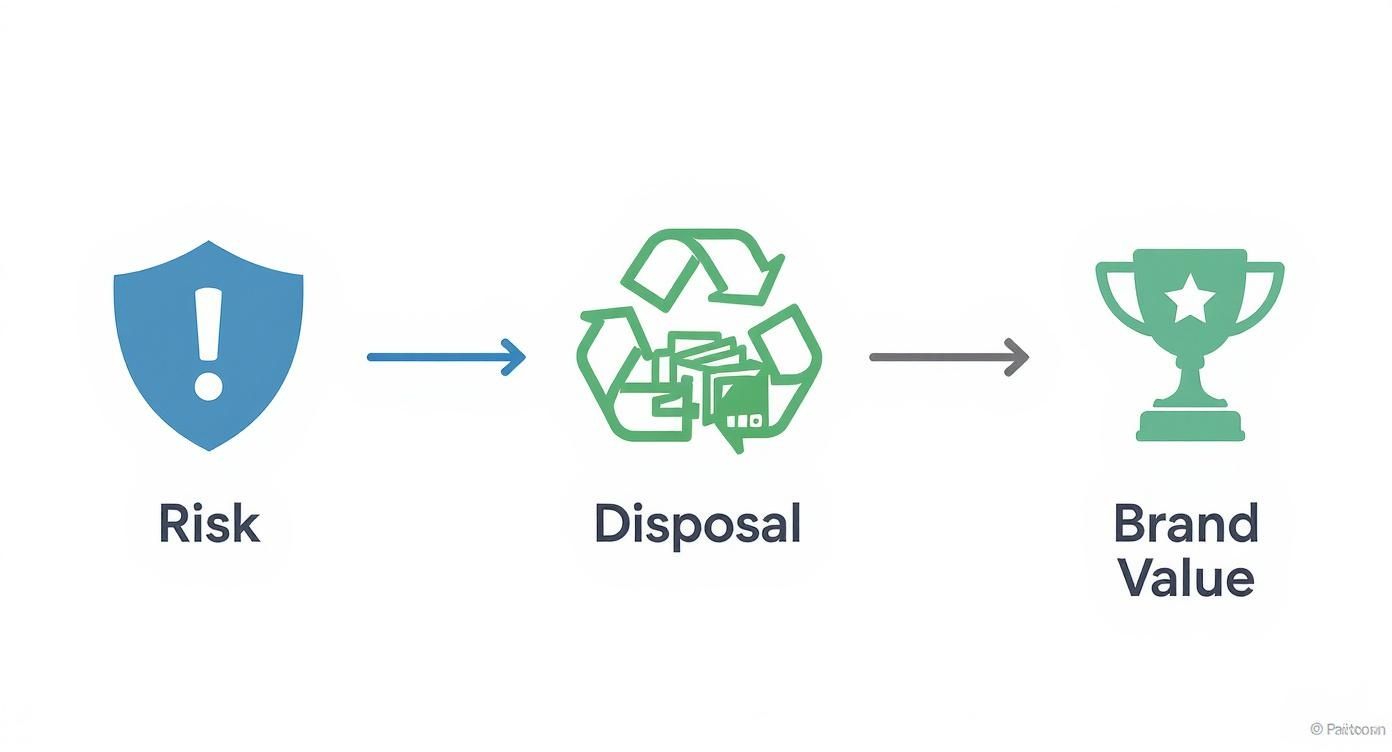
Think of it this way: managing security risks and choosing the right disposal method directly builds a stronger, more trustworthy brand.
Understanding Data Sanitization Methods
Not all data destruction techniques are built the same. If you're running a business, particularly in a regulated field like finance or healthcare, knowing the difference isn't just good practice—it's what keeps you out of a compliance nightmare.
Let's start with a factory reset. This is your basic first step. Modern smartphones are encrypted by default, so a reset essentially throws away the decryption key, making the data unreadable. For an iPhone with its hardware-level encryption or a newer Android phone, this is a surprisingly strong defense.
But for true enterprise-grade security, you need to go further with software-based wiping. This involves using specialized programs to overwrite the phone's storage repeatedly with random data, making sure the original information is impossible to recover. This approach is what aligns with tough standards like NIST 800-88, which is a common requirement for corporate and government data destruction. To really get into the weeds, you can learn more about what data sanitization is and see why it’s so critical.
Here’s a real-world example:
Imagine a financial advisory firm in Atlanta upgrading 200 company smartphones. Those phones hold client portfolio details and confidential messages. A simple factory reset won't cut it for their compliance auditors. They must use a certified data destruction process that gives them an auditable certificate for every single device.
Physical Destruction: The Final Word in Security
Sometimes, software wiping isn't enough. For devices that held extremely sensitive data or are just too old to be wiped securely, physical destruction is the only surefire method. This isn't about taking a hammer to a phone in the parking lot; it’s a controlled, documented process.
Your options here include:
- Shredding: An industrial shredder grinds the entire phone into tiny metal and plastic fragments. There's no coming back from that.
- Drilling: This method involves drilling holes straight through the phone's internal memory chips, rendering them useless.
- Incineration: High-temperature burning reduces the device to ash, completely destroying any component that could hold data.
This level of destruction provides absolute peace of mind and an unbreakable chain of custody. It's a key part of ensuring strong data security and privacy practices in phone handling from beginning to end.
Choosing the right data destruction method is a critical decision in any corporate device retirement plan. You're balancing security needs, compliance mandates, and practical logistics. The table below breaks down the common options to help you see where each one fits.
Comparing Data Destruction Methods for Corporate Devices
| Method | Effectiveness | Meets NIST 800-88 | Best Corporate Use Case |
|---|---|---|---|
| Factory Reset | High for modern devices with built-in encryption. | Partially, as a first step. | Low-risk devices or as a preliminary step before professional wiping. |
| Software Wiping | Very High, data is overwritten and unrecoverable. | Yes, when using certified software. | Standard for most corporate devices, especially for resale or donation. |
| Physical Destruction | Absolute, data physically ceases to exist. | Yes, the ultimate form of sanitization. | Devices with highly sensitive data, damaged devices, or end-of-life hardware. |
Ultimately, your best defense is a multi-layered data destruction policy. Start with a factory reset on every device, follow up with certified software wiping, and then use physical destruction for any high-risk or non-functional units. This approach turns compliance from a headache into a core security protocol that protects your business, your customers, and your reputation.
Nail Down Your Logistics and Chain of Custody
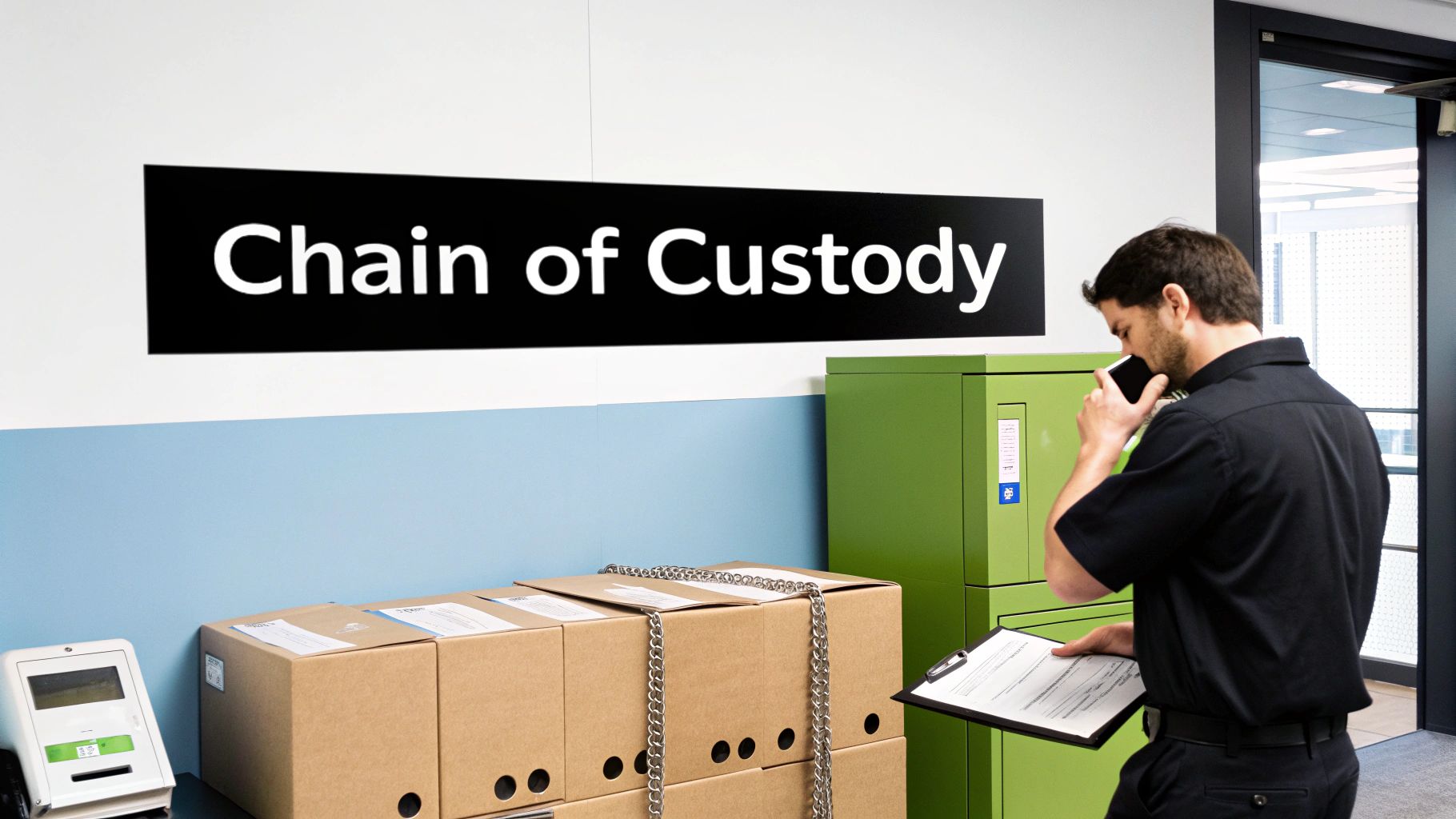
Once you've got your data sanitization plan locked in, it's time to tackle the physical journey of your old devices. A secure chain of custody isn't just a box to check for compliance; it's the only way to protect your company from the second a phone is turned in until it's officially recycled or destroyed. One misplaced device can unravel all your hard work on data security.
The whole thing kicks off with a clear, simple internal collection system. Just telling employees to "turn in their old phones" is asking for trouble. You need a structured, secure, and straightforward process that leaves no room for error.
Establish Secure Internal Collection Points
Your collection process has to be as secure as it is easy to follow. The idea is to make it simple for employees to do the right thing while making sure every single device is accounted for.
Start by setting up secure, locked collection bins or even a dedicated room that IT controls. Let your entire staff know exactly where these are and what the process is. Vague instructions are how devices end up forgotten on desks or stashed in unlocked cabinets, creating huge security gaps.
To build a system that actually works, try this:
- Assign a point person. Put one person or team, like the IT manager, in charge of overseeing the collection and logging of every device.
- Use secure containers. Place locked bins in spots that are accessible but still monitored.
- Explain the "why." A quick note to staff explaining that the process protects both company and personal data goes a long way in getting everyone on board.
The Non-Negotiable Step: Serial Number Tracking
Documenting every device by its unique serial number is the absolute foundation of a defensible chain of custody. This creates a paper trail that auditors love, proving precisely what you handed off for disposal.
The moment a device is turned in, it needs to be logged into a master inventory sheet. This log should follow the device from the employee, to the collection bin, and finally, to your recycling partner. This simple action is your number one defense in an audit and provides concrete proof of responsible handling.
An unbroken chain of custody, documented by serial number, is your proof of due diligence. It answers the critical questions for auditors: Which devices were disposed of, when were they collected, and who handled them at every stage? Without it, you're operating on trust alone, which isn't enough for compliance.
Properly managing this process is a huge part of building a resilient program. To really streamline the logistics and maintain a secure chain of custody, it's worth understanding and implementing effective supply chain risk management strategies.
Partnering for Secure Transport and Pickup
After you've collected and logged all your devices, the final logistical hurdle is getting them to a certified facility securely. This is where finding a specialized local partner becomes a massive strategic advantage. Trying to handle transport yourself can introduce all sorts of risks, from using unsecured vehicles to potential loss or theft on the way.
A professional partner takes all that worry away. For example, a provider in Atlanta that offers secure, documented transport with its own fleet makes the whole process a breeze. They should give you locked containers for the journey and a detailed manifest that you can cross-reference with your internal serial number log. For companies with a lot of devices, this is a total game-changer.
Many reputable electronic waste disposal companies even offer free pickups for bulk disposals (typically 50+ devices). This turns a complex logistical headache into a managed, cost-effective service. It ensures your devices are handled securely from your door to their final destination, with zero gaps in the chain of custody.
Choosing Your Disposal Path: Recycling vs. Donation
Once your old phones are securely collected and their data is handled, you hit a fork in the road. What’s their final destination? For businesses, this isn't just about clearing out obsolete hardware. It's a strategic call that impacts your security posture, potential financial returns, and your company's commitment to social responsibility.
Generally, you've got three main routes for disposing of old cell phones: resale, donation, or certified recycling. Each has its own appeal, but they also come with serious drawbacks that every organization needs to weigh carefully.
Evaluating Your Primary Options
At first glance, resale looks like a no-brainer. The idea of recouping some of that initial investment is tempting, especially when you're dealing with hundreds of devices. But this path is a minefield of security risks. Even after a thorough data wipe, the chance that residual data could be recovered is a liability you can't afford. Plus, the logistics of selling devices in bulk can quickly turn into a massive time-drain for your IT team, often for very little financial gain.
Donating directly to a charity or nonprofit is a fantastic way to support a cause you believe in. Giving phones to a local shelter or community program can provide a critical lifeline to those in need. Still, the same data security concerns pop right back up. Can you be 100% certain the organization you’re donating to can perform certified data destruction? That uncertainty can create a compliance gap that most businesses just aren't willing to risk.
That brings us to certified recycling—the most secure and environmentally responsible choice. A certified recycler guarantees that every single device is processed according to strict environmental standards, always with a zero-landfill policy. More importantly, they give you Certificates of Data Destruction, which are absolute gold for your audit trails and compliance records. The only real downside? Traditional recycling often lacks that direct, feel-good impact you get from a donation.
The Hybrid Model: Cause-Based Recycling
But what if you didn't have to choose? There’s a better way that combines the ironclad security of certified recycling with the powerful social impact of a direct donation. This is the whole idea behind cause-based recycling. It’s a model that transforms e-waste from a simple disposal task into a truly meaningful contribution.
Instead of choosing between security and social good, this approach allows you to achieve both simultaneously. Your old tech can be securely processed while funding tangible, positive change in the community.
Imagine this: your company's old phones are recycled responsibly, and the value they generate is funneled directly into building housing for veterans or planting new forests. It's not just a transaction; it's a story. You get all the essential compliance documents—the data destruction certificates, the chain of custody records—and you get a verifiable report on your social impact. This is the future of electronics recycling for veterans and other social causes.
This dual-impact model creates a powerful narrative for your ESG and CSR initiatives. You’re not just keeping lead and mercury out of landfills; you’re tangibly improving lives and restoring ecosystems. In fact, many companies are searching for clear guidance on where you can recycle cell phones in a way that truly aligns with these corporate values.
Making the Strategic Choice
For most businesses, the strategic choice becomes crystal clear when you look at it through the lens of risk, compliance, and brand identity. Resale offers a small financial kickback, but the data security risks are often too high. Direct donation is a noble gesture, but it brings compliance headaches with it.
The e-waste problem is massive, and consumer habits show we have a long way to go. A recent survey found that 45% of Americans just keep their old phones tucked away in a drawer, with only a tiny fraction ever reaching a certified recycling program. This gap is a huge opportunity for corporations to lead the way.
Cause-based recycling stands out as the most balanced and compelling solution. It delivers:
- Ironclad Security: Certified data destruction and a fully documented chain of custody.
- Environmental Integrity: Adherence to the strictest recycling standards and a firm zero-landfill commitment.
- Measurable Social Impact: Tangible support for causes like veteran aid and reforestation, complete with impact reports for your ESG documentation.
When you choose this path, disposing of old cell phones becomes more than just another operational task. It becomes an authentic, powerful story of how your company turns retired assets into hope and restoration.
Turning E-Waste Disposal into an ESG Win
What if an operational task like disposing of old cell phones could become a powerful strategic asset? When you approach it the right way, your device retirement program can be much more than a compliance headache. It can actually become a cornerstone of your Environmental, Social, and Governance (ESG) reporting, telling a story that builds brand loyalty and gets both employees and customers excited.
This isn't just about dodging bad press. It’s about getting out in front and creating a positive narrative. When you partner with a recycler focused on dual-impact initiatives—like supporting veterans and funding reforestation—you create a genuine, easy-to-implement program that hits home in today's socially conscious market. The trick is to turn those efforts into tangible, reportable assets for your corporate sustainability electronics disposal program.

From Documentation to Compelling Narratives
The foundation of any solid ESG story is verifiable proof. Vague claims of "being green" just don't cut it anymore. Your stakeholders, from investors to customers, want to see quantifiable evidence of your commitment.
A cause-based recycling partner delivers exactly that. Instead of getting just a standard certificate of recycling, you receive detailed impact reports that bring your company’s contributions to life.
These documents often include things like:
- Veteran Support Impact Reports that detail exactly how your recycled devices translated into tangible aid for veterans in the community.
- Plant-A-Tree Certificates showing the specific number of trees planted in reforestation projects on your company's behalf.
- Live Impact Counters you can embed on your website, displaying real-time stats like "1,245 veterans supported" and "3,700 trees planted."
These aren't just for your internal records. They are powerful tools for your annual sustainability reports, corporate website, and marketing campaigns, giving you the transparency that builds real trust.
Activating Your ESG Story in the Marketplace
Once you have that solid documentation in hand, you can start launching targeted campaigns that put your company's values on full display. This is where you connect a routine operational process—the secure disposal of electronics—with emotional, tangible outcomes.
A "Recycle for a Cause" campaign, for instance, can use messaging like, "Your old tech can house a veteran and grow a forest." This simple phrase positions your company as a facilitator of positive change, turning a mundane business activity into a source of community pride.
By aligning your recycling efforts with seasonal events like Veterans Day, Earth Day, and Arbor Day, you can create timely PR pushes and donation drives that capture public attention and media interest. Pitching these dual-impact stories to local outlets like the Atlanta Journal-Constitution can generate valuable earned media.
This proactive approach is especially effective for corporate partnerships. Offering free pickups for 50+ devices and then following up with comprehensive ESG documentation makes you an easy win for other companies trying to boost their own CSR profiles. Providing them with a "Recycled with Purpose" digital badge for their website further amplifies the message and helps build a network of socially responsible businesses. This is a critical piece of a successful Atlanta electronic recycling program designed for corporate needs.
Leveraging Digital Channels and Employee Engagement
Your ESG story is perfect content for your digital marketing. Think about short, impactful videos showing USDA reforestation footage or testimonials from veterans who received aid—that kind of content is incredibly effective on social media and LinkedIn. Publishing case studies that quantify how your partners met their sustainability benchmarks by using your service builds thought leadership and attracts new corporate clients.
This strategy pays off internally, too. When employees see their company turning e-waste into tangible good, it's a huge boost for morale and engagement. You can foster this connection by:
- Issuing Personalized Certificates: Automatically email individuals or departments Impact Certificates showing their specific contribution ("You helped plant 3 trees and helped 1 veteran!").
- Launching a Referral Program: Reward users who refer others with an extra tree planted in their name for every successful referral.
- Sharing Real Stories: A monthly impact newsletter with updates on reforestation progress and stories of veterans supported keeps the mission front and center for everyone.
The global cell phone recycling market was valued at approximately $3.5 billion and is projected to reach nearly $9.8 billion by 2032. This growth isn't just happening on its own; it's driven by companies recognizing that responsible recycling is a major business opportunity, not just an environmental chore. By integrating your disposal program into your ESG framework, you're not just managing e-waste—you're investing in your brand's future. You can read the full research about the growing cell phone recycling market to see just how big this trend is becoming.
Your Corporate Cell Phone Disposal Questions Answered
Even with a solid plan, questions are bound to pop up. When you're dealing with company data, environmental compliance, and logistics, the details matter. Here are some straightforward answers to the most common questions we get from businesses finalizing their cell phone disposal strategy.
What Documentation Is Essential for Our Compliance Audits?
For any program to be truly bulletproof come audit time, you need a solid paper trail. Three documents are non-negotiable.
First is a Certificate of Data Destruction. This isn't just a receipt; it's a formal declaration that every single device was sanitized to a specific standard, like the rigorous NIST 800-88 guidelines. Without this, you have no verifiable proof that you protected sensitive corporate or customer information.
Next, you absolutely need a detailed Chain of Custody record. This document should track each phone by its unique serial number from the second it leaves your possession to its final destination. It creates an unbroken, auditable log that proves due diligence at every single stage.
Finally, a Certificate of Recycling is crucial. This verifies that your retired assets were processed in an environmentally responsible way, adhering to a strict zero-landfill policy. A professional ITAD partner should provide all three of these documents as a standard part of their service—they are the foundation of your compliance and ESG reporting.
How Can We Get Employees Excited About Our Recycling Program?
The secret is to turn a routine operational task into a genuine cultural win. Instead of just sending out a sterile corporate memo, launch a company-wide recycling drive. Go a step further and invite employees to bring in their old personal phones, too. It’s a small gesture that makes the entire initiative feel more personal and inclusive.
Then, communicate the impact clearly and consistently. Use your internal newsletters, Slack channels, or team huddles to share tangible results. Think about the difference between saying "we recycled phones" and "Our team's efforts helped plant 50 trees this quarter through our e-waste program." When you partner with a cause-based recycler, the story becomes even more compelling.
Sharing the real stories—of the veterans being supported or the forests being restored through your collective action—connects a simple operational task to a powerful mission. This doesn't just boost morale; it powerfully reinforces your company’s real-world commitment to social responsibility.
Is It More Cost-Effective to Handle Phone Disposal In-House?
It's a tempting thought. On the surface, handling phone disposal internally seems like a way to cut costs. But this approach is loaded with hidden expenses and, frankly, unacceptable risks.
First, consider the IT labor hours. Wiping, documenting, and managing each device takes your skilled team away from revenue-generating projects. More importantly, what’s the cost of human error? A single device improperly wiped could lead to a catastrophic data breach. Then there’s the issue of credentials—internal teams rarely have the certifications needed for legitimate environmental reporting.
A reputable third-party service provides efficiency, certified data destruction, and guaranteed compliance for a transparent fee. When you weigh that against the immense value of risk mitigation and the positive assets created for your ESG reports, partnering with a specialist is almost always the smarter, more secure, and truly cost-effective solution.
What Happens to Phones That Are Too Old or Damaged to Be Reused?
This is where a certified e-waste recycler’s commitment to responsible materials recovery truly shines. If a phone is past the point of refurbishment, it is never simply thrown away or shipped to a landfill. Instead, it enters a meticulous dismantling and recovery process.
The journey typically looks like this:
- Safe Removal of Hazardous Materials: The first step is always to carefully remove components like batteries. This prevents hazardous substances like lithium and cadmium from contaminating the environment.
- Physical Dismantling and Shredding: The de-batteried phones are then shredded into small, manageable fragments.
- Advanced Materials Separation: From there, sophisticated sorting technology separates the fragments into clean commodity streams—plastics, glass, and valuable precious metals like gold, silver, and copper.
These recovered raw materials are then sold back into the supply chain to create new products. This "zero-landfill" policy is the hallmark of a truly responsible partner and ensures that every last device, regardless of its condition, contributes positively to the circular economy.
Ready to transform your company's e-waste into a powerful ESG asset? Green Atlanta offers secure, certified, and cause-driven solutions for the disposal of old cell phones and other IT equipment. We provide free pickups for bulk disposals (50+ devices), complete audit documentation, and a tangible social impact story that supports veterans and reforestation.