
Best Buy/Recycling vs B2B E-Waste for Atlanta Businesses

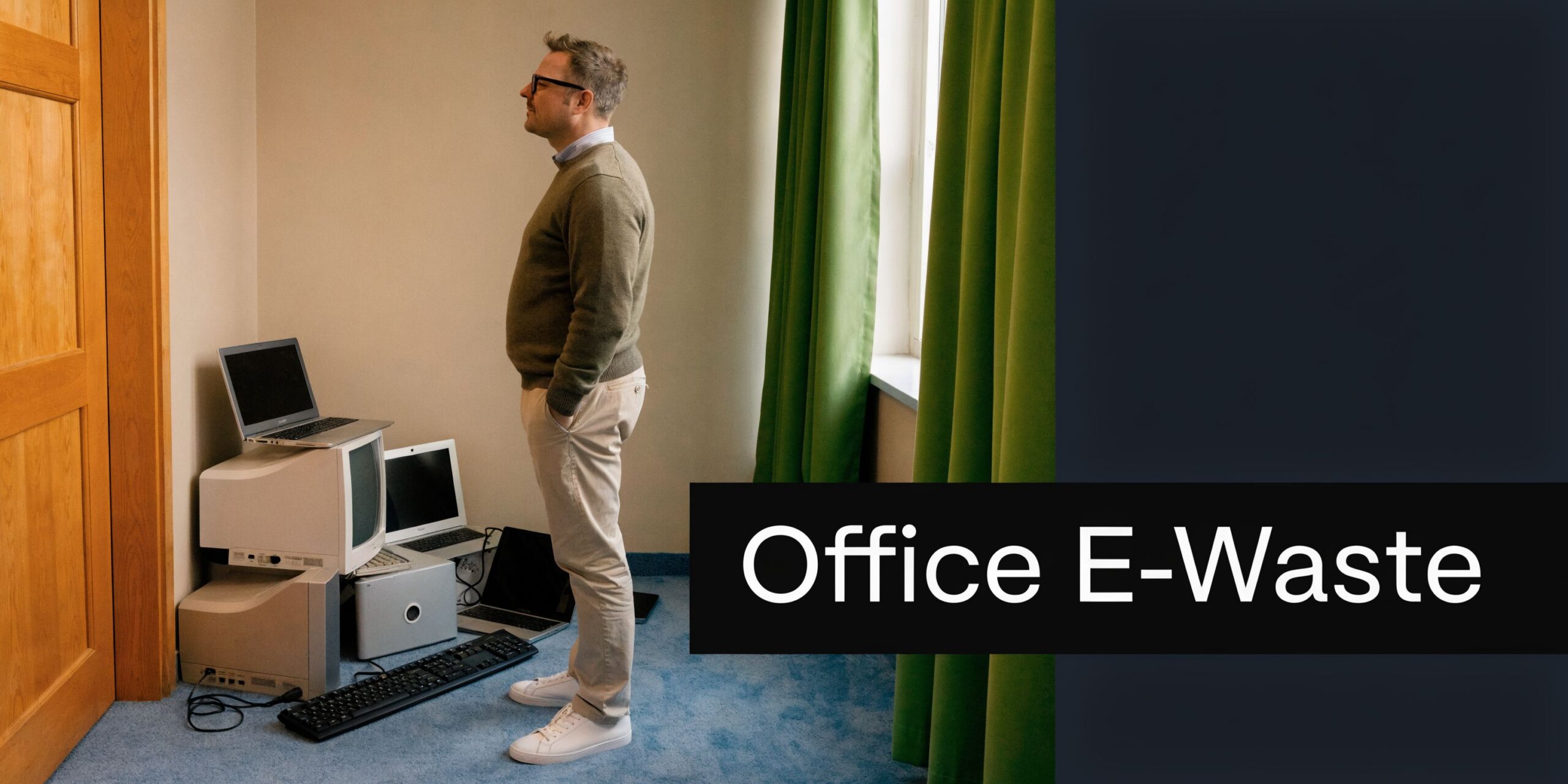
Old laptops under a desk. Dead monitors in a storage room. Retired switches stacked beside a copier. A few phones in a drawer because nobody wants to deal with them.
If you manage IT in Atlanta, that pile is not just junk. It is data risk, audit risk, operational drag, and a missed ESG opportunity.
The usual question sounds simple: should your team use consumer electronics recycling, or should you bring in a business e-waste partner? For a household, the answer can be easy. For a company, it is not.
A retail drop-off works for consumer convenience. A business disposal program has to do more. It has to protect data, document custody, remove equipment in volume, and give your company a defensible paper trail. If your devices ever held employee records, customer files, financial information, student data, or patient information, this is a governance decision.
Here is the blunt version. If you are clearing out a few low-risk accessories, retail may be fine. If you are decommissioning office equipment for an Atlanta business, you need to evaluate the decision like an IT asset disposition project, not a weekend errand.
Your Old Office Tech Pileup The Hidden Risks and Opportunities
The scene is familiar. Your team finishes a hardware refresh, an office move, or a cleanup before lease renewal. You have towers, laptops, docking stations, printers, drives, tablets, networking gear, and maybe a few aging servers with nobody assigned to remove them.
Most companies make the same mistake first. They frame disposal as a cleanup problem. It is not. It is an asset handling decision.
An old desktop may still contain internal documents. A retired laptop may still hold browser-saved credentials. A failed server can still create exposure if nobody documents how it left your facility. Once equipment leaves your control without a clear process, your risk goes up and your visibility goes down.
The two paths most Atlanta teams consider
You usually have two practical options:
| Option | Best fit | Main advantage | Main limitation |
|---|---|---|---|
| Retail drop-off | Small household-style loads | Convenient and familiar | Not built for enterprise control |
| Professional B2B e-waste service | Office cleanouts, decommissions, regulated data, bulk pickups | Documentation, logistics, security workflows | Requires project coordination |
That distinction matters more than most office managers realize. Retail programs are designed to make basic recycling accessible to the public. Business programs are designed to manage chain of custody, data destruction, scheduling, and reporting.
The hidden opportunity inside the pile
There is also upside here if you handle it correctly.
A strong recycling process can help your company:
- Reduce legal exposure by routing devices through documented handling.
- Support internal audits with clear disposal records.
- Improve office operations by clearing space without burdening staff.
- Strengthen CSR messaging if your recycling partner ties disposal to measurable community outcomes.
If your staff has to load devices into personal cars, drive them across town, and hope the process is enough, you do not have a business disposal program. You have a workaround.
That is why the choice between retail drop-off options and a specialist recycler is not minor. One model solves consumer convenience. The other solves business accountability.
The Consumer Drop-Off Model Explained
A staff member boxes up a few old laptops, loads them into a personal car, and drives to a retail store on lunch break. That feels efficient. For an Atlanta business, it creates the wrong kind of efficiency. You clear space, but you also shift transport, handling, and documentation onto employees without gaining the controls an IT manager needs.
Best Buy built its recycling program for public access and convenience. That matters. A national retail option keeps a large volume of electronics out of the trash and gives people a familiar place to bring common devices. For a business, though, the key question is different: does the model match your risk profile?
What the model is built to handle
The answer is clear. Consumer drop-off programs are built for small loads, standard store intake, and self-service transport. They work well when your team is dealing with a handful of retired items and speed matters more than formal business reporting.
That usually means all of these conditions apply:
- You have a small number of devices.
- Your staff can transport them without disrupting work.
- The equipment does not require a documented chain of custody.
- You do not need project scheduling, pickup logistics, or asset-level reporting.
- Your goal is responsible recycling, not audit support or a formal ITAD process.
Used within those limits, retail drop-off is reasonable.
Where businesses get into trouble
Problems start when companies treat a consumer channel like a business disposal program.
Retail intake does not give Atlanta organizations what they need during office cleanouts, hardware refreshes, relocations, or decommissions. IT managers need control over who handled the devices, how data-bearing assets were processed, what left the building, and what records remain for audit or legal review. A store counter is not designed around those needs.
That gap affects more than compliance. It affects labor, too. If your employees are sorting equipment, loading vehicles, making multiple trips, and waiting on store acceptance rules, you are using paid staff time to patch over a process mismatch.
The business decision
This is not only a disposal choice. It is a risk decision and, if handled well, a brand decision.
For low-volume, low-sensitivity electronics, retail drop-off can be an acceptable outlet. For anything tied to regulated data, internal controls, executive devices, bulk removals, or a public-facing sustainability effort, Atlanta companies should treat recycling as a managed business function. The disposal path you choose affects liability exposure, internal workload, and your ability to tell a credible CSR story about how your organization handles retired technology.
If you need a plain-language consumer overview before setting an internal policy, start with this guide on whether Best Buy recycles computers.
Retail recycling serves public convenience. Business recycling should protect your company, document the outcome, and support a CSR narrative you can stand behind.
A Head-to-Head Comparison for Atlanta Businesses
Your team finishes a laptop refresh in Midtown. The old devices are stacked in a storage room, finance wants them gone, and leadership assumes recycling is an errand. It is not. For an Atlanta business, this choice affects data exposure, staff time, audit readiness, and the story your company can tell about responsible asset retirement.
Start with the question that matters. Are you disposing of a few low-risk items, or are you managing a business process with legal, operational, and brand consequences?
| Criteria | Retail drop-off | Specialist B2B e-waste partner |
|---|---|---|
| Primary user | Consumers and households | Businesses, institutions, regulated organizations |
| Volume handling | Small quantities | Bulk removals and scheduled projects |
| Transport | Your staff handles drop-off | Pickup and managed logistics |
| Data handling | Consumer-focused process | Documented sanitization or destruction workflows |
| Audit support | Minimal paperwork for business records | Certificates, asset logs, and internal reporting support |
| Business fit | Small, low-risk electronics | Refreshes, relocations, decommissions, sensitive assets |

The dividing line is control
Retail drop-off works for convenience. Business recycling works when you need accountability.
That distinction matters the moment a device ever touched payroll records, client files, health information, legal documents, source code, or executive communications. Your company needs to know what left the office, who handled it, how storage media was processed, and what records exist afterward. A consumer-facing drop-off model does not center that chain of control.
A professional ITAD or B2B recycling partner does. The service is built around asset tracking, documented handling, and proof your team can keep on file.
If you cannot show how a retired device was handled, you are accepting avoidable risk.
Labor cost matters more than many IT teams expect
Retail drop-off shifts the burden to your staff. Someone has to sort devices, stage them, load vehicles, drive across Atlanta, wait for acceptance, and repeat the trip if the volume is too high or certain items are excluded.
That is expensive labor used on the wrong task.
A business recycler changes the operating model. Pickup, loading coordination, and project scheduling are part of the service. Your IT team stays focused on infrastructure, security, and user support instead of acting as a disposal crew. If you are comparing the consumer option against business-grade service, this guide to Best Buy electronics recycling options for businesses and households helps clarify where each path fits.
Auditability separates a convenient outlet from a business process
Atlanta companies in healthcare, legal, finance, education, logistics, and government contracting should make this a policy decision, not a one-off cleanup choice.
A retail counter may be acceptable for a few low-value accessories or outdated peripherals with no data risk. It is a poor fit for serialized asset tracking, internal sign-off, or disposal events that may later face scrutiny from compliance teams, insurers, outside counsel, or customers. If your organization expects documented destruction, itemized reporting, or a clean custody trail, choose a provider built for business accounts.
This also affects your CSR position. A managed recycling program gives you a stronger story for procurement reviews, ESG reporting, client questionnaires, and community-facing sustainability claims. “We dropped it off” is weak. “We retired assets through a documented business recycling process” is credible.
My recommendation
Use retail drop-off only for small quantities of low-risk electronics when no documented custody trail is required.
Choose a B2B e-waste partner if any of the following apply:
- Devices held confidential, regulated, or proprietary data
- You need asset tracking or destruction records
- The load is too large for staff-driven trips
- You want pickup and project management
- You plan to turn recycling into a credible CSR and sustainability message
For Atlanta businesses, this is a strategic operations decision. Treat it that way.
When Your Atlanta Business Cannot Use a Retail Drop-Off
There are situations where retail drop-off is not merely inconvenient. It is the wrong tool.
Best Buy's public-facing recycling information focuses on household drop-offs and does not mention secure wiping, shredding, or audit-ready certificates designed for enterprises, hospitals, or government agencies. It also emphasizes the consumer model with up to three items per day, leaving business IT managers in markets like Atlanta underserved when they need compliant, fleet-based pickup for bulk removals, according to Best Buy's recycling services information.

Healthcare and hospitals
A hospital IT lead in Atlanta is replacing workstations at nurses’ stations and retiring old laptops used by administrators. Some devices failed years ago and were pushed into storage. Others still boot.
That organization should not rely on a consumer drop-off workflow.
Healthcare teams need a process that aligns with internal security policy, records handling, and audit readiness. The retail model does not present itself as a HIPAA-centered disposal system. That gap alone should push healthcare organizations toward a specialized provider.
Law firms and financial offices
A law office in Midtown or a finance group in Buckhead may not have huge server rooms, but they often have something just as sensitive: dense concentrations of confidential files.
Client documents, deal records, tax information, litigation materials, board communications, saved credentials, email archives, and scanned IDs all tend to end up on ordinary endpoints. A retired desktop is not low-risk just because it is old.
In these environments, disposal needs to be documented the same way access is documented. If that sounds strict, good. It should.
The more confidential the client relationship, the less acceptable an informal disposal process becomes.
Tech companies and data centers
Here, retail drop-off falls apart fastest.
A startup in Atlanta can outgrow one office and decommission a surprising amount of equipment in a single move. Add rack gear, failed drives, test hardware, network appliances, and developer workstations, and the disposal project quickly becomes a logistics job.
Best Buy's public materials do not address business-specific handling for servers and data center equipment. That is a major omission for any company retiring infrastructure. These projects usually require de-installation, packing, loading, transport coordination, and documentation that survives internal review.
If your equipment is leaving through a dock, not a trunk, you are already outside the natural limits of a consumer program. Teams planning removals from a warehouse or equipment room should understand the operational side of a proper loading dock process before scheduling a pickup.
Schools, colleges, and public agencies
Education and government environments create their own complications.
Devices may hold staff records, student information, administrative documents, or public-sector data. Disposal often happens in waves after upgrades, grant-funded refreshes, or campus moves. The quantity alone makes self-hauling unreasonable. The documentation requirement makes it worse.
A retail model may still serve an individual employee cleaning out a few old accessories at home. It is not a strong fit for institutional retirement of managed assets.
The practical threshold
If you are asking whether your company can “just take it to Best Buy,” ask a better question instead: would I be comfortable defending that decision to my compliance lead, legal team, or executive leadership?
If the answer is no, you already know what to do.
How Recycling Can Build Your Brand and Support the Community
Most companies stop at compliance. That is a mistake.
Responsible electronics recycling can also become a brand asset if you connect disposal to a cause people care about. For Atlanta organizations, that means turning a routine IT task into something employees, customers, and stakeholders can rally around.

Cause-based recycling works because it is concrete
“Recycle for a Cause” is strong positioning because it gives old equipment a visible second life in your company story.
The message is simple: your retired tech can support veterans and help plant trees.
That framing gives IT managers and facility leaders a better internal narrative. Instead of emailing staff about junk removal, they can launch a recycling drive that ties surplus equipment to veteran support and reforestation. That is easier to promote, easier to get leadership buy-in for, and easier to include in CSR communication.
Useful tactics include:
- Seasonal campaigns tied to Veterans Day, Earth Day, and Arbor Day.
- Employee impact certificates after internal collection events.
- Partner-facing digital badges such as “Recycled with Purpose.”
- Post-drive reports that help marketing and HR tell the story.
It also fits modern facility and operations strategy
IT disposal is no longer isolated from facilities, operations, and ESG reporting. Teams that manage buildings, storage areas, moves, and vendor coordination increasingly need sustainability outcomes they can communicate. This perspective is reflected in broader discussions about sustainability in facility management, where operational decisions support both environmental goals and organizational reputation.
That matters in Atlanta, where many organizations want local credibility, not just a line item on a sustainability slide.
CSR value gets stronger when it is easy to document
The best CSR programs are easy for business units to participate in.
A recycling partner can strengthen that by giving companies practical tools such as:
- Impact reports that summarize what was collected and what community outcomes were supported.
- Tree-planting certificates that teams can share in internal newsletters or recruiting materials.
- Veteran support narratives that resonate far more than generic waste language.
- LinkedIn-ready campaign materials for employer brand and community relations.
For companies trying to turn disposal into something more valuable, this overview of the benefits of e-waste recycling gives the environmental case, but the bigger business win is reputational. Done right, recycling can support hiring, employee engagement, and community standing.
If your company already spends time producing ESG and CSR content, your e-waste program should contribute to that effort instead of operating in the background.
My opinion
This is one of the easiest wins available to an Atlanta operations or IT team.
You already have obsolete equipment. You already need to move it responsibly. Pairing that necessity with veteran aid and tree planting turns a mandatory task into a differentiator. Most companies overlook that. The smart ones will not.
Your Atlanta E-Waste Decision Checklist and Next Steps
Do not overcomplicate the decision. Ask the right questions and the answer becomes obvious.
Ask these questions before choosing a retail drop-off
Does any device contain PII, PHI, financial records, legal files, employee data, or internal IP?
If yes, treat the project as a controlled business disposal event.Do you need a documented chain of custody or destruction record for internal governance?
If yes, a consumer drop-off model is likely too thin.Are you disposing of equipment in bulk?
A few accessories are one thing. An office refresh, closure, relocation, or lab cleanup is another.Do you expect your team to self-transport the assets?
If your answer involves employee vehicles or multiple store trips, your process is already inefficient.Are there servers, failed drives, networking gear, or storage devices involved?
Those assets deserve tighter handling than a general public drop-off.Does your company care about CSR, ESG, recruiting brand, or community impact?
If yes, disposal should support those goals instead of staying invisible.
A simple decision filter
Use this rule set.
| If your situation looks like this | Best option |
|---|---|
| A few low-risk consumer-style devices, no audit need, self-transport is easy | Retail drop-off may be acceptable |
| Confidential data, regulated data, bulk loads, pickups needed, business reporting required | Use a professional B2B recycler |
What I would recommend for most Atlanta companies
For most businesses, once the asset count grows beyond a handful and the devices came from a managed work environment, move away from retail logic.
Use a specialist if:
- you are refreshing employee laptops,
- clearing a storage room,
- vacating office space,
- retiring infrastructure,
- or creating documentation for leadership and compliance teams.
If you are still mapping out your internal process, this guide on 5 steps to dispose of electronic waste at your business is a practical planning resource.
Your disposal process should be easy to explain in one sentence to your CIO or compliance lead. If it is not, it needs work.
The next step that saves the most time
Inventory the categories first. Separate endpoints, drives, network gear, peripherals, and specialty equipment. Then decide which items are low-risk convenience disposals and which require managed pickup and documentation.
That single sorting step usually prevents the most expensive mistake, which is treating all old electronics as if they carry the same level of risk.
Frequently Asked Questions About Business E-Waste Recycling
Can a small business still use a professional recycler
Yes. Small businesses often have the same data risks as larger organizations. A twenty-device office can still hold payroll records, customer files, saved passwords, and confidential emails. The size of the company does not erase the need for proper handling.
Is Best Buy bad for recycling
No. Best Buy plays a useful role in public access recycling. The problem is not the existence of consumer electronics recycling programs. The problem is using a consumer-oriented model for a business scenario it was not built to manage.
What if some of our equipment still has value
Ask for an asset review before disposal. Some business recyclers can identify devices that should be remarketed, reused, or separated from scrap streams. That conversation should happen before anything gets mixed into a general load.
Do we really need documentation if we already wiped devices internally
Usually, yes.
Internal wiping is helpful, but it does not replace a documented outbound process. Once devices leave your site, you still need to know who handled them, where they went, and what record supports the transfer.
What kinds of organizations should avoid retail drop-off
Healthcare providers, law firms, financial companies, schools, government offices, manufacturers with proprietary data, and any company decommissioning servers or large batches of endpoints should think carefully before using a consumer channel.
What if we are preparing for an office move in Atlanta
Then timing and logistics matter as much as recycling itself. You do not want obsolete equipment slowing movers, taking up dock space, or lingering after the move plan is locked. Schedule disposal early and tie it to the relocation timeline.
Is there business value beyond compliance
Absolutely. A strong recycling program can support internal cleanup, reduce risk, improve stakeholder confidence, and give your company a stronger local CSR story when paired with visible community outcomes.
If your Atlanta organization needs secure, business-focused electronics disposal, Atlanta Green Recycling is built for that job. They help companies handle pickups, data destruction, de-installation, bulk IT removals, and compliance-minded documentation across the Atlanta metro. If you want a cleaner process, less risk, and a stronger community impact story, start the conversation before your old equipment becomes next quarter’s problem.