
Why Sandy Springs Attracts Tech Companies


Sandy Springs doesn't fit the usual “suburb with offices” stereotype. The city's own economic-development profile says its 2021 Fortune 500 roster included six Sandy Springs-based companies, and that all of its local Fortune 500 companies sit on a highway corridor or a MARTA Red Line stop, which tells you something important about how the market works there: corporate location decisions in Sandy Springs are tightly tied to access, labor, and speed of movement, not just prestige addresses (Sandy Springs economic-development profile).
For a tech company evaluating metro Atlanta, that matters. You're not just picking an office submarket. You're choosing an operating environment that affects hiring, commute patterns, customer meetings, IT infrastructure planning, and increasingly, your ESG posture. Sandy Springs stands out because those pieces reinforce each other. The business base is dense. The talent story is practical. The transport network supports daily execution. The lifestyle proposition helps retain the people you recruit.
That combination is the primary reason why Sandy Springs attracts tech companies. It functions less like a peripheral location and more like a strategic ecosystem for enterprise technology teams.
The Rise of a Premier Tech Destination North of Atlanta
Atlanta remains one of the country's more active tech hiring markets, and that regional scale helps explain why Sandy Springs has gained traction with enterprise-oriented firms. For a relocation committee, the question is not whether metro Atlanta can supply growth. The question is which submarket converts regional demand into a workable operating model. Sandy Springs does that well because it combines access to Atlanta's economic base with an environment that supports hiring, daily operations, and long-term occupancy decisions.
That matters most for companies that are past the early startup phase. Once a business adds customer-facing teams, IT support, compliance functions, and administrative leadership, office location starts affecting more than rent. It shapes who will take the job, how often teams can meet in person, how easily clients can reach the office, and whether expansion can happen without a full relocation a few years later.
Sandy Springs performs well on that test because it functions as a strategic ecosystem, not just an address north of Downtown. A firm can recruit from the broader metro labor market, maintain practical access to major business nodes, and place employees in a community that many mid-career professionals will consider for the long term. Companies evaluating that broader hiring picture can use Underdog.io's guide to high-growth Atlanta tech roles to benchmark how demand is distributed across the region.
Infrastructure planning belongs in the same discussion. Tech firms that expect hardware refresh cycles, server-room changes, or future expansion into higher-compute operations should review regional digital capacity alongside office inventory. That is one reason relocation analysis should include resources on data center activity in Georgia, especially for teams that want their real estate, IT, and business continuity decisions aligned from the start.
One more point often gets left until too late. A modern tech location decision also carries an operating-responsibility component. As companies formalize ESG reporting and tighten controls around IT asset disposition, a market becomes more attractive when responsible downstream partners are available locally. In Sandy Springs, that gives firms a practical way to connect growth, infrastructure, and compliance, with Atlanta Green Recycling fitting into the final stage of that operating framework.
A Hub of Corporate and Economic Density
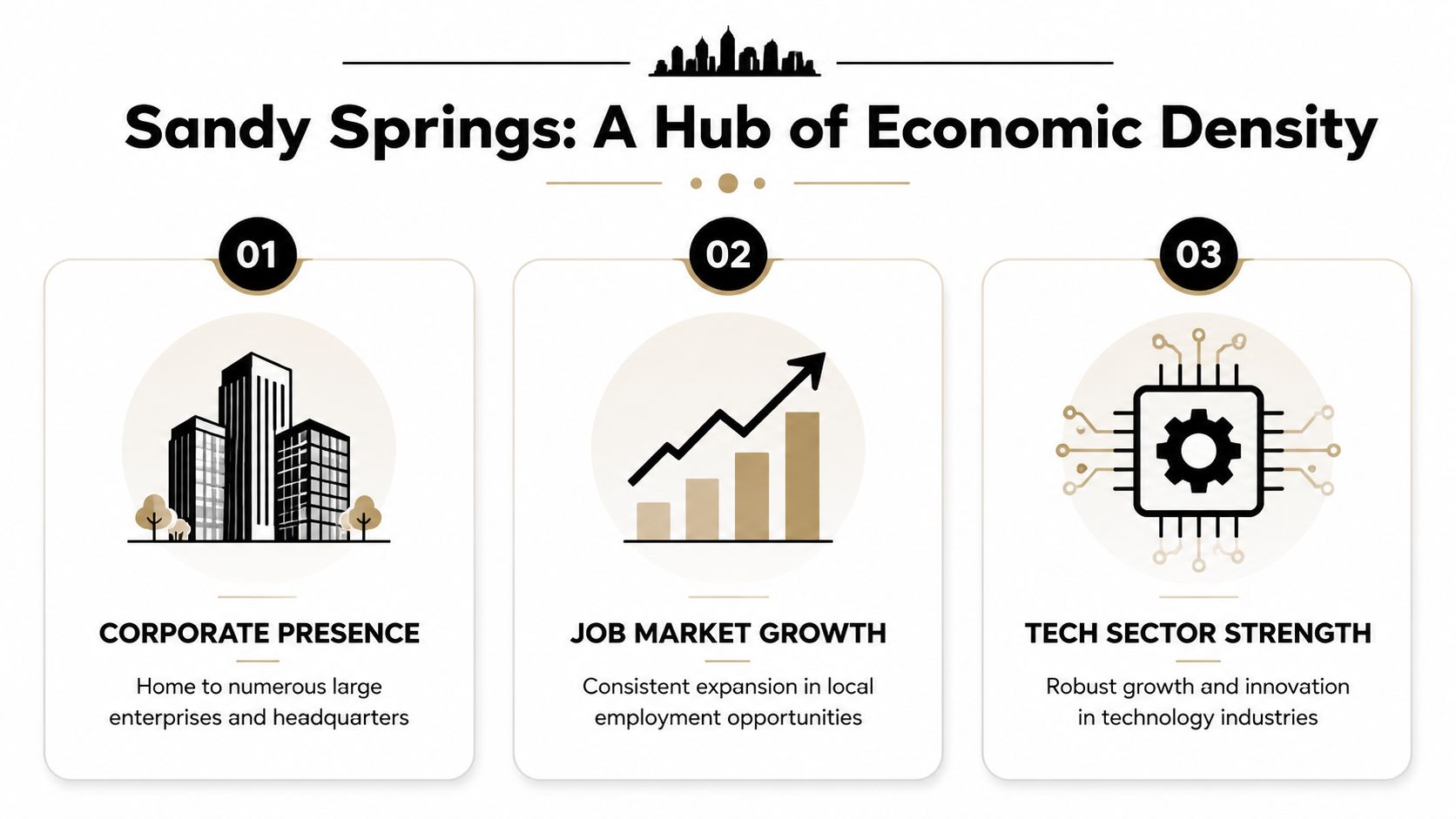
Corporate density is the strongest hard-signal indicator in the Sandy Springs story. Markets that attract only small firms can feel exciting but fragile. Sandy Springs looks different because major employers there show both scale and technology relevance.
According to a 2025 city financial report cited by Atlanta Tech News, large Sandy Springs employers include UPS General at 2,798 employees, Optomi at 2,000, Cox Enterprises at 1,484, and Cisco Systems at 821, among others. That employer mix shows a market where enterprise operations, digital systems, staffing, communications, and technical support functions coexist in meaningful concentration (Atlanta Tech News on the enterprise-tech arc).
What corporate density changes for a tech firm
A dense corporate base affects more than prestige. It changes how a company operates day to day.
- Partnership access. Enterprise neighbors create nearby opportunities for channel relationships, vendor discussions, pilot projects, and service contracts.
- Experienced labor circulation. Companies benefit when professionals with backgrounds in IT operations, cybersecurity, enterprise sales, analytics, and support functions already work in the submarket.
- Lower market risk. A location anchored by established employers is generally easier to justify to boards, finance teams, and real estate committees than a trend-driven district with a thinner business base.
Sandy Springs deserves to be evaluated as a business ecosystem, not just a map pin. The presence of employers such as UPS, Cox, Cisco, and Optomi suggests a local market where technology work is tied to real operating scale. That usually creates a more durable environment for firms that need disciplined execution, not just brand visibility.
Why enterprise concentration matters more than startup buzz
A startup-heavy district can help with visibility and networking. It doesn't always help with execution. Many tech companies relocating to metro Atlanta aren't looking for a founder scene. They need a place where implementation teams, account managers, compliance staff, infrastructure leaders, and technical recruiters can all function efficiently.
A simple comparison helps:
| Decision factor | Startup-centric district | Corporate-dense submarket like Sandy Springs |
|---|---|---|
| Hiring profile | Generalist and early-stage | Enterprise and specialized |
| Customer access | Strong for founder networking | Strong for B2B relationship building |
| Operational maturity | Mixed | More consistent |
| Relocation fit for established teams | Sometimes uneven | Often stronger |
Practical rule: If your company sells into enterprises, builds enterprise software, or supports regulated clients, a corporate-dense location usually creates more value than a location chosen mainly for buzz.
That's one of the clearest business cases for Sandy Springs. It gives tech companies access to a real commercial gravity center inside metro Atlanta.
Accessing a Deep Talent Pool and Innovation Infrastructure
The talent story in Sandy Springs isn't just about proximity to Atlanta. It's about fit. The city's strategic economic development plan says Sandy Springs benefits from a large concentration of highly educated residents and strong labor-force characteristics that support FinTech, medical, and business-services ecosystems. For employers that need specialized technical talent, that matters because those sectors overlap heavily with software, data, security, compliance, and operations work (reporting on the Sandy Springs Innovation Center and city plan).

Why labor-market fit beats broad labor-market size
Many relocation discussions focus on total metro population. That's too blunt. A tech firm doesn't hire “population.” It hires people with specific skills, sector familiarity, and commute tolerance.
Sandy Springs is better understood as a place where several valuable hiring pools overlap:
- Enterprise IT professionals who already work in large-company environments
- Data and security talent tied to finance, business services, and complex operations
- Client-facing technical staff who need to move comfortably between office, transit, and regional customer sites
The local innovation infrastructure supports that profile. The Sandy Springs Innovation Center was created as a shared workspace and startup incubator and was explicitly marketed to locate innovation and technology companies in the city. Its location near MARTA also improves access for employees, founders, and visitors in ways that many suburban innovation efforts fail to do.
Innovation infrastructure that supports scale
The Innovation Center matters less as a symbol and more as a signal. It shows the city has treated innovation as something to host deliberately, not just something it hopes will happen organically.
For growing firms, that translates into practical advantages:
- Recruiting gets easier when candidates see a recognizable innovation environment rather than an isolated office park.
- Client meetings feel smoother when office and collaboration locations are accessible.
- Expansion decisions become simpler because the city already frames technology as part of its economic identity.
Teams building advanced engineering functions may also need specialized outside recruiting support. For example, firms hiring for distributed ledger or protocol-related roles may supplement local hiring with specialist partners who hire blockchain developers when the role requires narrower technical sourcing than a general recruiter can provide.
For broader regional context, it also helps to study how nearby institutions feed the innovation economy. This overview of Georgia Tech's role in Atlanta innovation is useful because it connects local location strategy to the larger technical ecosystem around Atlanta.
A market with educated residents matters. A market that converts that education into accessible, employer-ready technical labor matters more.
Strategic Connectivity for Commutes and Commerce
Commute reliability shapes labor access more than many relocation teams expect. In Sandy Springs, the practical advantage is not one road or one station. It is the overlap of I-285, GA-400, and MARTA's Red Line, which gives employers multiple ways to pull talent, host clients, and connect regional operations from one address.
That matters at the operating level. A tech company with employees split across Midtown, Buckhead, Alpharetta, East Cobb, and North Fulton does not need a location that works for only one commute pattern. It needs a site that keeps the labor shed broad and reduces avoidable friction for in-office days, customer meetings, vendor visits, and cross-functional travel.
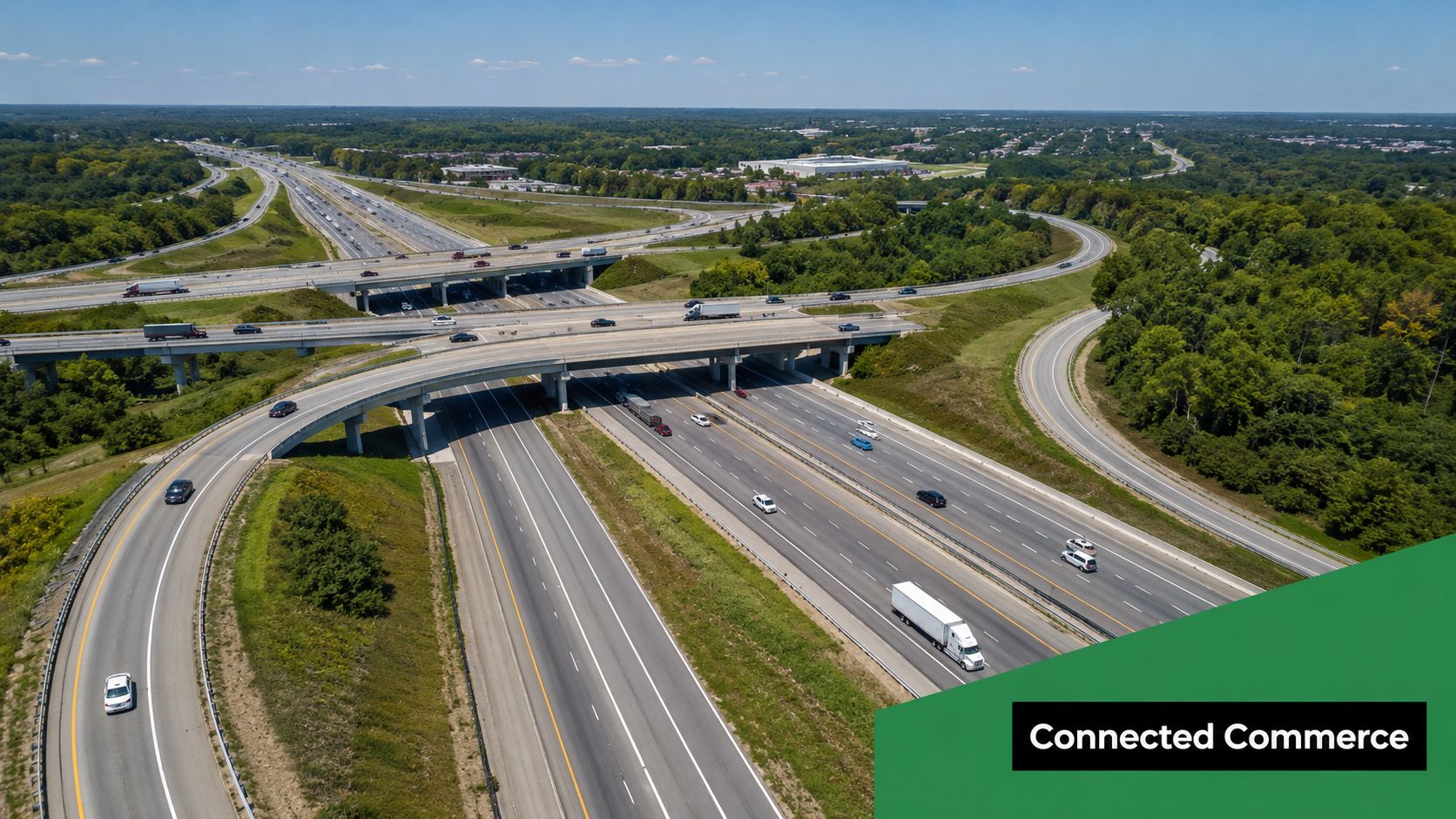
For operations leaders, this is less about convenience than risk control. An office market tied too tightly to a single corridor narrows the candidate pool and makes attendance patterns more fragile when traffic, weather, or personal schedules change. Sandy Springs supports both drivers and transit users, which improves recruiting flexibility and gives managers more realistic workplace policies.
Client access matters too. For firms selling enterprise software, cybersecurity, fintech, data services, or managed IT, meeting velocity affects revenue. A location with clear regional access can shorten planning time for sales calls, implementation sessions, and executive briefings. Sandy Springs performs well here because visitors arriving from other parts of metro Atlanta can usually understand the route without excessive local wayfinding.
A practical site-selection screen should focus on three questions:
| Question | Why it matters |
|---|---|
| Is the office close to a major highway corridor? | Supports regional access for staff, vendors, and customers |
| Is rail transit a realistic option for daily use? | Expands the labor shed and gives employees another commute choice |
| Can clients and candidates reach the building without unnecessary complexity? | Reduces friction in recruiting, sales, and implementation meetings |
One reason Sandy Springs stands out among north-Atlanta submarkets is that it combines suburban office accessibility with real transit utility. That combination is useful for hybrid teams, especially when one group drives from nearby neighborhoods while another group rides rail from intown Atlanta. Companies comparing specific buildings near the northern end of the line can use this guide to MARTA access to North Springs to evaluate commute practicality at the submarket level.
The larger point is strategic. Connectivity in Sandy Springs supports more than daily travel. It ties together labor access, customer access, and operational resilience in one ecosystem decision. For a tech firm evaluating relocation, that is a stronger business case than simple proximity on a map.
Quality of Life and Real Estate Advantages
Sandy Springs' real estate proposition succeeds because it aligns with how established tech teams live. Many firms reach a point where they no longer need a location that performs mainly as a talent signal. They need a location that supports stable, long-term employment. Sandy Springs answers that need by pairing office functionality with a residential environment that appeals to professionals who want room, routine, and access to Atlanta without living in its densest districts.
A relocation committee should think about this from the employee's side. Senior engineers, product leaders, cybersecurity staff, analysts, and corporate IT managers often make housing decisions differently from recent graduates. They may want a short drive, practical schools, more living space, parks, or a quieter weekday rhythm. A submarket that supports those preferences can improve retention because it reduces the mismatch between where people work and how they want to live.
Why this matters for recruiting senior talent
Quality of life doesn't sit outside the business case. It is the business case when your open roles are hard to fill.
Consider two candidate scenarios:
- A mid-career infrastructure leader moving with family will often evaluate neighborhood fit, commuting burden, and day-to-day convenience as closely as compensation.
- A solutions architect already living in the northern arc of metro Atlanta may accept a role faster if the office doesn't require a disruptive shift in travel patterns.
Those decisions rarely show up in flashy market reports, but they shape acceptance rates. Sandy Springs benefits because it offers a more balanced proposition than either a fully urban office district or a far-flung suburban campus.
The office and infrastructure angle
On the occupier side, this balance also supports real estate strategy. Sandy Springs fits companies that want professional office space near major transportation routes while keeping flexibility for future IT changes, hardware refreshes, and possible expansion into heavier infrastructure needs.
That's especially relevant for firms with:
- Hybrid workplace needs that require a polished office without a downtown-only footprint
- Support and operations teams that benefit from reliable parking and regional road access
- Server, lab, or back-office functions that may later intersect with broader infrastructure planning in the Atlanta market
The strongest office locations do two jobs at once. They help the company run, and they help employees imagine staying.
That's one reason Sandy Springs tends to hold appeal beyond the first lease term. It can work at launch, and it can still work after the organization becomes more complex.
Completing Your ESG Strategy with Responsible Operations
A relocation plan isn't finished when the lease is signed and the furniture arrives. For tech companies, one of the least glamorous parts of a move can create some of the biggest compliance and reputation risks: old laptops, retired networking gear, decommissioned drives, obsolete monitors, and surplus office electronics.
That's why ESG in a relocation context should be treated as an operations issue, not a branding exercise. If your company is moving into Sandy Springs, consolidating offices, or refreshing hardware, you need a process for secure data destruction, documented asset handling, and responsible downstream recycling.
Where responsible disposition fits into the business case
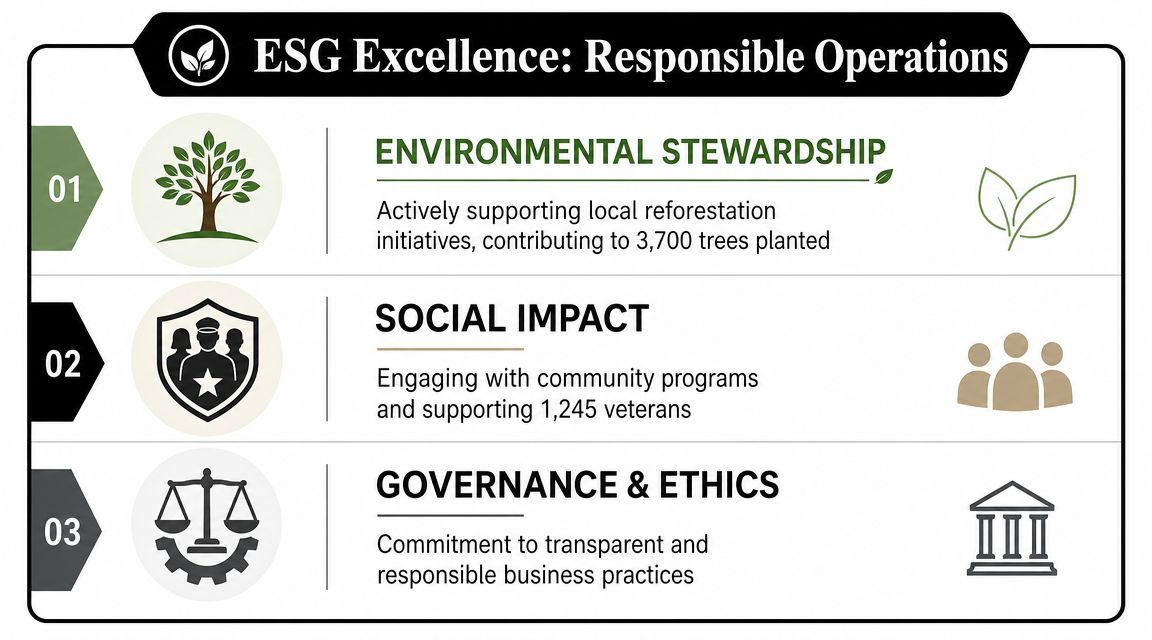
Most tech firms already talk about ESG. Fewer integrate it cleanly into move management, procurement cycles, and IT asset disposition. That's a miss, because electronics handling can support all three ESG dimensions at once:
- Environmental stewardship through keeping electronics out of landfill streams
- Social impact when recycling programs support visible community outcomes
- Governance through documented handling, data sanitization, and chain-of-custody discipline
For companies that want a local option tied to those needs, electronics recycling in Sandy Springs is one practical route to build this into move planning. Atlanta Green Recycling provides business-focused IT asset disposition services such as secure data destruction, hard drive wiping to DoD sanitization standards, physical shredding for obsolete media, equipment removal, de-installation, packing, and pickup logistics. In other words, it addresses the operational side of ESG, not just the messaging side.
Turning disposal into a CSR narrative
The stronger opportunity is to move beyond simple compliance. The publisher's model adds a cause-based layer built around veteran aid and tree planting. Used well, that gives companies a cleaner CSR story around equipment retirement and office turnover.
A practical approach looks like this:
- Run a cause-based campaign during relocation or refresh cycles. Messaging such as “Your old tech can house a veteran and grow a forest” connects disposal to visible outcomes without making the move itself the story.
- Use impact reporting carefully in ESG communications. The publisher's brand materials reference impact counters for veterans supported and trees planted. Those figures can be meaningful in campaign execution, but internal teams should verify how they're documented before placing them in formal CSR reporting.
- Turn one-time disposal into employee engagement through seasonal drives tied to Earth Day, Arbor Day, or Veterans Day.
Responsible IT disposition is one of the rare back-office activities that can improve compliance, reduce landfill risk, and support community-facing storytelling at the same time.
That's the missing piece many relocation plans overlook. A modern tech company doesn't just need the right office in Sandy Springs. It needs operations that match the standards it claims to value.
Your Next Steps for a Strategic Move to Sandy Springs
If you're evaluating north-Atlanta submarkets, Sandy Springs deserves a serious look because it solves several business problems at once. It offers corporate density that supports enterprise relationships. It provides access to educated, specialized labor. It gives companies road and transit connectivity that reduce commute friction. And it supports a quality-of-life profile that helps retain experienced employees.
The right move process is disciplined. Don't treat location, labor, facilities, and IT disposition as separate workstreams that only meet at the end. The companies that execute relocations well usually align those decisions early.
A practical checklist for tech firms
Use this framework during site selection and move planning:
- Confirm role mix first. Decide whether the office is built for engineering, customer-facing teams, back-office support, executive functions, or a blend.
- Map the commute shed. Test whether your likely hires and current staff can realistically reach the site by car, MARTA, or both.
- Evaluate office fit, not just rent. Look at parking, client arrival experience, decommissioning requirements, and room for hardware staging during the move.
- Plan IT asset disposition before move day. Old devices, retired drives, and unused electronics shouldn't become an afterthought.
- Document compliance workflows. Healthcare, education, government, and enterprise teams need records that stand up to audit and internal review.
The final operational step most teams leave too late
Office moves often surface a hidden inventory of obsolete technology. That includes old desktops in storage rooms, retired monitors, network equipment from prior upgrades, failed drives, and miscellaneous peripherals that nobody wants to own. Leaving that problem until the last week creates risk.
A cleaner process is to fold decommissioning into the project schedule early and work from a documented chain:
| Move phase | What to address |
|---|---|
| Pre-move audit | Identify surplus IT assets and data-bearing devices |
| Relocation planning | Separate redeployable equipment from end-of-life hardware |
| Decommissioning | Schedule secure data destruction and removal |
| Post-move closeout | Retain certificates and internal documentation |
For organizations that need support with that final step, this office relocation service resource is relevant because it focuses on the removal, handling, and disposition side that often gets missed in standard move planning.
Sandy Springs makes sense for tech companies that want a strategic ecosystem rather than a single advantage. If your leadership team is weighing the move, the best next decision isn't just where to lease. It's how to make the entire relocation secure, compliant, and operationally clean from day one.
If your company is planning a move, hardware refresh, or office decommission in metro Atlanta, Atlanta Green Recycling can help you build the last mile of the plan around secure data destruction, responsible electronics recycling, and documented IT asset disposition that fits enterprise, healthcare, education, and government requirements.