
Sell Telecom Equipment Near Me: An Atlanta Guide


If you're searching sell telecom equipment near me, you're probably not starting with a clean, simple pile of gear. You're dealing with storage room shelves full of Cisco phones, an old Avaya system no one wants to touch, network switches left over from a move, and a finance or compliance team asking what can be recovered, what has to be wiped, and how fast it can leave the building.
That mix is normal in Atlanta. Offices consolidate. Hospitals replace handsets. Schools migrate voice systems. Data centers decommission racks in phases, not all at once. The hard part isn't deciding that the equipment is surplus. The hard part is moving it out without losing value, missing a compliance step, or turning an avoidable project into a weeks-long distraction for IT.
The good news is that secondary demand for telecom hardware is real. The refurbished telecom equipment market was valued at approximately $42.5 billion in 2022 and is projected to reach $78.3 billion by 2030, and businesses selling surplus assets can often recoup 20-50% of original value depending on condition and model, according to refurbished telecom equipment market analysis from eNetwork Supply. The key is handling the process like an asset disposition project, not a cleanup exercise.
Preparing Your Telecom Assets for Disposition
Old telecom gear becomes expensive the moment it loses context. A stack of handsets without model data, power supplies, or extension notes is harder to price. A pallet of switches without serials or configuration status creates delays. If you want a fast quote and a clean handoff, start with an inventory manifest that tells a buyer exactly what they're looking at.
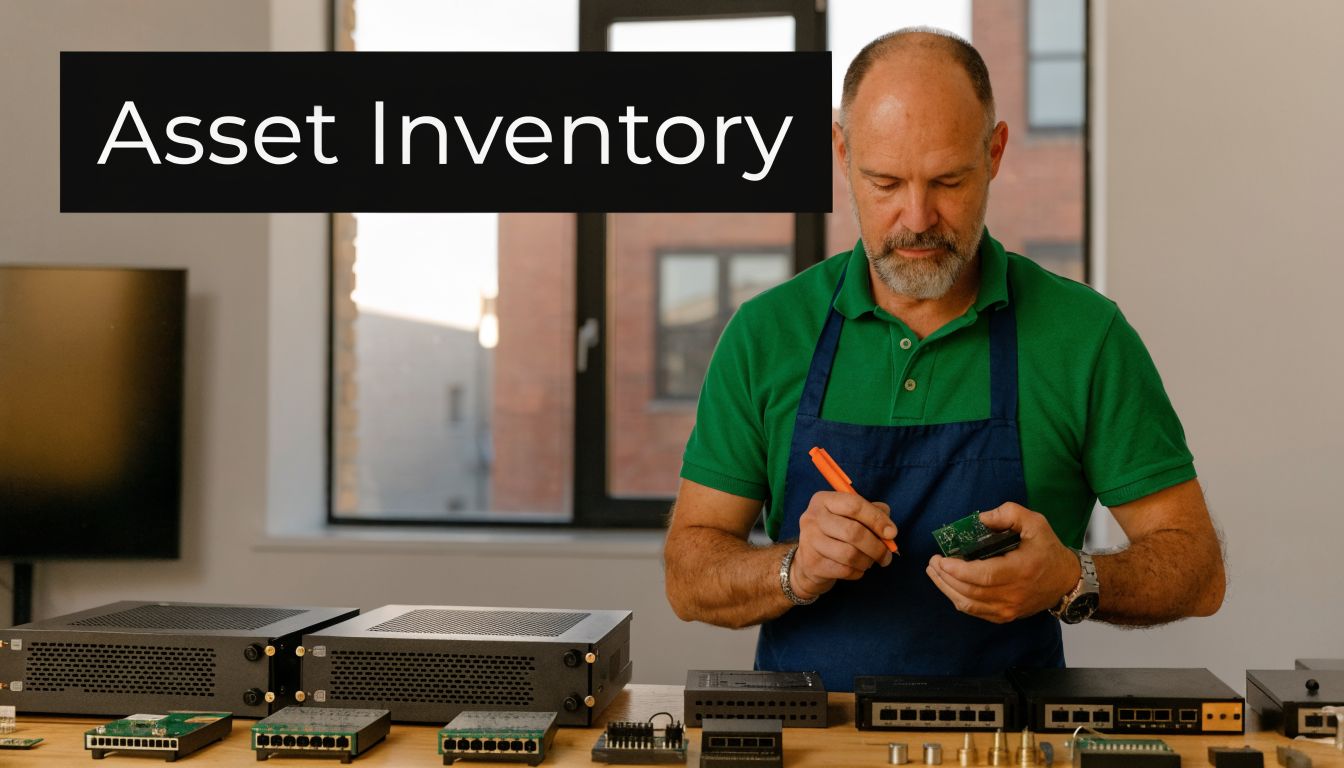
Build the manifest before you move anything
Don't begin by boxing equipment. Begin by identifying it where it sits. For most Atlanta offices, that means telecom closets, server rooms, cubicle rows, front desk stations, and storage areas that accumulated retired devices over several refresh cycles.
Your inventory should separate devices into practical groups such as VoIP phones, PBX systems, conference phones, routers, switches, gateways, firewalls, and accessories. If you mix all categories into one sheet, valuation gets slower and errors increase.
A useful manifest records:
- Manufacturer and model. Cisco 7900 series phones, Avaya 9600 series handsets, Polycom conference units, Mitel desk phones, routers, and switches should each be listed by exact model.
- Serial number. This matters for traceability, chain of custody, and later audit documentation.
- Quantity by type. Count complete units separately from loose components.
- Physical condition. Note cracked screens, missing stands, broken buttons, cut cables, rack rash, or damaged ports.
- Functional status. Mark items as working, untested, powers on, or non-working.
- Completeness. Include whether handsets, cords, power bricks, licenses, faceplates, and mounting hardware are present.
- Location. Record where the assets sit now so pickup crews don't waste time searching building to building.
Condition notes affect more than price
Condition isn't a cosmetic detail. It changes whether equipment is reusable, parts-grade, or scrap. A complete lot of matching business phones is easier to resell than mixed handsets pulled from different offices with no cords or bases.
This is why IT managers should avoid shorthand like "used phones, various." That description doesn't help anyone. A stronger note is "Cisco IP phones, mixed lot, mostly complete, some yellowing, several without stands." It signals what can be processed quickly and what may need separate handling.
Practical rule: If a device would create a question for your technician during pickup, add that answer to the manifest now.
Photograph lots and label pallets
Photos save time. Wide shots show volume. Close-ups show model numbers and condition. If you're working across more than one floor or site, assign internal lot IDs that match your spreadsheet and your staging area.
For larger projects, put similar devices together before pickup. Keep Avaya handsets with Avaya handsets, Cisco switches with Cisco switches, and loose accessories in clearly marked containers. This reduces recounts and protects your quote from changing later because complete systems were split apart.
A few simple staging habits help:
- Keep complete systems together. Base, handset, cord, and power supply should travel as one unit when possible.
- Separate damaged equipment. That keeps good inventory from being undervalued.
- Flag anything with possible stored data. Phones, PBX equipment, and voice infrastructure should be identified early for sanitization planning.
If your team needs a broader checklist for staging electronics safely before pickup, this guide to prepare your electronics for recycling is a practical reference.
What works in real projects
The best inventories are built by the people closest to the equipment, then reviewed by the person responsible for disposition. In practice, that usually means desktop support or network staff gather the hardware details, while IT management verifies quantities and approves removal.
What doesn't work is waiting until moving day to figure out what belongs in the sale lot. That approach leads to missing accessories, mixed asset categories, and slower quoting. If your goal is to sell telecom equipment near me without wasting internal time, the inventory is the foundation. Everything else depends on it.
How to Value Telecom Equipment and Set Realistic Expectations
A lot of sellers overestimate old telecom hardware for one reason. They remember what it cost to buy, install, and support it. Secondary buyers don't price on past budget pain. They price on current demand, model relevance, completeness, and how much work it takes to test, sort, and move the lot.
That doesn't mean old gear has no value. It means value is uneven. A rack of newer switches can behave like an asset. A pile of ten-year-old desk phones may behave more like a logistics project with partial recovery.
What buyers actually pay for
The strongest pricing usually goes to equipment that is still useful in live environments, service inventory, or parts support. Exact models matter. So does whether the lot is clean and consistent.
According to guidance on bulk telecom equipment resale from Beyond Surplus, certified ITAD vendors handling bulk sales of 50+ devices can produce 20-40% higher net recovery than online marketplaces, and seller satisfaction runs 85-95%. That's an important distinction. Gross listing price and net recovery aren't the same thing.
A complete, tested enterprise phone lot can be attractive because the buyer can move it quickly. A stripped system loses momentum fast. Expert guidance from Beyond Surplus also notes that complete configurations get full value more often, while stripped systems can depreciate sharply. In plain terms, missing parts cost money.
Four factors that move pricing up or down
Instead of trying to assign one blanket value to the whole room, evaluate the lot through these filters.
| Value driver | What helps | What hurts |
|---|---|---|
| Model demand | Common enterprise models from Cisco, Avaya, Polycom, Mitel | Obsolete systems with little resale demand |
| Condition | Clean, tested, working units | Broken ports, screen damage, heavy wear |
| Completeness | Handset, base, cords, power supply, rack ears, modules | Missing accessories or stripped chassis |
| Lot quality | Large, matched quantities with clear inventory | Mixed scrap piles with uncertain counts |
This is also why telecom liquidation often mirrors liquidating surplus office equipment. Buyers pay more when the inventory is organized, documented, and easy to remove. Disorder lowers value because the buyer has to absorb labor and uncertainty.
Recovery expectations by asset type
Not all telecom categories behave the same way in resale.
VoIP handsets often depend on quantity and consistency. A few isolated phones usually don't command much attention. Large, uniform lots with good model data do better.
PBX systems are more selective. Value tends to concentrate in sought-after cards, expansion modules, and complete systems with known configuration history. Older proprietary platforms can still move, but expectations should stay grounded.
Routers and switches are often easier to evaluate because model numbers tell a clear story. If the equipment is enterprise grade, complete, and not physically damaged, it usually gets faster interest than mixed office phone leftovers.
If you're trying to estimate what might turn into cash before you request quotes, this overview of old electronics for cash helps frame the recovery side of disposition.
Most telecom sellers don't lose value because the gear is worthless. They lose value because the lot is incomplete, poorly documented, or sold through the wrong channel.
What doesn't work
Three mistakes show up repeatedly.
- Listing one unit at a time when the actual opportunity is a bulk lot.
- Using original purchase price as the benchmark instead of current secondary demand.
- Ignoring handling costs such as packing, freight risk, missing accessories, and time spent answering buyer questions.
The right expectation is simple. Some telecom assets recover meaningful value. Some offset removal and compliance costs. Some should be recycled, not marketed. Good valuation isn't about forcing every item into a resale story. It's about separating the assets that still trade from the ones that only create delay.
Securing Your Data and Ensuring Full Compliance
Telecom equipment gets underestimated as a data risk because it doesn't look like a server. That's a mistake. Business phones, PBX platforms, voice gateways, and network-connected communications hardware can retain call history, user directories, voicemail-related data, network settings, and credentials. In healthcare, education, finance, and government work, that turns a routine equipment sale into a compliance event.

A 2025 Verizon DBIR data point cited by Big Data Supply reported a 17% rise in telecom-related breaches from residual data on decommissioned VoIP systems, and 74% of Atlanta healthcare and IT firms cited data sanitization as their top e-waste barrier. If you manage regulated assets, that should shape your process from day one.
Factory reset is not enough
A factory reset is an operational shortcut. It is not an auditable destruction method. It may remove visible user settings, but it doesn't give you the level of assurance most regulated organizations need when assets leave the building.
That's where companies get into trouble. Someone assumes desk phones are harmless, clears a few menus, and sends the lot into resale. Later, no one can prove what was removed, how it was removed, or whether every device in the shipment was handled the same way.
For regulated sellers, the standard has to be higher. Internal policy, legal review, and customer commitments often matter as much as the hardware itself.
Know which telecom assets need sanitization
Some teams focus only on drives and overlook telecom endpoints. In practice, any device that stored user, call, or configuration data deserves review before resale or recycling.
Prioritize:
- VoIP phones and IP handsets that may retain call logs, directories, and user settings
- PBX systems and voice platforms with configuration data and administrative access records
- Gateways, routers, and switches that may contain credentials, IP configurations, and site details
- Conference phones and collaboration devices that may hold contacts or pairing history
- Removable or embedded storage media inside telecom hardware
A good rule is simple. If the device touched your network or your users, assume it needs a data disposition decision.
Auditable sanitization matters
For many Atlanta organizations, the essential requirement isn't just wiping data. It's proving that the wipe happened. That means documented process, serialized tracking, and paperwork your compliance team can keep.
The same Beyond Surplus methodology referenced earlier describes DoD 5220.22-M wiping, physical shredding for certain media, and NIST 800-88 compliance reporting as part of secure IT asset handling. Those aren't interchangeable with casual in-house reset steps. They exist because high-risk environments need repeatable, reviewable controls.
If your organization needs a local service model built around that kind of documentation, this resource on secure data destruction in Atlanta outlines what an auditable process should include.
If you can't produce a serial-level record and a destruction certificate, your compliance file is incomplete.
Where businesses get exposed
The riskiest projects usually share the same patterns:
- Mixed ownership. Telecom assets sit between IT, facilities, procurement, and outside installers, so nobody owns the final wipe decision.
- Staged removals. Equipment comes out in phases, and unsecured devices sit in closets while teams wait for the next move window.
- Assumed harmlessness. Desk phones and legacy voice gear are treated like low-risk peripherals.
- No chain of custody. Assets leave a secure area without clear handoff records.
Those gaps matter more than most sellers expect. Even when resale value is attractive, regulated organizations often choose the path that minimizes risk first and monetizes second. That's the right order.
What good looks like
A defensible telecom disposition workflow identifies data-bearing devices before pickup, isolates them from general surplus gear, applies the right sanitization method, and ties each action back to an inventory record. The result should be simple enough for operations and strong enough for audit.
That usually includes:
- Serialized intake records
- Documented wiping or shredding decisions
- Chain-of-custody tracking
- Certificates of destruction or sanitization
- Clear separation between reusable assets and destroyed media
The worst time to ask data questions is after the truck leaves. If you're trying to sell telecom equipment near me and your industry faces HIPAA, contractual confidentiality, or public-sector handling rules, certified data destruction isn't an add-on. It is the gate that determines whether the project was handled responsibly at all.
Choosing Your Atlanta Telecom Equipment Partner
Most businesses have two broad options. They can try to move telecom gear themselves through marketplaces and piecemeal buyers, or they can use a certified ITAD partner that handles valuation, pickup, data controls, documentation, and downstream processing. The right answer depends less on optimism and more on what your team can execute without introducing risk.
For bulk lots, the market has already answered part of that question. As noted in the earlier Beyond Surplus data, 72% of IT managers used buyback programs during cloud migrations, and certified ITAD channels for 50+ devices can deliver 20-40% higher net recovery than online marketplaces while producing 85-95% seller satisfaction. Those are net results, not just listing hopes.
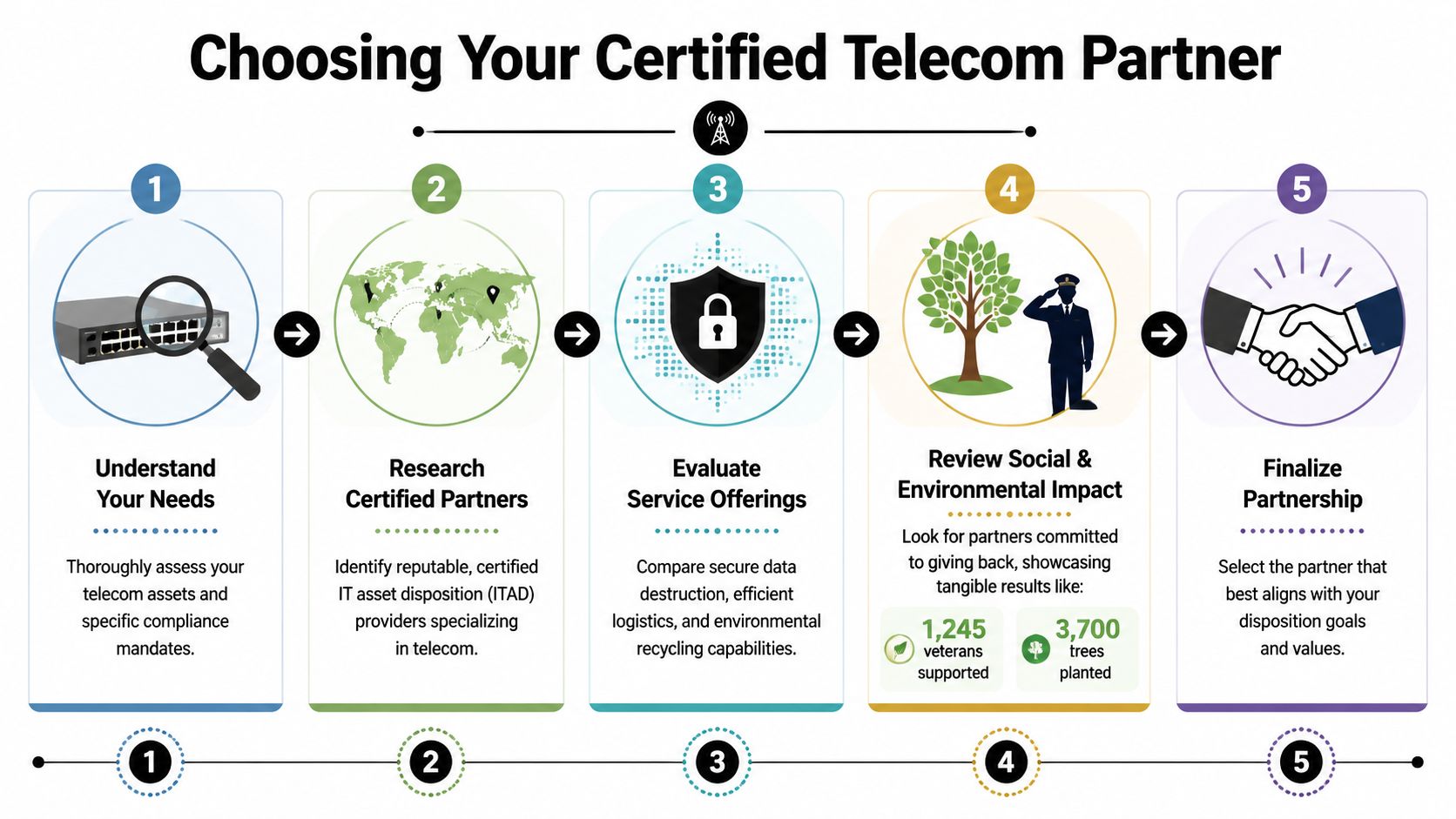
Compare the two paths honestly
The DIY route looks appealing because it feels direct. You post inventory, answer offers, and hope the margin stays high. In practice, internal labor, relisting, packing damage, no-shows, and inconsistent compliance records tend to erode that advantage.
A certified partner costs you some control over the micro-steps, but it removes operational burden. That matters when your priority is getting equipment out safely and documenting every stage.
| Factor | DIY Marketplaces like eBay | Certified ITAD Partner e.g., Atlanta Green Recycling |
|---|---|---|
| Pricing process | Seller sets asking prices and manages negotiations | Buyer evaluates the full lot and provides structured quotes |
| Data security | Seller must design and document the sanitization process | Sanitization and chain of custody are built into the workflow |
| Logistics | Internal staff packs, labels, stores, and ships | Pickup, de-installation, packing, and transport can be coordinated |
| Risk of partial sales | High. Good items move first, leftovers remain | Entire lots are handled in one project scope |
| Paperwork | Often fragmented across listings and carriers | Centralized records support audit and compliance needs |
| Internal workload | Heavy for IT and office staff | Lower. Most tasks shift to the service provider |
| ESG story | Limited unless the company builds one itself | Easier to document recycling and community impact outcomes |
What to ask before choosing anyone
The right interview process looks a lot like vetting any trade partner with access to your site, your systems, or your liability. If you've ever reviewed a contractor checklist, the logic is similar to vetting residential electrical professionals. You don't hire on confidence alone. You verify process.
Ask direct questions such as:
- How do you track serialized telecom assets from pickup through final disposition
- What data destruction standards do you follow for phones, PBX equipment, and embedded media
- Can you separate resale-eligible gear from devices that require destruction
- What documentation do you provide after the project closes
- How do you handle de-installation, palletizing, and transport
- Do you support corporate pickup thresholds for larger office clear-outs
A serious partner answers these without hesitation and doesn't gloss over edge cases like mixed-condition lots, incomplete systems, or regulated assets.
Why mission matters in this category
Most telecom disposition vendors talk about compliance, recovery, and sustainability. That's all necessary. It isn't always memorable.
In Atlanta, there's a stronger model. A mission-driven recycler can help turn what feels like a disposal problem into a documented ESG and CSR story. That matters for companies with sustainability teams, procurement oversight, or community-impact goals. It also matters for organizations that want their e-waste process to say something better than "we removed old phones."
A cause-based program changes the conversation:
- Veteran support impact gives your retired equipment a social outcome your leadership team can stand behind.
- Tree planting and reforestation certificates turn e-waste into a visible environmental action, not just a waste diversion line item.
- Seasonal drives around Veterans Day, Earth Day, and Arbor Day give office managers and ESG leads a practical reason to schedule cleanouts at the right time.
- A digital badge such as Recycled with Purpose gives companies something they can place in a sustainability report, internal newsletter, or LinkedIn update.
The strongest local partner isn't just the one who clears a closet. It's the one who helps you document value, control risk, and explain the outcome to leadership.
Look for a partner that fits Atlanta operations
Local matters when your project spans multiple offices, requires building access coordination, or depends on a narrow pickup window. The phrase sell telecom equipment near me usually starts as a search query, but it reflects a real operational need. You want a team that can show up, identify what belongs in the lot, and remove it without creating more work for your staff.
For Atlanta businesses evaluating options, this directory of IT asset disposition companies is a useful place to benchmark service expectations.
A good telecom equipment partner should be able to do four things well. They should assess the lot accurately, protect you on data handling, move the assets efficiently, and leave behind paperwork that satisfies compliance and supports your sustainability narrative. If they can also tie the project to veteran aid and reforestation, the disposition stops being a cost center story and becomes something much more useful inside the business.
Managing Logistics Paperwork and Final Payout
Most telecom disposition projects succeed or fail in the final mile. Not because the equipment was hard to identify, but because removal, paperwork, and payout were handled loosely. Once a lot is approved, execution should feel controlled from the first pickup notice to the final remittance and certificates.

The broader telecom industry gives a reason to take this seriously. Synergy-Tel's overview of telecom equipment disposition notes that the U.S. telecom sector refreshes 40% of its hardware every 3-5 years, creating millions of surplus units, and that turnkey ITAD solutions with serialized tracking and chain-of-custody documentation can reduce disposal costs by 30-40% per decommissioning project while supporting compliance.
What smooth logistics look like
A professional removal process starts with a schedule that matches your site reality. Some offices need after-hours pickup. Some hospitals need loading dock coordination. Some data centers need phased removals because not every rack can go dark at once.
From there, the work should be structured:
- Onsite de-installation if needed. Telecom assets are disconnected safely and grouped by lot.
- Protective packing. Phones, cards, and network gear are packed to prevent avoidable breakage.
- Serialized scanning. Equipment is checked against the approved inventory.
- Secure transport. The handoff is documented from your team to the pickup team.
That chain matters because it ties your asset list to your compliance file. Without it, you're relying on memory and email threads.
The paperwork that closes the loop
The right documents depend on the project, but most business sellers should expect a clear package at closeout.
Look for records such as:
- Asset inventory reconciliation showing what was picked up
- Certificate of data destruction for wiped or shredded data-bearing assets
- Certificate of recycling for items processed as non-reusable material
- Settlement summary or payout record explaining what generated recovery value
- Impact reporting for ESG or CSR files if your organization tracks community and sustainability outcomes
If your compliance team asks what a formal destruction record should include, this explainer on what is a certificate of destruction is a solid reference.
Clean projects end with proof, not assumptions.
Payouts and long-term value
A fair payout process is straightforward. The lot is evaluated, exceptions are documented, and payment follows the agreed terms. Problems usually appear when there was no clear manifest, no separation between reusable and scrap equipment, or no agreement on condition adjustments before pickup.
For local IT managers, the larger point is this. Fast payment matters, but dependable execution matters more. A vendor that pays quickly and leaves your records incomplete can create more downstream cost than the check was worth. By contrast, a partner that handles logistics, documentation, and audit support well becomes easier to use every time your organization refreshes voice and network infrastructure.
That repeatability is what turns telecom liquidation from an occasional headache into a manageable operating process.
Conclusion Turning Your E-Waste Into Hope
Selling retired telecom gear isn't just about clearing space. It's about making smart decisions in the right order. First, identify exactly what you have. Then set realistic recovery expectations based on condition, completeness, and demand. Treat data security as a top priority. Choose a partner that can handle pickup, paperwork, and compliance without creating more work for your team.
For Atlanta organizations, there's a bigger opportunity inside that process. Surplus phones, PBX systems, switches, and network hardware don't have to end as a quiet disposal line item. Handled well, they become part of a stronger local story. One that supports sustainability goals, strengthens CSR reporting, and connects routine IT operations to visible community benefit.
That matters because e-waste decisions are no longer just operational. They're cultural. They say something about how a company handles risk, waste, and responsibility. A mission-driven approach gives businesses a way to turn an unavoidable cleanup into a measurable good.
Recycling That Restores Lives and Environments isn't just a tagline. It's a practical standard for how modern asset disposition should work. Your old tech can support veteran aid, contribute to tree planting, and keep reusable equipment moving through a more responsible lifecycle.
When you search sell telecom equipment near me, the best outcome isn't finding the closest buyer. It's finding a process that protects your organization and does something worthwhile with what you no longer need.
If your organization is ready to turn retired telecom gear into a compliant, well-documented, community-focused outcome, Atlanta Green Recycling can help you start the process with local pickup, secure data destruction, responsible recycling, and reporting that supports both compliance and ESG goals. Schedule a consultation and turn your e-waste into a story of veteran support, reforestation, and smarter asset recovery.