
R2 Certified Telecom Recycling Chicago


A Chicago telecom refresh usually ends the same way. The new gear is online, users stop complaining, and the old hardware gets pushed into a server room corner, a storage cage, or an empty office nobody wants to claim. Then compliance, facilities, security, and procurement all realize the same thing at once. That pile is no longer an operations issue. It's an asset disposition issue.
For corporate teams, R2 certified telecom recycling Chicago isn't just a search term. It's usually the point where you're trying to solve several problems at once: data risk, chain of custody, environmental handling, pickup logistics, and internal reporting. If the recycler can't handle all of them in one controlled workflow, your decommissioning project turns into a patchwork of assumptions.
Navigating Your Next Telecom Decommissioning Project
A typical Chicago office decomm doesn't look dramatic. It looks ordinary. A stack of switches near an MDF, retired VoIP phones in banker boxes, patch panels leaning against a wall, and maybe a few routers and servers waiting for “later.”
That's where projects drift into risk. Old telecom equipment often sits long after the cutover because nobody wants to shut down daily work to sort serial numbers, verify what still stores data, or coordinate pickup windows with building access. Meanwhile, the gear still has business value in one of three forms: recoverable materials, documentation value, or potential liability.

What sits in that pile
The hardware usually includes more than phones and cables. In Chicago office and data room cleanouts, it's common to see:
- Network infrastructure like switches, routers, firewalls, and wireless controllers
- Telecom systems such as PBX equipment, gateways, desk phones, and conference units
- Mixed support gear including UPS units, batteries, patch panels, transceivers, and cabling
- Stranded IT assets that get lumped in with telecom, which is where a clear IT asset disposition process becomes useful
A weak recycler treats that load as generic e-waste. A competent one separates data-bearing gear, tracks custody, and gives you a documented endpoint for each category.
Practical rule: If your team can't answer who controlled the equipment from removal to final processing, the decommissioning job is still open.
The strongest way to shrink that risk is to use a recycler operating under a recognized control framework. R2 certification has become a major global benchmark, with the number of responsible electronic recycling facilities holding the certification surpassing 200 worldwide, which is why enterprise buyers increasingly use it as a screening standard for electronics reuse, recycling, and data-bearing asset handling in markets like Chicago, as noted by The FTK Group's report on R2 certification growth.
There's also a physical security angle that gets missed. During office exits and equipment staging, old gear can disappear just as easily as new gear if nobody controls access to the area. Teams planning larger site transitions often borrow from broader security strategies for reducing business shrinkage to tighten handoffs, loading dock control, and temporary storage.
Decoding R2 Certification An Essential Primer
Most buyers see “R2 certified” on a website and stop there. That's not enough. You need to know what the certification changes in the recycler's day-to-day operations.
The easiest way to think about R2 is this: it functions like a process control system for electronics disposition. It's not there to make a recycler sound responsible. It's there to force documented handling for material recovery, reuse, data-bearing assets, worker safety, and legal compliance.

The four parts that matter most
For an IT manager, these are the practical parts of the standard to care about:
| R2 area | What it means in practice | Why a buyer should care |
|---|---|---|
| Data security | The recycler uses defined controls for data-bearing equipment | You don't want routers and switches handled like scrap metal |
| Environmental protection | Materials move through controlled recycling streams | Mixed electronics don't end up in unmanaged disposal channels |
| Legal compliance | The recycler operates within documented regulatory requirements | Your audit trail is stronger when the vendor works inside a formal standard |
| Worker safety | Staff dismantle and process equipment in controlled conditions | Safe handling usually tracks with disciplined operations overall |
Why this matters beyond marketing
A lot of providers use compliance language loosely. They'll say they do secure destruction, eco-friendly recycling, or responsible disposal. Those phrases are fine as general claims, but they don't tell you whether the shop is audited, whether the chain is documented, or whether downstream vendors are part of the control model.
That's the key distinction. R2 is a management standard with audited requirements. It asks whether the recycler can show what happened, not whether the sales team can describe it.
A useful comparison is building code. A contractor can promise a structure is safe. Code compliance is what forces inspection, documentation, and minimum standards. R2 does something similar for electronics recyclers and ITAD workflows.
What buyers should look for in plain English
When a vendor says it's R2 certified, a corporate buyer should expect evidence of process maturity, including:
- Clear intake controls so assets aren't mixed into anonymous bulk loads
- Defined destruction or sanitization paths for data-bearing items
- Material segregation for batteries, boards, metals, plastics, and reusable devices
- Records you can use later for internal audit, legal review, or sustainability reporting
If you've worked only with generic haulers or local drop-off style recyclers, this can feel like extra overhead. In practice, it saves time because your internal team spends less effort chasing paperwork after pickup.
For organizations comparing providers in different regions, it also helps to see how a certified electronics recycling company describes its controls. The details matter more than the badge itself.
A recycler earns trust when operations can prove the claim. Certification is useful because it turns “trust us” into a process you can inspect.
Why R2 is Critical for Telecom Equipment Disposal
Telecom gear isn't ordinary office e-waste. That's where many disposal plans break down.
A retired monitor is mostly a material handling issue. A retired router, firewall, switch, PBX appliance, or VoIP platform is a material issue plus a configuration and security issue. That difference should drive the way you select a recycler.
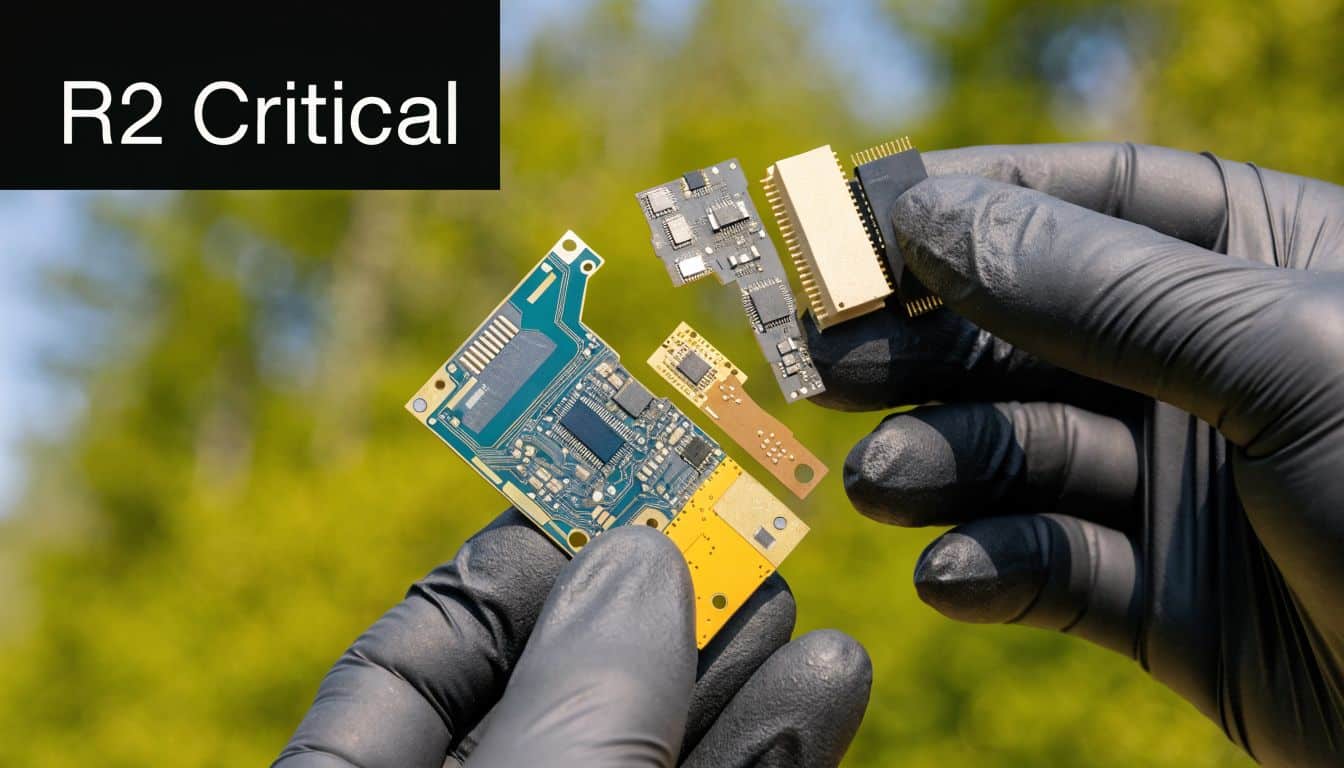
Telecom assets carry a different kind of risk
The problem isn't just whether a device has a hard drive. Telecom hardware may retain configuration files, call logs, VPN credentials, stored network settings, user assignments, or other operational data. Even when a device looks obsolete, it can still reveal how your environment was built.
That creates a blind spot for companies using a recycler that only knows how to process “electronics” in bulk. Secure product destruction sounds good on paper. It doesn't answer whether a managed switch was sanitized properly or whether reusable chassis were separated from any data-bearing components.
The downstream issue most buyers miss
One reason R2 matters so much here is that telecom gear breaks into many streams after intake. Boards, power supplies, plastics, batteries, cabling, and reusable units may all move differently. The R2 standard requires certified facilities to manage and verify their entire recycling chain, including downstream vendors, which is especially important for telecom assets that could otherwise be exported, landfilled, or processed by unaudited subcontractors, according to SERI's overview of the R2 standard.
That requirement changes the buyer's risk profile. Instead of trusting a single pickup event, you're asking for a controlled chain that extends beyond the loading dock.
Where generic recyclers usually fall short
In telecom projects, I see three recurring failures:
- They talk about destruction, not sanitization. Those aren't always the same thing.
- They accept mixed loads without telecom-specific intake logic. That makes later reporting weaker.
- They can't explain where each material stream goes after sortation. That leaves downstream exposure in your blind spot.
A better vendor can explain, in plain language, how they handle network gear as distinct from laptops, displays, and loose peripherals.
Here's the practical test. Ask what happens to a firewall, a managed switch, and a PBX unit after pickup. If the answer sounds identical for all three, the vendor probably doesn't understand telecom disposition at the level you need.
Why this matters for ESG too
Environmental performance and data security aren't separate tracks here. They're connected. If a vendor can't control mixed material streams and data-bearing components in the same workflow, your sustainability story is thin because the chain behind the claim is weak.
That's why many companies fold telecom retirement into a broader e-waste recycling strategy for business assets instead of treating network hardware as a one-off cleanup problem.
The R2 Telecom Recycling Market in Chicago
Chicago is one of those markets where you don't have to invent a certified recycling ecosystem from scratch. It's already there, and that matters for buyers who need pickup options, processing capacity, and vendors familiar with enterprise documentation.
The city has been part of the certified electronics recycling sector for a long time. An EPA-related list from 2012 already included R2-certified recycler locations in Chicago, at a time when 203 companies were R2-certified, 135 were e-Stewards certified, and 27 held both certifications, for a combined total of 276 certified companies listed across the two major programs, as shown in the EPA-related certified recycler list. That's a useful historical signal. Chicago wasn't a late adopter market.
Why market maturity matters
For a corporate IT team, a mature recycling market usually gives you better operational options:
- More pickup flexibility across Chicago, Cook County, and suburban locations
- Better odds of finding telecom-aware handling rather than household-style e-waste intake
- Stronger reporting expectations because larger commercial clients have pushed providers in that direction
- Less dependency on a single facility when timing, capacity, or service scope changes
This matters most during office consolidations, multi-site refreshes, and data room cleanouts where timing collides with lease deadlines and building access rules.
Chicago supports both large and small workflows
Not every job is a truckload of data center gear. Some are smaller branch-office decommissions with phones, switches, UPS units, and a few servers. Chicago's market can support both.
For example, current Chicago-area provider information shows business-focused logistics in the city itself. STS Electronic Recycling lists a Chicago office at 200 South Wacker Drive, 31st Floor, Chicago, IL 60606, with free pickup available throughout Chicago, Cook County, and Chicagoland, plus same-day response for businesses and urgent requests. That local operating detail is useful because it shows how the market evolved from generic e-waste into more responsive B2B ITAD-style service.
If you're sorting small loads or trying to separate business pickups from resident options, it also helps to know where the consumer side of the market sits. For that, a roundup of local Chicago drop-offs for electronics can clarify what's public-facing versus what belongs in a business chain-of-custody workflow.
In Chicago, the real advantage isn't just having recyclers nearby. It's having a market where certified handling is already part of the conversation.
The practical takeaway
Chicago buyers should use that market depth to get more specific in vendor conversations. Don't settle for “we recycle electronics.” Ask about telecom gear, serial-level reporting, certificates, building logistics, and downstream accountability.
In a less mature city, you might compromise. In Chicago, you usually don't need to.
Checklist for Choosing Your Chicago R2 Recycler
The wrong way to vet a recycler is to ask for a quote first and process details later. Pricing comes after fit. If the recycler can't handle telecom-specific data, documented custody, and reporting, the number doesn't matter.
The biggest screening issue is telecom data handling. Many recyclers advertise generic secure product destruction but don't explain how they wipe configuration files, call logs, or VPN credentials from network gear, which creates a real compliance gap for buyers evaluating telecom disposal, as reflected in the service language on STS Electronic Recycling's Chicago page.
The shortlist questions that actually matter
Use this checklist when you speak with vendors.
| Verification Area | Key Question to Ask | Why It Matters |
|---|---|---|
| Certification status | Is your current certification active, and which facility will process our equipment? | Some companies market certification broadly while using different operating locations |
| Telecom data handling | How do you handle routers, switches, firewalls, PBX systems, and VoIP hardware that may retain configuration data? | Telecom assets need device-specific controls, not generic wipe language |
| Chain of custody | What documentation do you issue at pickup, transfer, and final disposition? | You need a defensible record from release through processing |
| Destruction method | When do you sanitize for reuse, and when do you physically destroy? | The method should fit the asset type and your policy |
| Asset reporting | Can your certificate map to serial numbers or asset tags where applicable? | Without reconciliation, certificates become hard to audit |
| Downstream controls | Who handles non-reusable components after your initial processing? | Your risk doesn't end at first intake |
| Logistics capability | Can you manage office buildings, loading docks, after-hours pickups, and multi-site scheduling in Chicago? | A vendor can be compliant and still fail the job operationally |
| ESG support | Do you provide impact reporting, environmental documentation, or mission-based outcomes we can use in CSR reporting? | The recycler may be able to support broader company goals, not just disposal |
What good answers sound like
A serious recycler speaks operationally. They can tell you how they receive assets, how they separate reusable gear from scrap, who signs custody documents, what the destruction records contain, and how they manage exceptions.
Weak answers usually sound like this:
- “We destroy everything securely.” Too vague.
- “We're certified, so you're covered.” Not enough detail.
- “We'll send paperwork after pickup.” That invites reconciliation problems.
- “Our team handles all electronics the same way.” Telecom gear usually needs a more specific path.
What works in practice
For Chicago projects, the best vetting sequence is usually:
- Confirm the exact processing location. Don't assume the city office is the processing plant.
- Ask telecom-specific questions early. Start with routers, switches, and firewalls.
- Request sample paperwork. Manifests and certificates tell you a lot.
- Review logistics before scheduling. Freight elevator access, COI requirements, dock times, and security escorts can shape the project more than recycling itself.
- Check whether the recycler can support your internal ESG narrative. If your company reports on environmental and social outcomes, that's part of the buying decision now.
Buyers get into trouble when they confuse a pickup service with an ITAD workflow. Telecom disposal needs the second one.
The ESG screening question most teams skip
Ask whether the recycler supports any mission-driven or cause-based reporting. Not because that replaces compliance. It doesn't. Ask because once compliance is covered, you may be able to turn a disposal event into a documented sustainability and CSR asset.
That can include impact certificates, reuse documentation, community-benefit narratives, or reporting that aligns with your sustainability team's annual disclosures. A corporate decommissioning project already touches governance and environmental performance. If the recycler also supports a credible social impact model, the project becomes easier to explain internally.
Beyond Compliance The ESG Advantage of Mission-Driven Recycling
Most companies still buy recycling services as if they're buying junk removal with paperwork. That's too narrow.
Once data security, downstream control, and documentation are in place, the recycler becomes part of your ESG footprint. The decision starts to affect how your company talks about responsible asset retirement, community impact, and sustainability execution.

Why mission matters after compliance is solved
A mission-driven recycler can give you more than a certificate of recycling. It can support a cleaner internal story for procurement, sustainability, HR, and executive reporting.
The strongest version of this is cause-based positioning. A recycler might connect electronics recycling to veteran support, tree planting, community reinvestment, or similar outcomes that a client can document and share. That doesn't make the environmental controls less important. It makes the contract more useful after the truck leaves.
What an ESG-friendly recycling relationship can include
For corporate clients, these are the most practical extras:
- Impact documentation that sustainability or CSR teams can reference in annual reports
- Campaign-ready messaging for Earth Day, Arbor Day, Veterans Day, or office-wide cleanout events
- Employee-facing certificates or updates that make the program visible internally
- Partner badges or recognition assets a company can place on a website or in a social responsibility summary
The "recycle for a cause" concept becomes more than a slogan in this context. If the recycler can connect retired equipment to verified environmental and social outcomes, your disposal process becomes easier to explain as a values-aligned operating decision.
What to look for in a partner
Not every company needs this. But if your organization already talks about ESG, supplier responsibility, or community engagement, it's worth screening for.
Look for recyclers that can provide:
| ESG feature | Why it helps |
|---|---|
| Mission-based reporting | Gives your CSR team language and records they can use |
| Cause-linked campaigns | Helps turn a one-time pickup into an internal engagement program |
| Reuse and donation pathways | Supports a stronger circularity narrative |
| Environmental plus social framing | Makes the recycler easier to justify in procurement and leadership reviews |
A company building this kind of program may frame the work around ideas like “turning e-waste into forests” or supporting veterans while processing retired business technology. The point isn't the tagline. The point is whether the recycler can support a documented social impact layer alongside secure telecom recycling.
For organizations developing that broader framework, a business sustainability strategy for electronics disposition can help align compliance operations with reporting and community goals.
A good recycling partner keeps you out of trouble. A mission-driven one can also help your company show what responsible disposition looks like in public.
One practical example
Atlanta Green Recycling is one example of a provider that connects electronics recycling to broader business sustainability positioning while also offering secure IT asset handling and documentation. That kind of model is relevant because it shows where the market is moving. Buyers increasingly want disposal partners that can satisfy audit needs and support ESG storytelling in the same engagement.
Verifying Certification and Auditing Your Chain of Custody
You should never rely on a website badge alone. Verification needs to be independent and simple enough that procurement, IT, and compliance can all repeat it.
Start with the recycler's active certification status. Ask for the exact legal entity and facility name, then cross-check it in the SERI directory. If the company has multiple locations, make sure the certified facility is the one receiving or processing your equipment.
What to verify before pickup
Use a direct, no-drama checklist:
- Facility identity. Confirm the address and the operating location tied to the certification.
- Service scope. Ask whether the pickup team, transfer point, and processing site are all within the documented workflow.
- Certificate timing. Find out when you'll receive manifests, destruction records, and final disposition documents.
- Exception handling. Ask what happens if asset counts don't match or if unexpected devices appear in the load.
If a vendor gets evasive on any of those, pause the process.
What chain of custody should actually show
A useful chain of custody is more than a receipt. It should establish who released the equipment, who accepted it, what categories or assets were included, and how the handoff was documented. For telecom projects, serialized tracking is ideal when the project justifies it.
Your final records should be specific enough to answer ordinary audit questions:
| Record type | What it should include |
|---|---|
| Pickup manifest | Date, site, asset categories, and releasing/receiving parties |
| Certificate of data destruction | Method used, applicable assets, processing date, and traceable identifiers where relevant |
| Certificate of recycling | Confirmation that non-reusable assets entered the recycling stream |
| Reconciliation report | Comparison between the original list and final processing outcome |
If your internal team wants a sense of what that paperwork should look like, reviewing a certificate of destruction template can help clarify what “good documentation” means before you ask a vendor for samples.
Questions that expose weak controls
Ask these in the vendor call, not after approval:
- Who are your downstream vendors for non-reusable telecom materials?
- How do you document transfers after initial intake?
- Can your destruction certificate tie back to our asset list?
- What happens when an asset arrives without a visible serial or tag?
- How do you separate reusable equipment from material slated for destruction?
If the recycler can't explain the paperwork before pickup, the paperwork won't improve afterward.
Frequently Asked Questions About Telecom Recycling in Chicago
Can I include laptops, monitors, and other IT assets with telecom equipment
Usually yes, but you should tell the recycler upfront. Mixed loads are common in office cleanouts and infrastructure refreshes. The key is to separate categories during scoping so the recycler can plan data handling, reuse review, and reporting correctly.
What should I do before pickup day
Create an inventory that's good enough to work from. It doesn't have to be perfect, but it should identify major asset types, note anything data-bearing, and flag items that need special handling such as batteries or damaged equipment.
Also coordinate building logistics early. Freight elevators, loading dock reservations, certificates of insurance, and security escorts often create more delay than the recycling process itself.
Does R2 certified telecom recycling Chicago always mean onsite destruction
No. Some projects need onsite services, but many don't. The right answer depends on your policy, the asset type, and how much chain-of-custody control you require. What matters more is whether the vendor can document the method used and tie it back to your inventory.
How do I evaluate capacity for a large decommissioning
Ask where the equipment will be processed and whether the facility can absorb the load without long dwell times. Capacity matters when you're retiring dense telecom gear from multiple rooms or sites.
For example, SIMS Recycling Solutions lists Chicago-area facilities with significant throughput. Its West Chicago site has an annual processing capacity of 40,000,000 lbs, and the Franklin Park site lists 5,000,000 lbs, according to Toshiba's Chicago recycling centers page featuring SIMS facility information. For larger telecom decommissions, that kind of scale can reduce bottlenecks and shorten the time sensitive equipment sits in the chain.
What does a good final document package include
At minimum, expect a pickup record, a disposition summary, and destruction or recycling certificates where applicable. For higher-control projects, ask for serial-number or asset-tag mapping when the equipment and policy justify it.
Is mission-driven recycling worth considering for business projects
Yes, if compliance comes first and the impact claims are documented. For companies with active ESG or CSR goals, a recycler that supports environmental and social reporting can turn a disposal event into something more useful than a closed ticket.
If your team is planning secure IT disposition, data destruction, or a broader business electronics recycling program, Atlanta Green Recycling is one option to review. The company provides business-focused electronics recycling, secure media handling, pickup logistics, and documentation support that can fit larger IT and decommissioning workflows.