
Recycling in Gainesville Your Complete Local Guide

Recycling in Gainesville isn’t complicated. The city uses a straightforward dual-stream curbside system with those familiar orange and blue bins. It all boils down to separating your paper and cardboard into the orange bin, while plastics, glass, and metals go into the blue one. This simple sorting at the source is the secret sauce to the city's incredibly efficient recycling program.
Your Go-To Guide for Gainesville Recycling
Welcome to the only guide you'll need for recycling in Gainesville. Our city is known across Florida for its sustainability efforts, and this walkthrough makes it easy for you to be a part of that success story. We’ll cover everything from what goes in your curbside bins to how to deal with trickier items like old electronics and bulky yard waste. Think of this as your complete playbook for cutting down on waste and making a real impact right here in our community.
Getting a handle on Gainesville's dual-stream system is the first step. When you separate your materials correctly, you're doing more than just cleaning out your garage—you're directly contributing to a healthier local environment. That one small action has a massive ripple effect.
Gainesville's Commitment to Sustainability
The dedication to recycling in Gainesville is more than just a city ordinance; it's a shared community value that delivers some seriously impressive results. The structured approach helps keep the collected materials clean, which means more of it actually gets repurposed instead of taking a one-way trip to the landfill. This focus on quality is what makes the whole program work so well.
You can see this commitment in the numbers:
- Top-Tier Performance: Back in 2018, Alachua County hit an incredible overall recycling rate of 68%, which put it in the top three counties in all of Florida.
- Reduced Landfill Burden: Over a five-year span leading up to 2018, the amount of waste sent to our landfills plummeted from 46.13% to just 30%. That’s a huge drop, especially considering the total amount of waste produced went up during that time.
These stats really show how your individual efforts at the curb add up to major environmental wins for the entire county.
Here's a quick look at the main recycling services available to you as a resident.
Gainesville Recycling at a Glance
This table breaks down the key recycling services and facilities in Gainesville, so you know exactly where to turn.
| Service/Facility | What It Is | Key Feature |
|---|---|---|
| Curbside Recycling | The city's primary residential recycling collection service. | Uses a dual-stream system with orange (paper) and blue (containers) bins. |
| Special Collections | Pickup services for bulky items, electronics, and hazardous waste. | Requires scheduling in advance for specific material types. |
| Drop-Off Centers | Designated locations for residents to bring recyclables. | Accepts materials not suitable for curbside, like batteries or appliances. |
Each of these plays a vital role in our local ecosystem for managing waste responsibly.
Simplifying Your Recycling Routine
The beauty of Gainesville's program is its simplicity. The city doesn't expect you to become a plastics expert or memorize a long list of confusing rules. Instead, it all comes down to a basic separation of two categories: fibers (paper, cardboard) and containers (bottles, cans, jugs). This approach cuts down on confusion and makes it easier for everyone to participate.
By keeping paper and cardboard separate from containers, Gainesville ensures the fiber materials stay clean and dry. This makes them far more valuable and much easier to turn into new products. That’s the real genius behind the system’s effectiveness.
While our focus here is on what you can do at home, it’s good to know that businesses have their own set of needs, especially with electronics. It's a whole different world, and you can see a great example of how corporate recycling programs work to manage e-waste on a larger scale.
Now, let's dive into the specifics of this system. This guide will break down every piece of the puzzle, giving you the confidence to recycle correctly and help make Gainesville a greener city for all of us.
Mastering the Orange and Blue Bin System
Gainesville’s curbside recycling program is wonderfully straightforward once you get the hang of it. It’s all built around a dual-stream system that separates materials into two simple categories using your orange and blue bins. Think of it as the first, most crucial step to ensure everything you toss in has the best shot at becoming something new.
The entire system is designed around one core idea: separating fibers from containers. This small act of sorting at home makes a huge difference in the quality and value of the stuff collected. When paper and cardboard are kept clean and dry, they’re far more appealing to manufacturers, which makes Gainesville's entire recycling effort more economically sustainable. This is a huge reason why recycling in Gainesville is so effective.
The Orange Bin: Fibers Only
Your orange bin is reserved exclusively for clean paper and cardboard products. In the recycling world, these materials are known as "fibers," and keeping them separate is absolutely vital. Contamination from food grease or liquids can ruin an entire batch of paper, sending it straight to the landfill.
Before you put anything in your orange bin, just make sure it’s:
- Clean and Dry: No greasy pizza boxes or soggy paper towels, please.
- Flattened: Break down all your cardboard boxes. This saves a ton of space in your bin and on the collection truck.
- Free of Non-Paper Items: Pull off any plastic wrap from newspapers or junk mail.
The usual suspects for your orange bin include newspapers, mail, office paper, magazines, paper bags, and every type of cardboard box you can think of (cereal, shipping, shoe boxes).
To make it even easier, this little decision tree breaks down the basic logic of Gainesville's system.
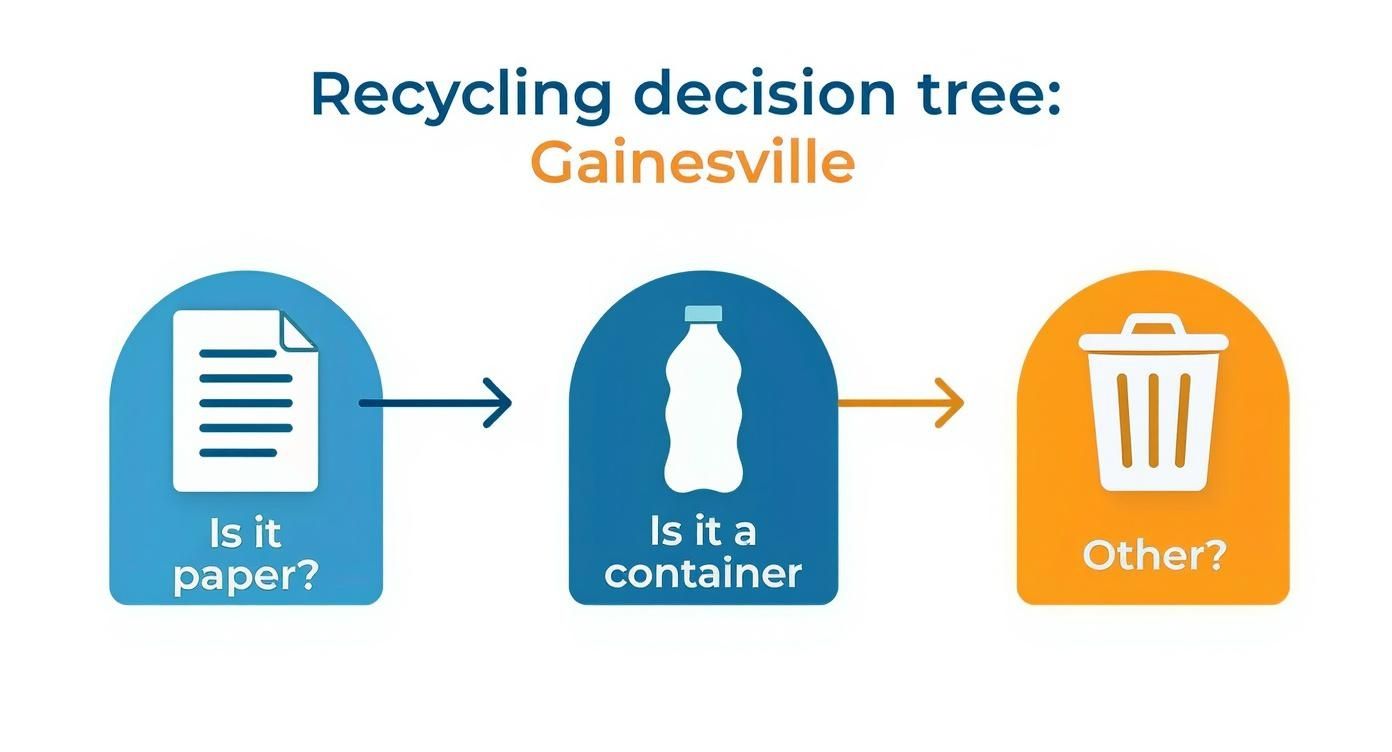
This visual guide really hammers home the simple "paper or container?" rule. Anything else goes in the trash to prevent contamination.
The Blue Bin: Containers Only
Next up is your blue bin, which is the catch-all for your empty and rinsed containers. This is where you’ll put all your plastics, glass, and metals. Unlike the orange bin, these materials can all be mixed together because they’re designed to be sorted by machines at the processing facility.
The single most important habit here is to rinse all containers before you toss them in. Leftover food or sticky liquids can attract pests and create a real mess, lowering the quality of the recyclables. You don't need to scrub them spotless—a quick rinse is all it takes.
Here’s a quick list of what belongs in your blue bin:
- Plastics: Look for the #1 and #2 symbols. This covers things like water bottles, milk jugs, soda bottles, and laundry detergent containers.
- Glass: All colors of glass bottles and jars are good to go.
- Metals: Steel, tin, and aluminum cans—think soup cans, vegetable cans, and soda cans—are perfect for the blue bin.
The secret to great recycling is stopping contamination before it starts. Properly sorting your waste at home is the single biggest thing you can do to help the whole system work. To really dig into this idea, you can learn more about what is waste segregation and its importance in building a truly circular economy.
Common Recycling Mistakes to Avoid
Even when we mean well, mistakes can happen. Contamination is the number one enemy of any recycling program, and it usually happens when we toss the wrong things into our bins. Knowing what to leave out is just as critical as knowing what to put in.
To make sure your efforts count, keep these common contaminants out of your bins for recycling in Gainesville:
- Plastic Bags and Film: These are a nightmare for sorting machinery. They get tangled in the gears and can shut down the whole operation. Take them to retail drop-off locations instead.
- Styrofoam: Polystyrene foam, including cups, egg cartons, and packing peanuts, is a no-go for curbside bins.
- Food-Soiled Items: That greasy pizza box, used paper plates, and containers with a lot of food residue belong in the trash.
- Electronics and Batteries: These are considered hazardous waste. They contain materials that need to be handled separately and never go in your curbside bins.
- Clothing and Textiles: While these items can often be reused or donated, they don’t belong in your recycling bins.
By steering clear of these items, you’re helping ensure that everything collected can actually be processed and turned into something new—which is what this is all about.
The Journey of Your Recyclables After Pickup
Ever wonder what actually happens after the recycling truck rumbles away from your curb? Your carefully sorted materials don’t just magically become new products. It’s the start of a fascinating journey that’s absolutely central to making recycling work here in Gainesville—a path blending logistics, technology, and pure economics.
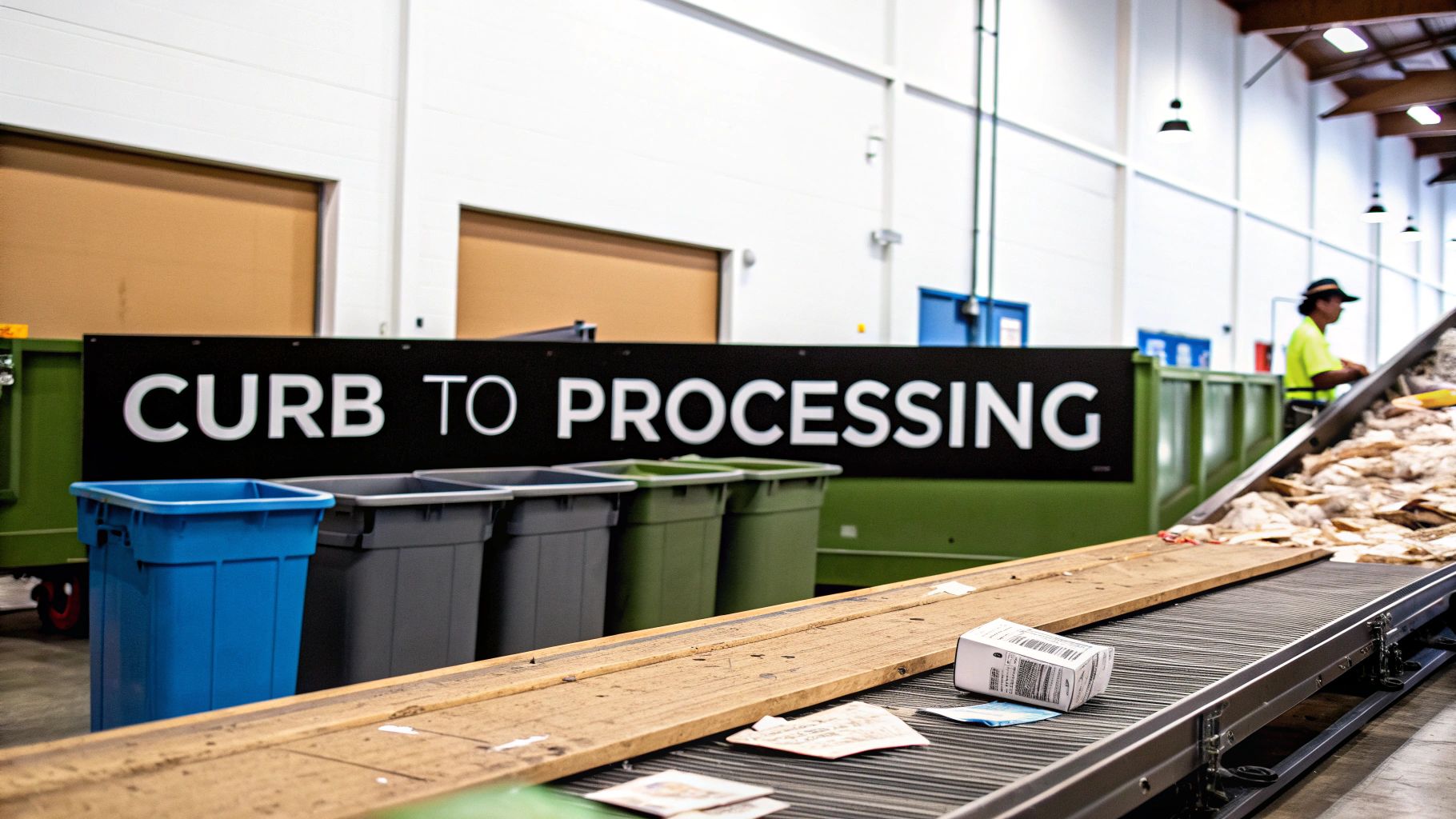
This journey’s first stop is the Leveda Brown Environmental Park and Transfer Station, the heart of Alachua County's entire recycling operation. This is where the contents of your orange and blue bins are unloaded, weighed, and prepped for the next leg of their trip. Think of it as a bustling hub where raw materials from all over the county come together.
Inside the Materials Recovery Facility
The Leveda Brown Environmental Park is home to a Materials Recovery Facility, or MRF (pronounced "murf"). The easiest way to picture a MRF is as a high-tech sorting center. It uses a smart combination of machinery and sharp-eyed workers to separate the mixed jumble from your blue bin—plastics, glass, and metals—into their own distinct categories.
This facility is where Gainesville's dual-stream system really shows its value. Because you’ve already separated your clean paper into the orange bin, the MRF can focus on sorting the containers far more efficiently. That simple step you take at home results in higher-quality materials that are much more valuable on the global market.
The sheer scale of this operation is impressive. Alachua County's recycling efforts are concentrated at this 27.5-acre site near the Gainesville Regional Airport. The MRF here processes about 1,400 tons of recyclables every single month, which adds up to more than 33 million pounds a year. And thanks to the dual-stream system, the program boasts a remarkably low residential contamination rate of just 3%. These impressive recycling efforts have been a key part of the county's success.
The Economics of Recycling
Once everything is sorted, the materials are crushed into huge, dense bales and sold as commodities to manufacturers. This is where the business side of recycling kicks in. The value of recycled paper, plastic, and aluminum can swing wildly based on global supply and demand, international trade rules, and what manufacturers need at any given moment.
When you keep your recyclables clean and properly sorted, you're not just helping the environment—you're contributing to the financial health of Gainesville's recycling program. Higher-quality materials fetch better prices, which helps offset the costs of collection and processing.
This economic reality is exactly why preventing contamination is so critical. A bale of paper soaked with liquids or plastics mixed with the wrong items can be flat-out rejected by buyers. When that happens, it has to be sent to a landfill, turning a potential revenue stream into a costly disposal problem. This is a totally different ballgame from specialized disposal; you can see just how different by checking out the e-waste recycling process, which handles complex electronics.
By following the simple guidelines for your orange and blue bins, you directly support the economic stability of our entire system. Your diligence ensures that recycling in Gainesville remains not just an environmental priority, but a fiscally responsible one, too.
Handling Waste That Cannot Go in Your Curbside Bin
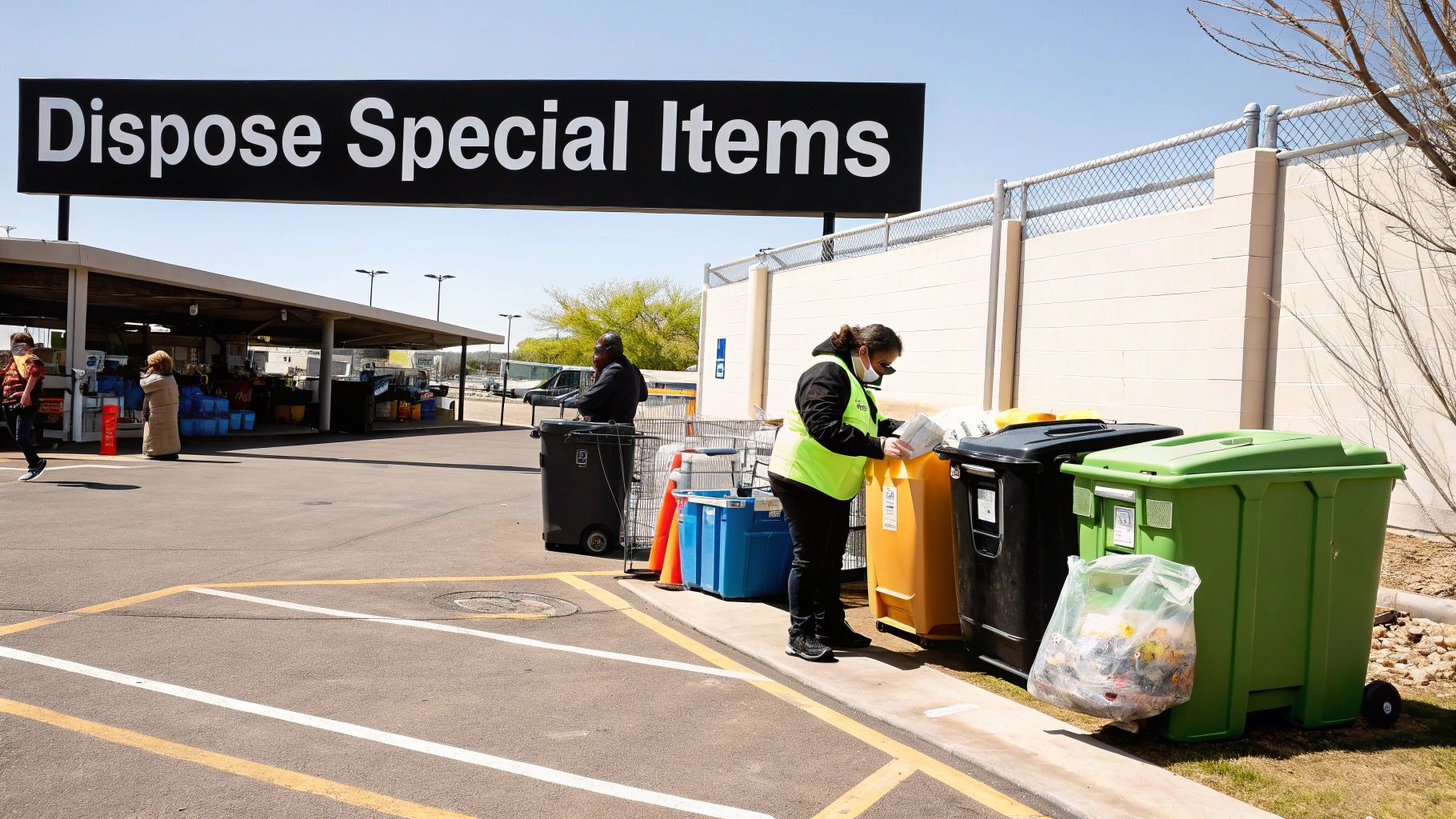
Your orange and blue bins are the workhorses for day-to-day recycling, but what do you do with everything else? We're talking about old TVs, dead batteries, half-empty paint cans, and piles of yard trimmings. These items need special handling for a reason—if they're not disposed of correctly, they can contaminate our local soil and water with hazardous materials or even break expensive collection equipment.
The good news is that Gainesville has a straightforward system for dealing with these non-curbside items. By using the city’s designated collection services and drop-off centers, you can make sure every bit of waste is managed safely and responsibly. It’s a vital piece of the puzzle for a successful city-wide recycling program.
Tackling Household Hazardous Waste
Some of the most dangerous things in our homes can't just be tossed in the trash. Items like chemicals, pesticides, fluorescent bulbs, and batteries contain toxic materials that can cause real environmental damage if they end up in a landfill.
To deal with this, Alachua County runs the Hazardous Waste Collection Center. This is your one-stop shop for safely getting rid of a whole range of tricky materials.
Here are some of the common things they accept:
- Electronics: Old computers, TVs, phones, and printers.
- Batteries: All kinds, from the AAs in your remote to rechargeable packs and car batteries.
- Paints and Solvents: Leftover latex or oil-based paint, thinners, and wood stains.
- Automotive Fluids: Used motor oil, antifreeze, and even old gasoline.
- Household Cleaners: Things like bleach, ammonia, and other corrosive cleaning agents.
Making the trip to the center is one of the most important things you can do for responsible recycling in Gainesville. It keeps nasty stuff out of our ecosystem and even allows valuable materials to be recovered.
E-waste is a big one. Our gadgets contain hazardous materials like lead and mercury, but they also hold precious metals that can be recycled. If you're curious about how these complex items are broken down, you can learn more about what specialized programs accept. This guide on accepted items for e-waste recycling gives a great overview.
Managing Bulky Items and Appliances
So, what about that sagging old couch, the mattress that’s seen better days, or a refrigerator that finally gave out? These "bulky items" are way too big for your regular garbage pickup and need to be collected separately. The City of Gainesville makes this pretty easy, but you do have to schedule it ahead of time.
You’ll need to contact the city's solid waste division to arrange for a bulky item pickup. The service is designed specifically for things that are too large or heavy for the standard trucks to handle.
A few tips to make it go smoothly:
- Schedule Early: Give the city a call well in advance to get on their collection schedule.
- Follow Placement Rules: Don't put items out on the curb until the evening before your scheduled pickup day.
- Prep the Item: Make sure appliances are completely empty. For safety, secure any doors shut or remove them entirely.
By scheduling a proper pickup, you help prevent illegal dumping and ensure these large items are dealt with correctly—often, many of their components can even be recycled.
Yard Waste Collection Guidelines
Lawn clippings, leaves, and branches are another category with their own set of rules. This kind of waste is collected separately because it can be composted or turned into mulch, which puts valuable nutrients back into the soil instead of just filling up our landfill.
To get your yard waste collected without a hitch, just follow these simple guidelines for recycling in Gainesville:
- Bag It or Can It: Put leaves, grass clippings, and small twigs into paper lawn bags or a regular reusable container.
- Bundle It: Tree limbs and branches need to be tied into bundles that are no longer than five feet and weigh no more than 40 pounds.
- Keep It Separate: This is key—never mix yard waste with your regular trash or recyclables.
Following these steps helps the collection crews work safely and efficiently, ensuring all that organic material gets processed the right way. Taking care of hazardous waste, bulky items, and yard trimmings is just as important as sorting your orange and blue bins. It’s how we complete the picture of a truly effective waste management system for our community.
Your Recycling Efforts Create a Greener Gainesville
When you toss a plastic bottle into that blue bin or flatten a cardboard box for the orange one, you’re doing a lot more than just cleaning up the garage. You're actively casting a vote for a healthier, more sustainable Gainesville.
These small, consistent actions are the real engine behind our city's recycling success, creating a powerful ripple effect that benefits both our environment and our local economy.
More Than Just an Alternative to the Landfill
Your commitment directly eases the burden on our planet's finite resources. Every item you recycle means less demand for raw materials like timber, petroleum, and metal ores. This translates to less energy spent on mining, drilling, and manufacturing from scratch—a cornerstone of building a circular economy right here at home.
The impact goes far beyond just keeping trash out of the ground. It’s about a fundamental shift in how we see things, transforming what was once "waste" into a valuable resource. Gainesville’s system is a perfect example of this in action. Our community's collective efforts don't just fill up trucks; they supply the raw ingredients for new products, creating a closed-loop system where very little is truly thrown away.
One of the biggest environmental wins here is the massive reduction in greenhouse gas emissions. It almost always takes less energy to make products from recycled materials than to create them new. Take aluminum cans, for instance. Making a new can from recycled aluminum uses an incredible 95% less energy than making one from raw bauxite ore. That energy saving directly shrinks our community's carbon footprint.
By taking part in Gainesville's recycling program, you become a key player in the city's climate action plan. Each item you recycle is a concrete step toward lightening our collective environmental impact and preserving the natural beauty of our area for the next generation.
This whole process has a tangible effect on our local environment, helping keep our air and water cleaner for everyone.
A Story of Innovation and Community Impact
Alachua County’s dedication to sustainability is always pushing forward, and it’s led to some seriously impressive results. Thanks to the diligent recycling efforts of residents like you, our county consistently ranks among the best performers in Florida.
In fact, our collective work recently pushed Alachua County from sixth to fifth place in the statewide recycling rankings, hitting an amazing overall recycling rate of 67% by 2024. That year alone, residents recycled a whopping 201,872 tons of material.
Even the waste that still goes to the landfill is being seen as an opportunity. A forward-thinking partnership with the New River Regional Landfill involves a project that captures landfill gas from decomposing waste and converts it into pipeline-quality natural gas. It’s a brilliant example of how innovation can find value even in what’s left over. You can learn more about Alachua County's recycling progress and other green initiatives.
Projects like this show how the benefits of smart waste management go far beyond the blue and orange bins. It’s all part of a larger vision where every part of the waste stream is re-examined for its hidden potential.
The Power Is in Your Hands
Ultimately, the success of recycling in Gainesville and Alachua County comes down to you. The city provides the bins and the trucks, but it’s the daily choices made in kitchens, offices, and backyards across our community that make the whole system hum.
Your decision to rinse out a jar, break down a box, or make a special trip to a drop-off center is what fuels this entire process.
Think about the cumulative effect of these small actions:
- Saving Our Forests: Every ton of paper recycled saves about 17 trees.
- Conserving Energy: The energy saved from recycling just one glass bottle can power a light bulb for four hours.
- Cutting Down on Pollution: Recycling helps prevent the release of harmful pollutants tied to mining and manufacturing new materials.
When you multiply these individual impacts by thousands of households, week after week, the sheer scale of the achievement becomes crystal clear. Your effort isn't just a drop in the bucket—it is the bucket, filled by a community working together for a greener future.
Partnering with Businesses for Community Impact
While what we do in our homes is the bedrock of sustainability, the business community’s involvement can take recycling in Gainesville to a whole different level. Local companies are in a unique position to become powerful allies in our city-wide green initiatives, turning their corporate responsibility goals into real, tangible action right here on the ground.
This kind of partnership goes way beyond just sticking a few recycling bins in the breakroom. We're talking about creating structured programs that turn a company's waste stream—especially all that outdated tech—into a genuine force for good. Just imagine a local tech firm organizing a recycling drive where their old office equipment doesn't just dodge the landfill but directly helps support a local cause.
Turning E-Waste into a Community Asset
Let's face it, businesses are constantly upgrading computers, monitors, and servers. This creates a steady flow of electronic waste. But instead of seeing this as a disposal headache, companies can reframe it as a golden opportunity for positive impact. This is where cause-based marketing and corporate social responsibility (CSR) really shine, linking the simple act of recycling to outcomes people actually care about.
A local business could kick off a “Recycle for a Cause” campaign with a message that hits home, like during a seasonal drive for Earth Day or Arbor Day.
Think of a slogan like: “Your old tech can grow a forest.” This is the kind of storytelling that connects an everyday business task—getting rid of old assets—to a powerful and visible community benefit, like planting new trees in a local park under a "Greener Gainesville" initiative.
It’s a true win-win. The company handles its e-waste responsibly and, at the same time, builds a compelling story about its commitment to a greener Gainesville.
Corporate Recycling Drives and ESG Wins
Putting together a corporate electronics recycling drive is a fantastic way for businesses to hit their Environmental, Social, and Governance (ESG) targets. When you partner with a certified e-waste recycler, the whole process becomes surprisingly simple. These programs often include free pickup for a certain number of devices, completely secure data destruction, and detailed reports that show the impact you've made.
These drives offer some key perks for local companies:
- Easy ESG Documentation: After the drive, businesses get formal documents like Plant-A-Tree certificates. These are perfect for plugging right into annual sustainability reports.
- Stronger Brand Reputation: Sharing these efforts on social media and the company website shows a real commitment to the community. That’s a big deal for customers who want to support good corporate citizens.
- Digital Recognition: Companies can earn a digital badge, like a “Recycled with Purpose” seal, to display on their website—clear, visual proof of their environmental stewardship.
For companies looking to get started, exploring professional recycle programs for business can provide the framework and documentation needed to make a measurable difference.
As businesses deepen their community roots and commitment to a 'Greener Gainesville', bringing in initiatives around sustainable practices and using eco-friendly products is a natural next step. These partnerships don't just clear out old equipment; they build a stronger, more sustainable local economy where businesses are seen as key players in the community’s well-being. It transforms a logistical chore into a powerful story of local impact.
Answering Your Top Gainesville Recycling Questions
Even for the most dedicated recycler, some items can leave you scratching your head at the bin. We get it. That’s why we’ve put together answers to the most common questions we hear about recycling in Gainesville. Let's clear up the confusion so you can toss with confidence.
Can I Recycle Greasy Pizza Boxes?
This is the classic recycling question, and the answer is a hard no. While the box is made of perfectly good cardboard, the grease and cheese that soak into the fibers are a huge problem for the recycling process.
Think of it like trying to make fresh paper out of oily rags—it just doesn't work. The grease contaminates the entire batch, meaning that one greasy box can send a whole bale of clean cardboard straight to the landfill.
But there's a simple fix. Just tear off the clean, grease-free top of the box and toss it in your orange bin. The greasy bottom half has to go in the trash.
What Do the Numbers on Plastic Containers Mean?
That little number stamped on the bottom of a plastic container is its resin identification code. It tells you what type of plastic it's made from. While you'll see numbers from 1 to 7, Gainesville's curbside program is set up to handle the two most common and valuable types.
For your blue bin, you're looking for plastics marked with a #1 (PET) or #2 (HDPE).
- #1 PET Plastics: These are your typical clear plastics, like water and soda bottles or peanut butter jars.
- #2 HDPE Plastics: This is the cloudier, more rigid plastic used for milk jugs, laundry detergent bottles, and shampoo containers.
Why not the others? Plastics like #5 (yogurt cups) and #6 (Styrofoam) aren't accepted curbside because there isn’t a consistent, local market to turn them into new products. Always flip it over and check the number before you recycle.
Do I Need to Remove Lids from Bottles and Jars?
Yes, taking a moment to separate lids from their containers makes a big difference. Lids are usually made from a different material than the bottle or jar itself, and mixing materials can jam up the sorting equipment at the Materials Recovery Facility (MRF).
Here’s the quick guide:
- Plastic Bottles: Unscrew the plastic cap and throw it in the trash. The little plastic ring left on the bottle's neck is fine to leave on.
- Glass Jars: Pop off the metal lids and you can recycle them loose in your blue bin along with your other metals.
- Steel Cans: The best way to handle these is to drop the lid inside the empty can and give the top a little pinch to keep it from falling out.
It’s a small step that ensures everything gets sorted correctly and improves the quality of the materials we collect.
Is It Really Necessary to Rinse Containers?
Absolutely. Giving your containers a quick rinse is one of the most critical steps you can take to make recycling in Gainesville successful. Food scraps and leftover liquids are considered contaminants that can ruin entire batches of otherwise good recyclables.
You don't need to scrub them spotless—a quick swish of water is plenty. The goal is just to get rid of any residue that could grow mold, attract pests, or just plain muck up the other clean paper and cardboard in your bin.
Remember, your recyclables might sit around for a few days before they get processed. Rinsing keeps the whole system cleaner, safer for the workers who handle it, and ultimately makes the materials more valuable.
What Should I Do with Shredded Paper?
As satisfying as it is to shred old documents, those tiny strips of paper are a nightmare for recycling machinery. They're too small to be sorted properly, so they fall through the cracks, get mixed in with other materials, and mostly end up as waste.
For this reason, shredded paper is not accepted in Gainesville's curbside bins. If you have sensitive documents, your best bet is to find a local shredding event or use a professional service. You can also add small amounts of shredded paper to a backyard compost pile.
How Do I Handle Plastic Bags and Film?
Plastic bags, grocery sacks, and thin plastic film (like the wrap around a case of water) are the number one enemy of recycling facilities. They’re known as "tanglers" because they wrap themselves around the large rotating gears of the sorting equipment, forcing the entire facility to shut down for hours while workers cut them out by hand.
Never, ever put plastic bags or film in your orange or blue bins. Instead, gather them up and take them back to a retail drop-off point. Most local grocery stores and big-box retailers have collection bins right inside their front doors. Just make sure the bags are clean and dry, and you'll be doing a huge part to keep Gainesville's recycling program running efficiently.
At Atlanta Green Recycling, we believe in “Recycling That Restores Lives and Landscapes.” Our specialized services are designed for corporate IT departments, healthcare facilities, schools, and government agencies, providing secure, compliant, and responsible e-waste disposal solutions. Learn how we can help your organization turn retired IT assets into a positive environmental impact. Visit us at https://www.greenatlanta.com.