
Access Control Atlanta GA Your Guide to Business Security


Choosing the right access control in Atlanta, GA, goes far beyond a simple security purchase. It’s a strategic decision that protects your people, your property, and your most sensitive data. Think of it as the central nervous system for your building's security, specifically designed for our city's unique and fast-paced commercial landscape.
Protecting Your Atlanta Business With Modern Access Control
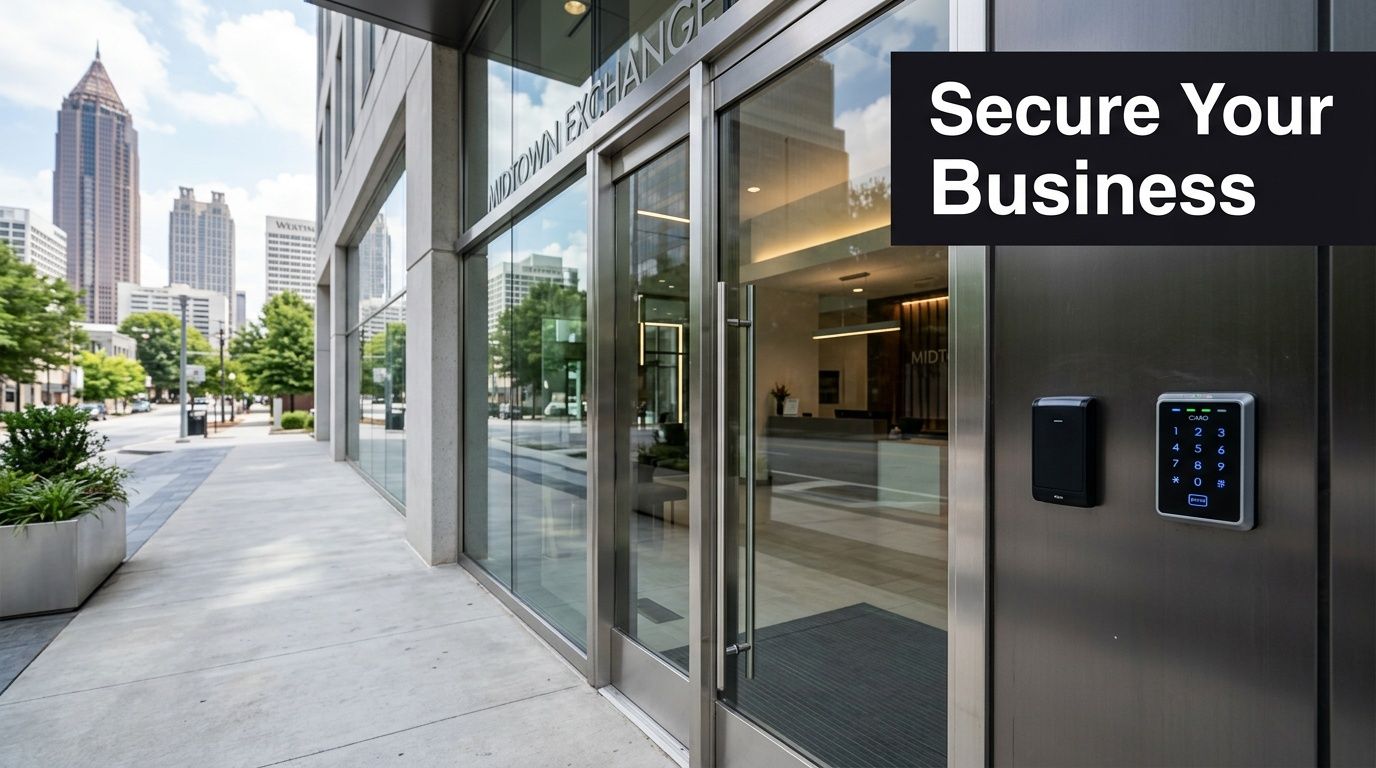
In this guide, we'll get into the specifics of how companies all over the metro area—from tech startups in Midtown to sprawling healthcare campuses in Sandy Springs—are putting advanced systems to work. A modern access control system isn't just about a locked door anymore. It’s a powerful tool that anchors your entire security strategy.
With an integrated solution, your Atlanta organization can unlock some serious benefits:
- Meet Compliance Standards: Systems can be set up to meet tough regulations like HIPAA by controlling who gets into sensitive areas and, just as importantly, logging every entry.
- Streamline Operations: Forget the headaches and security risks of physical keys. You can manage permissions for employees, visitors, and vendors on the fly.
- Generate Invaluable Audits: Every swipe, tap, or scan creates a digital footprint. This gives you a searchable, crystal-clear record for security reviews or even just understanding foot traffic patterns.
Atlanta's Role in the Access Control Market
It's no surprise that Atlanta is a major player in this booming industry. The global physical access control market is set to jump from USD 11.80 billion in 2026 to an incredible USD 21.17 billion by 2033, and North America is leading the charge.
This explosion is being fueled by new tech—think IoT devices, AI analytics, and cloud-based mobile access. While the good old key card still holds its own, we're seeing a huge uptick in biometrics and multi-tech readers across Atlanta's corporate towers, hospitals, and universities.
To begin securing your Atlanta business effectively, it's crucial to first grasp the fundamental principles of access control for business security.
This guide will walk you through the key technologies shaping security today—biometric, cloud-based, and mobile access—and help you figure out which is the right fit for your business here in Atlanta. And when you're upgrading, don't forget about the old gear. Properly disposing of old equipment is just as important, and you can learn more about how secure data destruction services make sure your old hard drives don't become someone else's treasure.
How to Properly Assess Your Facility’s Security Needs
Before you even glance at a piece of hardware or call an access control Atlanta GA installer, you need a plan. Jumping the gun and heading straight into vendor talks is a classic mistake. It often leads to one of two outcomes: overspending on a system loaded with features you'll never use, or worse, pinching pennies and leaving critical vulnerabilities exposed.
The first, most crucial step is to create a detailed requirements document. Think of this as your strategic blueprint—a thorough self-audit that puts you in the driver's seat. With this in hand, you can have meaningful conversations, get accurate quotes, and find the perfect system for your needs.
Identify Your Key Security Zones
Start by taking a walk through your facility, but this time, look at it with a security mindset. Not all doors carry the same weight. The goal here is to map out every single area and classify its security risk.
What, exactly, are you protecting?
- High-Sensitivity Areas: These are your crown jewels, the places where a breach is unacceptable. We're talking about server rooms, executive offices, pharmacy vaults, or rooms holding sensitive client files. Access must be tightly restricted and meticulously logged.
- Medium-Sensitivity Areas: Think about general office spaces, inventory rooms, or employee-only break areas. The goal is to keep the public out while allowing most of your team to move freely during business hours.
- Low-Sensitivity Areas: This covers your main entrances, lobbies, and other public-facing zones. Here, the focus is less on restriction and more on managing the flow of people and having a record of who is coming and going.
A Buckhead law firm, for instance, will have entirely different priorities than a manufacturer. The firm will focus on locking down file rooms and partner offices, while the plant in the Fulton Industrial District is more concerned with the production floor, loading docks, and tool cribs.
Pro Tip: Don't just think about doors. Your plan needs to account for every potential entry point. This includes elevators, parking gates, and even cabinets that house valuable equipment or materials. A good plan is a complete one.
Map Out Who Needs Access and When
Once you know what you're protecting, it’s time to figure out who gets access. This is where you move beyond simple keys and start building a system of roles and permissions. And remember, this isn't just about your full-time staff; it's about every single person who sets foot on your property.
Begin by listing every type of individual and assigning them to a group. Get specific.
Example Access Groups:
- Executives: Unrestricted, 24/7 access.
- General Staff (Day Shift): Access to main entrances and their own department, Monday-Friday, from 8 AM to 6 PM.
- Night Shift Crew: Access only to specific entrances and work areas, Sunday-Thursday, from 10 PM to 7 AM.
- Cleaning Crew: Limited access to general office areas only, strictly after business hours.
- IT Technicians: 24/7 access to server rooms and IT closets, but not to the executive wing.
- Temporary Visitors/Contractors: Time-based access to specific zones only, which automatically expires (e.g., one-day access to the 3rd floor).
This detailed mapping is the very heart of an effective access control strategy. It's what turns a simple lock into a smart system that makes thousands of correct decisions for you daily—letting the right people in at the right times, and keeping everyone else out.
Define Your Operational Requirements
Finally, let's get practical. How does this system need to behave in the real world, day in and day out? This is about more than just unlocking doors.
Ask yourself these key questions:
- Holiday Schedules: How will the system handle building closures for holidays? Can you program these dates in advance so you don't have to worry about it?
- Emergency Procedures: Do you need a "panic button" for an instant, facility-wide lockdown? In case of a fire alarm, should doors automatically unlock to help first responders?
- Visitor Management: How will you manage guests? Do they need temporary key cards, or will a receptionist buzz them in?
- Reporting Needs: What kind of data do you need? Is a simple log of entries enough, or do you need a detailed report of every person who accessed the server room last week?
By thoughtfully working through these three stages—zones, people, and operations—you'll have the essential blueprint for your security needs. This document will be your most valuable asset when you finally start talking to installers here in Atlanta.
Choosing the Right Access Control Technology for Your Business
Picking the right technology is probably the biggest decision you'll make for your access control atlanta ga project. This choice cascades down to everything else—your security level, how easy it is for your team to use, how the system grows with you, and what it all costs in the long run.
For businesses here in Atlanta, the options are plentiful. I've seen companies go with all sorts of setups, so let's break down the main contenders to see what makes the most sense for you.
Before you get lost in the tech specs, it really helps to map out your own needs first. A simple decision tree can bring a lot of clarity to the process.
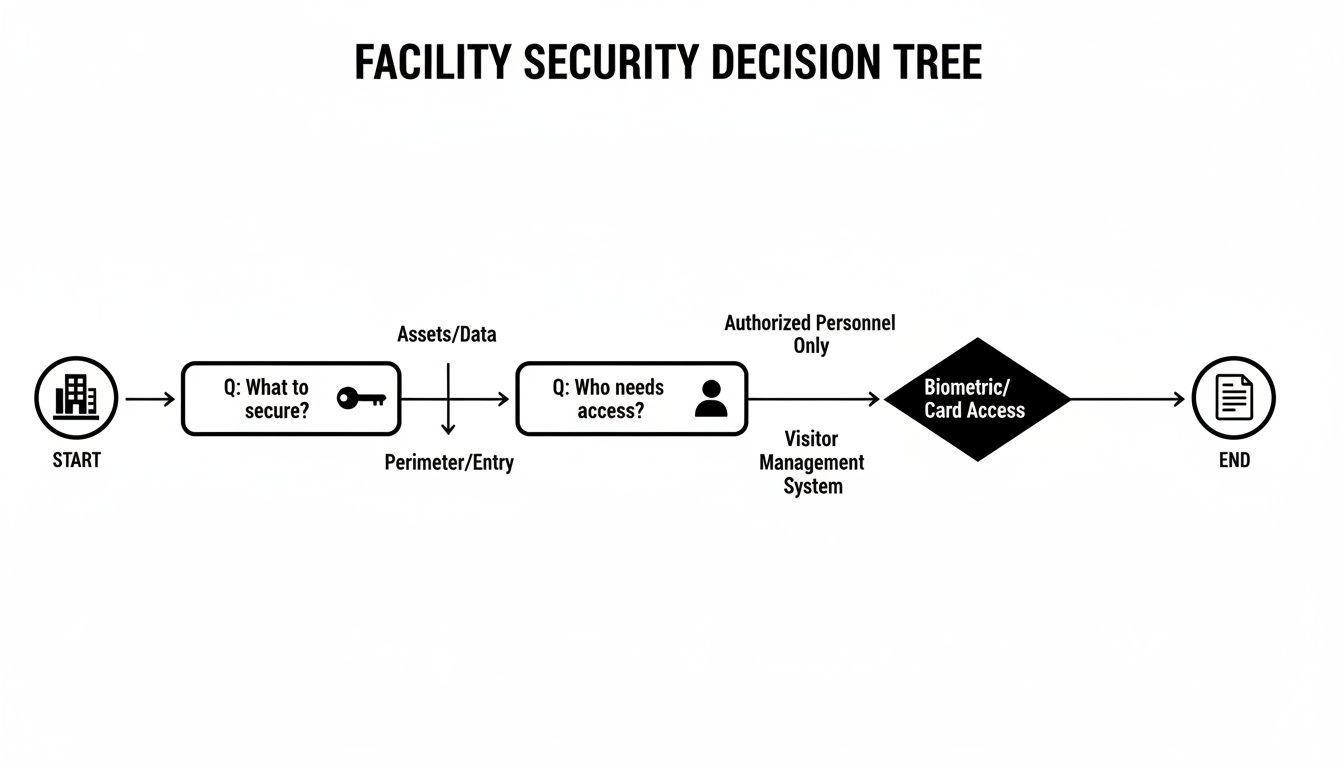
Thinking through who needs access to what is the cornerstone of a solid security plan. Once you have that figured out, choosing the technology becomes much easier.
Keycards and Fobs: The Tried-and-True Standard
Keycards and fobs are the workhorses of access control. They run on RFID technology—a user taps their credential on a reader, and the door either opens or stays locked. Simple.
There's a reason they're everywhere. They are cost-effective, incredibly reliable, and everyone knows how to use them. No training required.
The catch? They secure the credential, not the person. If a card is lost or stolen, you have a security hole until you deactivate it. This makes them great for general office access, but you'll want something more for high-security areas.
Biometrics: Advanced Security with a Personal Touch
Biometric systems verify a person based on who they are, not what they have. This is where you get into some seriously strong security.
The main types you’ll see are:
- Fingerprint Scanners: A very common and relatively affordable entry into biometrics.
- Facial Recognition: Offers a completely touchless and quick experience, perfect for busy entrances.
- Iris Scanners: Provides an extremely high level of security, the kind you’d find in government facilities or high-tech labs.
The beauty of biometrics is that you can't just "borrow" someone's fingerprint. It confirms the actual individual is present. We're seeing huge adoption of this across Atlanta, from corporate HQs in Midtown to research facilities out in Technology Park. If you want to see how this fits into a bigger picture, check out our guide on integrating access control with smart building technology.
Mobile Access: The Future in Your Pocket
Mobile access does exactly what it sounds like: it turns your team's smartphones into their keys. Using Bluetooth or NFC, they can just tap their phone or sometimes just walk up to a door to get in.
This approach is incredibly convenient. It also makes managing credentials a breeze—no more issuing, tracking, or replacing lost plastic cards.
Think about a fast-growing startup at the Atlanta Tech Village. Mobile access is a perfect fit. It scales instantly as they hire, and permissions can be updated on the fly. It’s exactly what a modern workforce expects.
To help you weigh your options, this table breaks down the most common technologies against the factors that matter most.
Comparing Access Control Technologies for Atlanta Businesses
This table compares the most common access control technologies across key decision-making factors to help you select the best fit for your organization's budget, security needs, and operational workflow.
| Technology Type | Typical Cost | Security Level | Best For | Scalability |
|---|---|---|---|---|
| Keycards/Fobs | Low to Moderate | Medium | General office access, high-turnover environments, budget-conscious | Good |
| Biometrics | Moderate to High | High | High-security areas, data centers, labs, verifying individual identity | Excellent |
| Mobile Access | Moderate | High | Modern workplaces, tech companies, managing remote or hybrid teams | Excellent |
| Cloud (ACaaS) | Subscription-based | High | Multi-site businesses, companies planning for growth, remote management | Superior |
Each technology has its place. The key is aligning the tech's strengths with your organization's specific security goals and daily operations.
Cloud-Based ACaaS: Scalability and Flexibility
Access Control as a Service (ACaaS) takes your management software out of a dusty server closet and puts it in the cloud. You can manage everything—users, schedules, door access—from a web browser or an app, no matter where you are.
This model is a game-changer for businesses with more than one location or any company that's planning to grow.
Atlanta's booming data center market is driving massive demand here. The global market is projected to skyrocket from USD 10.34 billion in 2026 to USD 25.04 billion by 2035. While biometrics held the top spot in 2025, multi-factor authentication (MFA) is growing fastest, which is critical for Atlanta's many tech and healthcare firms.
An ACaaS platform allows a business in Alpharetta to grant a contractor temporary access to a satellite office in Peachtree City without anyone having to be physically present. This remote management capability is a huge operational advantage.
As you evaluate your options, don't forget specialized systems like the best visitor management software. These tools often integrate directly with your main access control platform, giving you a single, unified way to handle everyone who walks through your doors.
Finding and Vetting the Best Access Control Installers in Atlanta
You’ve done the hard work of picking the perfect access control system. But here's a hard truth I've seen play out too many times: even the most sophisticated technology is a liability if it’s put in by the wrong hands. The final, and arguably most crucial, piece of the puzzle is finding a skilled, trustworthy installer.
For any Atlanta business serious about security, this means doing your homework. A great installer is more than a technician; they’re a security partner. They’ll help you spot weaknesses in your initial plan, navigate Atlanta's specific building codes, and make sure everything works perfectly from day one. You're looking for a team that gets it right, on schedule, and without surprise costs.
The Bare Minimum: Don't Talk to Anyone Who Can't Check These Boxes
Before you even think about comparing quotes, there are a few absolute non-negotiables. Think of these as the entry ticket to even be considered for your project.
- A Valid Georgia Low Voltage License: This isn't just a suggestion; it's the law. Any company installing low-voltage wiring, which covers virtually all modern access control systems, must hold a proper license in Georgia. Ask for their number and verify it.
- Proper Insurance: Your installer absolutely must have adequate general liability and workers' compensation insurance. This is your shield against liability if an accident or property damage happens during the job.
- Manufacturer Certifications: The best installers invest in their education. Certifications from top-tier brands like HID Global, Brivo, Verkada, or Paxton are proof that they have deep, specific knowledge of the system you’re about to buy.
A reputable installer will be ready and willing to show you their credentials. If a company gets defensive or hesitant when you ask for their license, insurance, or certifications, that’s a massive red flag. Thank them for their time and move on.
The Real Interview: Questions That Separate the Pros from the Amateurs
Once you’ve confirmed a few companies have the basics covered, it's time to dig in. The answers to these questions will tell you everything you need to know about their experience, their process, and how they treat their clients.
- What's your experience with businesses in our industry? An installer whose bread and butter is small retail shops might not be equipped for the compliance maze of a large healthcare facility. Ask for case studies or examples of projects similar to yours in both size and scope.
- Walk me through your system design process. A true partner doesn't just sell you a box of hardware. They should want to walk your facility, pour over your requirements, and propose a solution that’s genuinely tailored to your building's flow and security needs.
- What does a realistic project timeline look like from start to finish? They should be able to outline a clear plan, from pulling wires to the final walkthrough and staff training. This is all about setting clear expectations and preventing frustrating delays.
- Who is my dedicated point of contact? You need to know there's one person you can call who is accountable for your project's success. A dedicated project manager is a sign of a well-run company.
- What are your post-installation support and warranty terms? Get specific. What are their service level agreements (SLAs)? If a critical door reader fails, are they there in 2 hours or 2 days? What are the exact terms for their labor and hardware warranties?
Asking these pointed questions is the best way to avoid major headaches later. In many ways, the due diligence process mirrors what we recommend in our guide on vetting elevator inspection companies in Atlanta; the core principles of verifying expertise and process are universal.
Ultimately, finding the right installer is about finding a long-term partner. You want a local Atlanta expert who communicates clearly, takes the time to understand your business, and has a verifiable track record. Be wary of high-pressure sales tactics or vague quotes—total transparency is the foundation of a successful security project.
Budgeting and a Guide to Atlanta’s Local Rules
A successful access control project hinges on two things: a realistic budget and a solid grasp of Atlanta's local compliance rules. To get an access control atlanta ga system installed, you have to look past the shiny hardware quote and map out the full cost of owning it. At the same time, knowing the local regulations—like Atlanta’s specific permitting requirements—is the only way to sidestep expensive surprises and project-killing delays.
Thinking about the complete financial picture from day one is absolutely essential. So many businesses get tunnel vision, focusing only on the price of the readers and controllers. Then, they’re blindsided by all the other costs needed to actually bring the system online.
Breaking Down the Total Cost of Ownership
To put together a budget that won’t bite you later, you need to account for every single piece of the puzzle. A truly comprehensive plan includes:
- Installation Labor: This is often a huge chunk of your initial expense. It covers running low-voltage wiring, physically mounting all the hardware, and getting the system configured.
- Software and Subscriptions: For cloud-based systems (ACaaS), this is a recurring fee, usually billed per door, per month. If you go with an on-premise system, you might have a one-time software license fee instead.
- Credentials: Don’t forget about the "keys" themselves! This means the cost of keycards, fobs, or even mobile credential licenses, which can add up fast depending on how many people need access.
- Ongoing Maintenance: A service level agreement (SLA) with your installer is your safety net. This contract typically covers routine system check-ups, necessary software updates, and emergency support for when a reader inevitably goes offline at the worst possible time.
For companies aiming to get the most value from their budget, our guide on sustainable procurement best practices has some great strategies you can apply to tech purchases. The idea is to lock down a reliable system without overspending, ensuring you get a strong return on your security investment.
Sample Budget Ranges for Atlanta Businesses
To give you a real-world idea of what to expect, let's look at some typical budget ranges for access control projects right here in the Atlanta market. These are all-in estimates covering hardware, professional installation, and the initial setup.
| Business Size | Typical Door Count | Estimated Budget Range |
|---|---|---|
| Small Business | 2-5 Doors | $5,000 – $15,000 |
| Medium Business | 10-25 Doors | $20,000 – $75,000 |
| Large Business | 50+ Doors | $100,000+ |
Of course, these numbers are just a starting point. Your final cost will definitely move up or down based on the technology you pick—biometric readers, for example, cost more than standard card readers—and how complex the installation itself is.
Navigating Atlanta's Regulatory Landscape
Now for the part that can trip up even the most carefully planned projects: local regulations. In Atlanta, installing an access control system isn't just your business. It often involves oversight from the city and county to guarantee everything is safe and up to code.
The North American access control market, with Atlanta as a major hub, is growing fast. Valued at USD 3.88 billion in 2025, it's projected to hit USD 5.84 billion by 2030, driven by commercial real estate upgrades and tighter security rules. You can find more details about the booming access control market on marketsandmarkets.com.
All this growth brings more official scrutiny. Here’s what you absolutely need to know:
- Permitting for Low-Voltage Work: If your project involves running new low-voltage wires (and most do), your installer will almost certainly need to pull a permit. This is typically handled through the City of Atlanta Office of Buildings or the equivalent office in surrounding counties like DeKalb, Gwinnett, or Cobb.
- Code Compliance: A licensed installer’s job is to make sure the entire system follows local building and fire codes. This is non-negotiable. For instance, there are strict rules for how doors on an emergency exit path must behave during a fire alarm, ensuring they unlock automatically for safe evacuation.
Trying to cut corners on permits or code can lead to failed inspections, expensive rework, and massive project delays. This is exactly why partnering with a licensed, experienced Atlanta-based installer isn't just a good idea—it's essential for a successful and legally compliant installation.
Partnering for Corporate ESG and Community Impact

When you upgrade your access control Atlanta GA system, your decisions can echo far beyond just physical security. A modern installation project almost always leaves a trail of outdated readers, controllers, and wiring. What happens to all that e-waste matters now more than ever, both for the planet and your company's reputation.
Forward-thinking Atlanta businesses are looking for installation partners who do more than simply haul away old equipment. They want partners who can turn that pile of hardware into a force for good. This mindset elevates a standard capital expenditure into a powerful, cause-based story. Taglines like "Recycling That Restores Lives and Landscapes" capture this new approach to corporate responsibility.
Turning E-Waste into an ESG Win
Imagine your retired technology doing more than just staying out of a landfill. Some Atlanta security vendors work with certified recyclers on a dual-impact mission: they convert recycled electronics into funds that directly support veteran aid programs and environmental efforts like reforestation. It’s a powerful model where your old tech can house a veteran and grow a forest.
This approach gives a serious boost to your company’s ESG (Environmental, Social, and Governance) and CSR (Corporate Social Responsibility) targets. When you're vetting an installer, you need to ask some pointed questions about their e-waste process.
- Do they have established partnerships with certified electronics recyclers?
- Can they give you tangible proof of the impact, like detailed reports or tree-planting certificates?
- Do they provide documentation that you can fold into your own corporate sustainability reporting, such as Veteran Support Impact Reports?
This isn’t just about checking a box for responsible disposal; it’s about making your upgrade part of a much bigger, more meaningful story.
By choosing a security partner with a strong, mission-driven recycling program, you position your company as an ESG leader. This simple choice can become an easy and authentic win for your corporate responsibility benchmarks.
From a Security Project to a Community Story
This dual-impact model does more than just meet ESG goals—it builds genuine credibility and a positive local presence. When you align your e-waste disposal with charitable causes like veteran support and reforestation, it resonates with your employees, your customers, and the entire community. It lets you frame your security project not just as a necessary expense, but as a direct investment in a "Greener Atlanta" initiative.
The best partners will equip you with the tools to tell this story. This could be a digital "Recycled with Purpose" badge for your website or a personalized impact certificate showing exactly what your contribution achieved—for example, “You planted 3 trees and helped 1 veteran.” By co-hosting recycling drives with veteran groups or environmental NGOs, and sharing these stories through video and press features, the impact becomes real and visible.
By connecting your access control project to these tangible outcomes, you generate goodwill that extends far beyond the security of your building. If you're interested in how local Atlanta businesses can champion sustainability, you can learn more about Atlanta's green initiatives and corporate responsibility. This approach strengthens your brand and gets your whole organization engaged in a mission that truly matters.
Frequently Asked Questions About Atlanta Access Control
Making the leap to a new access control system is a major move for any Atlanta organization. It’s only natural to have a few questions swirling around. We get it.
Let's walk through some of the most common things we get asked by business owners right here in Atlanta, so you can move forward with confidence.
How Long Does a Typical Access Control Installation Take in Atlanta?
This is the classic 'it depends' question, but I can give you some real-world benchmarks. For a small office setup covering just 2-4 doors, a sharp installation team can often get it all done in a day or two.
But when you're looking at a larger project—think a sprawling school campus or a multi-floor corporate headquarters with 50+ doors—the installation might stretch out over several weeks.
A few things will influence that timeline:
- The Wiring Situation: Is there existing, usable wiring we can tap into, or are we running everything new from scratch? The latter adds time.
- Your Hardware Choices: Standard card readers are a pretty quick install. More advanced tech, like biometric scanners, requires more finesse and time.
- System Handshakes: Do you need the system to talk to your fire alarms or video cameras? Those integrations, while powerful, add steps to the process.
Your installer should always provide a detailed project schedule before you sign on the dotted line. No surprises.
Can I Integrate a New Access Control System With My Existing Cameras?
You absolutely can. In fact, skipping this step is one of the biggest missed opportunities I see. Most modern access control platforms, especially the cloud-based ones, are built to play nicely with major video management systems (VMS).
This creates an incredibly powerful link between an access event (like a card swipe or a "door forced open" alert) and the video footage of that exact moment. When you need to investigate something, you're not scrubbing through hours of video. You just click the event and see what happened.
Before you commit to a system, have a chat with your potential vendor about your current camera setup. They'll be able to confirm compatibility.
Pro Tip: This integration is a total game-changer for security investigations. It turns a frustrating, time-consuming search into a quick, one-click verification.
What Is the Average Cost Per Door for Access Control in the Atlanta Area?
Here in the Atlanta market, you're typically looking at a range of $1,500 to $3,500 per door.
A simple, standalone card reader system will keep you closer to the $1,500 end. As you start adding more sophisticated hardware like biometric readers, high-security electrified locks, or navigating complex wiring paths, that cost will climb toward the $3,500 mark.
That price should bundle in the hardware, software, and professional installation. Our best advice? Always get at least three detailed, itemized quotes from reputable local installers. It's the only way to get a true apples-to-apples comparison and know you’re getting a fair price.
Do I Need a City Permit for My Access Control Installation?
More often than not, yes. If the job involves running new low-voltage wiring—and most installations do—your contractor will almost certainly need to pull a low-voltage permit. Depending on your location, this will be handled through the City of Atlanta or your specific county, like Fulton, DeKalb, or Gwinnett.
This is not something you should have to worry about. Any reputable and licensed Georgia Low Voltage contractor worth their salt will handle all the permitting for you. They know the local codes inside and out, ensuring your system is 100% compliant and saving you from potential fines or having to redo work down the road.
Upgrading your access control often means decommissioning old equipment. Atlanta Green Recycling offers comprehensive e-waste disposal solutions to help you manage this process responsibly. Turn your old tech into a force for good with our "Recycle for a Cause" program: your old hardware can house a veteran and grow a forest. Schedule your e-waste pickup today.