
Electronics Recycling Staples vs Atlanta Green Recycling

A lot of Atlanta IT teams are facing the same uncomfortable moment right now. A lease is ending, a server room is being cleared, a laptop refresh is underway, or a clinic is retiring workstations that still touched regulated data. Procurement wants a simple vendor decision. Compliance wants proof. Sustainability wants a story they can put in a report.
That’s where the phrase electronics recycling staples starts to mean two different things. One meaning is literal: a familiar national retail program with broad public access. The other is strategic: whether a retail recycling model is the right fit when your organization needs pickup logistics, documented destruction, and ESG outcomes that go beyond basic diversion.
For corporate teams, this isn’t a recycling question alone. It’s a chain-of-custody question, a data governance question, and often a brand question too. If you’re in healthcare, higher education, local government, or a data-heavy office environment, the trade-off usually isn’t between recycling and not recycling. It’s between consumer convenience and enterprise control.
Why Choosing the Right Electronics Recycling Partner Matters
An Atlanta office manager can carry a few devices into a store and be done in minutes. A hospital IT director handling retired drives, tablets, and nurse-station hardware can’t treat the same job that way. The assets may look similar. The risk profile doesn’t.
Staples’ own research found that only 4% of U.S. consumers recycle obsolete electronics, and 55% never buy used tech, even though free options exist, which shows how much usable infrastructure still depends on behavior rather than policy-driven workflows (Waste Dive coverage of the Staples research). For corporate teams, that gap matters because retail convenience alone doesn’t solve internal disposal discipline.
A recycling partner affects more than where devices end up. It affects:
- Data exposure: Whether media is self-wiped, professionally sanitized, or physically destroyed.
- Audit readiness: Whether your team receives a certificate, serialized records, or only a basic handoff.
- Operational disruption: Whether staff must sort, transport, and unload assets themselves.
- ESG reporting: Whether the outcome is limited to recycling or can also support broader sustainability and social-impact narratives.
For Atlanta organizations comparing public drop-off and business-grade service, the smarter question is not “Who accepts electronics?” It’s “Who can handle our risk, our timeline, and our reporting burden with the least internal friction?”
That’s why teams planning decommissions often start with a broader review of the benefits of e-waste recycling and then narrow the decision around compliance and logistics, not just convenience.
Practical rule: If employees have to improvise the chain of custody, the recycling program is too light for regulated IT assets.
Program Profiles of Staples and Atlanta Green Recycling
The cleanest way to compare these two options is to separate retail accessibility from enterprise service design. Staples built a nationally scaled consumer program. Atlanta Green Recycling is positioned around local B2B handling, pickup, and compliance-oriented workflows for Atlanta-area organizations.
Key features at a glance
| Feature | Staples Program | Atlanta Green Recycling |
|---|---|---|
| Primary model | Retail drop-off and business mail-back kits | Local B2B electronics recycling and IT asset disposition |
| Geographic footprint | Over 1,500 stores nationwide according to Rubberform’s summary of the Staples program | Atlanta metro service model focused on organizations |
| Consumer access | Broad in-store acceptance for many common electronics | Scheduled business service rather than walk-in retail |
| Business option | Staples Advantage recycling kits with certification-oriented processing | Pickup, de-installation, packing, and bulk removal for organizations |
| Certifications referenced in source material | e-Stewards commitment for collected materials, plus R2 and NAID in B2B workflows | Compliance-minded workflows described by the publisher, including DoD-standard wiping and shredding |
| Typical fit | Households, small offices, ad hoc device drop-off, distributed teams | Offices, hospitals, schools, agencies, and data-center or move-related projects |
| Chain of custody | Stronger in B2B kit workflow than in consumer walk-in handoff | Built around direct business handling and documented service workflows |
| ESG story | Responsible recycling, retail convenience, established national recognition | Recycling plus cause-based messaging tied to veteran aid and tree planting |
What Staples is optimized for
Staples has real strengths. Its biggest advantage is reach. A dispersed workforce or small office with a limited number of devices can often use the program quickly without scheduling a truck, coordinating dock access, or waiting on a pickup route.
Its consumer program also has maturity. Staples launched free in-store electronics recycling in 2012, expanded to more than 1,500 stores, and became the first major U.S. retailer to commit exclusively to e-Stewards certified recyclers for collected electronics, according to the program summary published by Rubberform (program overview). That matters because e-Stewards is framed there as the most rigorous standard for avoiding export, landfill, incineration, prison labor, and unsecured handling.
What the Atlanta model is optimized for
A local B2B recycler is solving a different problem. The value is less about public access and more about control. Corporate teams often need scheduled pickups, loading dock coordination, palletization help, on-site removal, and a single point of contact when dozens or hundreds of assets have to leave a site on a deadline.
That makes the local comparison more operational than brand-driven. A national retail network is useful when your disposal event is small and decentralized. A local business recycler becomes more relevant when the project includes handoff documentation, internal approvals, or physical movement of equipment your staff doesn’t want to manage themselves.
For a fuller local comparison focused on service details, many Atlanta teams start with this reference on electronic recycling at Staples.
Comparing Compliance Data Destruction and Certification
A common failure scenario starts after the hardware leaves the office. Procurement approved the recycler because the environmental credentials looked credible. Six months later, internal audit asks for proof that 180 retired laptops and 43 failed drives were sanitized under a defined standard, with custody records tied to the pickup date. At that point, the difference between a public recycling channel and a business-grade disposition workflow stops being theoretical.
What Staples documents in its B2B workflow
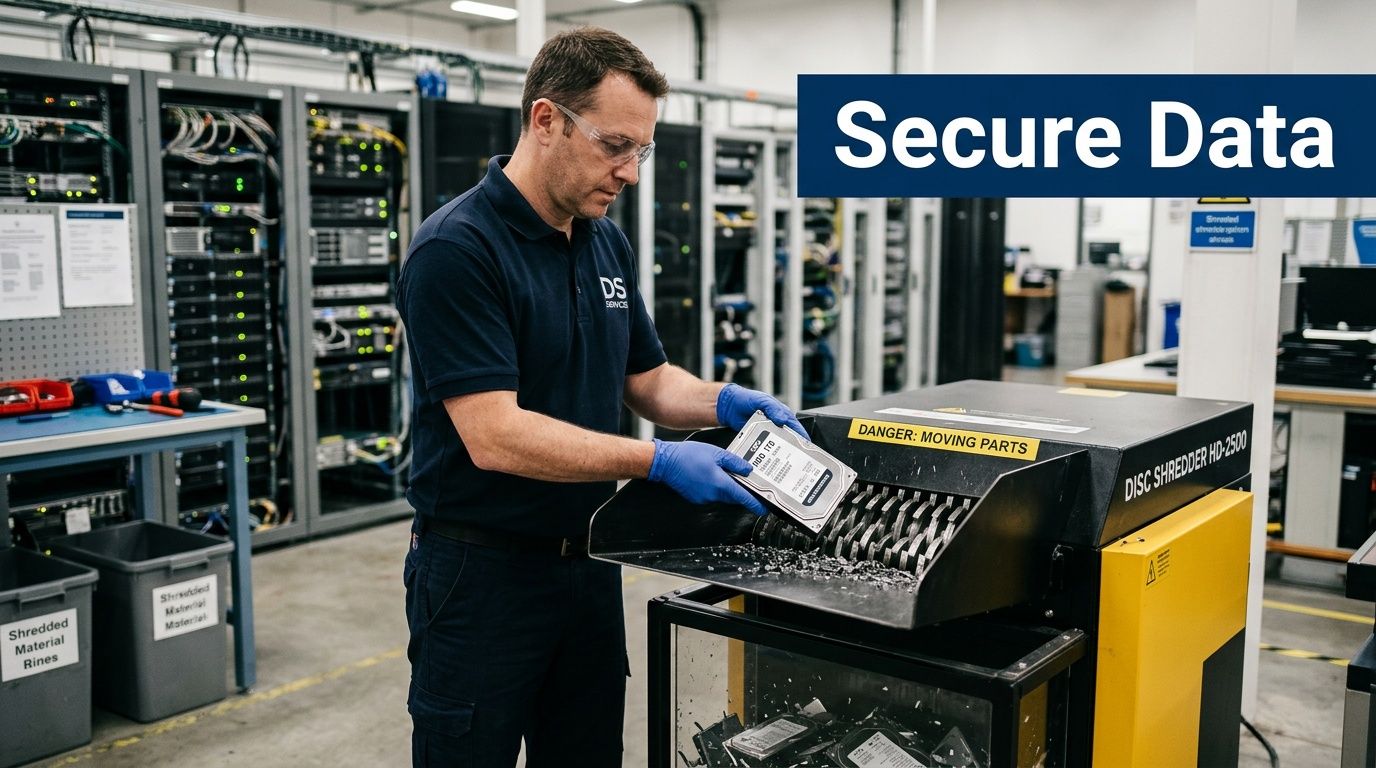
The clearest compliance position in the Staples system sits with Staples Advantage, not with consumer drop-off. According to In Compliance Magazine, the business program follows R2, e-Stewards, and NAID standards and offers DoD-comparable overwriting and physical shredding with audit-ready certificates (In Compliance Magazine summary).
For a corporate IT team, that changes the procurement case in three specific ways.
Documentation quality
Consumer recycling can confirm handoff. A B2B process is expected to document what happened after handoff, including how assets were sanitized and how that outcome was recorded.Media-specific controls
Business workflows can apply different methods based on the asset. A working laptop drive may be overwritten. A failed SSD or damaged hard drive may need physical destruction instead.Audit defensibility
Security, privacy, and legal reviewers usually need more than a receipt. They need evidence that the selected process matched internal policy and a recognized benchmark.
Where consumer programs create compliance gaps
Consumer-oriented recycling often assumes the device owner will erase data before drop-off. That assumption breaks down in enterprise retirement cycles, especially when assets are encrypted, inoperable, password-locked, or removed from service after a failure event.
EPA guidance on electronics recycling warns that donated or recycled devices can still retain sensitive information if they are not properly sanitized (EPA electronics donation and recycling page). For regulated organizations, that shifts the question from environmental responsibility to evidence. The relevant issue is not whether the recycler intends to handle material properly. The issue is whether your organization can prove the sanitization method, custody chain, and destruction outcome.
That distinction also matters for ESG reporting. A recycler can support landfill diversion goals and still leave a gap in data-governance controls. For teams using sustainability claims in customer marketing or board reporting, the stronger story combines both outcomes: verified material recovery and verified data destruction.
An electronics recycling program can support ESG goals and still fail a privacy or records-management review if the documentation trail is thin.
What corporate teams should ask before approving a recycler
A vendor does not need to mirror your internal policy language. It does need to answer your control questions clearly and in writing.
- Sanitization method: Is the process overwrite, degauss, shred, or a device-by-device mix?
- Failed media handling: What is the documented path for drives that cannot be powered on or read?
- Certificates: Do you receive a site-level certificate, serialized reporting, or both?
- Custody transfer: Who records possession at pickup, transit, intake, and destruction?
- Exceptions handling: How are damaged, encrypted, or unidentified devices logged and resolved?
How to read standards without turning procurement into a research project
The standards conversation gets easier when each label is translated into an operational signal.
| Standard or benchmark | What it signals to an IT team |
|---|---|
| e-Stewards | Tight environmental controls and accountability for downstream vendors |
| R2 | Defined process controls for electronics reuse and recycling |
| NAID | Audited discipline around data destruction procedures |
| DoD-comparable wiping | Familiar procurement language for secure overwrite expectations |
| NIST-aligned handling | A current framework for media sanitization policy and verification |
The practical conclusion is straightforward. If the assets contain protected data, choose the disposition path that produces the strongest record set, not just the easiest drop-off path. For organizations that need direct destruction evidence, requesting a certificate of destruction for IT asset disposition records becomes part of procurement, not an afterthought after pickup.
Comparing Pickup Logistics and Asset Acceptance
A common failure point looks like this. An IT team schedules a weekend office clear-out, only to find on Friday that part of the retired inventory exceeds store acceptance limits, several units need dock access, and no one has assigned staff time to transport seven-item loads across multiple trips. The recycling decision was made correctly on paper, but the logistics model did not match the asset mix.
Staples fits a retail collection workflow. Its program accepts many standard office devices, including computers, laptops, tablets, monitors, printers, scanners, keyboards, cables, smartphones, digital cameras, and batteries, with a limit of up to seven items per visit according to the Staples program overview summarized by Rubberform, which also notes the company’s broad store footprint and rewards structure for some items (Staples program details). For a branch office disposing of a few endpoints, that can be efficient enough.
For corporate teams, the operational question is labor transfer. A drop-off model keeps sorting, packing, vehicle loading, and store transport inside your internal cost base. A scheduled pickup model shifts more of that work to the recycler and usually reduces project friction when the inventory includes palletized material, rack hardware, or mixed peripheral loads. That trade-off matters more than many procurement comparisons acknowledge because internal labor hours often exceed the visible recycling fee.
Asset acceptance rules also change project risk. As noted earlier, Staples’ process includes manual disassembly by category and reports 95% material recovery by weight for accepted electronics, while excluding some items such as large appliances and cracked CRTs. That recovery benchmark is useful for ESG reporting. The exclusion list is just as important for project planning. If a site has damaged displays, oversized gear, or older equipment in poor condition, a retail path can create rework at the worst point in the chain, after devices have already left controlled storage.
Atlanta projects add another layer. Building access, freight elevator windows, chain-of-custody signoff, and after-hours removal are local operating constraints, not abstract service features. A healthcare office, campus department, or downtown corporate suite may need a recycler that can collect from a loading area, document the handoff, and remove bulk inventory on a fixed schedule. Teams evaluating dock-side removal can review loading dock electronics pickup support to see the level of coordination a pickup-based program may need.
A simple scenario helps separate the options. If the office has ten boxed laptops and no timing pressure, retail drop-off may be acceptable. If the project includes pallets of mixed devices, move-out deadlines, or equipment that may be refused at intake, scheduled pickup is usually the lower-risk option even before compliance documentation is considered.
The less obvious point is brand impact. Retail drop-off can still support responsible recycling, but pickup programs often give companies cleaner inputs for ESG reporting and cause-based communications because they document volume, collection conditions, and diversion activity in a way that is easier to attribute to a business unit or site. For teams that want recycling to support both compliance and sustainability claims, logistics is part of the reporting strategy, not just the transportation plan.
Evaluating Costs Scalability and ESG Impact
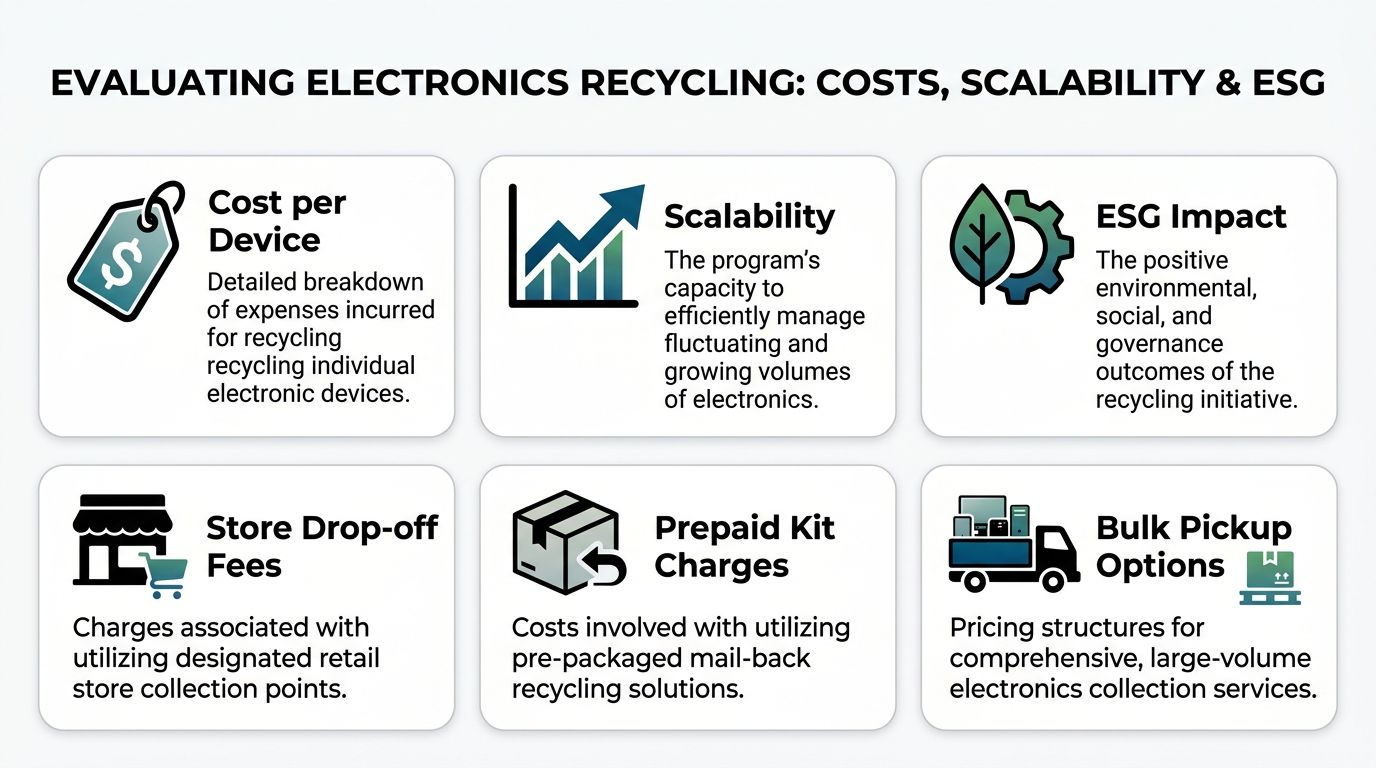
Cost comparisons in electronics recycling usually start too narrowly. Teams compare a store fee with a pickup quote and stop there. That misses the core budget issue, which is total handling cost plus the value of documentation and ESG utility.
Direct charges are only one layer
Staples’ consumer-facing structure can be economical for small jobs, but there are still rules and charges to evaluate. Source material describing the program notes a $10 per item fee for large items at drop-off points and also describes the B2B route as prepaid recycling kits rather than open-ended local pickup service (Pegasuss Online guide). For a handful of assets, that may be fine. For larger projects, labor and transport start to dominate the economics.
A corporate team should price four cost buckets, not one:
| Cost area | Questions to ask |
|---|---|
| Internal labor | Who’s boxing, carrying, inventorying, and driving assets? |
| Service model | Is the quote based on per-item handling, kits, or pickup scope? |
| Compliance admin | Do certificates and reporting come standard or as an extra step? |
| Project friction | Will the method slow a move, refresh, or closeout deadline? |
Scalability is a workflow issue
Scalability isn’t only about volume. It’s about whether the model still works when a project becomes messy.
A store-based path scales awkwardly when devices are spread across floors, buildings, or departments. A pickup-and-deinstallation model scales better when the recycling event is part of a broader IT project, because the handoff stays inside one managed chain.
That’s also why many enterprise teams separate retail disposal from IT asset disposition. The first solves a recycling need. The second solves a project management need.
ESG value can change the buying decision
The local Atlanta angle adds more interest than a basic “Staples vs recycler” comparison. Many procurement teams now need a recycling partner that supports both waste diversion and a wider CSR narrative.
A cause-based campaign can do that if its documentation is honest. The publisher’s brief proposes a “Recycle for a Cause” concept built around veteran aid and tree planting, plus website impact counters, seasonal drives, partner badges, and CSR-facing reporting. Used carefully, that framework gives companies an easier internal story to tell: old tech doesn’t just leave the building responsibly. It supports a visible social mission.
The key is discipline. If an organization promotes impact, it should publish evidence for whatever it claims. If there’s an impact counter, it should be maintained. If there’s an eco-badge or partner certificate, it should reflect an actual recycling event and a real reporting package.
A better way to compare value
When executives review recycling vendors, frame the decision like this:
- Retail value: Good for convenience, familiar branding, broad public access.
- Project value: Better when you need pickup, timing control, and less staff involvement.
- Compliance value: Highest when the vendor can produce destruction evidence and clear custody documentation.
- Brand value: Strongest when the recycler’s outputs can support ESG, community engagement, or seasonal campaigns such as Veterans Day, Earth Day, or Arbor Day.
That final category is often overlooked. Yet for many organizations, the easiest way to win approval for a recycling initiative is to connect disposal with a broader community outcome and give communications teams something more meaningful than “we recycled some devices.”
Selecting the Right Program for Specific Use Cases
The right answer depends on the project. A single rule won’t help much, so it’s better to match the recycling model to the operating environment.
Hospital or healthcare clinic refresh
If devices touched patient data, choose the route with the strongest destruction records and the least employee handling. Healthcare teams usually need more than a recycling receipt. They need a process that aligns with privacy controls, failed-drive handling, and documented transfer.
Use a consumer-facing option only for low-risk peripherals that carry no data and don’t require custody documentation.
Data center or server room retirement
This is usually a pickup project. Servers, storage hardware, failed media, network gear, and rack removals create too many handoff points for ad hoc store disposal to be efficient.
For these jobs, prioritize:
- Serialized tracking
- Physical media destruction options
- De-installation support
- Coordinated pickup windows
University or K-12 technology refresh
Education environments often sit in the middle. They may have large device counts but mixed sensitivity. Chromebooks, classroom peripherals, monitors, and lab equipment create a volume problem before they create a technical one.
A blended approach can work. Small, low-risk assets may fit a retail or kit-based route. Bulk collections across campuses usually benefit from scheduled removal and centralized documentation.
If the project spans multiple buildings, convenience shifts from “nearest store” to “fewest internal touchpoints.”
Municipal or community collection event
Public-facing drives have a different objective. Accessibility and recognition matter. A retail brand can help with familiarity. A local recycler can help with staffing, pickup, and event-specific coordination.
This is also the scenario where cause-based messaging has real upside. A campaign framed around veteran support, tree planting, or a “Greener Atlanta” community initiative can increase participation while giving local partners a stronger reason to promote the event.
Standard office cleanout or relocation
The decision often comes down to time. If a branch office has a modest number of accepted items and a staff member can transport them without policy concerns, a retail option may be enough. If the move includes multiple departments, hard drives, or furniture-adjacent cleanout pressure, a managed local pickup is usually easier to defend internally.
One local B2B option in this category is Atlanta Green Recycling, which the publisher describes as providing pickup, de-installation, DoD-standard wiping, shredding, and documentation for organizations across the metro area. That makes it a different tool than a walk-in retail program, not a substitute for every retail use case.
Corporate IT Decision Checklist
Bring this checklist into procurement or facilities planning meetings. It keeps the decision tied to controls instead of habits.
Security and compliance
- Data-bearing devices present: If yes, require written sanitization and destruction language.
- Failed or unreadable media in scope: Confirm whether physical shredding is available.
- Audit exposure: Ask what documentation your privacy, legal, or compliance team will receive.
- Custody controls: Identify every handoff from office floor to final processing.
Volume and labor
- Limited quantity and staff can transport safely: A retail model may work.
- Bulk volume, pallets, or multi-room removal: Pickup service is usually more efficient.
- Tight move or closure window: Favor the option with scheduled logistics and fewer internal touches.
Acceptance and handling
- Mixed asset condition: Check exclusions before collection day.
- Legacy equipment: Verify handling for older monitors and damaged items.
- Packing burden: Decide whether your staff or the recycler handles boxing and loading.
Reporting and stakeholder value
- Need for sustainability reporting: Ask what environmental documentation is available.
- Need for social-impact narrative: Build recycling into CSR messaging if your organization supports cause-based campaigns.
- Need for reusable procurement language: Save certificates, scope details, and standards references for future RFPs.
Good questions to ask on the first call
- What’s your process for data-bearing assets that won’t power on?
- What proof of destruction or recycling do we receive?
- Who takes custody on site?
- What items do you refuse?
- Can you support a timed pickup tied to a move, audit, or refresh?
Teams comparing providers in the ITAD category often review local benchmarks such as Atlanta IT asset disposition companies to separate simple recycling from a controlled end-of-life process.
Recommendations and Next Steps for Corporate Teams
A common failure point looks like this: IT clears out a storage room to free space before a move, chooses the most familiar recycling option, and only later learns that legal needed stricter custody records, sustainability wanted reporting detail, and procurement needed documentation standards on file. The recycler was not necessarily wrong. The internal sequencing was.
The practical recommendation is to choose a provider by project type, then route approval through the right stakeholders in the right order. Staples fits limited, employee-delivered loads where accepted items are clear, chain-of-custody risk is low, and the organization does not need much project management. A managed B2B recycler fits higher-volume removals, data-bearing assets, site closures, and refresh cycles where pickup control, documentation, and audit support matter more than public convenience.
As the EPA data cited earlier shows, sanitization has to come before any disposal choice. After that, the decision usually turns on labor, custody, reporting depth, and whether the recycler can support both compliance needs and ESG reporting without creating extra work for IT.
For corporate teams, the next steps are straightforward:
- Inventory the asset mix and separate data-bearing from non-data-bearing equipment.
- Choose the service path based on custody and labor requirements, not just public familiarity.
- Request documentation samples before approving a vendor.
- Coordinate with sustainability and communications teams if the project could support a CSR campaign.
- Use seasonal timing when it helps internal visibility, especially around Earth Day, Arbor Day, or Veterans Day.
One step often determines whether the project stalls or gets approved. Start with IT to define asset scope and handling requirements. Bring in Legal or Compliance next to confirm retention, data destruction, and custody expectations. Then involve Sustainability to map reporting outputs to ESG goals, and Procurement last to finalize vendor terms against an already-defined operating requirement. That sequence reduces rework because it prevents a low-cost disposal option from being selected before risk and reporting standards are set.
If your organization needs a local B2B workflow for secure electronics disposal, Atlanta Green Recycling offers Atlanta-area pickup, IT asset disposition support, data destruction services, and documentation-oriented handling for offices, healthcare groups, schools, agencies, and data center projects.