
Where to Recycle Electronics in Atlanta: 7 Vetted Options for 2025


For businesses, schools, and healthcare facilities in Atlanta, disposing of outdated electronics isn't just about clearing space. It's a critical task involving data security, environmental compliance, and corporate social responsibility (CSR). Knowing where to recycle electronics responsibly can be a challenge, as standard recycling bins aren't equipped for the sensitive data on hard drives or the hazardous materials inside servers and medical devices. The right partner prevents e-waste from entering landfills and protects your organization from data breaches and regulatory fines, all while potentially boosting your ESG profile.
This guide cuts through the noise. We provide a roundup of Atlanta's top-tier electronics recycling solutions tailored for organizational needs, from certified recyclers like Atlanta Green Recycling to convenient national programs at Best Buy and Staples. For those dealing specifically with smaller devices, understanding the nuances is key; for a detailed overview on finding appropriate channels for mobile phone disposal, consult this comprehensive guide to mobile phone recycling in Australia.
Our goal is to help you make an informed choice that aligns with your operational and ethical goals. We’ll explore mission-driven partners who turn e-waste into social good and directories like Earth911 that help you find certified local facilities. Each entry includes practical details and direct links to simplify your decision-making process, ensuring your end-of-life tech finds its proper home. This isn’t just about disposal, it's about a secure and sustainable technology lifecycle.
1. Atlanta Green Recycling: A Mission-Driven Partner for Corporate & Institutional E-Waste
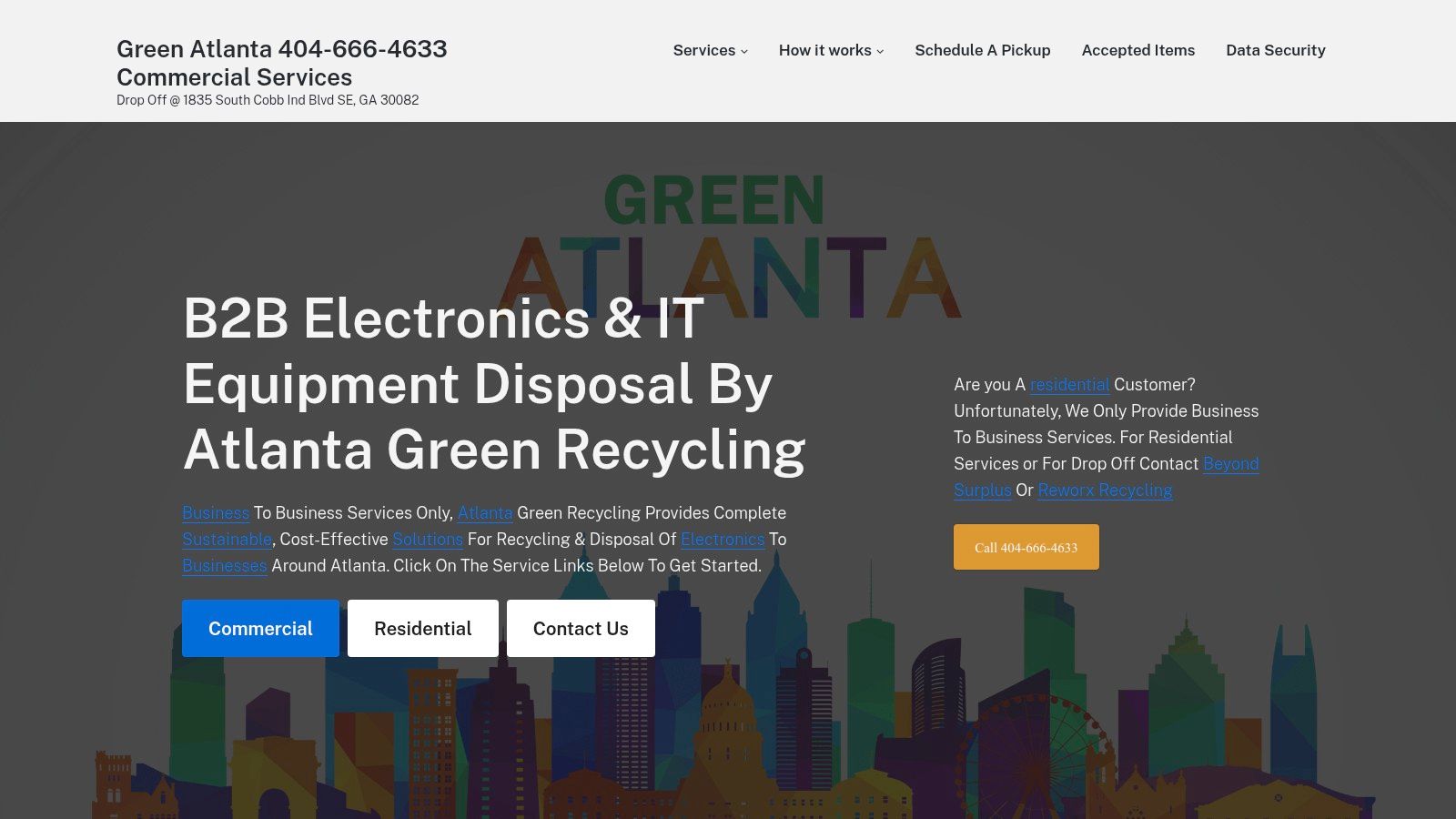
For Atlanta-based organizations seeking a comprehensive solution for their electronic waste, Atlanta Green Recycling stands out as a premier, full-service partner. This platform is meticulously designed not just for disposal but for strategic IT asset disposition, blending enterprise-grade security with a powerful social and environmental mission. It offers a turnkey service that addresses the complex needs of businesses, healthcare providers, educational institutions, and government agencies, making it a definitive answer to the question of where to recycle electronics responsibly in the metro area. It's an ideal choice for businesses searching for "corporate sustainability electronics disposal" or "electronics recycling for veterans" in Atlanta.
What sets Atlanta Green Recycling apart is its dual-impact model, which transforms a standard operational task into a tangible ESG (Environmental, Social, and Governance) victory. Every recycling project contributes directly to veteran aid programs and reforestation efforts, allowing companies to enhance their sustainability reports with verifiable social good. This unique approach is encapsulated in their tagline, "Recycling That Restores Lives and Landscapes."
Key Features and Use Cases
Atlanta Green Recycling’s services are built to handle the logistical and compliance burdens of modern organizations. From initial contact to final reporting, the process is streamlined for efficiency and peace of mind.
- Secure Data Destruction: At the core of their offering is a commitment to data security. They provide free DoD-standard hard-drive wiping for all collected assets and guarantee physical shredding for non-functional media. This is essential for organizations managing sensitive data, particularly those in healthcare who must adhere to HIPAA regulations.
- Turnkey Logistics & Corporate Drives: The company manages the entire asset removal process. This includes onsite de-installation, professional packing, and transportation. They offer free pickup for businesses with 50+ devices, making company-wide “Recycle for a Cause” drives an easy ESG win.
- Compliance-Ready Documentation: Every step is documented to support rigorous audits. Clients receive detailed chain-of-custody and disposition paperwork, ensuring a transparent and defensible recycling process that meets corporate and governmental standards.
- Impact-Based CSR Partnerships: Partners receive personalized impact certificates ("You planted 3 trees and helped 1 veteran") and a digital “Recycled with Purpose” badge for their websites, making it easy to showcase their commitment. As one system administrator, Mary Sequoia, noted, “If HIPAA compliance is a requirement like us call GAR.” This demonstrates their ability to satisfy both security and mission-based objectives.
Practical Tips for Getting Started
To maximize the benefits of partnering with Atlanta Green Recycling, consider these steps:
- Schedule a Consultation: Use their website, greenatlanta.com, or call directly to discuss your specific needs. Since pricing is project-based, a direct quote is necessary. Their website also features impact counters showing real-time contributions to veteran support and tree planting.
- Organize a Corporate Recycling Drive: For an easy ESG win, organize a company-wide collection event. With a minimum of 50 devices, you can secure free pickup and receive a comprehensive Veteran Support Impact Report for your CSR documentation.
- Inquire About Decommissioning: If planning a major IT overhaul or data center shutdown, engage them early. Their team can help create a structured plan for asset de-installation and removal, minimizing disruption to your operations.
Pros and Cons
| Strengths | Limitations |
|---|---|
| Enterprise-Grade Data Security: DoD-standard wiping and physical shredding provide maximum protection for sensitive information. | Business-Only Service: Not available for direct residential pickups; individuals must use partner drop-off sites. |
| Full-Service Logistics: Onsite de-installation, packing, and fleet-based pickup simplify bulk removals. | No Published Pricing: Quotes are customized and require direct contact, which can slow initial planning. |
| Robust Compliance Support: Audit-ready documentation is ideal for regulated industries like healthcare and government. | |
| ESG & CSR Differentiation: The dual-impact model (veteran aid + tree planting) offers a compelling narrative for sustainability reporting. To understand more, explore the environmental impact of electronic waste and how responsible recycling mitigates it. |
Ultimately, Atlanta Green Recycling delivers more than just e-waste disposal; it provides a strategic partnership that aligns operational needs with corporate values, security mandates, and sustainability goals.
2. Best Buy — Electronics & Appliances Recycling
For organizations seeking a reliable and widely accessible recycling solution, Best Buy’s national program offers a compelling mix of convenience and structured processes. While often seen as a consumer-facing service, its ubiquitous retail presence and diverse collection methods make it a practical option for small-to-medium-sized equipment disposals, especially for businesses with multiple satellite offices in the Atlanta area.
Best Buy’s program is built on accessibility. It provides a straightforward answer for where to recycle electronics without needing to schedule a specialized pickup for smaller batches of equipment.
Key Features and How to Use Them
The program’s strength lies in its multiple recycling pathways, allowing organizations to choose the method that best fits their immediate needs.
- In-Store Drop-Off: This is the most direct option. Businesses and schools can bring up to three items per household per day to any Atlanta-area Best Buy. This method is ideal for retiring small office electronics like keyboards, mice, cables, and laptops.
- Haul-Away Service: When purchasing new appliances or larger electronics like office televisions, Best Buy can haul away the old unit for a fee. This streamlines the replacement and disposal process into a single transaction.
- Recycle-by-Mail Boxes: For smaller, high-value, or sensitive items, you can purchase a prepaid shipping box. This is an excellent solution for collecting old company mobile phones or tablets from remote employees, ensuring they are centrally and responsibly managed.
Expert Tip: Before dropping off any computers or devices with storage, it is critical to ensure all sensitive corporate, student, or patient data is securely wiped. For guidance on this crucial step, you can learn more about how to properly erase a hard drive.
Program Suitability and Limitations
Best Buy’s platform excels for routine, low-volume recycling needs. The transparent and detailed lists on their website clearly outline what they accept and any associated fees or state-specific rules. This clarity helps office managers and IT staff plan disposals without unexpected hurdles.
However, the program has limitations for large-scale enterprise needs. The daily item limits and fees for certain items (like monitors and TVs) can make it less cost-effective for bulk decommissioning projects. It also does not provide the data destruction certificates or detailed asset tracking that dedicated ITAD vendors offer, which is a critical requirement for many healthcare and government agencies.
| Feature | Best For | Limitations |
|---|---|---|
| Store Drop-Off | Small offices, schools with few items | 3 item/day limit; not for bulk |
| Haul-Away | Appliance & TV upgrades | Only available with new purchase |
| Mail-In Boxes | Remote teams, small valuable tech | Cost per box can add up |
Pros:
- Extremely convenient with numerous locations across metro Atlanta.
- Multiple service options (in-store, mail-in, haul-away) provide flexibility.
- Clear guidelines on accepted items and fees are available online.
Cons:
- Not designed for large-scale corporate or institutional recycling.
- Fees apply to TVs, monitors, and some appliances.
- Lacks formal data destruction certification and asset reporting.
Website: https://www.bestbuy.com/site/services/recycling
3. Staples — Free Tech Recycling in Stores + Mail-Back Kits
For businesses and educational institutions looking for a zero-cost, accessible option for routine office tech disposal, Staples provides one of the most straightforward programs available. Its nationwide network of retail stores offers a convenient drop-off point for common electronics, making it an excellent resource for decluttering IT closets and managing the lifecycle of everyday office equipment in the Atlanta area.
This program is designed for simplicity and convenience, providing a clear answer to where to recycle electronics like printers, computers, and peripherals without the complexities of scheduling or minimum volume requirements. By partnering with organizations like ERI, Staples ensures that these disposals are managed responsibly, turning potential e-waste into a resource.
Key Features and How to Use Them
Staples’ recycling services are multifaceted, offering value beyond just free drop-offs and catering to different organizational needs from rewards to certified mail-in options.
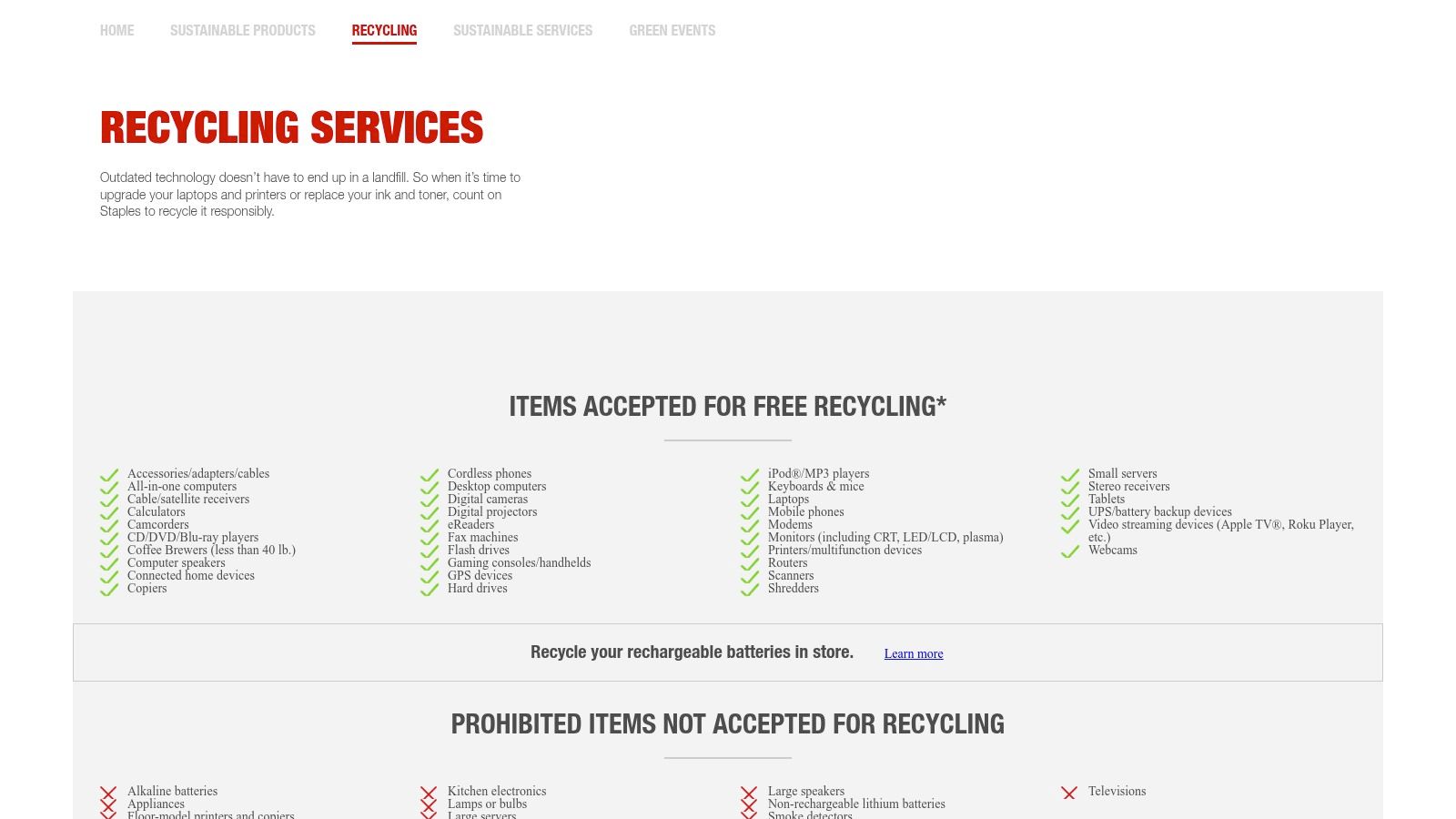
- Free In-Store Recycling: This is the core of their offering. Atlanta-based organizations can bring up to seven items per customer per day to any store. This service is ideal for recycling desktops, laptops, printers, monitors, and other common IT peripherals.
- Ink & Toner Recycling Rewards: For businesses that regularly purchase ink and toner, Staples offers store credit for returning used cartridges. This incentivizes consistent recycling and reduces operational costs.
- Rechargeable Battery Collection: Through a partnership with Call2Recycle, stores serve as free drop-off locations for rechargeable batteries from laptops, power tools, and cell phones, simplifying another common disposal challenge.
- Mail-in Electronics Recycling Kits: For organizations without easy access to a store or those requiring certified data destruction, Staples offers prepaid recycling boxes. Partnering with ERI, these kits provide a documented and secure way to handle sensitive devices.
Expert Tip: To maximize efficiency, bundle different types of recyclables for a single trip. You can drop off old keyboards, a printer, used ink cartridges, and old laptop batteries all at once, streamlining your sustainability efforts and saving time.
Program Suitability and Limitations
The Staples program is a standout choice for small to medium-sized businesses, schools, and local government offices with consistent, low-volume recycling needs. The free drop-off model is especially beneficial for managing the disposal of everyday office tech without impacting budgets. The program’s clear online guidelines help IT managers quickly determine what is accepted.
However, the program is not built for enterprise-level decommissioning projects. The daily item limit, exclusion of TVs, and potential variance in accepted items between stores make it impractical for bulk disposals. Furthermore, the free in-store service does not offer the serialized asset tracking or certificates of data destruction that are mandatory for organizations with strict compliance requirements, such as healthcare or financial institutions.
| Feature | Best For | Limitations |
|---|---|---|
| In-Store Drop-Off | Daily office tech (PCs, printers, monitors) | 7 item/day limit; TVs not accepted |
| Ink/Toner Rewards | Businesses with high printing volume | Requires a rewards membership |
| Mail-In Kits (ERI) | Secure disposal for remote or sensitive items | Incurs a cost per box |
Pros:
- Completely free in-store recycling for a wide range of common office electronics.
- Numerous locations across the Atlanta metro area offer unparalleled convenience.
- Value-added programs for ink/Toner and rechargeable batteries enhance its utility.
Cons:
- Not suitable for large-scale or bulk recycling projects due to item limits.
- Does not accept televisions or large appliances for recycling.
- In-store service lacks the formal data destruction certification required for compliance.
Website: https://www.staples.com/sbd/cre/noheader/sustainability-center/recycling-services/electronics
4. Call2Recycle — Battery and Cell Phone Recycling (locator + mail-back)
For organizations managing a constant stream of batteries and small electronics, Call2Recycle offers a trusted, safety-focused solution. As a leading nonprofit stewardship program, it provides a comprehensive network for recycling batteries and cell phones, making it an essential resource for IT managers, facilities coordinators, and sustainability officers across Atlanta who need a reliable answer for where to recycle electronics, specifically smaller power sources.
The platform excels at simplifying the disposal of potentially hazardous items like rechargeable and lithium-ion batteries. By partnering with major retailers, it turns thousands of local stores into convenient drop-off points, integrating responsible disposal into routine business errands.
Key Features and How to Use Them
Call2Recycle’s strength is its dual-pathway approach, offering both free, accessible drop-off points and specialized mail-in solutions for more complex needs.
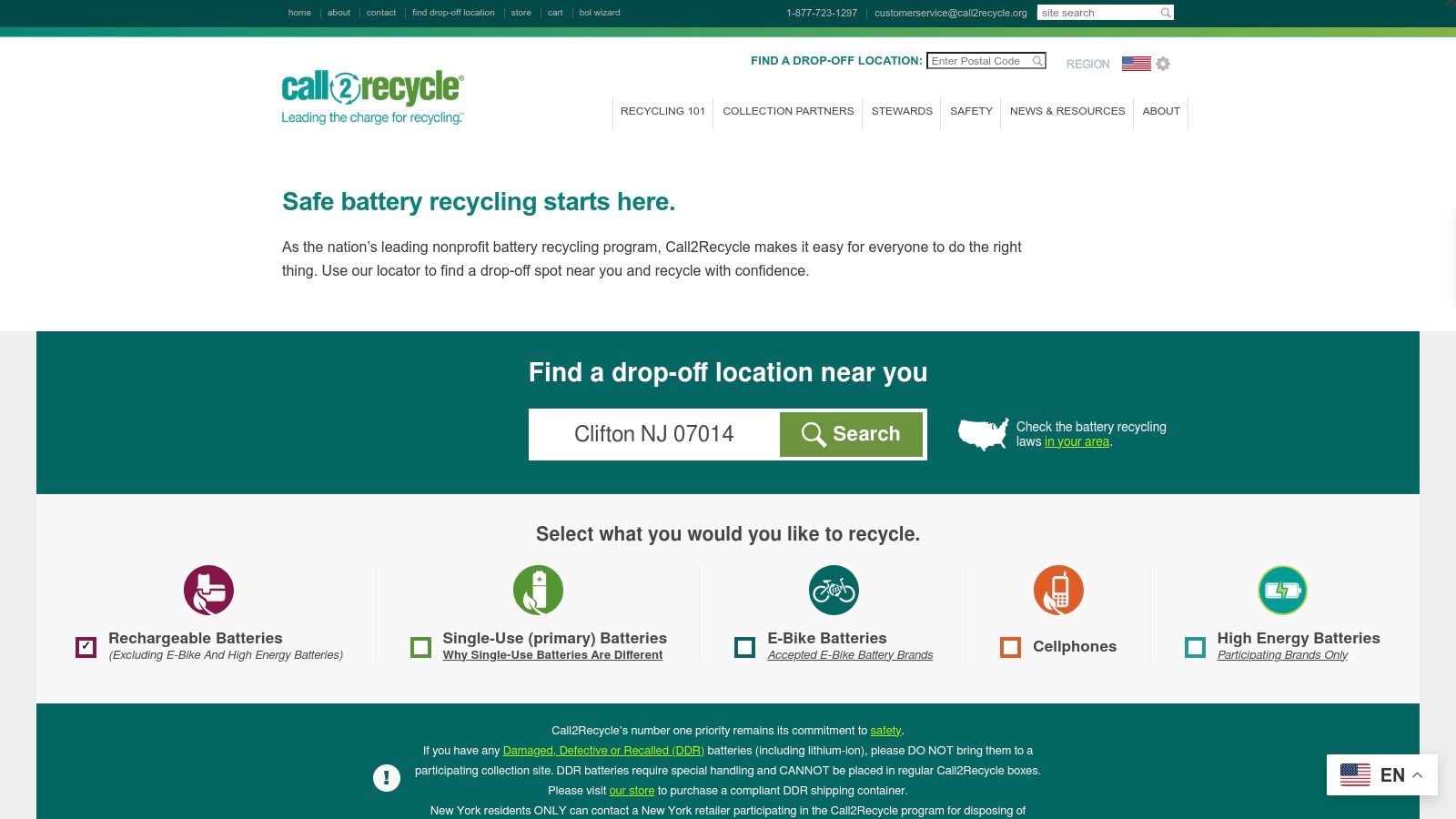
- ZIP-Code Drop-Off Locator: This is the program’s core feature. By entering an Atlanta ZIP code on their website, you can instantly find nearby participating retailers like The Home Depot, Lowe's, and Staples. This is ideal for offices and schools to responsibly discard rechargeable batteries from laptops, power tools, and other devices.
- Mail-Back Recycling Kits: For situations requiring more control or for damaged batteries, organizations can purchase prepaid mail-back kits. This service is invaluable for facilities managing damaged, defective, or recalled (DDR) lithium-ion batteries, which pose significant safety risks if not handled correctly.
- E-Bike Battery Collection: As micro-mobility grows in corporate and university campuses, Call2Recycle provides a dedicated take-back network through trained e-bike retailers. This addresses a new and challenging waste stream for many Atlanta organizations.
Expert Tip: Before recycling old mobile devices, remember that they store sensitive information. Use the Call2Recycle locator for disposal but first ensure all data is securely wiped. For a complete guide on this process and additional disposal options, learn more about where you can recycle cell phones.
Program Suitability and Limitations
Call2Recycle is the go-to platform for any organization that regularly handles batteries and cell phones. Its safety-first approach and extensive, free drop-off network make it highly practical for routine disposal needs. The program's nonprofit status and certifications provide peace of mind that materials are handled responsibly.
However, its focus is narrow. The program does not accept larger electronics like computers, monitors, or printers, limiting its use as a one-stop-shop for full IT asset decommissioning. Furthermore, while the drop-off network is free for consumers, the mail-back kits, especially the specialized DDR ones, represent a direct cost that can add up for organizations with frequent needs.
| Feature | Best For | Limitations |
|---|---|---|
| Drop-Off Locator | Routine recycling of rechargeable batteries & cell phones | Accepted items vary by location; not for bulk |
| Mail-Back Kits | Damaged/recalled batteries, centralized collection | Cost per box can be significant |
| E-Bike Program | Campuses & businesses with e-bike fleets | Limited to specific e-bike collection sites |
Pros:
- Highly trusted, safety-focused national program with broad retail coverage in Atlanta.
- Offers both free local drop-off options and paid mail-in solutions.
- Specialized kits for safely handling damaged and defective lithium-ion batteries.
Cons:
- Strictly limited to batteries and cell phones; not a comprehensive e-waste solution.
- Mail-back box pricing can be a considerable expense for one-off or large-volume users.
- Accepted battery types can vary between different drop-off partner sites.
Website: https://www.call2recycle.org/locator
5. Earth911 — Recycling Search
When you need to find a specialized or local recycling solution that falls outside the scope of major retail programs, Earth911 serves as an essential, comprehensive search directory. Rather than being a recycler itself, it is a powerful database designed to connect organizations with the right local drop-off sites, municipal events, and private recyclers for virtually any type of electronic waste. This makes it an invaluable tool for finding where to recycle electronics that other programs might not accept.
Earth911’s strength is its granularity. It helps facility managers and IT departments in Atlanta quickly locate options for everything from common office peripherals to bulky, unusual, or regulated items that require specific handling.
Key Features and How to Use Them
The platform is designed for quick, location-based searches, providing a wide array of potential disposal pathways for Atlanta-area organizations.
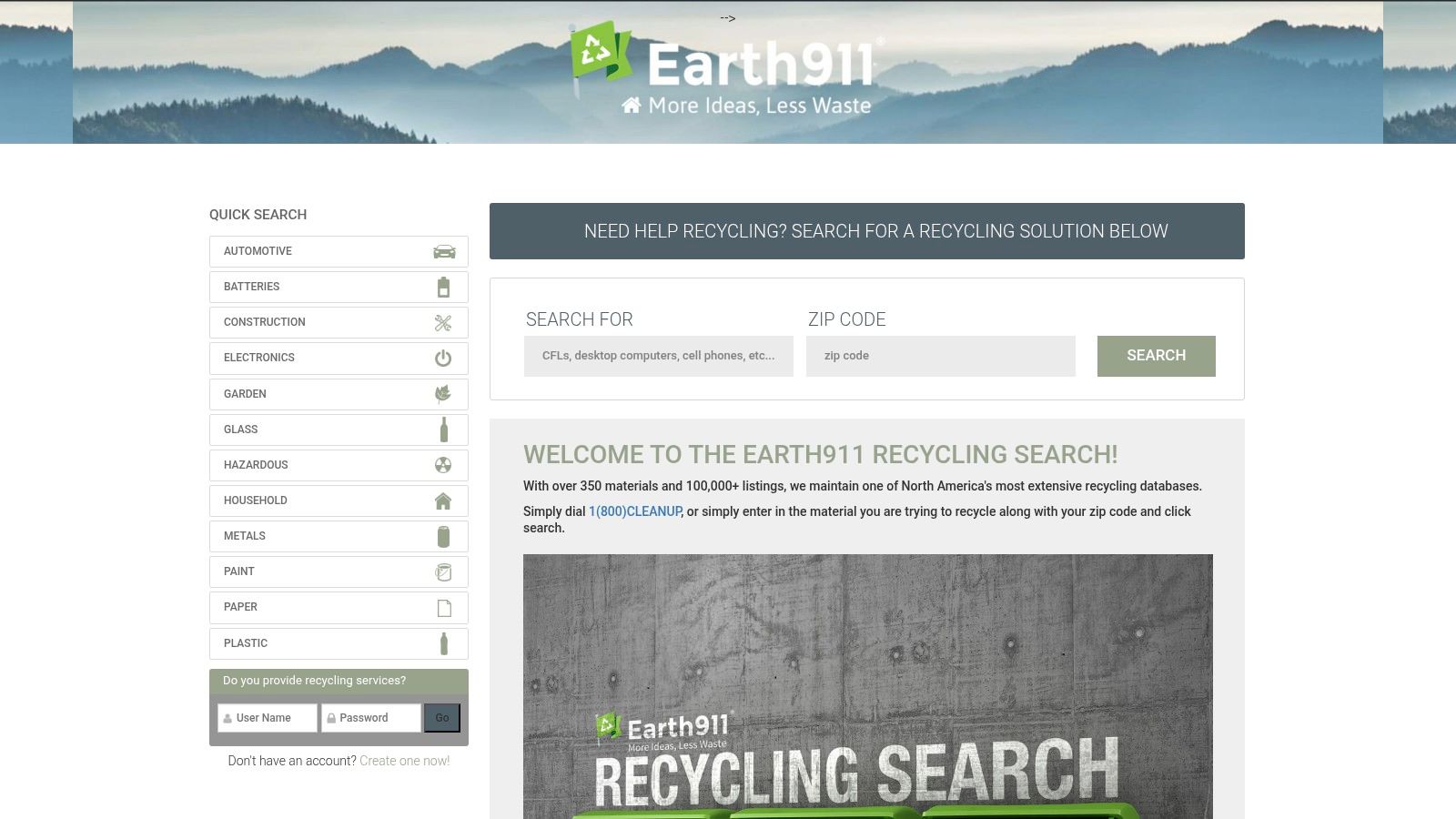
- Granular Item Search: Unlike general locators, you can search for specific items like "CRT monitors," "game consoles," or "lab equipment." Enter the item and your ZIP code, and the tool generates a map and list of nearby facilities that explicitly accept that material.
- Comprehensive Database: The search results include a diverse mix of options, from city-sponsored household hazardous waste (HHW) events to independent, certified e-waste recyclers and retail drop-off points. This broad scope often surfaces solutions for difficult-to-recycle items.
- Detailed Location Information: Each listing provides critical operational details, such as hours of operation, contact information, potential fees, and specific instructions. This helps avoid wasted trips and ensures you comply with the recycler’s requirements.
Expert Tip: The information on Earth911 is submitted by the recycling providers themselves and can sometimes be outdated. Always call the listed facility or check their website to confirm hours, accepted materials, and any associated fees before heading out.
Program Suitability and Limitations
Earth911 is the ideal starting point for any recycling query, especially for one-off or non-standard disposals. Its search functionality is particularly useful for finding outlets for oversized items like large-format printers or old server racks, which are typically rejected by retail take-back programs. It empowers organizations to find the best local fit for their specific e-waste challenges.
However, as a directory, its primary limitation is that it does not provide the recycling service itself. The quality, cost, and data security practices are determined by the third-party facility you choose from the listings. For businesses needing guaranteed data destruction certificates or auditable asset tracking for compliance, it is crucial to vet the selected vendor to ensure they meet your security standards. For a complete overview of all your options, you can find more information about local Atlanta-area recycling services on greenatlanta.com.
| Feature | Best For | Limitations |
|---|---|---|
| Item-Specific Search | Hard-to-recycle, large, or unusual electronics | Dependent on the accuracy of third-party listings |
| Municipal Event Listings | Cost-effective disposal for smaller businesses | Events are infrequent and may have item limits |
| Directory of Recyclers | Finding certified, specialized e-waste handlers | Requires user to vet vendors for data security |
Pros:
- Extensive, free-to-use database covering hundreds of material types.
- Excellent for locating recyclers for items retailers won't accept.
- Aggregates private, municipal, and non-profit options in one place.
Cons:
- Acts only as a locator; does not perform recycling services.
- Information can be outdated; users must verify details with the listed facility.
- Does not offer integrated services like data destruction certification or asset management.
Website: https://search.earth911.com
6. SERI — R2 Certified Facility Directory
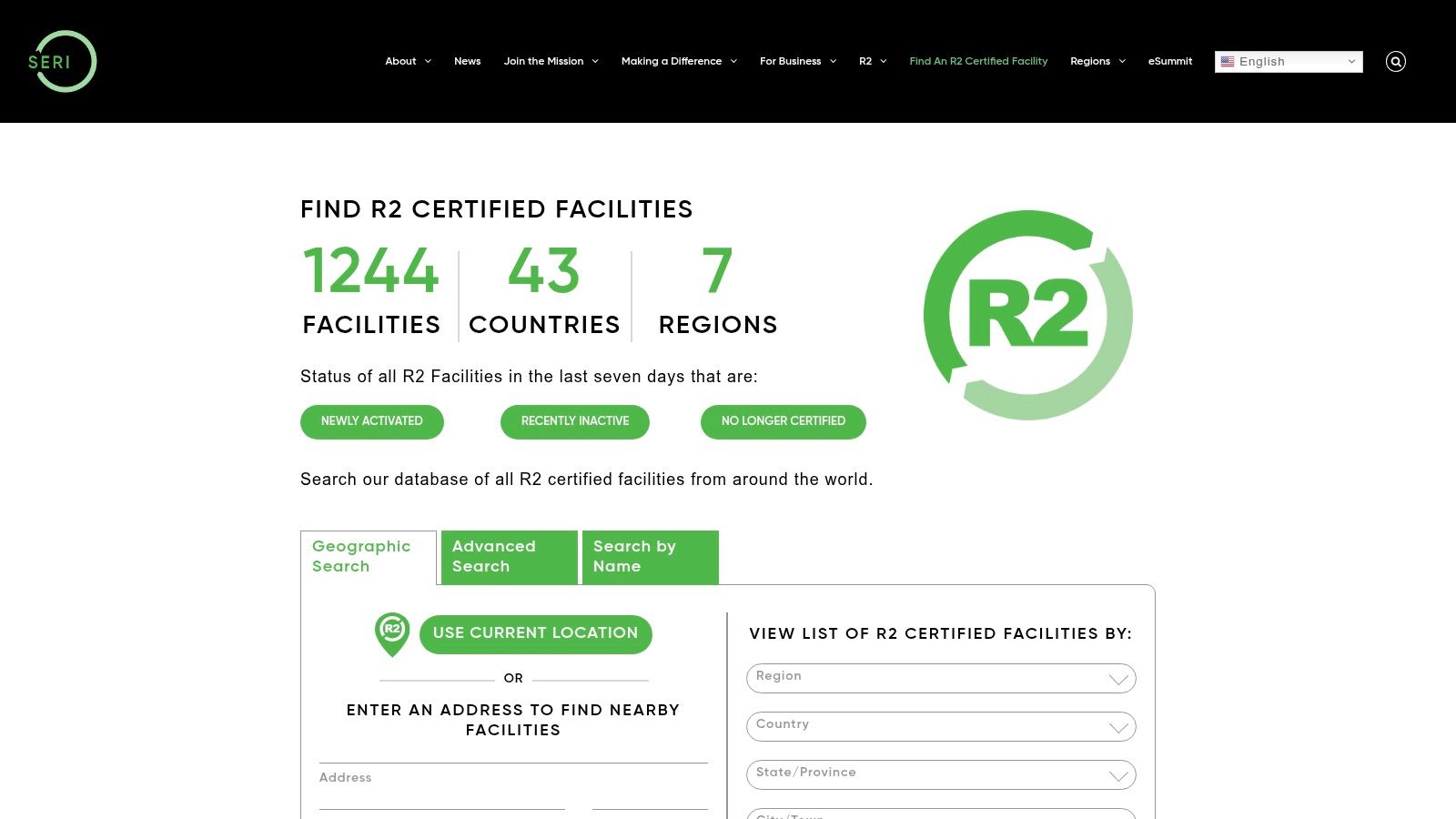
For organizations where data security, environmental compliance, and chain-of-custody are non-negotiable, the SERI R2 Certified Facility Directory is the definitive starting point. Instead of being a direct recycler, SERI is the housing body for the R2 Standard, a rigorous global certification for electronics recyclers. The directory is an essential tool for any Atlanta-based organization, from healthcare institutions to government agencies, needing to find a vetted, audited, and compliant recycling partner.
Using this directory provides a high-assurance pathway for finding where to recycle electronics, ensuring that sensitive assets are handled according to the highest industry standards for data destruction and environmental stewardship. It transforms the search from a guessing game into a selection process based on verified credentials.
Key Features and How to Use Them
The SERI directory is a powerful search tool, not a service provider. Its value lies in allowing businesses to filter and identify local recyclers that meet specific operational and security requirements.
- Geographic and Process Search: The most critical feature is the ability to search for certified facilities in and around the Atlanta area. You can narrow your search by specific R2v3 process requirements, such as data sanitization, testing and repair, or materials recovery.
- Filter by Business Needs: Organizations can filter for partners that specialize in specific business workflows, like IT Asset Disposition (ITAD), which is crucial for corporate decommissioning projects that require asset tracking and value recovery.
- Verification of Certification: Each listing provides direct access to the facility’s R2 certificate, allowing you to verify its status and scope of certification. This transparency is vital for due diligence and meeting internal compliance or ESG mandates.
Expert Tip: When contacting a facility from this directory, always ask for their specific chain-of-custody documentation process. An R2-certified partner should be able to provide detailed reports that track your assets from pickup to final disposition, a key requirement for HIPAA and NIST compliance.
Program Suitability and Limitations
The SERI directory is the gold standard for organizations with high-stakes recycling needs. It's the best resource for corporate IT departments, data centers, and healthcare providers who must prove responsible disposal and data destruction to auditors, regulators, or clients. Finding a local partner through this directory can also be a significant win for corporate ESG and CSR initiatives, providing documented proof of sustainable practices.
However, the directory itself is just a list. It does not provide pricing, accepted items, or logistical details. You must contact the individual facilities to get quotes, understand their service models, and confirm their capabilities. The level of service and consumer-friendliness can vary significantly from one certified provider to another.
| Feature | Best For | Limitations |
|---|---|---|
| Certified Facility Search | Enterprises, healthcare, government | Directory only; no direct services |
| Process Filters | Finding specific services (e.g., data wipe) | Requires user to vet individual providers |
| Certification Verification | Compliance and due diligence | Availability and pricing vary by facility |
Pros:
- Provides access to the most secure and environmentally compliant recyclers.
- Essential tool for organizations needing audited data destruction and chain-of-custody.
- Filtering options allow you to find a partner that matches your specific ITAD needs.
Cons:
- It is a directory, not a service; users must do their own outreach and vetting.
- Service costs, accepted items, and logistics are not listed and vary by provider.
- May be overkill for individuals or very small businesses with basic recycling needs.
Website: https://sustainableelectronics.org/find-an-r2-certified-facility
7. e-Stewards — Find a Recycler
For organizations where ethical and environmental governance is non-negotiable, the e-Stewards directory is the definitive resource for finding certified recycling partners. It provides a map-based locator for facilities that meet the highest standards for responsible e-waste management, ensuring that sensitive equipment never ends up in global dumping grounds. This platform is ideal for Atlanta-based hospitals, government agencies, and corporations with strict CSR or ESG policies.
Using the e-Stewards network is a direct way to support a recycling framework that prioritizes environmental justice and data security, moving beyond basic compliance to true stewardship. It’s the go-to answer for where to recycle electronics when the entire downstream chain must be transparent and accountable.
Key Features and How to Use Them
The platform’s primary function is its certified recycler directory, which simplifies the process of vetting potential partners against a globally recognized standard.
- Certified Recycler Map: The core tool is a filterable map that allows you to locate e-Stewards Certified Recyclers and Refurbishers. You can search near Atlanta to find facilities that have undergone rigorous third-party audits to verify their processes.
- No-Export Assurance: The e-Stewards Standard explicitly prohibits the export of hazardous electronic waste to developing countries. This is a critical differentiator for organizations committed to avoiding environmental and social harm in their supply chain.
- Downstream Transparency: Certification requires recyclers to track all hazardous materials throughout their entire downstream process until final disposition. This provides an unparalleled level of accountability.
Expert Tip: When contacting a certified recycler from the directory, specifically mention your organization’s need for an e-Stewards compliant process. This signals your commitment to high standards and ensures they provide service documentation, like Certificates of Destruction, that aligns with these rigorous requirements.
Program Suitability and Limitations
The e-Stewards directory excels for organizations that require the highest level of assurance for their asset disposition. It is particularly valuable for healthcare institutions protecting patient data, government agencies handling sensitive information, and corporations looking to bolster their ESG reports with credible, verifiable recycling practices. The platform itself serves as a starting point to connect with these vetted vendors.
However, the directory’s focus on quality over quantity means there are fewer certified facilities compared to broader locators. This may require arranging transportation to a facility outside the immediate Atlanta metro area. Furthermore, the platform is a directory, not a service provider, so you must contact the individual recyclers to confirm their specific services, pricing, and logistics.
| Feature | Best For | Limitations |
|---|---|---|
| Certified Directory | ESG/CSR-focused companies, healthcare | Fewer locations than general locators |
| No-Export Policy | Global corporations, government agencies | May result in higher processing costs |
| Downstream Tracking | Organizations requiring full accountability | Requires direct engagement with the recycler |
Pros:
- Provides the highest standard of environmental and social responsibility in e-recycling.
- Excellent for organizations with strict ESG, CSR, or data security policies.
- Ensures hazardous e-waste is not exported to developing nations.
Cons:
- Directory-only; does not provide direct services, pricing, or logistics.
- The number of certified recyclers may be limited in the immediate Atlanta area.
- Requires organizations to perform their own outreach and negotiation with listed vendors.
Website: https://e-stewards.org/find-a-recycler
Top 7 Electronics Recycling Comparison
| Service / Program | 🔄 Implementation complexity | ⚡ Resource requirements | 📊 Expected outcomes (⭐) | 💡 Ideal use cases | Key advantages |
|---|---|---|---|---|---|
| Atlanta Green Recycling | Medium–High — coordinated onsite de‑installs and pickups | Commercial engagement, on‑site access, fleet/logistics; project quote required | ⭐⭐⭐⭐ — audit‑ready data destruction, high diversion | Regulated orgs, data centers, bulk IT decommissions | Enterprise data security, chain‑of‑custody, turnkey logistics, CSR/ESG impact |
| Best Buy — Electronics & Appliances Recycling | Low (store drop‑off) to Medium (haul‑away/mail) | Retail drop‑off or mail; fees may apply (TVs/monitors); location limits | ⭐⭐⭐ — convenient national coverage, but limits/fees for some items | Households with small electronics; users needing local drop‑off or mail | Ubiquitous stores, multiple return pathways, clear accepted‑item rules |
| Staples — Free In‑Store + Mail‑Back Kits | Low for in‑store; Medium for mail‑back kits | Store visit for free drop‑off; optional paid mail‑back kits (ERI) | ⭐⭐⭐ — free office item drop‑offs; mail kits for remote needs | Office electronics, rechargeable batteries, ink/toner recycling | Free store recycling, battery collection, ink rewards, certified mail options |
| Call2Recycle — Battery & Cell Phone Recycling | Low for local drop‑off; Medium for DDR/mail handling | ZIP‑code locator for free drop sites; paid mail‑back kits for damaged batteries | ⭐⭐⭐⭐ — high safety and reliability for batteries | Rechargeable/consumer batteries, damaged Li‑ion, e‑bike batteries | Safety‑focused program, broad retail partners, DDR kits for damaged cells |
| Earth911 — Recycling Search | Low (search tool); variable to arrange service | User provides ZIP/item, then contacts listed providers; free directory | ⭐⭐⭐ — very wide directory; outcomes depend on chosen provider | Finding local options for unusual/large items and HHW events | Extensive database, granular item search, municipal and private listings |
| SERI — R2 Certified Facility Directory | Medium — directory lookup + follow‑up with facilities | Requires contacting R2 facilities; may involve commercial terms | ⭐⭐⭐⭐ — vetted facilities, audited processes, secure handling | Businesses and households needing audited, compliant recyclers | R2 certification assurance, filters for processes and data‑security |
| e‑Stewards — Find a Recycler | Medium — map search then arrange logistics | Fewer certified sites; may need travel or pickup arrangements | ⭐⭐⭐⭐ — strong environmental/social safeguards and chain control | Organizations prioritizing no‑export and strict downstream policies | e‑Stewards certification (no‑export), rigorous downstream stewardship |
Making the Right Choice: Turn Your E-Waste into a Strategic Asset
Navigating the landscape of electronics recycling in Atlanta can feel complex, but as we've explored, the city offers a robust ecosystem of solutions tailored to every need. From the convenient drop-off services at retailers like Best Buy and Staples for small-scale disposals to comprehensive locator tools like Earth911 and Call2Recycle, the options are plentiful. However, for organizations managing sensitive data and large volumes of IT assets, the decision of where to recycle electronics transcends mere convenience; it becomes a critical component of security, compliance, and corporate identity.
The key takeaway is that not all recycling partners are created equal. Your choice should be a strategic alignment with your organization's specific requirements. For those in healthcare, government, or corporate sectors, the primary concern is often uncompromising data security and a transparent chain of custody. This is where directories for certified recyclers, such as the R2 and e-Stewards networks, become invaluable, connecting you with partners who adhere to the highest global standards for data destruction and environmental responsibility.
From Compliance Task to Brand Differentiator
The modern approach to e-waste management is shifting from a simple operational task to a powerful opportunity for brand enhancement. Disposing of old equipment is no longer just about clearing storage space; it’s a chance to demonstrate your commitment to Environmental, Social, and Governance (ESG) principles. For a deeper dive into the broader principles and best practices, consider reviewing this resource: A Friendly Guide to Recycling Electronic Equipment. This perspective is crucial for understanding how your e-waste policy can become a public-facing asset.
Organizations that embrace this mindset can transform their recycling program into a compelling narrative. Imagine turning a server decommissioning project into a tangible story of community support and environmental restoration. This is achievable by selecting a partner whose mission aligns with your own values.
Key Insight: The most effective electronics recycling strategy doesn't just solve a problem; it creates value. By partnering with a mission-driven recycler, you can convert outdated assets into measurable social and environmental impact, strengthening your brand's reputation and CSR portfolio.
Actionable Steps for Your Organization
So, where do you go from here? The path forward involves a clear, methodical approach to selecting the right partner.
- Assess Your Needs: Begin by inventorying the types and volume of electronics you need to recycle. Crucially, determine the data sensitivity of the devices. Do you require on-site hard drive shredding? Do you need a certificate of destruction for every asset to meet HIPAA or NIST 800-88 compliance?
- Evaluate Potential Partners: Using the tools discussed in this article, create a shortlist of potential recyclers in the Atlanta area. For large-scale needs, prioritize certified providers like those found in the R2 or e-Stewards directories. Ask them about their process, data security protocols, and what kind of documentation they provide.
- Leverage Your Impact: For organizations keen on building their brand, look for a partner that offers more than just disposal. A service like Atlanta Green Recycling, with its dual-impact model of supporting veterans and planting trees, provides a ready-made ESG win. You can use their impact reports and certificates to fuel your "Recycle for a Cause" campaigns, showcasing your commitment on LinkedIn, in annual reports, and through internal communications.
- Implement and Promote: Once you've chosen a partner, integrate the process into your operational workflow. Don't stop there; promote your responsible recycling efforts. Use the stories and data from your recycling partner to engage employees, stakeholders, and the community. This turns a backend process into a frontline marketing and engagement tool.
Ultimately, choosing where to recycle electronics is a decision that reflects your organization's values. By making a thoughtful, informed choice, you not only protect your data and the environment but also seize an opportunity to turn obsolete technology into a strategic asset that builds a legacy of positive change.
Ready to transform your e-waste into a powerful story of community and environmental impact? Atlanta Green Recycling offers certified, secure electronics recycling for Atlanta businesses, hospitals, and schools, turning your old tech into vital support for veterans and reforestation efforts. Schedule your free pickup today and start making a measurable difference.