
What to Do with Old Monitors: An Atlanta Guide to Smart Disposal


That old monitor collecting dust in the corner? It’s not just clutter—it's a resource waiting for its next chapter. The golden rule is to recycle, donate, sell, or repurpose it. Whatever you do, just don't toss it in the trash. The right path forward depends on its condition, but every option keeps harmful e-waste out of our landfills and can even support our community.
Making the Right Choice for Your Old Monitors in Atlanta
Deciding what to do with an old monitor can feel like just another task on a long to-do list. Here in Atlanta, though, it’s a real chance to make a positive difference. Instead of letting your old tech add to the massive e-waste problem, you can give it a new, valuable purpose, whether it's a high-end gaming screen or a basic office display.
The sheer scale of the e-waste problem is hard to wrap your head around. In 2022, the world generated a staggering 62 million tonnes of electronic waste. To put that in perspective, screens and monitors alone are expected to make up 6.7 million tonnes of that by 2025. What’s truly shocking is that only about 22.3% of this e-waste was properly collected and recycled, leaving a huge environmental mess for future generations.
Your Four Main Pathways
Figuring out your next move is simpler than it sounds. Each route has its own perks, from earning a little extra cash to helping out a local cause. It all boils down to one simple question: does the monitor still work?
- Recycling: This is your go-to for broken or hopelessly outdated monitors. Certified recycling ensures that hazardous materials are handled safely, while valuable metals get recovered and reused. For non-working electronics, it's the most responsible choice you can make. With the right partner, recycling can even support causes like “electronics recycling for veterans.”
- Donating: If your monitor is in good working order, giving it away extends its life immeasurably. Schools, local Atlanta charities, and nonprofits are often in desperate need of working tech to help bridge the digital divide for families and students.
- Selling: A functional, modern monitor can definitely have some resale value. Check out platforms like Facebook Marketplace or Craigslist to find a local buyer and turn that unused equipment into cash.
- Repurposing: Time to get a little creative! A working monitor can easily become a dedicated digital photo frame, a dashboard for your smart home, or even a handy second screen for your laptop. It’s a great way to squeeze more life out of it and keep it out of the recycling bin for a while longer.
Your Old Monitor Options at a Glance
Feeling a bit overwhelmed? This quick table breaks down your choices to help you decide on the best path for your old monitor based on its condition and what you're hoping to achieve.
| Disposal Option | Best For | Effort Level | Potential Impact |
|---|---|---|---|
| Recycling | Broken, obsolete, or non-functional monitors | Low to Medium | Prevents pollution, recovers materials, supports causes. |
| Donating | Fully functional, usable monitors | Low | Supports local communities and non-profits. |
| Selling | Newer, functional monitors with resale value | Medium | Puts cash back in your pocket, promotes reuse. |
| Repurposing | Any working monitor you can find a new use for | Medium | Extends the device's life, reduces immediate waste. |
Ultimately, each option is a huge step up from the landfill. You're either giving the device a second chance or ensuring its components are handled the right way.
This simple flowchart can help guide your first step.
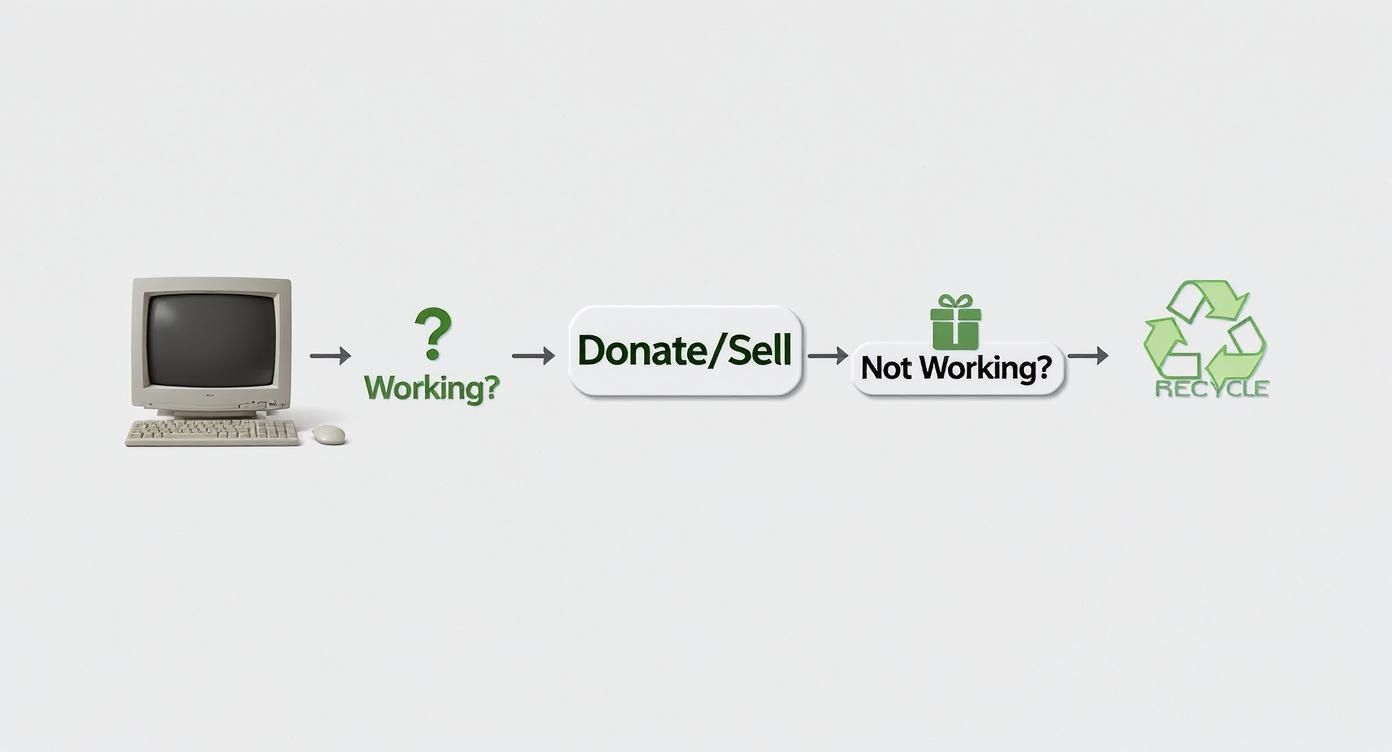
The takeaway is pretty clear: the monitor's condition is the biggest factor. For anything that doesn't power on or work correctly, recycling is the essential final step.
If you’re ready to explore local recycling options, dive into our detailed guide on where you can recycle electronics right here in the Atlanta area.
Turning E-Waste Into Hope: Recycling That Restores Lives and Landscapes
Recycling an old monitor is more than just a responsible decision; it’s a chance to make a real, positive impact. This is the whole idea behind our "Recycle for a Cause" campaign—turning old tech into actual support for veterans and funding for local reforestation. It’s about transforming potential waste into tangible hope.
This process completely reframes what recycling can be. Instead of just being the end of the line for an old device, it becomes the starting point for something new and meaningful.
Think about it: your company's old office monitors could directly help house a veteran. Your outdated gaming screen could help plant a new forest right here in Georgia. This dual-impact model means every single device makes a difference. We track and share these results, showing you the direct line between your action and the outcome.
The Power of Cause-Based Recycling
Our model is built on a simple but powerful idea: Your old tech can house a veteran and grow a forest. This isn't just a catchy phrase; it's a transparent promise we stand by. By connecting the simple act of recycling with real, emotional results, we give individuals and businesses a powerful reason to choose a more meaningful path for their old electronics.
To make that connection crystal clear, we use a few tools to show our collective effort:
- Live Impact Counters: Our website features real-time stats, like "1,245 veterans supported" and "3,700 trees planted," giving you social proof and total transparency.
- Seasonal Drives: We align our recycling campaigns with key dates like Veterans Day, Earth Day, and Arbor Day, creating timely opportunities for community and PR pushes.
- Video Storytelling: We create short, impactful videos showing veterans receiving aid funded by recycling or USDA reforestation footage with tagged donations. It really brings the mission to life.
This whole approach ensures that when you're deciding what to do with old monitors, you see an opportunity to take meaningful action. Every donation, whether it's a single monitor from your home or a truckload from a corporate office, becomes a story of restoration. And when you're packing things up, using materials like biodegradable bubble wrap can take your green efforts one step further.
From Individual Action to Community Impact
Our goal is to turn a single act of recycling into a lasting relationship. After you donate, we automatically email a personalized impact certificate detailing your contribution—for example, "You planted 3 trees and helped 1 veteran." It's a simple acknowledgment that can turn a one-time recycler into a true advocate for the cause.
By sharing real stories of supported veterans and reforestation progress through our monthly impact newsletter and social channels, we're building a community around a shared mission. This isn't just about managing e-waste; it's about restoring lives and landscapes, one monitor at a time.
For anyone in the Atlanta area, we've designed the process to be as smooth as possible. A quick look at services for electronics recycling in Atlanta shows just how easy it is to get involved. By choosing to work with a cause-based recycler, you ensure your old monitor does more than just stay out of a landfill—it actively builds a better future.
The Critical Need for Secure E-Waste Recycling
Ever wondered why you can't just toss an old monitor in the trash with your leftover pizza boxes? The answer is hiding right inside its plastic casing. That screen you've been staring at for years is a complex piece of tech, and it's packed with materials that need to be handled with care.
Old-school CRT monitors and even many modern flat screens contain a nasty cocktail of hazardous stuff like lead, mercury, cadmium, and flame retardants. When these devices get dumped in a landfill, those toxins don't just stay put. They can leach into the soil and seep into our groundwater, posing a real threat to Atlanta's local ecosystems and, ultimately, our health.
This isn't just a small local problem; it's a global headache. Improperly managed e-waste created an externalized economic cost of around $37 billion in 2022 alone, mostly from the environmental fallout caused by these exact substances. Choosing a certified recycler isn't just a nice thing to do—it's a critical step in preventing long-term damage that hits both the environment and our wallets. You can see more of the staggering costs of e-waste by checking out these recycling facts and statistics.
Beyond Environmental Protection: Data Security
Okay, so we've covered the environmental angle. But there's another major piece of the puzzle to think about when you're retiring an old monitor: your data.
It might seem strange to worry about data on a simple display, but many modern "smart" monitors or all-in-one computers are just that—computers. They can hang onto login credentials, bits of your browsing history, and other sensitive personal or company information.
Just hitting "delete" or doing a factory reset isn't a guaranteed fix. Without certified data destruction, a determined individual could potentially pull that information from the device, creating a huge security risk for you or your business. This is where the pros come in. Certified e-waste recycling services ensure your data is completely obliterated before the hardware is ever touched.
Choosing a certified recycler is the only way to guarantee that your device is handled responsibly from both an environmental and a data security perspective. It closes the loop on the device's lifecycle, ensuring it poses no future risk.
The Certified Recycling Process Explained
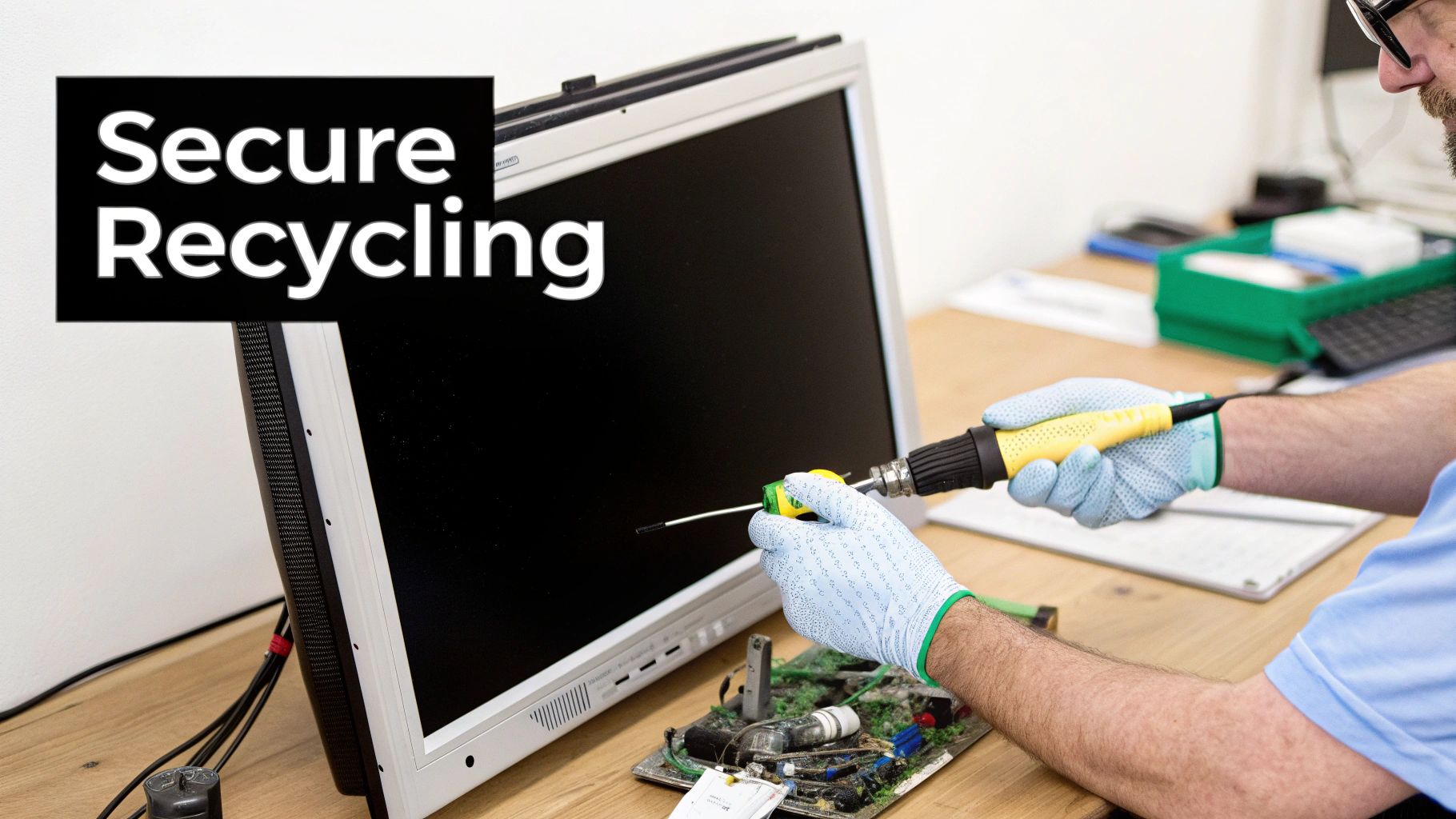
When you hand your old monitor over to a certified recycler, it doesn't just get tossed into a big shredder. It begins a secure, meticulously planned journey to break it down safely and recover what's valuable.
Here's a look at what that process typically involves:
- Secure Collection and Logistics: It all starts with a secure chain of custody. Your devices are collected and transported in a controlled manner to a secure facility. No pit stops.
- Certified Data Destruction: This is priority number one for any device that might hold data. Professionals use methods that meet tough standards, like those from the Department of Defense (DoD), to wipe or physically shred hard drives and memory chips. This makes the data 100% unrecoverable. For a closer look at this crucial step, you can learn more about our approach to data security during electronics recycling in Atlanta.
- Manual Dismantling: Trained technicians carefully take the monitor apart by hand. This isn't brute force; it's a precise operation to separate the different materials—plastic casings, circuit boards, glass panels, and wiring.
- Material Separation and Recovery: Once dismantled, the components are sorted into clean streams of commodities. Plastics, precious metals (like the gold and copper in circuit boards), aluminum, and steel are all bundled up and sent to specialized refiners to become raw materials for new products.
- Responsible Disposal of Hazardous Materials: Anything toxic, like the leaded glass from old CRTs or the mercury in LCD backlights, is safely isolated. From there, it goes to specialized facilities that are equipped to handle and dispose of it without harming the environment.
This thorough approach ensures that almost every piece of your old monitor gets a second life, drastically cutting down the need to mine new resources and keeping pollution out of our environment.
How Atlanta Businesses Can Champion Corporate Responsibility
For any Atlanta company, managing old IT assets often feels like just another logistical puzzle. But what if it could be a powerful statement for your brand? Instead of a simple operational task, recycling your old monitors can become a strategic victory for your company’s Environmental, Social, and Governance (ESG) and Corporate Social Responsibility (CSR) goals.
This approach transforms an end-of-life process into a compelling story of community support and environmental stewardship. When you partner with a mission-driven recycler, you're not just getting rid of e-waste; you're actively creating positive, measurable outcomes right here in our community.
An Easy ESG Win for Atlanta Companies
Meeting sustainability and CSR benchmarks is more important than ever. Customers, partners, and stakeholders are all watching, looking for businesses that show a real commitment to making a difference. This is exactly where a strategic recycling partnership gives you a clear advantage.
We've designed our programs to be a seamless ESG win for your organization. To make it even easier, we offer free pickups for businesses with 50 or more devices, completely removing the logistical headache of IT asset disposal. It’s a dead-simple way to clear out old equipment while making a significant impact on local keywords like “corporate sustainability electronics disposal.”
By turning e-waste into a resource for veteran aid and reforestation, your company can demonstrate a powerful commitment to both social and environmental causes. This isn't just recycling; it's recycling with purpose.
This process allows your business to easily bake impactful actions into your corporate responsibility framework, turning a routine operational need into a public-facing win.
Turning Action into Tangible Assets
Once your old monitors are collected, the partnership delivers more than just a clear conscience—it gives you valuable documentation for your sustainability reporting. This is absolutely critical for showing your company's positive impact to shareholders, employees, and customers.
Our corporate partners receive:
- Veteran Support Impact Reports: Detailed reports that spell out the exact contribution your electronics donation made toward supporting local veterans.
- Plant-A-Tree Certificates: Official certificates documenting the number of trees planted in your company’s name, helping you showcase your commitment to reforestation.
- “Recycled with Purpose” Digital Badge: An eco-badge that your business can proudly display on its website, in email signatures, and within sustainability reports to signal your proactive stance on responsible e-waste management.
These aren't just receipts; they are powerful tools for storytelling and brand building. You can publish case studies on LinkedIn to show how your company met sustainability benchmarks, using them in marketing materials to highlight how your company is turning its e-waste into tangible good.
Building a Greener Atlanta Together
Beyond your own corporate actions, there are plenty of opportunities for deeper community engagement. Think about co-hosting recycling drives with local VFW chapters or environmental nonprofits to build credibility and generate positive local press with outlets like the Atlanta Journal-Constitution.
Collaborating with Atlanta-area schools, universities, and municipal bodies under a "Greener Atlanta" initiative further strengthens your local presence. These partnerships create a ripple effect, encouraging wider community participation and positioning your company as a leader in corporate citizenship.
Ready to see how your business can get involved? Explore our dedicated recycling programs for businesses to learn more.
Give Your Old Monitor a Second Life with Creative DIY Projects
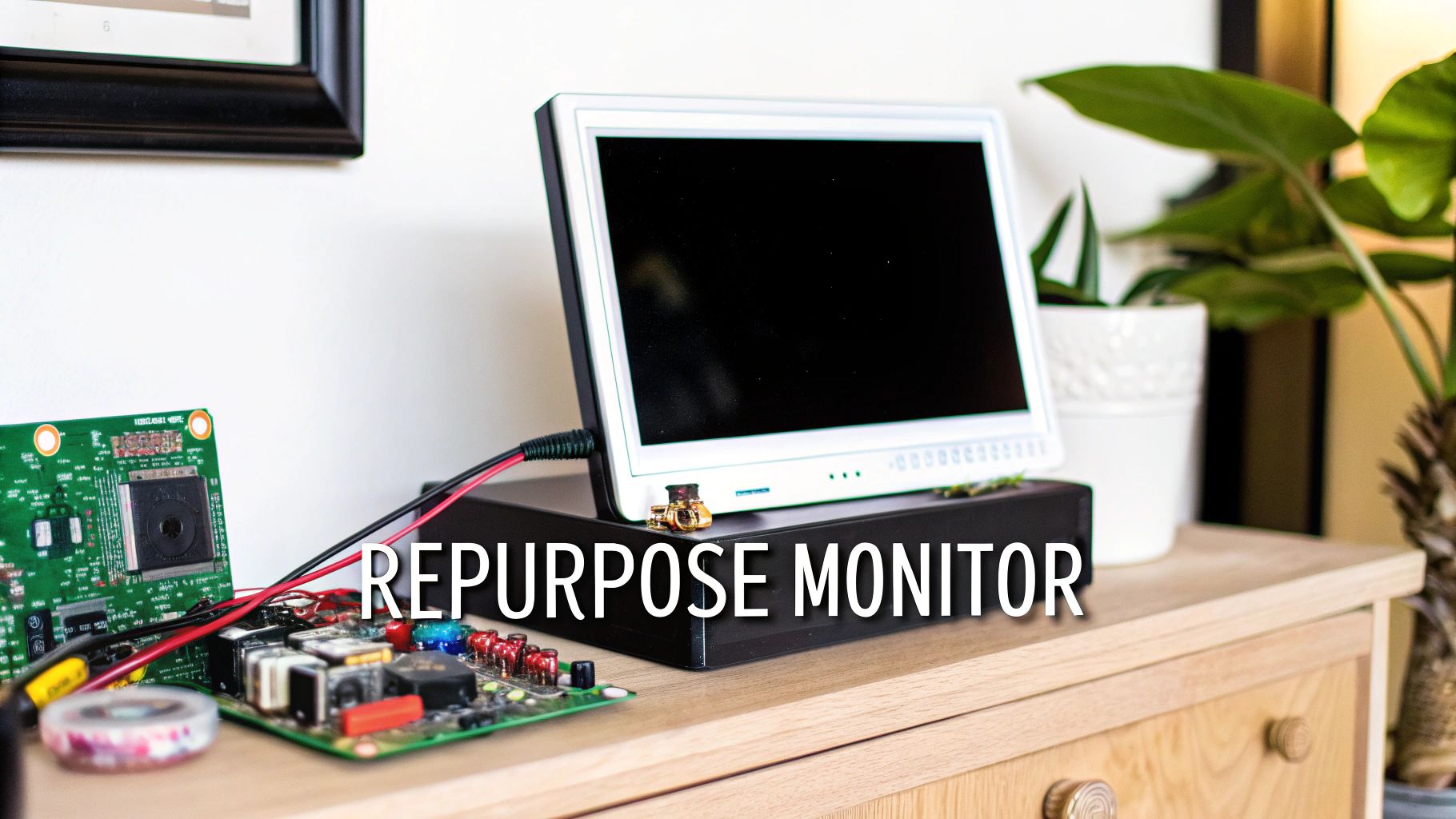
Before you write off that old monitor, take a moment to ask if it still has some fight left in it. If the screen powers on and shows an image, you're not looking at a piece of junk—you're looking at a blank canvas for a fun and genuinely useful DIY project. Repurposing is a brilliant way to keep electronics humming along for a few more years, keeping them out of the recycling pile.
It really just comes down to a little creativity. Instead of seeing an outdated paperweight, picture a custom-built digital display for your home or office. With a little bit of tinkering and some surprisingly cheap hardware, you can give that old monitor a brand-new job.
Simple and Actionable DIY Monitor Ideas
The good news is you don't need an engineering degree to pull this off. Most of these projects are straightforward enough to tackle in an afternoon. All it takes is a working monitor and a small, inexpensive device to feed it some content.
Here are a few popular ideas to get your wheels turning:
- Dedicated Digital Photo Frame: Grab an old streaming stick (like a Chromecast or Amazon Fire Stick) or a Raspberry Pi. You can hook it up and use something like Google Photos to run a constant slideshow of family pictures. Suddenly, that old monitor is a dynamic, living photo album.
- Smart Home Dashboard: A wall-mounted monitor paired with a Raspberry Pi can become your home's command center. You can display security camera feeds, control your lights and thermostat, or just check the weather at a glance using free, open-source dashboard software.
- Productivity Sidekick: Set up an older, smaller monitor right next to your main screen. Dedicate it to the things you always need to see but don't want cluttering up your primary workspace—your calendar, a to-do list, or your team's Slack channel.
- Retro Gaming Station: Got an old monitor with that classic 4:3 boxy aspect ratio? It's practically begging to be turned into a retro arcade machine. Connect a Raspberry Pi running an emulator, plug in a couple of USB controllers, and you're ready to relive the glory days of classic video games.
What You Might Need
The specific tools will vary, but the core ingredients are almost always simple and affordable. The biggest hurdle is just figuring out how to get your old screen to talk to a modern gadget.
Repurposing isn't just a fun DIY activity; it's a practical application of the "reuse" principle. By finding a new job for your old monitor, you're actively reducing demand for new products and keeping functional electronics out of the waste stream.
For most projects, your shopping list will be surprisingly short:
- A Content Source: This is the "brain" of your new setup. A Raspberry Pi is a tiny, versatile computer that's perfect for custom dashboards and gaming projects. For something simpler like a photo frame, a spare Chromecast, Roku, or Amazon Fire Stick works just fine.
- The Right Cables or Adapters: Your old monitor probably has older connections like VGA or DVI, while modern devices almost exclusively use HDMI or USB-C. You'll likely need a simple adapter, like a DVI-to-HDMI or VGA-to-HDMI converter, to bridge that technology gap. They're cheap and easy to find online.
By getting creative, you not only get some cool custom tech for your space but also do your part for a more sustainable approach to electronics. For those thinking on a larger scale, exploring ways to repurpose e-waste can even create new revenue streams.
A Practical Guide to Donating or Selling Your Used Monitor
If your old monitor still works perfectly fine, recycling shouldn't be your first thought. Giving it a second life is a fantastic way to keep useful tech in circulation, reduce waste, and either help someone out or put a little cash back in your pocket.
For many folks in the Atlanta area, the question of what to do with a working monitor is a common one. The good news is, our city is full of organizations and individuals who could get a lot of value out of your old but functional gear.
Donating Your Monitor in Atlanta
Donating your monitor is a simple choice with a big impact. Local non-profits, schools, and community centers are often running on tight budgets, and reliable computer equipment is a constant need. That monitor you've upgraded from could become an essential tool for a student learning from home or an adult in a job training program.
Think about reaching out to these types of places right here in Atlanta:
- Schools and Educational Programs: Public schools or after-school programs are frequently looking for extra monitors for their computer labs or to send home with students who don't have the right equipment.
- Local Charities and Shelters: Organizations like Goodwill or local shelters can either put the monitor to use in their own offices or sell it in their thrift stores to help fund their missions.
- Community Centers: These local hubs can use monitors for public computer access, workshops, and their own administrative work.
Just be sure to call ahead. A quick phone call is all it takes to confirm they're accepting electronics and to check on any specific rules they might have.
Selling Your Used Monitor for a Fair Price
If your monitor is fairly new and in great shape, selling it is definitely an option worth exploring. Platforms like Facebook Marketplace, Craigslist, and eBay are hotspots for local sales, putting you in direct contact with buyers around Atlanta.
To get your listing noticed, focus on being clear and honest. If you decide selling is the right move, it helps to understand the basics of how to sell household items online.
Pricing Tip: Not sure what to ask for? Search for your monitor’s exact model number on these platforms to see what similar ones have sold for recently. Price yours competitively, but be realistic about its age and any minor cosmetic flaws.
When you build your listing, include clear, well-lit photos from a few different angles. List the model number, screen size, resolution, and what kind of connection ports it has (like HDMI, DisplayPort, or USB-C). Honesty is key here—if there’s a dead pixel or a small scratch, just mention it. It builds trust with potential buyers and prevents headaches later on.
Your Pre-Donation and Pre-Sale Safety Checklist
Before that monitor leaves your possession, a few simple steps will ensure a smooth and secure hand-off for everyone involved. This little checklist protects your information and gets the device ready for its next chapter.
- Clean the Device Thoroughly: Use a soft, microfiber cloth to wipe down the screen. A separate cloth with a gentle cleaner is perfect for the plastic casing and stand. A clean monitor just looks so much better.
- Gather All Necessary Cables: A monitor is pretty useless without its cords. Make sure you include the power cable and at least one video cable (like an HDMI or DisplayPort cable). This turns it into a complete, ready-to-use package for the next person.
- Perform a Factory Reset: This one is critical. If you have a "smart" monitor with built-in apps or user accounts, it is absolutely essential to do a factory reset. This wipes any of your personal data, logins, or saved Wi-Fi networks, protecting your privacy. Just check the manufacturer's instructions for the specific steps.
Common Questions About Monitor Disposal in Atlanta
Diving into the world of e-waste can feel a bit overwhelming. When you’ve got an old monitor sitting around, it’s only natural to have a few questions about what to do with it. We get it. That’s why we’ve put together some straightforward answers to the questions we hear most often in Atlanta, so you can move forward with confidence.
Making the right call here does more than just clear up desk space—it keeps our local environment safe. Getting a handle on the rules and your options is the first, most important step.
Getting Your Monitor Ready for Its Next Chapter
Whether you’re planning to recycle, donate, or sell an old monitor, a few minutes of prep work can make a big difference. First off, just give the screen and casing a quick wipe-down with a soft, dry cloth. A clean monitor is always more appealing to a new user or just plain easier for a recycler to process.
Next, round up all the cables that go with it. You’ll definitely want the power cord and at least one video cable, like an HDMI or DisplayPort cord. If you happen to have a "smart" monitor that you've logged into, it's critical to do a factory reset to wipe your personal data. For standard monitors, there’s no data to worry about, and if there’s any doubt, certified recyclers will ensure everything is securely destroyed.
The Do's and Don'ts of Local Disposal
One question comes up more than any other: "Can I just toss this in my regular trash bin?" The answer is a hard no.
You should never put a computer monitor in your regular trash in Atlanta. They are classified as e-waste and contain hazardous materials like lead and mercury that can contaminate soil and water. In many jurisdictions, it is also illegal. Always use a certified electronics recycler or a designated e-waste collection service.
This isn't just a suggestion; it's a rule that protects our community from some pretty nasty toxins. The good news is, there are plenty of free and convenient recycling options right here in Atlanta. Many big-box electronics stores have take-back programs, and local governments frequently host free e-waste collection days.
Is My Old Monitor Worth Anything?
Wondering if you can get a little cash for that old screen? There’s a pretty simple way to tell. Generally, a monitor still has some resale value if it checks a few boxes:
- Age: It's usually less than 5-7 years old.
- Functionality: It powers on and works perfectly with no glitches.
- Condition: The screen is clean, with no dead pixels, deep scratches, or weird discoloration.
- Connectivity: It has modern ports like HDMI or DisplayPort that most people are looking for.
To figure out a fair price, just hop on a site like Facebook Marketplace or eBay and search for your exact model. See what similar ones have actually sold for recently in the Atlanta area. That’ll give you a real-world baseline for your own listing.
There are also cause-based recyclers that offer free drop-off services and will even schedule free pickups for businesses with enough equipment. This turns the simple act of recycling into a direct contribution to the community, funding everything from veteran support programs to local tree planting. It’s a fantastic way to give your old tech a positive legacy.
Ready to turn your e-waste into a force for good? At Green Atlanta, we make it easy for businesses to responsibly recycle their old monitors and IT equipment while making a measurable impact on our community and environment.