Create a Successful Medical Equipment Recycling Program


A formal medical equipment recycling program isn't just about being green—it's a critical operational strategy for any modern healthcare facility. Think of it as a comprehensive system for managing outdated or broken devices in a way that’s compliant, secure, and sustainable. This goes way beyond simple trash disposal; it involves ironclad protocols for data security, environmental safety, and regulatory adherence. Getting this wrong can open you up to some serious financial and legal trouble.
Why Your Facility Needs a Recycling Program Now
Let's be clear: implementing a recycling program for your medical equipment is no longer an optional "nice-to-have." It’s a core business function. The reasons for this go far beyond environmental feel-goods and hit you right where it counts: your bottom line, legal standing, and public reputation.
Technology in our field moves at lightning speed. That means the pile of decommissioned devices is only getting bigger, creating an urgent need for a structured disposal plan.
The financial fallout from non-compliance can be devastating. A single device tossed in a dumpster with patient data still on it could trigger a massive HIPAA violation, with fines that can easily cripple a facility’s budget. And that’s not all. Equipment with hazardous materials like lead or mercury? Improper disposal can bring the EPA knocking, along with their own set of steep penalties. These are just the direct costs—the hit to your brand after a public data breach can erode patient trust for years to come.
The infographic below really drives home the compliance risks that keep healthcare administrators up at night.
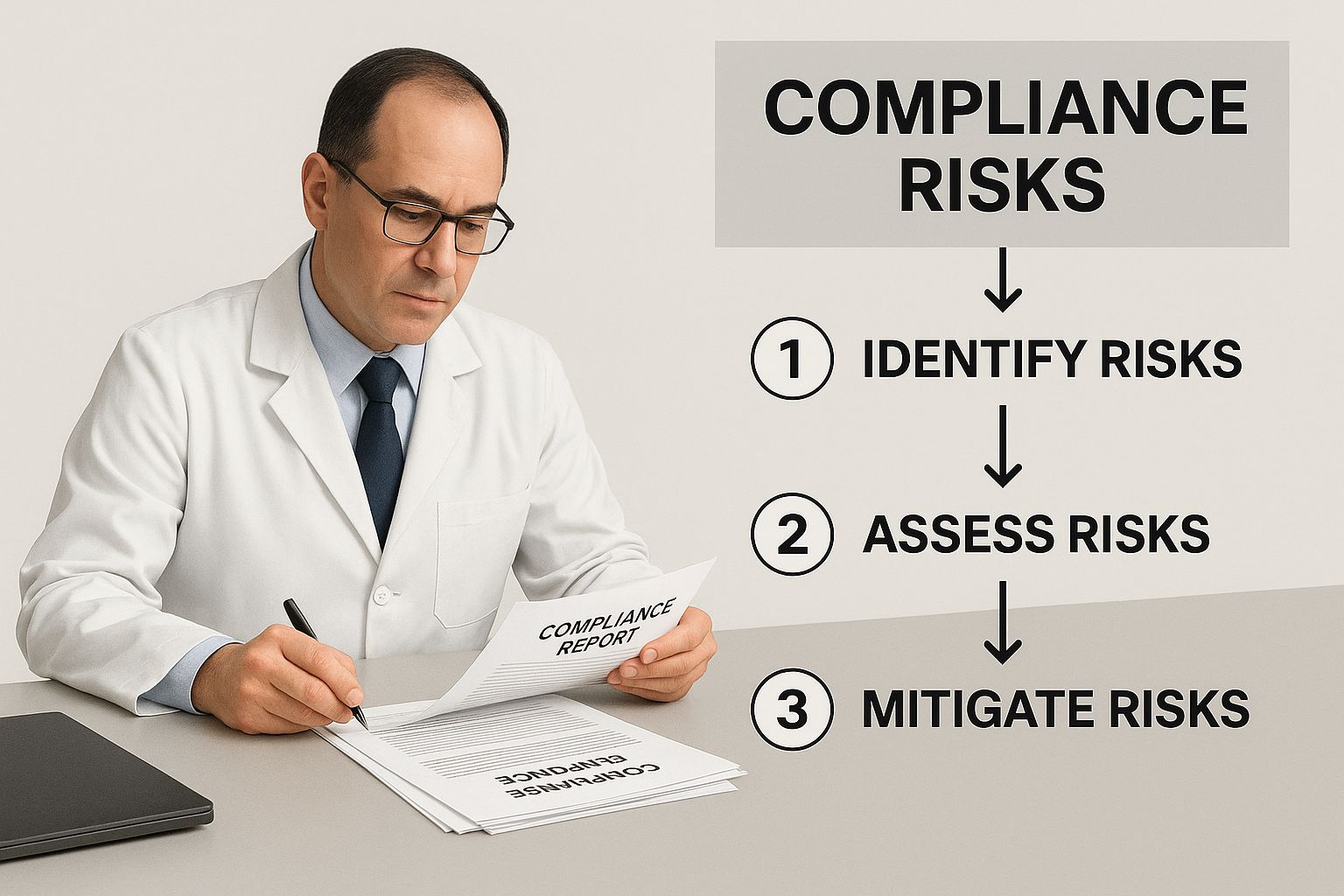
As you can see, managing compliance isn't a one-and-done task. It's an ongoing cycle of verification and oversight.
Turning a Necessity into an Advantage
Here's the good news: a well-run program can actually turn this operational headache into a strategic asset. When you formalize your recycling efforts, you're building a strong pillar for your Environmental, Social, and Governance (ESG) and Corporate Social Responsibility (CSR) reports.
This isn't just for a report, either. A real commitment to sustainability resonates with an increasingly eco-conscious patient base and helps you attract top talent who want to work for employers with solid ethical standards. For a closer look at these benefits, check out the 7 key benefits of electronics recycling in Atlanta.
The market is already reflecting this shift. The global medical device recycling service market is on track to hit roughly $3.06 billion by 2025. This growth is fueled by tougher regulations and the sheer speed of technological turnover, signaling a clear industry-wide move toward sustainable end-of-life management for medical gear.
A medical equipment recycling program isn’t a cost center. It's a competitive advantage that protects your facility, enhances your brand, and demonstrates a commitment to community and environmental health.
By looking at recycling through this strategic lens, your facility can shift from a reactive, compliance-driven mindset to a proactive one that creates real, tangible value. It becomes a powerful statement about your organization's dedication to patient safety, data security, and being a responsible corporate citizen.
Building Your Program's Foundation
A successful medical equipment recycling program isn’t built on good intentions alone. It needs a solid framework, and that starts with people. The first real step is to assemble a cross-functional "green team." This group will be the engine for your entire program, driving buy-in and making sure things actually get done across the whole organization.
You absolutely need diverse perspectives at the table. Pull in folks from IT who live and breathe data security. You’ll need clinical engineering, who knows the lifecycle of every device inside and out. Don't forget administrative staff—they’re the ones who can navigate the tricky worlds of procurement and facility logistics. Getting them all in one room from the start prevents silos and ensures your program is practical, not just a nice idea on paper.

Conduct a Comprehensive Equipment Audit
Once your team is in place, it's time for your first big task: a full-scale equipment audit. It’s simple, really—you can't manage what you don't measure. The goal here is to create a detailed inventory of every single device your facility decommissions over a year.
Get specific. Categorize everything by type, volume, age, and whether it holds patient data. This audit is your baseline. It gives you the hard data you need to estimate recycling volumes, pinpoint potential hazardous materials, and ultimately choose the right recycling partner. It turns abstract goals into a concrete logistical puzzle you can solve. For a much deeper dive, you can check out our detailed medical equipment disposal practices and guidelines.
A well-rounded team is essential for a program that actually works. Each department brings a unique and critical piece of the puzzle to the table, ensuring no detail is overlooked from logistics to compliance.
Here's a look at the key players you'll want on your team and what they bring to the process.
Key Roles for Your Recycling Program Green Team
| Role/Department | Primary Responsibility | Key Contribution |
|---|---|---|
| Clinical Engineering/Biomed | Manages the lifecycle and decommissioning of medical devices. | Provides technical expertise on equipment specifications, hazardous components, and safe handling procedures. |
| IT/Information Security | Ensures all patient data is securely destroyed before disposal. | Oversees HIPAA compliance, data wiping protocols, and vendor certification for data destruction. |
| Facilities Management | Handles the physical logistics of equipment collection, storage, and transport. | Develops practical workflows for moving and staging retired assets within the facility. |
| Environmental Health & Safety (EHS) | Guarantees compliance with EPA and state environmental regulations. | Identifies hazardous materials (e.g., mercury, lead) and ensures proper disposal protocols are followed. |
| Procurement/Finance | Manages vendor contracts and tracks the financial impact of the program. | Negotiates with recycling partners and helps calculate cost savings or ROI. |
| Administration/Legal | Oversees policy development, regulatory compliance, and internal communication. | Ensures the program is legally sound and effectively communicated to all staff. |
Having this mix of expertise ensures your program is robust, compliant, and smoothly integrated into your facility's daily operations from the very beginning.
Navigate the Regulatory Landscape
The regulatory world for medical equipment is notoriously complex. Your program has to be built from the ground up to tackle two massive areas: HIPAA for data security and EPA rules for hazardous materials. Dropping the ball in either of these can lead to some seriously painful penalties.
HIPAA is non-negotiable. It mandates that all electronic Protected Health Information (ePHI) must be rendered completely unreadable and unusable before any device leaves your control. This means you must partner with a vendor that provides certified, auditable data destruction. Period. At the same time, EPA regulations dictate how you handle components with nasty stuff like mercury, lead, and cadmium. Your policy has to spell out exactly how to manage these materials safely.
A great starting point for any recycling initiative is to get familiar with the principles of a circular economy in waste management. This mindset shifts the focus from just "getting rid of stuff" to prioritizing reuse and recovering valuable resources.
Your documented policy is the blueprint for your program. It should clearly define roles, outline step-by-step procedures, and set measurable objectives, turning your recycling vision into an actionable reality.
The push for proper disposal isn't just about compliance; it's a massive industry trend. In 2024, the global medical waste management market was valued at nearly $18.91 billion. That number is climbing fast, driven by the sheer volume of waste we're producing and much stronger government enforcement. It shows a clear, industry-wide shift toward more responsible and eco-friendly practices. Putting in this foundational work now ensures your medical equipment recycling program is effective, compliant, and sustainable from day one.
How to Choose the Right Recycling Partner
Picking your certified recycling vendor is easily the most critical decision you'll make when setting up a medical equipment recycling program. This goes way beyond just having someone haul away old devices. You're entrusting a partner with your facility's data security, your compliance with a mountain of regulations, and your hard-earned reputation.
One wrong move here can unravel all your foundational work, creating a nightmare of compliance violations and security risks.
A good partner is your shield. They protect you from liability with processes that are transparent, documented, and completely verifiable. That’s why you have to be rigorous when vetting them, digging into their certifications, data security protocols, and how they handle materials downstream.
Your Non-Negotiable Vetting Checklist
Before you even think about signing a contract, make sure any potential partner can give you a clear "yes" to these questions. This is your absolute minimum standard.
-
Essential Certifications: Do they hold either an R2 (Responsible Recycling) or e-Stewards certification? These are the gold standards in the electronics recycling world. They guarantee the vendor follows the highest environmental and safety practices. If they don't have one of these, it's a huge red flag.
-
HIPAA-Compliant Data Destruction: Can they prove they provide NIST 800-88 compliant data destruction? You need tangible proof here. Insist on seeing a sample Certificate of Data Destruction. They should provide one for every single device that ever held patient information.
-
Transparent Chain of Custody: Ask for a clear, documented chain of custody that tracks equipment from the moment it leaves your doors to its final destination. This paper trail is your lifeline during an audit, proving you handled everything by the book.
-
No Offshoring of Hazardous E-Waste: This is a big one. Ask them directly where their downstream materials go. A responsible partner won't ship hazardous electronic waste to developing countries where it's often processed in unsafe and unregulated conditions.
If you need a bit more guidance, reviewing these 6 key questions for electronic waste disposal experts will help you structure your conversations and quickly separate the pros from the pretenders.
Beyond Compliance to Community Impact
Once you’ve locked down the compliance basics, you can start looking for a true strategic partner, not just a vendor. This is where a mission-driven recycler can turn a simple operational task into a powerful story for your brand.
Look for a partner whose work genuinely aligns with your facility’s values. Some recyclers, for example, have incredible programs that create a dual philanthropic impact.
By choosing a partner with a strong social mission, you turn decommissioned assets into tangible community benefits. Messaging like, "Your old tech can house a veteran and grow a forest," connects your program to a purpose that resonates with staff, patients, and stakeholders.
This kind of partnership amplifies your ESG and CSR efforts without any extra work on your part. A mission-focused recycler can give you real metrics for your sustainability reports—things like the number of "veterans supported" or "trees planted." Suddenly, a routine procedure becomes a compelling story about corporate responsibility.
The demand for these specialized, high-integrity services is only growing. In fact, the medical waste recycling service market is expected to hit $2.24 billion by 2033. This growth is being pushed by stricter regulations and new technologies. It’s clear that picking a sophisticated, mission-aligned partner isn’t just good practice anymore—it’s just smart business.
Designing a Seamless Collection Process
Even the most well-thought-out medical equipment recycling program can fall apart if the logistics aren't right. The bridge between your shiny new policy and its real-world success is a solid internal collection system. It has to be clear, secure, and dead simple for every staff member involved.
First things first, you need designated, secure, and clearly-marked drop-off points. Think strategically about placement. You might have one spot for small, handheld monitors and a completely separate, more accessible staging area for those bulky diagnostic machines. Signage is your best friend here—keep it visual and straightforward, spelling out exactly what goes where and who to call with questions.
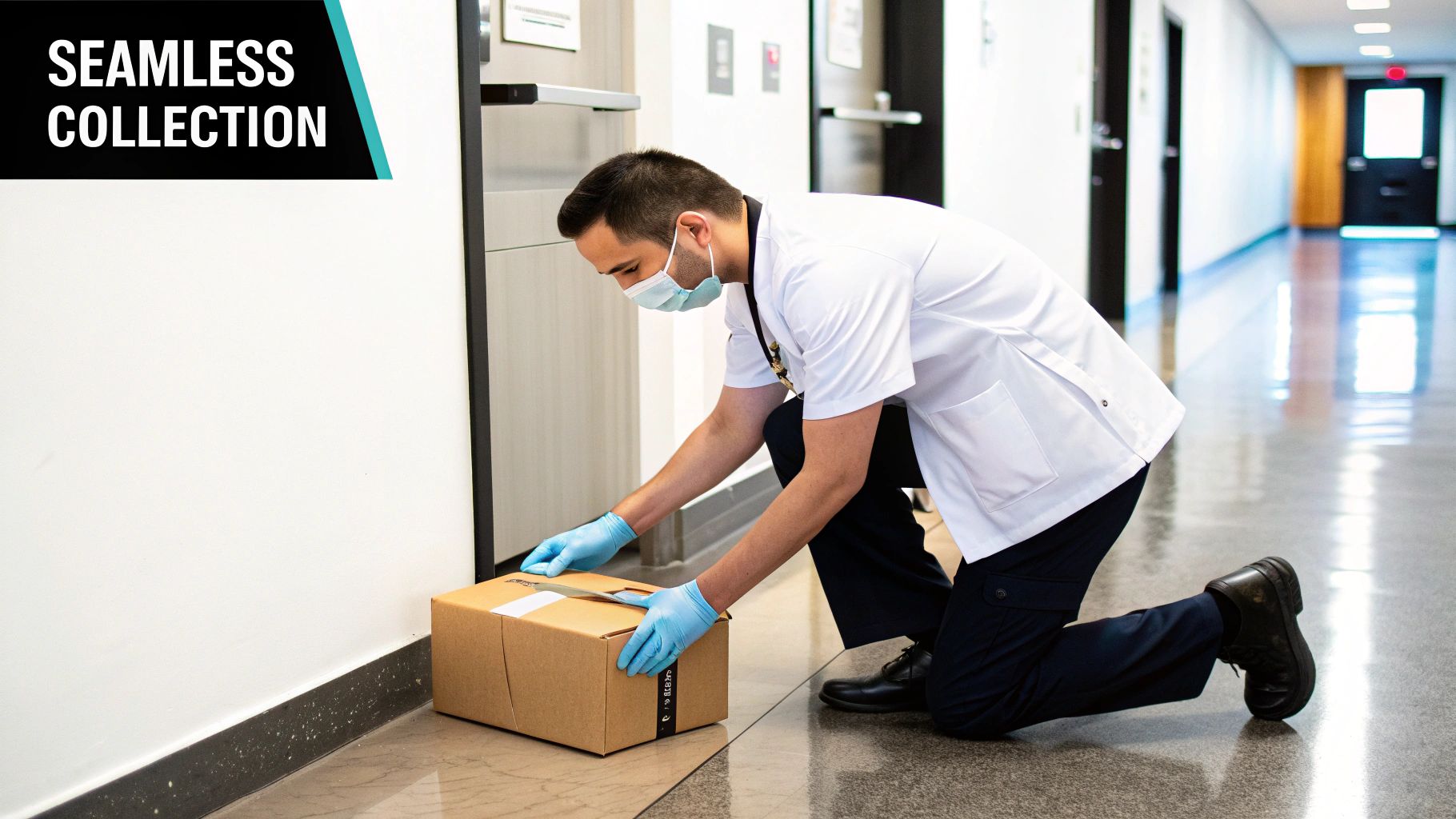
Before a single device leaves your facility, data sanitization is non-negotiable. Any piece of equipment that holds electronic Protected Health Information (ePHI) must go through certified data destruction protocols. This isn’t just good practice; it’s a critical step to protect patient privacy and keep your facility compliant with HIPAA regulations.
Streamlining Collection and Transport
Once you have your drop-off areas set up, the focus shifts to the physical process of moving and documenting every retired asset. This takes some real coordination between your "green team" and the departments getting rid of the equipment.
- Safe De-installation: Your staff need to know how to disconnect equipment safely. This includes understanding the proper Personal Protective Equipment requirements to protect themselves from any potential hazards.
- Asset Management: This is where paperwork becomes your proof. Keep a detailed asset list or log for every single item being recycled, tracking it from the moment it's decommissioned to its final pickup.
- Scheduling Pickups: You’ll want to work with your recycling partner to get a regular pickup schedule on the books. Make sure it fits your facility’s workflow and storage space so you don’t end up with a hallway full of old machines.
A seamless collection process isn’t just about bins and signs. It’s about creating a predictable, repeatable workflow that minimizes disruption, ensures staff safety, and maintains an unbroken chain of custody for every asset.
You’re going to run into logistical hurdles. It's just part of the process. For instance, getting a massive piece of equipment out of an upper-floor department might require a chat with facilities management to book the freight elevator during off-peak hours. Planning ahead is what keeps these challenges from completely derailing your program.
Training Staff for Consistent Adherence
Your staff are the ones who make this program work day in and day out, so their buy-in is everything. Training shouldn't be a one-time meeting; think of it as an ongoing conversation. Use department meetings to share success metrics, like the total pounds of e-waste diverted, to show the impact they're having and keep the program top-of-mind.
If you’re just starting out, our guide on the steps for starting an electronics recycling program at work is a great resource for building a framework from scratch. Ultimately, when the process is easy and the positive impact is clear, your staff are far more likely to become true champions for the cause.
Showcasing Your Program for Maximum Impact
Your medical equipment recycling program is so much more than an internal process—it’s a powerful story of responsibility and community engagement just waiting to be told. When you showcase your program effectively, you turn a simple compliance task into a public-facing asset that boosts your facility's reputation and builds incredible goodwill.
The trick is to move beyond dry reporting and start thinking like a marketer. This means connecting your recycling efforts to real, human-centered outcomes. For instance, instead of just saying you recycled equipment, why not launch a “Recycle for a Cause” campaign? This instantly reframes the entire initiative around its positive local impact.
Launch Cause-Based Marketing Campaigns
To really connect with your community, your message needs heart. If your recycling partner supports social causes like veteran aid and reforestation, that’s your golden ticket. It becomes your core differentiator.
Imagine promoting your program with a tagline like, “Your old tech can house a veteran and grow a forest.” That’s a powerful statement. It immediately connects the simple act of recycling with concrete, positive change that people can feel good about.
To make this impact tangible, think about adding an "Impact Counter" to your website. Displaying live stats like “1,245 veterans supported” and “3,700 trees planted” provides transparent social proof of your commitment. You can also time specific donation drives with relevant holidays like Earth Day, Arbor Day, or Veterans Day to create focused PR pushes that grab media and community attention.
Pro Tip: Create an annual Sustainability Impact Report that goes beyond basic numbers. Feature tangible metrics like "pounds of e-waste diverted" and "trees planted via our recycling partner." This creates a compelling narrative for your ESG and CSR documentation.
Foster Corporate and Community Partnerships
Your program doesn't have to exist in a silo. It can serve as a fantastic model for other local businesses looking to up their own sustainability game.
Position your initiative as an easy ESG win for corporate partners. You could offer to host corporate recycling drives, providing businesses with free pickup if they collect a certain number of devices.
After the drive, follow up with tangible proof of their contribution, like Plant-A-Tree certificates or Veteran Support Impact Reports they can use for their own CSR reporting. For healthcare facilities in the Atlanta area, pitching these success stories to outlets like the Atlanta Journal-Constitution or local sustainability blogs can generate significant positive press and build a ton of credibility.
You can even formalize these partnerships by offering a digital "Recycled with Purpose" badge that companies can display on their websites. This strategy not only amplifies your program’s reach but also positions your facility as a true leader in corporate responsibility. For businesses interested in setting up their own initiatives, our guide to business recycling programs is a great place to start.
By actively sharing your story and collaborating with others, your medical equipment recycling program becomes a catalyst for broader community engagement. It shows everyone that responsible disposal isn’t just about managing waste—it’s about investing in a healthier, more sustainable future for everyone.
Answering Your Team's Questions About Medical Equipment Recycling
Even with a solid plan in place, you're going to get questions. That's a good thing—it means people are engaged. As you roll out your medical equipment recycling program, a few common concerns will almost certainly pop up. Having clear, confident answers ready will help you smooth out any bumps in the road and build trust across your entire facility.
What Kinds of Medical Equipment Can We Actually Recycle?
You’d be surprised. The scope is much broader than most people think. We’re talking about everything from smaller, everyday items like infusion pumps and patient monitors all the way up to massive diagnostic systems—think MRI and X-ray machines. And of course, this also covers all the standard IT gear your facility runs on, like computers, servers, and phones.
The key isn't so much what you're recycling, but who you're recycling with. You need a certified partner who knows how to handle such a diverse mix of materials, from basic plastics and metals to complex circuit boards. A true expert will have a plan for safely managing potentially hazardous components, like lead or mercury, keeping you fully compliant.
How Do We Know Patient Data Is Kept Secure?
This one is non-negotiable. Protecting electronic Protected Health Information (ePHI) is your absolute highest priority under HIPAA. Your recycling partner must provide certified data destruction services. No exceptions.
This usually means one of two things: cryptographic erasure that meets NIST 800-88 standards or, more commonly, the physical shredding of hard drives and any other media that holds data. You should always, always get a formal Certificate of Data Destruction for every single device that ever touched patient information. That piece of paper is your proof of compliance and your best friend in an audit.
Is It Going to Be Expensive to Set Up a Recycling Program?
The cost can vary, but many healthcare facilities find that a well-run program can actually be budget-neutral or even have a positive financial return. Yes, specialized services like certified data destruction come with a fee, but those costs are often balanced out.
Newer, functional equipment might have resale value, and even older devices have scrap value from their raw materials. But the most important calculation is this: the planned, predictable cost of a compliant program is a drop in the bucket compared to the crippling fines for improper disposal or the catastrophic reputational damage from a data breach.
How Can We Get Our Staff to Actually Follow the Program?
Getting consistent buy-in from your team really comes down to two things: clear communication and making it easy.
First, explain the "why." Don't just send a memo with rules. Talk about the environmental impact, the legal requirements, and the positive story it tells your community. Give the program a purpose people can get behind.
Next, create simple, visual guides for how to collect and sort equipment. Post them right at the drop-off points. Get department heads on board to act as champions for the program, and make a point to share your wins. A quick mention in a staff meeting or newsletter—"This quarter, our facility diverted 3 tons of e-waste from landfills!"—goes a long way toward building momentum and a real sense of shared accomplishment.
Ready to build a secure, compliant, and genuinely impactful medical equipment recycling program for your facility? Atlanta Green Recycling delivers complete solutions for healthcare organizations across the Atlanta metro area, guaranteeing your e-waste is managed with the highest level of responsibility.
Schedule your free consultation with Atlanta Green Recycling today.